Investigative Reporting as a Public Health Research Method

Last week, the Center for Public Integrity, the  nonprofit investigative news organization, reported that  in 2012 the tobacco company Reynolds American Inc. helped fund several of the nation’s most politically active — and secretive — nonprofit organizations.  Based on its review of company documents, Center for Public Integrity reported that Reynolds American’s contributions include $175,000 to Americans for Tax Reform, a nonprofit led by anti-tax activist Grover Norquist, and $50,000 to Americans for Prosperity, a free-market advocacy outfit heavily backed by billionaire brothers Charles and David Koch. The story provided a rare insight into how some of the most powerful politically active 501(c)(4) “social welfare” nonprofits are bankrolled.


This and similar stories by a handful of other investigative journalism outfits provide hope that despite the gloomy state of the mainstream media, dozens of reporters around the country continue to investigate  corporate wrong doing .  For public health researchers and activists, investigative journalists can help to fill in the gaps about our understanding of how corporations’ business and political practices can undermine health, the environment and democracy. For that reason, these investigative media outlets have become as important a source of information on corporations and health as the scientific journals that publish reports on the impact of a specific practice or exposure on a specific health outcome.  This post provides an overview of several investigative journalism sites and lists some links to add to your Bookmarks.  


The Center for Public Integrity proclaims that is mission is “to enhance democracy by revealing abuses of power, corruption and betrayal of trust by powerful public and private institutions, using the tools of investigative journalism.”  As one of the country’s oldest and largest nonpartisan, nonprofit investigative news organizations, the Washington-based Center has produced series on the global tobacco industry, the high costs of corporate dentistrytoxic chemical pollution, and the occupational health of agricultural workers .  Unlike daily mainstream media, CPI often sticks with a story for months or years. In partnership with the International Consortium of Investigative Journalists, for example, the Center produced a multi-year investigation of the tobacco industry, in which country-based reporters worked with an international team of editors to uncover how companies like Philip Morris International and British American Tobacco distorted science and subverted democratic processes in Russia, Mexico, Indonesia and Uruguay. 


Source: ProPublica
Source: ProPublica


ProPublica is another independent, non-profit newsroom.  Based in New York City, its mission is to shine “a light on exploitation of the weak by the strong and on the failures of those with power to vindicate the trust placed in them”.  In the last few years, it has run investigations on guns, gun policy and the gun industry  and on  pharmaceutical company payments to doctors who prescribe their products.  Like the Center for Public Integrity, ProPublica often partners with other media including Frontline, the New York Times and National Public Radio to produce reports that run simultaneously in several media.  ProPublica’s MuckReads provides readers with ongoing updates on investigative stories in other media, offering an efficient way to scan the investigative landscape. 


The Center for Media and Democracy, another non-profit investigative reporting group, published news stories and analysis that exposes corporate spin and government propaganda. The Center publishes PRWatch, SourceWatch, FoodRightsNetwork and BanksterUSA.  PR Watch “exposes the hidden activities of secretive, little-known mega-firms such as Hill & Knowlton, Burson-Marsteller and Ketchum PR — the ‘invisible men’ who control our political debates and public opinion, twisting reality and protecting the powerful from scrutiny.”


Investigative Journalism and Public Health

For public health faculty, students and researchers, investigative journalism provides another window on the world.  Its practitioners use a variety of methods— analyzing public data obtained through the Freedom of Information Act; “crowd-sourcing” to enlist a broad section of people who have experienced a problem to help understand its causes and consequences;  and old-fashioned shoe-leather reporting. For public health students, these methods could significantly expand their research repertoires.  New partnerships between schools of public health and schools of journalism could help to produce a new generation of public health journalists, investigators who can combine methods from both disciplines to expose wrong doing that harms the well-being of populations. 


By teaching these research approaches, assigning public health students to read investigative journalistic accounts of public health problems, and asking them to compare the frames and methods used in, for example, an epidemiological, sociologic and investigative journalistic account of the same public health issue, faculty can help students understand the value and limits of each approach. 


More resources describing investigative journalism and its methods can be found here


Corporate Research for Public Health

Credit
Credit


In a recent article in the Journal of Public Health Management and Practice, Corporations and Health Watch contributing writer Lainie Rutkow and her colleagues at the Johns Hopkins School of Public Health conclude that schools of public health face a curricular gap, with relatively few offerings courses that teach students about the relationship between the private sector and the public’s health.  While 75% of the 46 accredited programs they surveyed offered at least one course on the private sector and public health, more than 40% of the courses reported focused on a single industry such as health insurance or pharmaceuticals.  Few focused on business and corporations as a social determinant of health and it did not appear that any emphasized teaching students how to investigate the health impact of corporation’s business and political practices. 


A new resource that can help public health researchers and students to fill this gap is Strategic Corporate Research, a new website developed by Tom Juravich, Professor of Labor Studies and Sociology at the University of Massachusetts and graduate students in the UMass Labor Center. Although the resource is based largely on union corporate campaigns, its method for researching corporate structures and practices will be of value to planners of public health campaigns to modify health damaging corporate practices.  The site includes information sources on US and Canadian publicly traded corporations, privately held firms and nonprofits and charities.   It also offers a practical tutorial for aspiring corporate researchers.   


More than  50 years ago – way before the internet was invented, notes Juravich,  sociologist C. Wright Mills argued that we were being overwhelmed by information and that what we needed is not more information but a framework to make sense of that information.  The website introduces a framework and a visual representation of the 24 areas (see below)  where corporate researchers can  focus their effort.  Juravich explains this framework in   Beating Global Capital: a Framework and Method for Union Strategic Corporate Research and Campaigns  and on the website.


4.24.2


Previous CHW posts that described additional resources for public health researchers on studying corporations include:

Bringing Corporations and Health into the Public Health Curriculum  September 12 , 2012

New Resource: Beating Goliath Examines Successful Campaigns Against Corporations  March 14, 2012

LittleSis: A Tool for Activists and Researchers November 9, 2011

Corporations and Health Watch Goes Back to School: 10 Ways to Bring the Health Impact of Business Practices into the Classroom  September 7, 2011


Can BRICS chart new directions in public health?


Credit
Credit

Last week, the BRICS nations—Brazil, Russia, India, China and South Africa– met in Durban, South Africa, to create a new set of financial institutions designed to better meet their needs than the World Bank and the International Monetary Fund.  They took steps to create their own credit rating agency and a BRICS Development Bank designed to fund infrastructure and sustainable development projects.


These new developments highlight the rapid growth of BRICS and their growing global influence.  A recent report by the United Nations Development Program noted that “for the first time in 150 years, the combined output of the developing world’s three leading economies – Brazil, China and India – is about equal to the combined GDP of the long-standing industrial powers of the North”.


As BRICS nations develop, industrialize and urbanize, they are also becoming the world’s leading producers of chronic diseases and injuries – the by-products of the western model of consumption oriented economic growth.  And here the question is will BRICS nations take a different path in public health than the western nations that have increasingly allowed market forces to set public health policy?


Two recent policy debates in South Africa illustrate the tensions.  Last month, South Africa’s Department of Health announced new regulations designed to lower the salt (sodium) content of certain categories of food manufactured in South Africa.  Research studies had shown that South Africans had higher salt intake than other populations. South Africans also have one of the highest rates of hypertension worldwide. An estimated 6.3 million people are believed to be living with high blood pressure in SA, making them more susceptible to life-threatening diseases like stroke and heart disease. Lowering the salt content in the foods most associated with salt intake was described as a cost effective measure to lower health care costs associated with NCDs.  Initially, many major South African industries supported the new regulations, claiming it would create a more level playing field for all food companies.  The Department of Health consulted extensively with food industry representatives and modified the regulations in response to industry suggestions. 


Outside experts hailed South Africa for taking such concrete steps for reducing salt or sodium consumption. Professor Graham Macgregor, chairman of the World Action on Salt and Health (WASH) described South Africa as taking a “pioneering” role in salt reduction programmes. “Achieving a long and healthy life, free from disease,” he said, “is a right not just for South Africans but for everybody in the world. It is time that Western governments stopped being pressurised by their tobacco and food industry and follow South Africa’s example by setting specific targets for reducing non-communicable diseases (NCDs), including salt reduction to less than 5g a day, particularly in developing countries where the major burden of NCDs lies.”


But after the regulations were issued, the Consumer Goods Council, the trade association representing South African food manufacturers, changed its tune.  In a statement, it said the Council was:

shocked and disappointed by the article regarding the salt reduction regulations. Following the process of policy promulgation(salt reduction), the CGCSA on behalf of its food members wrote to the Minister of Health on alternative approaches to ensure effective implementation of this initiative. The industry fully supports the goal of reducing salt in order to enhance public health. However, we are concerned that should these alternative measures not be taken into consideration, the impact of these good intentions will not be effective due to a number of reasons such as unrealistic timelines; lack of consumer education and cost implications as per the proposed draft regulations.


Some knowledgeable observers attributed the change in industry position to lobbying by multinational food companies, who feared that the South African regulations might set a precedent other countries would follow.


In another example of industry involvement in public health policy in South Africa, last week the government of Western Cape Province abruptly withdrew proposed regulations to restrict Sunday sales of alcohol only a few days before they were to go into effect.  Western Cape Province is led by the Democratic Alliance, a political party that is regarded as more business friendly than the opposition African national Congress Party.  Commenting on the apparent about-turn by the DA‚ the opposition party the African National Congress (ANC)‚ said the decision was a “political ploy by the DA after in realized that big business‚ its key constituency  would be the hardest hit.” The ANC generally supported the by-law because alcohol abuse was a “serious problem in our communities”. South African Liquor Traders Association president Saint Madlala welcomed the decision on Thursday but said “they should not keep us in suspense‚ they should just scrap the whole idea” of restricting alcohol sales.


BRICS nations differ from each other politically and economically and face internal as well as external pressures to follow rather than guide market influences. But the Durban meeting showed the potential for emerging nations to chart new paths for sustainable development and human-oriented economic growth.  In this context, the continued vulnerability of South Africa –and other BRICS nations-   to corporate pressure to weaken public health protection shows that like Western nations, BRICS countries will need to find new ways to protect their people’s health from corporate interference.  

A vicious circle: Declining sales lead gun and sugary beverage corporations to hypermarketing and hyperlobbying

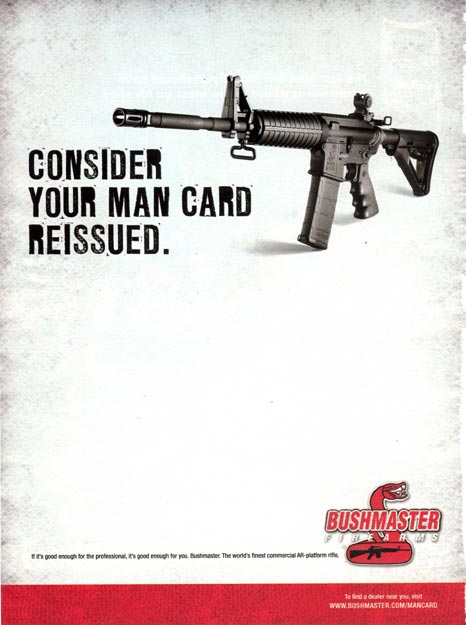
An ad for Bushmaster, Credit
An ad for Bushmaster, Credit 


A recent report in the New York Times found that the share of American households with guns has declined sharply over the last forty years. In the 1970s, an average of 50 percent of American households owned guns; by 2012 the proportion had fallen to 34 percent.


The decline in gun owner was most precipitous among younger Americans, reports the Times.  Household ownership of guns among elderly Americans remained virtually unchanged from the 1970s to this decade at about 43 percent, while ownership among Americans under the age of 30 fell to 23 percent this decade from 47 percent in the 1970s. The survey showed a similar decline for Americans ages 30 to 44.


Declining Soda Sales

Credit: New York Times

As shown in the chart to the left, consumption of carbonated soft drinks, sugary and diet beverages associated with a variety of health problems, has also declined in the United States.  It fell from a high of 2.4  eight  ounce servings per week in 1998 to a low of  just under 2 in 2011, a drop in per capita consumption of about 16 percent since the peak in 1998, according to Beverage Digest, a trade publication.


Hypermarketing and Hyperlobbying

What’s the connection between the declines in these two very different legal but lethal products?  In both cases, demographic changes in the consumer market and public health campaigns contributed to decreased sales.  In both cases, the response of the industry was to amplify its marketing and lobbying campaigns in an effort to reverse these declines.


The gun industry stokes the apprehension that each mass shooting and each proposed gun safety measure may lead to the confiscation of the more than 300 million guns American own.  The NRA has learned that generating fear helps to sell guns, further strengthening  its alliance with the gun makers who help to fund it.  For the gun industry, declines in sales have led to new efforts to advertise to men (“Consider your man cared reissued”, says Bushmaster) and women. The New York Times described an advertisement by Colt in the 1990s that showed a mother tucking a child into bed — “Self-protection is more than your right … it’s your responsibility,” the ad said.


According to the Wall Street Journal, a prolonged drop in U.S. soda revenues would represent a serious blow to the beverage industry since soda represents nearly 25% of the U.S. beverage market.  For decades, its massive scale has also guaranteed profit margins for decades.  To counter the threat, PepsiCo has invested hundreds of millions of dollars in marketing to turn around its U.S. soda business after losing market share to Coke. In January, Coke launched new television ads this week to counter consumer concerns about obesity and moves by officials to restrict soda sales.


So here’s the problem:  public health successes in reducing demand for unhealthy or dangerous products leads industries to double down on marketing the unhealthy product in an effort to overcome declining sales.  This effort can take several forms. It can lead to increased advertising to the same market or to new market segments (e.g., youth, women, Blacks and Hispanics) that are seen to present opportunities for growth.  Or it can lead industries to take their unhealthy products overseas—the soda industry is hoping to restore global profits in China, India and elsewhere.  Finally, as we have seen with the gun and soda industries, the campaign to restore sales can lead to aggressive political efforts to discredit the science and public health messages that contribute to declining sales or to remove or water down regulations or taxes that might further discourage sales.


In these cases, corporations are simply fulfilling their mandate to maximize profits. For public health, however, this hypermarketing and hyperlobbying presents a “can’t win for losing” dilemma.  If our successes accelerate the very practices we seek to end, then perhaps we need to consider broader and deeper strategies for modifying the business and political practices that harm public health.


Too many cars, too many guns, too many deaths: The public health consequences of over-production

In Beijing last month, the level of pollution for the fine particles known as PM 2.5 was 755, more than double the US EPA definition of hazardous, 300 micrograms per cubic meter .  PM 2.5 pollution is associated with higher death rates from lung cancer and heart disease as well as with a number of acute respiratory conditions.  According to the New York Times, Beijing residents described the air as “postapocalyptic,” “terrifying” and “beyond belief.”  The sources of PM 2.5 pollution are factories, coal furnaces and especially automobiles.  According to the Xinhua, the Chinese state news agency there are now 5.18 million vehicles in Beijing, compared with 3.13 million in early 2008, a choking 65% increase. 


Chinese officials have taken a number of emergency measures, including further limiting the number of cars allowed into the city ordering 180,000 older vehicles off the roads; and promoting the use of “clean energy” for government vehicles .


China is not alone in achieving record levels of urban air pollution.  Last week, levels of PM 2.5 pollution in New Delhi India exceeded those in Beijing. To date, Delhi’s government has not introduced any emergency measures.  In an earlier interview, Sheila Dikshit, the chief minister of the state of Delhi, acknowledged that the city could not keep up with the factors that cause air pollution.  Last year, a study in Lancet showed that air pollution has become a major health risk in developing countries, contributing to about 3.2 million premature deaths worldwide and moving for the first time onto the top ten killer list. More than 2.1 million of these deaths are in Asia. 


In the weeks since the Newtown Connecticut shootings on December 14, at least another 1,502 Americans have been killed by firearms (as of February 3, 2013), according to a crowd sourced story by Slate.  The deaths illustrate the myriad ways that guns in America can lead to tragedy: a girl shot as a bystander in a Chicago street, a two year old in South Carolina accidentally shot himself with his father’s .38 caliber handgun, an instructor in a shooting range shot by an angry customer, a soldier shot and killed in his barracks in Alaska, police officers and a Texas prosecutor. 


What do these air pollution deaths in Asia and gun deaths in the United States have in common?  Both are the result of the over-production and relentless marketing of products by the leading multinational corporations in two major consumer industries.  The global auto industry has set its sights on Asia, especially China and India, as the growth opportunities for this century. 


In 2009, General Motors sold 1.83 million vehicles in China and its market share grew from 1.3 per cent to 13.4 per cent. The firm is now the largest volume seller in China. At the time, GM China boss Kevin Wale told a reporter, “Despite the sales records in 2009, it looks as if 2010 will be even stronger,” he said. “The industry outlook is strong and we expect more growth, albeit at a somewhat slower pace.” In 2013, Forbes reports, GM expects continued growth.  Earlier this year, Dan Ammann, GM senior vice president and chief financial officer, told a  meeting of global auto leaders in Detroit, “We’re launching more vehicles globally than at any time in our history and some of our most important models are targeting the two largest markets in the world – the U.S. and China.


Of course the people of China want better transportation and the Chinese government is eager for partnerships that promote economic development.  But only the global auto companies have the capacity to translate that desire into a particular product –individual passenger vehicles — and to design, produce and market the products that maximize their profits.  Given their mandate to maximize returns on investment, they choose to contribute to increasing the millions of annual preventable deaths that their choice imposes rather than to consider alternative methods of transportation.  Producing enough cars to maintain profitability is more important than producing too many cars to sustain human health and the environment.


More than 300 million firearms sit in this country’s closets, under beds, in weapons racks and in glove compartments.  With less than 5% of the world’s population, we own more than 40% of all the firearms that are in civilians hands.  Why so many?   Prior to the 1960s, the gun industry had lost business as fewer people hunted or collected guns,  causing sales of rifles and shotguns to plummet.    Handguns –pistols and revolvers—became the industry’s hope for renewed profitability. In order to realize this goal, handgun producers had to make handguns affordable and they had to convince more people that they needed the protection a handgun offered.  To restore profitability, firearm companies have designed a sequence of products, from Saturday Night Specials in the 1970s and 1980s, to the super-sized semi-automatic handguns that Glock, Colt and Smith & Wesson produced in the last two decades to the assault rifles that are today’s must-have weapon.  To promote these products, the gun industry advertises relentlessly.  A few examples:

  • Bushmaster Firearms, a leading manufacturer of AR-15 weapons took the lead in aggressively marketing militarized assault weapons to civilians.  Its website uses the slogan, “Forces of opposition, bow down”. 
  • An ad for a pistol from Taurus USA promotes it as “the extreme-duty next generation handgun, created for Special Operations Personnel.”
  • In an effort to recruit young people into gun use, Junior Shooters, an industry-supported magazine, once featured a smiling 15-year-old girl clutching a semiautomatic rifle. At the end of an accompanying article that extolled target shooting with a Bushmaster AR-15, the author encouraged youngsters to share the article with a parent, an advertising strategy borrowed from McDonald’s.

Yes, American culture cherishes guns and yes, many Americans seem to have a deep emotional attachment to their weapons. But as with automobiles, only a handful of multinational corporations have the resources and the motivation to nurture those feelings, to translate the longing into finding, buying and sometimes using that weapon.  And it is that capacity that leaves America with an arsenal of 300 million weapons, a number that grows daily.  Having a firearm available increases the risk that suicides will be fatal, that gang disputes will result in deaths, that a bystander or family member will be killed during an intrusion, and that the partner of a domestic abuser will be killed rather than “only” injured. 


As a result, since 1960, more than one million people in the United States have been killed by guns and more than two million more have suffered non-fatal gun injuries. In this period, 13 times more Americans have been killed by firearms in the US than by the wars in Vietnam, Iraq, and Afghanistan combined.  The gun death rate in the United States is 20 times higher than in other developed nations.


So what’s the solution?  In the short run, the incremental solutions that are already on the policy agenda are part of the answer.  For automobiles, this means stronger public health regulations to require manufactures to make less polluting and safer cars.  It means public incentives for mass transit and better designed cities that encourage active transportation like walking and bicycling.  And it means limiting car use during high pollution conditions, even though this is a closing-the-barn-door-after-the-horses-escape strategy.    


For firearms, it means safer guns—trigger locks, loaded chamber indicators, manual thumb safeties, grip safeties, magazine disconnectors, and more effective background checks and registration systems.


But in the long run, the world needs fewer cars, fewer guns, and fewer other lethal but legal products.  Humanity and the environment that sustains us cannot survive in a world where a few thousand companies decide to make and market what they want in the quantities they decide regardless of the long term health and environmental consequences. In the twentieth century, each of the two major economic systems, state socialism and market capitalism, demonstrated their incapacity to promote well-being, democracy and a sustainable environment. The health consequences of the overproduction of cars and guns tell us it’s time for some new ideas on how to balance public needs with the quest for private profits.

Gun violence debates open doors for public discussion on role of gun industry

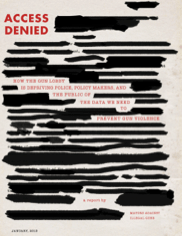
Mayors Against Illegal Guns report

As President Obama lays out plans for executive and legislative action to reduce injuries and deaths from firearms and New York State approves a sweeping package of gun control measures, health advocates have new opportunities to inform the public debate.  A few recent reports will assist in this task.


Mayors Against Illegal Guns released a new report  Access Denied How the Gun Lobby is Depriving Police, Policy makers and the Public of the Data We Need to Prevent Gun Violence.  The report asserts that:


Information is central to the American idea. It fuels our economy, keeps our elected officials accountable, and guides our public policy choices.  But not always.  Since the 1990s, the Washington gun lobby has led an aggressive effort to limit what we know about firearms.  And it has largely succeeded.


The report describes how the gun industry and the National Rifle Association have advocated policies that restrict scientists, law enforcement officials, the military and doctors from gathering the evidence that could inform more effective policies.  The Mayors’ group makes these recommendations to end the evidence blackout:

For nearly two decades, the U.S. has failed to make progress in reducing gun violence and gun crime because it has refused to look at them, to research them, and to talk about them. To make progress in the future, the federal government must revive research on firearms and remove restrictions on the use of information that can reduce crime and save lives.


Elected officials should take the following steps:

  • Remove “policy riders” on federal appropriations bills that limit firearms research at the CDC and NIH and provide appropriate funding to study the role of firearms on public health.
  • Fully fund the National Violent Death Reporting System and expand it to all 50 states to            improve our understanding of the role firearms play in fatalities.
  • Reconstitute the research program on gun trafficking at the National Institute of Justice to update and expand our understanding of the market for illegal guns.
  • Resume the publication of Justice Department reports on illegal gun markets and trafficking patterns.
  • Rescind the Tiahrt Amendments.
  • Expand the bulk sale reporting program for assault weapons to include all 50 states.


An investigation by George Zornick,  “How Walmart Helped Make the Newtown Shooter’s AR-15 the Most Popular Assault Weapon in America”, published in the Nation magazine examines how Walmart became the largest gun and ammunition  retailer in the country.  The Bushmaster AR-15 used by Lanza in the Newtown massacre is familiar to many Walmart shoppers. It’s on sale at about 1,700 Walmart stores nationwide, though the retail chain pulled the weapon from its website three days after the attack. Zornick reports that in 2006:


The chain announced that it was rolling back gun sales, citing declining profit margins on the relatively expensive weapons, which even at Walmart can retail for hundreds of dollars. But in 2011, company executives were looking at eight straight quarters of declining sales at stores open for a year or more—the worst slump in Walmart’s history.


This report shows that the ready access to guns that contributes to the nation’s high gun death rates is not mainly the result of a few shady gun dealers but of business deals between America‘s largest corporations that are looking to maximize profits by any means necessary. 


Finally, Johns Hopkins University this week convened more than 20 global experts for a summit on gun policy and violence to summarize relevant research and its implications for policymakers and concerned citizens.  “The(se) research-informed measures address not only mass shootings but also the less publicized U.S. gun violence that takes an average of 30 lives every day,” said Summit organizer Jon Vernick, JD, MPH, co-director of the Center for Gun Policy and Research at the Johns Hopkins Bloomberg School of Public Health. “We can reduce this number through implementation of such measures as expanding conditions which would prohibit high-risk individuals from possessing guns, strengthening the background check system by covering all firearm sales, and ensuring that necessary records for prohibited individuals are available.”

YouTube conversations on corporations and health in 2012


Corporations and Health Watch readers often ask for suggestions for new materials for teaching or speaking in public about the impact of corporations on health.  To meet this request, I suggest a few selections that have been posted in the last year. 


Dr. Marcia Angell, senior lecturer of Harvard Medical School’s Department of Social Medicine and former editor-in-chief of the New England Journal of Medicine, answers that question and more in this installment of the President’s Lecture Series at The University of Montana. This presentation, “The Truth About the Drug Companies”. 

Posted on August 17, 2012: 78 minutes


Dr. Yoni Freedhoff at the University of Ottawa was invited by the food industry to give this talk at an industry breakfast, but, he writes “3 days prior to the event they got cold feet and dis-invited me. The good news is, the internet’s a much larger audience than a room full of food industry folks who likely wouldn’t have cared much about what I had to say in the first place. So here’s my take on what the food industry can do, why they’re not going to do it, and what we can do about it.”       

Posted on December 10, 2012: 13 minutes


Dr.  David Hemenway of Harvard Public Health Institute present facts that show that MORE GUNS = MORE HOMICIDES. After MSNBC Right Wing TV Host of the Cycle read some statistics supporting more guns in America, she was silenced by some startling facts from a real study done nationwide.

Posted December 19, 2012: 4 minutes


Michael Kang , a law professor at Emory University discusses the lasting impact of Citizens United v. Federal Election Commission, the landmark United States Supreme Court case, including what was missed in the original outrage over the decision and where we might see campaign finance reform in the future.

Posted September 13, 2012: 2 minutes


Dr. David Jernigan , Director of the Center on Alcohol Marketing to Youth at Johns Hopkins University delivers a presentation on alcohol marketing as a risk factor for underage drinking during CDC’s Public Health Grand Rounds.

Posted on April 4, 2012: 9 minutes


Bill Moyers interviews Naomi Klein, author of the international bestseller The Shock Doctrine. Klein says says the tragic destruction of Hurricane Sandy can also be the catalyst for the transformation of politics and our economy. She’s been in New York visiting the devastated areas — including those where “Occupy Sandy” volunteers are unfolding new models of relief — as part of her reporting for a new book and film on climate change and the future, discuss hurricanes, climate change, and democracy. “Let’s rebuild by actually getting at the root causes. Let’s respond by aiming for an economy that responds to the crisis both [through] inequality and climate change,” Klein tells Bill. “You know, dream big.”

Posted Nov 17, 2012: 32 minutes


Michele Simon, Attorney and Author of Appetite for Profit–How the Food Industry Undermines Our Health  talks with us about the tens of billions of dollars worth of lobbying, misinformation, fraudulent press releases, misinformation, and massive advertising campaigns used to influence your food choices, as well as agricultural subsidies, the FDA, corporate deregulation, food safety issues, experimental food technologies, obesity, and children (and now that the Supreme Court has made it legal to influence elections), the government itself.

Posted March 12, 2012: 15 minutes

Books on Corporations and Health from 2012

Need one more late holiday gift for a fellow investigator of corporations and health? Looking for something to read yourself on those long dark January nights?  Need some sobering books to relieve too much holiday good cheer and rampant consumerism? This year brought a spate of new books examining the impact of corporations on health.  Here are ten that caught my eye over the last year. 


Paul M. Barrett. Glock: The Rise of America’s Gun.  Crown.                         

The story of the company that makes America’s gun, the favorite of cops and serial killers. 


Sharon Y. Eubanks, Stanton A. Glantz. Bad Acts: The Racketeering Case Against the Tobacco Industry.  American Public Health Association.

The inside story of the legal and political battles against tobacco corporations by Sharon Eubanks,  the lead counsel for the United States in the largest civil Racketeer Influenced and Corrupt Organizations (RICO) enforcement action ever filed, United States v. Philip Morris, et al.,  and veteran tobacco researchers Stanton Glantz. 


Jeremy A. Greene, Elizabeth Siegel Watkins. (Editors) Prescribed: Writing, Filling, Using, and Abusing the Prescription in Modern America.  Johns Hopkins University Press.  

In this edited collection, ten historians examine the role of prescription drugs in the last half of the twentieth century and analyze how drug companies, physicians and patients use and abuse prescription drugs.   


Katherine Gustafson.  Change Comes to Dinner How Vertical Farmers, Urban Growers, and Other Innovators Are Revolutionizing How America Eats.  St Martin’s Griffin.    

The author searches for alternatives to the corporate-driven food system and describes some promising local initiatives.   


Gerard Hastings.  The Marketing Matrix: How the Corporation Gets Its Power – And How We Can Reclaim It.  Routledge.                                                    

A UK marketing professor argues that we live in the simulated world created by the Marketing Matrix and suggests how we might escape its power. 


Martin Lindstrom.  Brandwashed: Tricks Companies Use to Manipulate Our Minds and Persuade Us to Buy.  Kogan Page.                                                     

A marketing insider reveals the strategies advertisers use to persuade us to buy their products.


Robert Proctor.  Golden Holocaust: Origins of the Cigarette Catastrophe and the Case for Abolition.  University of California Press.                                  

Stanford historian presents a history of the tobacco industry in the twentieth century and makes the case for a ban on the manufacture and sale of cigarettes.


Ralph Nader.  The Seventeen Solutions Bold Ideas for Our American Future.  Harper. 

The founder of the modern consumer movement describes the problems America faces and offers seventeen solutions, several focused on changing corporations. 


David Stuckler and Karen Siegel. (Editors and Authors). Sick Societies: Responding to the global challenge of chronic disease Oxford University Press.

This edited collection synthesizes the evidence on the rise of chronic diseases and assesses the role of government, business, and corporations in the etiology and prevention of chronic disease. 


Bill Vlasic. Once Upon a Car: The Fall and Resurrection of America’s Big Three Automakers–GM, Ford, and Chrysler. William Morrow.                                    

An account of the collapse and government-supported resurrection of the domestic auto industry by the Detroit bureau chief for the New York Times. 

Beyoncé and Lebron James help Pepsi and Coke to promote obesity and diabetes

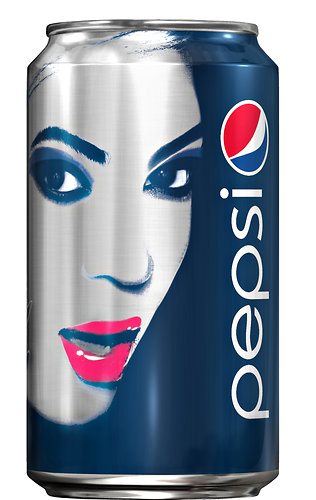
Beyoncé, the pop star, and PepsiCo, the soda company, have signed a new deal to promote each other, reports the New York Times.  The multiyear campaign, estimated to cost $50 million, will bring benefits to both parties. “Pepsi embraces creativity and understands that artists evolve,” explained Beyoncé. “As a businesswoman, this allows me to work with a lifestyle brand with no compromise and without sacrificing my creativity.”


For Pepsi, explains the Times, “the goal is to enhance its reputation with consumers by acting as something of an artistic patron instead of simply paying for celebrity endorsements.”  “Consumers are seeking a much greater authenticity in marketing from the brands they love,” said Brad Jakeman, president of Pepsi’s global beverage group. “It’s caused a shift in the way we think about deals with artists, from a transactional deal to mutually beneficial collaboration.”


Unfortunately, not everyone benefits from such collaboration.  While many factors have contributed to the rise in obesity and diabetes, no product has been more consistently implicated in the rise than the sugary beverages that are the lifeblood of Coke and Pepsi’s profits.  In the first six months of 2012, the two companies spent $148 million to promote their products on TV, radio, print and digital ads, what’s known as measured media.  They spent much more advertising in other countries around the world, nation’s whose obesity and diabetes rates are also rising. 


Can public health advocates play a role in discouraging multimillionaire celebrities from sickening the fans that made them rich?  (According to Celebrity Networth, Beyoncé’s 2012 net worth is  $350 million.)


Credit

Abdul El-Sayed, a social epidemiologist and physician-in-training at the Columbia University School of Public Health, has an idea.  In a recent post on the 2 X 2 Project, a blog of the Department of Epidemiology at Columbia University, he writes an open letter to Lebron James. James, the Miami Heat basketball star, has contracts with Coke and McDonalds.  In his letter, El Sayed writes:


LeBron, your agreement to advertise Sprite for the Coca-Cola Company is worth $16 Million over six years. Let’s do a little math to estimate how much sugar you’ll sell to our kids over that period.


Assuming that Coca-Cola breaks even on the deal (which is at least what it will do), then you should make the company back at least $16 million over six years. Coca-Cola makes about 21 cents on the dollar over all the products it sells, and a 20-ounce Sprite costs $1.39 on average. If Coca-Cola makes the same profit on 20-ounce Sprites, that means that you’ll have sold at least the equivalent of 54.4 million 20-ounce Sprites over the course of your six-year contract. Now, each one of those 20-ounce Sprites has 16 spoons of sugar in it, so LeBron, you’re responsible for selling over a billion spoons of sugar. Not to mention all of the McDonald’s grease you’re selling.


Beyond the billion spoons of sugar and the millions of Big Macs you’ll sell, perhaps the worst impact of your endorsements is the confusion it creates in kids’ minds.


Children see you accomplish extraordinary athletic feats on the basketball court night in and night out. At the same time, though, they see you supporting products their parents and doctors tell them are unhealthy. As young, impressionable children, that creates confusion about what is and is not healthy for them. After all, kids must think, how can Sprite and McDonald’s be unhealthy if LeBron James, the pinnacle of sports, is telling me to buy them?


The open letter to James ends with a plea:


In the end, whether you like it or not, you are a role model in our society. Kids look up to you—many want to be just like you. While it may be unfair to expect that you weigh in on all of society’s problems, you do have particular weight when it comes to this one, which you represent—whether you like it or not—as an athlete. Don’t allow yourself to be used as a tool to confuse the messaging about what is and is not healthy for our kids.


LeBron, if you’re reading this, I know you know how to step it up and lead: I watched you do it in the finals against OKC, and I watched you do it again this summer in London. This is your opportunity to step it up in a bigger way. Be the leader we know you can be, and take a stand against endorsements for companies that are making our kids obese.  Just like on the court, if you lead, others will follow.


El Sayed also asks readers to tweet the article @kingjames with #LebronForTheKids and to post it LeBron’s Facebook wall: https://www.facebook.com/LeBron


The takers: State and local governments subsidize corporations


In his campaign for President, Mitt Romney famously charged that 47% of the American population paid no federal income tax and “are dependent upon government, who believe that they are victims, who believe the government has a responsibility to care for them, who believe that they are entitled to health care, to food, to housing, to you-name-it.”  A new investigation by the New York Times identifies another category of taker: the corporations who take more than $80 billion in subsidies each year from state and local governments. According to the Times, these governments award $9.1 million in corporate subsidies every hour. More than 5,000 companies have been awarded a total of more than $1 million each in local subsidies.   Using the database of state and local government subsidies to corporations created by the New York Times, the table below shows 25 selected companies frequently mentioned in Corporations and Health Watch that received more than $1 million in subsidies.  The largest recipient of local government subsidies was the automobile industry.  The top three US car companies alone received $4.75 billion in local subsidies in the period reviewed by the New York Times.  Most troubling, the Times investigation noted:


A portrait arises of mayors and governors who are desperate to create jobs, outmatched by multinational corporations and short on tools to fact-check what companies tell them. Many of the officials said they feared that companies would move jobs overseas if they did not get subsidies in the United States.   Over the years, corporations have increasingly exploited that fear, creating a high-stakes bazaar where they pit local officials against one another to get the most lucrative packages. States compete with other states, cities compete with surrounding suburbs, and even small towns have entered the race with the goal of defeating their neighbors.


The Times further observed that for many communities, “the payouts add up to a substantial chunk of their overall spending… Oklahoma and West Virginia give up amounts equal to about one-third of their budgets, and Maine allocates nearly a fifth.”  As national, state and local officials debate about how best to balance revenues and expenses, corporate subsidies deserve further scrutiny.  CHW readers can visit the Times searchable database to examine their states’ record or the subsidies received by corporations they are tracking. 


Name of Company

Total Subsidy

Number of Grants

Number of States


General Motors

$1.77 billion

208

16


Ford

$1.58 billion

119

8


Chrysler

$1.4 billion

14

3


Orca Bay Seafood

$296 million

4

1


Fresh Direct

$131 million

9

1


Archer Daniels Midland

$110 million

23

6


Daimler

$101 million

24

8


Toyota Motor Company

$96.5 million

16

5


Pfizer

$92.9 million

44

9


Walmart Stores

$80.5 million

176

23


Merck and Company

$60.7 million

18

5


Coca Cola Bottling

$49 million

61

16


Diageo

$40 million

7

2


Abbott Laboratories

$14.7 million

21

9


Pepsi Cola(various franchises)

$13.3 million

23

9


Jim Beam Brands

$10.8 million

7

1


Philip Morris USA

$8.06 million

5

2


Remington Arms Company

$8.32 million

13

3


Millercoors

$7.46

7

4


Smith & Wesson

$6.16 million

9

1


Lorillard Tobacco Company

$5.5 million

2

1


Anheuser-Busch

$4.62 million

2

2


Cargill

$4.4 million

9

5


Reynolds Tobacco Company

$3.09 million

1

1


Pernod Ricard

$1 million

1

1