The uptick in mass shootings over the past few years has led to widespread calls for gun reform and the defeat of pro-gun lobbyist groups opposing it. Since the gun lobby currently employs many of the same tactics used by the powerful tobacco lobby, some have reasoned that the same blueprint used to weaken the big tobacco lobby could work for guns. Though the two lobbying groups—tobacco and guns—use similar strategies, the issues they represent are fundamentally different and require different game plans to defeat. An article in The Harvard Political Review, a journal published by Harvard undergraduates, explains the rationale for taking different approaches.
Engaging Young People in Countermarketing Unhealthy Food: The Youth Food Educators Toolkit

Image from YOFE Countermarketing Campaign
This guide provides resources and lessons plans for youth organizations, food groups, schools and health departments that want to engage young people in taking action to reduce the demand for unhealthy food. Based on two years’ experience of the Youth Food Educators (YOFE) Program, a project of the City University of New York Urban Food Policy Institute, the guide summarizes what has been learned from these experiences. More than two decades of tobacco control have shown that countermarketing is effective in reducing youth smoking rates. Countermarketing describes health communications strategies designed to reduce the demand for unhealthy products by exposing the motives of their producers and portraying their marketing activities as outside the boundaries of civilized corporate behavior. This guide describes how young people can use this strategy to reduce the demand for processed food products high in sugar, unhealthy fats and salt.
Standardised tobacco packaging: a health policy case study of corporate conflict expansion and adaptation
Writing in BMJ Open, investigators conclude that the multifaceted opposition to standardised packaging in the United Kingdom was primarily undertaken by third parties with financial relationships with major tobacco manufacturers. Low levels of transparency regarding these links created a misleading impression of diverse and widespread opposition. Countries should strengthen implementation of Article 5.3 of the FCTC by systematically requiring conflict of interest declarations from all organisations participating in political or media debates on tobacco control.
Full citation: Hatchard JL, Fooks GJ, Gilmore AB. Standardised tobacco packaging: a health policy case study of corporate conflict expansion and adaptation. BMJ Open. 2016 Oct 7;6(10):e012634.
How the Alcohol Industry Relies on Harmful Use of Alcohol and Works to Protect Its Profits
The alcohol industry have attempted to position themselves as collaborators in alcohol policy making as a way of influencing policies away from a focus on the drivers of the harmful use of alcohol (marketing, over availability and affordability). Their framings of alcohol consumption and harms allow them to argue for ineffective measures, largely targeting heavier consumers, and against population wide measures as the latter will affect moderate drinkers. The goal of their public relations organizations is to ‘promote responsible drinking’. However, analysis of data collected in the International Alcohol Control study and used to estimate how much heavier drinking occasions contribute to the alcohol market in five different countries shows the alcohol industry’s reliance on the harmful use of alcohol. In higher income countries heavier drinking occasions make up approximately 50% of sales and in middle income countries it is closer to two-thirds. It is this reliance on the harmful use of alcohol which underpins the conflicting interests between the transnational alcohol corporations and public health and which militates against their involvement in the alcohol policy arena. Full
Citation: Caswell S, Callinan S, Chaiyasong S, Cuong PV, Kazantseva E, Bayandorj T, Huckle T, Parker K, Railton R, Wall M. How the alcohol industry relies on harmful use of alcohol and works to protect its profits. Drug Alcohol Rev 2016; 00:000–000
Trump Team’s Ag Talking Points

Politico has obtained a list of talking points that offer a roadmap on how President-elect Donald Trump’s Agriculture secretary could shape agricultural policies, including the sweeping promise to “defend American agriculture against its critics, particularly those who have never grown or produced anything beyond a backyard tomato plant.” The document, provided by a source close to the Trump transition, was created for members of Trump’s Agriculture Advisory Committee and appears to date to the campaign.
With Trump Win, Gun Sellers See Win — And Loss
It’s no secret that Donald Trump campaigned as a champion of gun rights, but a Trump administration poses both welcome relief and an immediate problem for the gun industry, reports NPR’s Morning Edition. For Larry Cavener, who recently visited a new gun shop Tactical Advantage in Overland Park, Kan., this election means he can breathe easier. “This means that we’re not gonna be under siege for a few years, and it seems like it has been,” Cavener says. But the Obama years have actually been awesome for the U.S. gun industry. It’s roughly doubled in size, according to the National Shooting Sports Foundation, an industry trade group.
Corporations and Health Under Trump
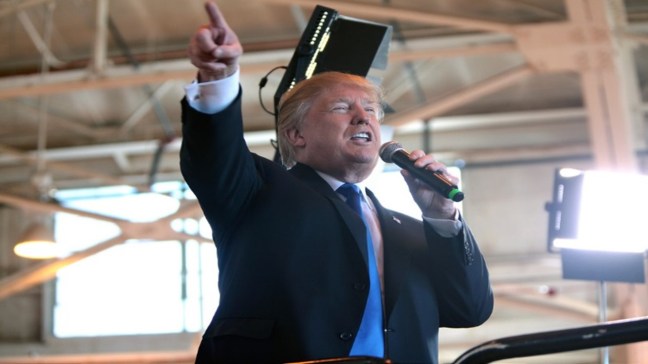
The election of Donald Trump is expected to bring about significant changes in how the federal government regulates corporations to protect public health and the environment. It will take some time to analyze what changes are likely and how public health advocates can respond most effectively. To begin that analysis, Corporations and Health Watch highlights some of the first such assessments.
What President Donald Trump Will Mean for U.S. Food Policy
President-elect Donald Trump made a few issues central to his platform: immigration, taxes, and healthcare among them. Food policy has gone largely ignored, though Trump’s statements on other issues will certainly inform the way food policy will look for the next four years — and possibly beyond that, writes Virginia Chambee for Eater. Trump has been especially vocal about immigration. His plan to build a wall on the southern border of the U.S. will likely hit the agricultural and restaurant industry hard. He has called climate change a “hoax,” which means it likely won’t be high on his list of priorities; this could be devastating for farmers. When it comes to minimum wage, Trump believes it’s an issue best left up to states (so don’t expect a higher federal minimum any time soon). And on employee benefits, Trump wants to repeal President Obama’s Affordable Care Act, but is seemingly in favor of paid maternity leave (though it’s unclear if that plan will cover single mothers). Chamlee takes a closer look at where Trump stands on policies related to food safety, agriculture, and workers’ rights.
Trump Expected to Seek Deep Cuts in Business Regulations
Hours after Donald J. Trump won the race for the White House, scores of regulations that have reshaped corporate America in the last eight years suddenly seemed vulnerable, writes The New York Times. While many questions remain about how Mr. Trump will govern, a consensus emerged Wednesday in many circles in Washington and on Wall Street about at least one aspect of his impending presidency: Mr. Trump is likely to seek vast cuts in regulations across the banking, health care and energy industries. “This is going to be a president who will be the biggest regulatory reformer since Ronald Reagan,” Stephen Moore, one of Mr. Trump’s economic advisers said in an interview on Wednesday. “There are just so many regulations that could be eased.”
Get Used To High Drug Prices As Big Pharma Emerges From Election Stronger Than Ever
On the campaign trail, Hillary Clinton, Bernie Sanders, and Donald Trump agreed on at least one thing: the need to control America’s spiraling costs of prescription drugs, writes Buzz Feed News. But after Tuesday’s election, the likelihood of drug pricing reform seems small. In California, Big Pharma spent more than $100 million to help defeat a ballot measure that would have pegged the state’s drug purchases to the discount rates currently offered to the Veterans Administration (VA).
That’s not to say that Big Pharma is thrilled with president-elect Trump, who has suggested that the huge Medicare program, which provides health insurance for senior citizens, should be able to negotiate prices with drug companies — something that’s currently prohibited by law. But with both houses of Congress remaining firmly under GOP control, legislation to shake up drug pricing seems unlikely. And specific plans proposed by Clinton, including fines for companies that jacked up prices without clear justification, are now off the table.
Blacklisted Businesses: Social Activists’ Challenges and the Disruption of Corporate Political Activity
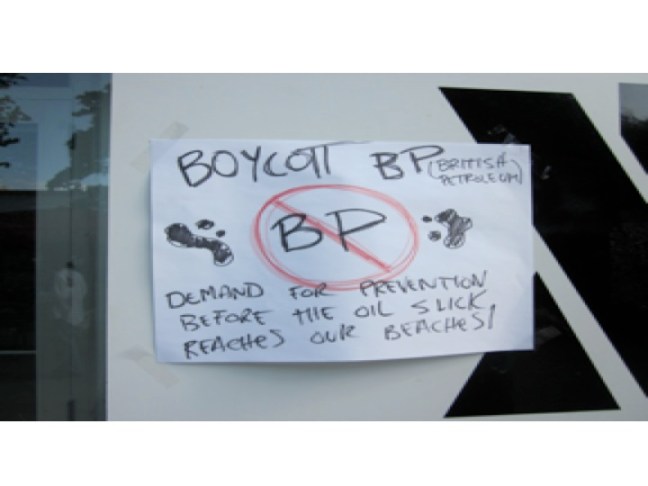
A new paper explores whether and how social activists’ challenges affect politicians’ willingness to associate with targeted firms. The authors study the effect of public protest on corporate political activity using a unique database that allows them to analyze empirically the impact of social movement boycotts on three proxies for associations with political stakeholders: the proportion of campaign contributions that are rejected, the number of times a firm is invited to give testimony in congressional hearings, and the number of government procurement contracts awarded to a firm. The authors show that boycotts lead to significant increases in the proportion of refunded contributions, as well as decreases in invited congressional appearances and awarded government contracts. These results highlight the importance of considering how a firm’s sociopolitical environment shapes the receptivity of critical non-market stakeholders.
Nutrition and marketing of baby and toddler food and drinks
Birth to two years is a critical period for developing healthy food preferences and eating habits and preventing childhood obesity. Baby Food FACTS, a new report by the Rudd Center for Food Policy and Obesity provides a comprehensive analysis of the nutritional content of food and drink products marketed to parents for their babies and toddlers (up to age 3), the messages used to promote these products, and how well the marketing messages correspond with expert advice about feeding young children. However, baby and toddler food and drink products and the marketing messages used to promote them do not always support experts’ recommendations for feeding babies and toddlers.
Why Tobacco Companies Are Spending Millions To Boost A Cigarette Tax
For many Missouri health advocates, an increase in the state’s tobacco tax is long overdue. But, according to the California public radio station KCLU, onlookers might be surprised to hear that tobacco companies are spending a fortune this election year to get one or another increase in that tax passed, while health groups are urging a no vote. Groups like Tobacco Free Missouri, the Health Care Foundation of Greater Kansas City and Campaign for Tobacco-Free Kids have joined fiscal conservatives in opposing Amendment 3. These anti-smoking groups worry that creating such a small tax now might eliminate the chance of future tax that would be big enough to significantly change smokers’ behavior.
 Corporations and Health Watch
