Bending in the Breeze: American Class Actions in the Twenty-First Century

Credit Abovethelaw.com

Writing in the DePaul Law Review, Richard Marcus observes that it is always better to have the breeze at your back, but that surely has not recently been the case for class action proponents. At the risk of overstating, there is a certain fin de siècle flavor to current procedural discussions, at least among academics; it seems that several foundational principles of late twentieth century procedural ordering have come under attack in the twenty-first century. Although not alone among those principles, class actions have a prominent role. Dean Robert Klonoff has recently written of “The Decline of Class Actions,” and Professor Linda Mullenix has written of “Ending Class Actions as We Know Them.” Professor Arthur Miller-who was present at the creation of the modern class action-has suggested that we face “the death of aggregate litigation by a thousand paper cuts.” But he, at least, sees some “rays of light that indicate it will survive.” …
Continue reading Bending in the Breeze: American Class Actions in the Twenty-First Century
Sponsorship of National Health Organizations by Two Major Soda Companies

The beverage giants Coca-Cola and PepsiCo have given millions of dollars to nearly 100 prominent health groups in recent years, reports The New York Times, while simultaneously spending millions to defeat public health legislation that would reduce Americans’ soda intake, according to public health researchers. The Times story is based on a new report in the American Journal of Preventive Medicine.

That study “investigates the nature, extent, and implications of soda company sponsorship of U.S. health and medical organizations, as well as corporate lobbying expenditures on soda- or nutrition-related public health legislation from 2011 to 2015… From 2011 to 2015, the Coca-Cola Company and PepsiCo were found to sponsor a total of 96 national health organizations, including many medical and public health institutions whose specific missions include fighting the obesity epidemic.

Continue reading Sponsorship of National Health Organizations by Two Major Soda Companies

Medical device makers rally to save their ‘go-to guy’ in Congress

With lawmakers bearing down on drug and device companies over prices, the industry can’t afford to lose any friends on Capitol Hill, writes STAT, an online news service on the medical industry.  And when it comes to medical devices, the industry might not have a better friend than Minnesota Congressman Erik Paulsen. Paulsen, a four-term Republican, has long been device makers’ “go-to guy” in Washington, helping secure a two-year delay of the Affordable Care Act’s tax on medical devices and pursuing reforms that could help the industry. But this year, Donald Trump is threatening to drag Paulsen down. So device makers are stepping in and pouring money into his campaign to save him.

Offshore Shell Games 2016 The Use of Offshore Tax Havens by Fortune 500 Companies

By Richard Phillips, Citizens for Tax Justice; Matt Gardner, Institute on Taxation and Economic Policy; Kayla Kitson, Institute on Taxation and Economic Policy; Alexandria Robins, U.S. PIRG Education Fund; and Michelle Surka, U.S. PIRG Education Fund

U.S.-based multinational corporations are al­lowed to play by a different set of rules than small and domestic businesses or individu­als when it comes to paying taxes. Corporate lobbyists and their congressional allies have riddled the U.S. tax code with loopholes and exceptions that enable tax attorneys and corpo­rate accountants to book U.S. earned profits to subsidiaries located in offshore tax haven coun­tries with minimal or no taxes. The most trans­parent and galling aspect of this is that often, a company’s operational presence in a tax haven may be nothing more than a mailbox. Overall, multinational corporations use tax havens to avoid an estimated $100 billion in federal in­come taxes each year.

Continue reading Offshore Shell Games 2016 The Use of Offshore Tax Havens by Fortune 500 Companies

Diageo’s ‘Stop Out of Control Drinking’ Campaign in Ireland: An Analysis

It has been argued that the alcohol industry uses corporate social responsibility activities to influence policy and undermine public health, and that every opportunity should be taken to scrutinise such activities. This study analyses a ‘responsible drinking’ campaign (“Stop out of Control Drinking”, or SOOCD) sponsored in Ireland by Diageo, one of the world’s largest alcohol companies. The study aims to identify how the campaign and its advisory board members frame and define (i) alcohol-related harms, and their causes, and (ii) possible solutions. The authors conclude that The ‘Stop Out of Control Drinking’ campaign frames alcohol problems and solutions in ways unfavourable to public health, and closely reflects other Diageo Corporate Social Responsibility (CSR) activity, as well as alcohol and tobacco industry strategies more generally. This framing, and in particular the framing of alcohol harms as a behavioural issue, with the implication that consumption should be guided only by self-defined limits, may not have been recognised by all board members. It suggests a need for awareness-raising efforts among the public, third sector and policymakers about alcohol industry strategies.

Citation: Petticrew M, Fitzgerald N, Durand MA, Knai C, Davoren M, Perry I (2016) Diageo’s ‘Stop Out of Control Drinking’ Campaign in Ireland: An Analysis. PLoS ONE 11(9): e0160379. doi:10.1371/journal.pone.0160379

Nearly 200 Music Industry Artists, Executives Demand Stricter Gun Control Laws

Almost 200 leading music industry figures have signed an open letter demanding Congress to pass bills for stricter gun control laws, including legislation that will prevent potentially dangerous individuals from purchasing firearms, reports The Wrap.  Lin-Manuel Miranda, Paul McCartney, Jennifer Lopez, Lady Gaga, and Demi Lovato were just a few of the names on the list. “As leading artists and executives in the music industry, we are adding our voices to the chorus of Americans demanding change,” the letter published by Billboard reads.

Colombia orders NGO to suspend health message on dangers of sugary drinks

Image from ad

Writing for the blog of Georgetown University’s O’Neill Institute for National and Global Health, Sarah Roache reported that the Colombian government recently ordered an NGO, Educar Consumidores, to suspend a television advertisement on the health risks associated with drinking sugary beverages. The order to pull the ad followed a complaint from Colombia’s largest beverage company and Pepsi affiliate, Gaseosas Postobon, which claimed the ad misled consumers in breach of Colombian law. The “Tomala en Serio television ad shows a man drinking sugary beverages throughout the day: a bottled juice in the morning, an iced tea at lunch time, and sodas in the evening. The images are accompanied by graphics showing how many teaspoons of sugar are in each drink.

Continue reading Colombia orders NGO to suspend health message on dangers of sugary drinks

Furor Over Drug Prices Puts Patient Advocacy Groups in Bind

Public anger over the cost of drugs has burned hot for a year, writes The New York Times, coursing through social media, popping up on the presidential campaign, and erupting in a series of congressional hearings, including one last week over the rising price of the allergy treatment EpiPen. But one set of voices has been oddly muted — the nation’s biggest patient advocacy groups. The groups wield multimillion-dollar budgets and influence on Capitol Hill, but they have been largely absent in the public debate over pricing.  But critics say that by avoiding the debate over cost, they are failing in their patient-advocacy duties. “It is a conflict of interest, because the interests of the pharmaceutical industry, from whom they are getting support, may be different from the interests of the patients,” said Dr. Michael Carome, the director of the Health Research Group at Public Citizen, a consumer advocacy group.

Hooked for Life How Weak Policies on Added Sugars Are Putting a Generation of Children at Risk

Extensive research shows that diets high in sugary foods and beverages are associated with increased risk of tooth decay, obesity, diabetes, cardiovascular disease, high cholesterol, and hypertension. But despite the overwhelming evidence linking sugar with negative health outcomes, federal policy has not fully acted on the best-available science to reduce added sugars in children’s diets. Continue reading Hooked for Life How Weak Policies on Added Sugars Are Putting a Generation of Children at Risk

Pharma lobbying held deep influence over opioid policies

photo credit

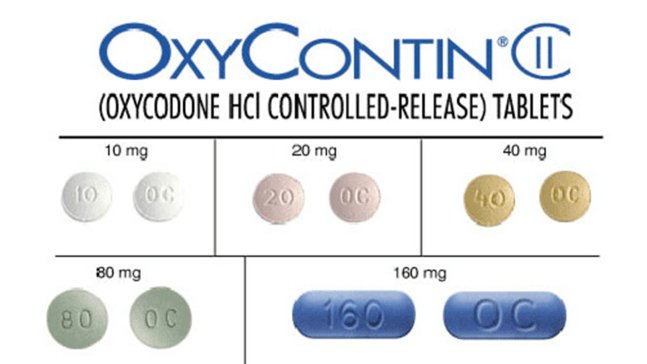
A two-part series by the Associated Press and the Center for Public Integrity investigated the influence of pharmaceutical companies on state and federal policies regarding opioids, the powerful painkillers that have claimed the lives of 165,000 people in the U.S. since 2000. Reporters tracked proposed laws on the subject and analyzed data on how the companies and their allies deployed lobbyists and contributed to political campaigns.

Continue reading Pharma lobbying held deep influence over opioid policies