Defining Appropriate Roles for Corporations in Public Health Research and Practice

Does industry sponsorship of health research influence the public health research agenda? Does it shape public health policy and priorities? In an editorial commentary on the report by  Fabbri et al. that is summarized above, Freudenberg notes that developing comprehensive and effective responses that can mitigate or prevent the harmful practices of lethal but legal industries is a vital public health priority. Corporate practices have become primary social determinants of premature death and preventable illnesses from noncommunicable diseases, injuries, and environmental exposures. Modifying harmful practices is a practical strategy for promoting health and reducing health inequalities. What additional research is needed to integrate the finding of Fabbri et al. on the impact of corporate sponsorship of research into a deeper understanding of the cumulative impact of the many industry practices that influence population health?  Several topics have recently attracted research attention. How can public health researchers best reduce conflicts of interest? Conflicts of interest occur when the public obligations of researchers, government officials, or corporations conflict with their private interests. Undetected or undisclosed conflicts of interest taint the validity of findings and threaten the credibility of public  health researchers. In an era when trust in many forms of authority is declining, industry affiliations that pose conflicts of interest could jeopardize the capacity of public health professionals to communicate credibly with the public to address future public health crises.

Another task is to define and assess appropriate roles for industry in setting public health policy. In the case of tobacco, the World Health Organization used the Framework Convention on Tobacco Control to draw a clear boundary for the industry role in shaping public policy. Should this approach also apply to the food, alcohol, and other industries? Or, as industry representatives argue, are the products of these industries so different from tobacco as to suggest another approach? Research that compares the practices of these industries as well as their products may provide more useful evidence for setting policies. Finally, policy research that compares the longer-term impact on the population health of various regulatory regimes can provide policymakers with the evidence needed to find an appropriate balance between government  and industry roles.

Citation: Freudenberg N. Defining Appropriate Roles for Corporations in Public Health Research and Practice. Am J Public Health. 2018 Nov;108(11):1440-1441
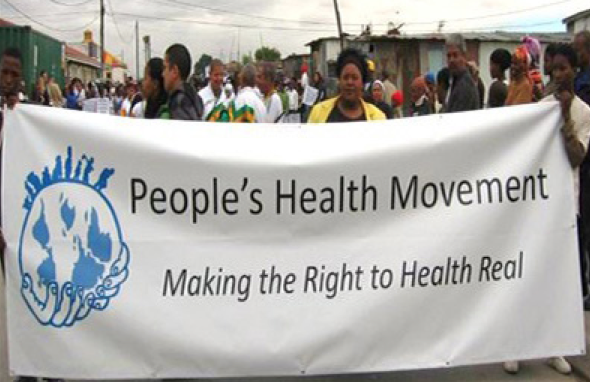
People’s Health Movement: A Call to Action on Nutrition, Food Security and Food Sovereignty

Screen Shot 2018-09-12 at 10.19.51 PM

Credit

In a commentary, in World Nutrition,  David Sanders, Claudio Schuftan, and Vandana Prasad write, “There are common roots underlying both under and ‘over-nutrition’ in our globalized world. These pertain to the impact on food systems of current practices related to food production, processing, manufacture, distribution, trade and commerce, as well as to the power differentials between those who are most affected by and those who benefit most from the current food system.

The unregulated penetration of food and beverage companies and the aggressive marketing of processed and ultra-processed foods have been severely compounding the problem of malnutrition and the underlying food insecurity.  This process is driven by mega agribusiness conglomerates and transnational food and beverage corporations through the employment of technologies and practices that are energy intensive and ecologically unsustainable, and that are also implicated in environmental degradation and climate change… In sum, malnutrition in all its forms, food insecurity and the erosion of food sovereignty are all socially and politically determined.  It is inadequate to acknowledge the continuing crisis of malnutrition and the inequalities it engenders without addressing their political roots and the conditions that perpetuate this.”

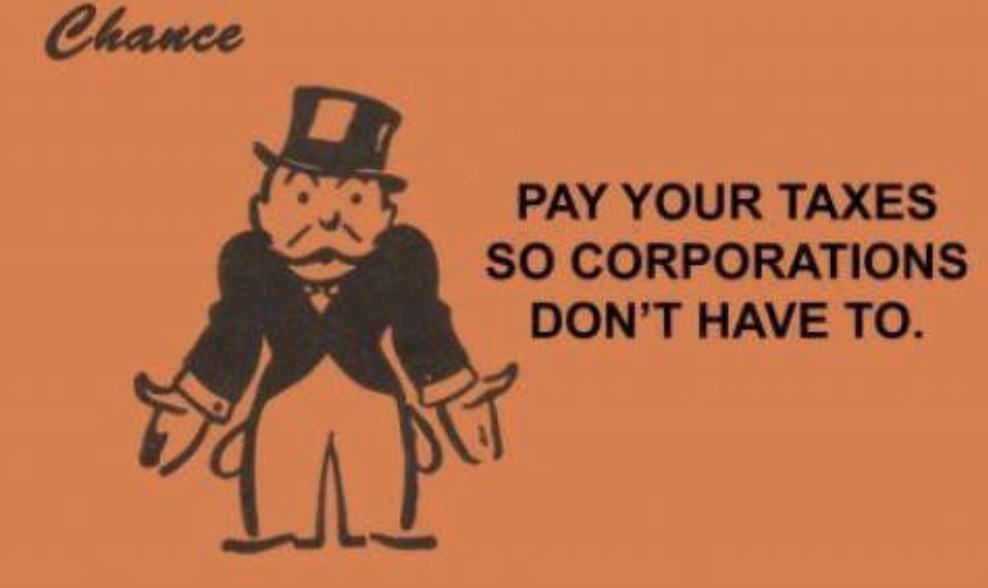
Public Health and Corporate Avoidance of U.S. Federal Income Tax

065A5C2A-0945-43EA-9425-A2F1FDA4ED7C

Credit

The amount of U.S. federal revenue affects the government’s ability to provide public health services, programs, infrastructure, and research to adequately protect the public’s health. Public health funding shortages are chronic. Corporate income tax avoidance is one source of unrealized federal tax revenue that, if collected and allocated to public health, could help offset those shortages. Major corporate methods of tax avoidance, their effect on federal revenue, and recommended policy changes are described. Corporate tax avoidance and government revenue shortages are framed as social determinants of health, and research questions and data sources for public health researchers for examining the issue are suggested. Although there is no guarantee that any additional corporateincome tax revenue would be directed to public health, the subject warrants the attention of public health researchers and policy advocates. The United States serves as a case study for public professionals in other countries to conduct similar analyses.

Citation:  Wiist, WH. Public Health and Corporate Avoidance of U.S. Federal Income Tax . World Medical & Health Policy. First published: 20 August 2018. https://doi.org/10.1002/wmh3.274

E-cigarette maker Juul targeted teens with false claims of safety, lawsuit says

Screen Shot 2018-08-02 at 10.28.34 PM

A Juul in the hand…(credit)

When a San Diego-based mother posted an emergency alert on Nextdoor, a community discussion app, she hoped a Good Samaritan could help, according to court filings, reports The Washington Post.  Her son was hysterical after losing a flash drive with his homework near the local McDonald’s, she wrote, uploading a photo along with the message. A neighbor quickly replied, explaining that the chewing-gum-sized object in the picture was not a flash drive: It was a Juul vaping device. “That’s just an indication of how quickly Juuls became prevalent,” recounted Esfand Nafisi, a lawyer who is handling two of three lawsuits initiated against Juul Labs last month. “You blinked your eye, and suddenly they were all over the place.”

“I think Juul has been insincere from the very beginning in saying it’s only for adult smokers,” said Robert Jackler, principal investigator at a Stanford University School of Medicine program that studies the impact of tobacco advertising. He noted that Juul Labs executives have boasted that they run “the most educated company, the most diligent, the most well-researched.”

Two recent court cases challenge Juul’s practices.

Read the complaintfiled against Juul in United States District Court Southern District of New York in June 2018.

Read the complaintfiled in United States District Court District of Northern California in April 2018.

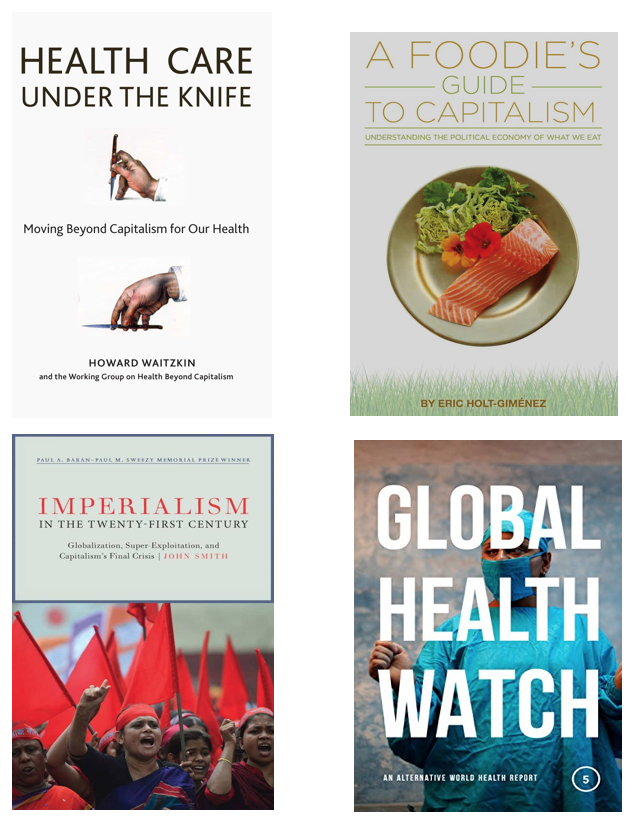
Four Recent Books on the Political Economy of Global Health

Screen Shot 2018-07-25 at 12.44.34 PM

Four recent books dealing with the political economy of global health are reviewed in a recent issue of Critical Public Health.  Drawing on the material covered in these sources, the reviewer argues that the concepts of capitalism, imperialism and class (at the national and global levels) are fundamental to a critical public health in the present era of economic globalization.

Analysis of corporate political activity strategies of the food industry: evidence from France

Screen Shot 2018-07-18 at 9.26.43 PM

A new study in  Public Health Nutrition  analyzed the corporate political activity (CPA) of major food industry actors in France. The  analysis shows that the main practices used by Coca-Cola and McDonald’s were the framing of diet and public health issues in ways favorable to the company, and their involvement in the community. The French National Association of Agribusiness Industries primarily used the ‘information and messaging’ strategy (e.g. by promoting deregulation and shaping the evidence base on diet- and public health-related issues), as well as the ‘policy substitution’ strategy. Nestlé framed diet and public health issues and shaped the evidence based on diet- and public health-related issues. Carrefour particularly sought involvement in the community. The authors found that, in 2015, the food industry in France was using CPA practices that were also used by other industries in the past, such as the tobacco and alcohol industries. Because most, if not all, of these practices proved detrimental to public health when used by the tobacco industry, we propose that the precautionary principle should guide decisions when engaging or interacting with the food industry.

Obstetrician-Gynecologists and Industry Let the Sunshine In!

Screen Shot 2018-07-11 at 8.47.57 PM


Credit

“What is an ethically responsible relationships between obstetrician-gynecologists(ob-gyns) and the pharmaceutical and medical device industries”, asks Lewis Wall in an editorial in Obstetrics & Gynecology?  He notes the inherent conflicts between the worldview of the pharmaceutical-medical device industry, where pursuit of profit overrides all other considerations, and the overriding obligation of physicians to put the health interests of their patients first.  When the trust that obligation engenders is lost, he writes “medical practice breaks down.”

Industry Payments to Obstetricians and Gynecologists Under the Sunshine Act

Another article in Obstetrics & Gynecology examines industry payments to ob-gyns. To evaluate financial relationships between obstetrician–gynecologists (ob-gyns) and industry, including the prevalence, magnitude, and the nature of payments, the authors of this report conducted a cross-sectional study using a list of industry contributions to U.S. obstetricians and gynecologists obtained through the Centers for Medicare and Medicaid Services Open Payments Database from August 1, 2013, to December 31, 2015. They concluded that obstetricians and gynecologists receive a substantial amount of payments from industry. Most of these payments were for honoraria, faculty compensation, or consulting and totaled less than $400 per health care provider. Although this total amount is less than typically received by surgical providers, the median payment value for obstetrics and gynecology subspecialists surpasses the median payment to orthopedic surgeons, the highest compensated specialty group in total. These financial relationships warrant further exploration with future research.

How a flood of corporate funding can distort NIH research

Screen Shot 2018-06-28 at 7.38.46 PM


Credit

“This month, National Institutes of Health Director Francis Collins seemed to shut down a noxious ethical problem,” writes Paul Thacker, a former Senate staff member,  in The Washington Post. “The agency released a 165-page internal investigation of an alcohol consumption study that had been funded mostly by beer and liquor companies. The study’s lead investigator and NIH officials were in frequent contact with the alcohol industry while designing the study, which, according to the postmortem, seemed predetermined to find alcohol’s benefits but not potential harms, such as cancer. In several email exchanges published in the report, NIH scientists seemed to joke about taking a drink every time somebody said “cheers,” which was a proposed acronym for their study. Collins ended the trial and promised to create new ethical boundaries for how NIH officials deal with industry.  But the intellectual corruption at our government research agencies runs much deeper, and this was only the latest scandal involving hidden corporate influence. I spent 3 1 / 2 years as a Senate investigator studying conflict-of-interest problems at the NIH and the research universities it funds. During that time, I found that the agency often ignored obvious conflicts. Even worse, its industry ties go back decades and are never really addressed unless the agency faces media scrutiny and demands from the public and Congress for change.”

Corporate Efforts to Derail Mass Transit

Screen Shot 2018-06-22 at 10.30.05 PM

Credit

In 1985, two urban policy scholars, J. Allen Whitt and Glenn Yago,  wrote:

The urban transportation systems that carry us around are not solely the result of technological innovation or efficiency. They are also a product of the rising and sinking political and market power of industrial interest groups, the changing relations among social classes, the politics of urban development struggles, and the inherent dynamics of the economic system… These factors, particularly corporate control of transportation policy, have profoundly shaped urban streetcar, automobile, bus, and rail transport in the United States during this century. We conclude that this private dominance over urban transportation policy has often led to narrow, profit-seeking behavior that has thwarted the development of more effective public transit.

This week, The New York Times reported that in the last few years Americans for Prosperity, the conservative group financed by oil billionaires Charles and David Koch has contributed hundreds of thousands of dollars to defeat plans to expand or improve mass transit in  Little Rock, Phoenix, Nashville, southeast Michigan,  and central Utah. The group has also contributed to effort to defeat more than two dozen transit-related measures such as states proposals to raise gas taxes to fund transit or transportation infrastructure.

“Stopping higher taxes is their rallying cry”,  Ashley Robbins a transportation researcher at Virginia Tech, told The New York Times. “But at the end of the day, fuel consumption helps them.”   Although Americans for Prosperity opposes pubic spending on mass transit, it supports spending tax money on highways and roads.  Koch brother-owned industries produce gasoline, asphalt, seatbelts, tires and other auto parts, businesses that could be harmed by new investments in mas transit.

Public health research shows that improving mass transit and reducing automobile use can  bring multiple health and environmental benefits:  less premature mortality from lung disease, fewer asthma symptoms, more physical activity and less sedentary time, fewer injuries and deaths from auto crashes, more social interactions and less isolation, less road rage, more walkable and attractive  cities, less air pollution, reduced carbon emissions, less urban sprawl.

Despite these benefits, for more than a century public policy at the federal, regional, state and local levels has been disproportionately influenced by commercial interests that favor increased automobile use over the well-being of our population and our environment.  Public health professionals and researchers need to explore new ways to bring this debate about democracy, health and the environment into the policy and political arenas.

A Bid to Increase Gun Exports, Stalled After Sandy Hook, Moves Ahead

Screen Shot 2018-05-31 at 7.27.42 AM


Credit

When cigarette, Coca Cola or whiskey sales fall in the United States, manufacturers look to recoup their losses by promoting sales of their lethal but legal products overseas, especially to the growing middle classes in middle income nations like China, Brazil, Mexico and India.  Now the Trump administration wants to streamline the process for exporting American firearms, reports the New York Times,  a change sought for years by domestic gun companies as a way to increase sales of both military weapons and small arms.

“A proposed rule published in the Federal Register would transfer jurisdiction of consumer gun exports from the State Department, where the licensing process is expensive and extensive, to the Commerce Department, which has a simpler application process.

Gun industry groups said that the shift, which was first conceived during the Obama administration but halted after the Sandy Hook school shooting in 2012, would pare down a bureaucratic process that currently discourages American firearms companies from sending their products abroad.

Lawrence Keane of the National Shooting Sports Foundation called the proposal “a significant positive development for the industry that will allow members to reduce costs and compete in the global marketplace more effectively, all while not in any way hindering national security.”

But critics of the proposal worry that American guns, including AR-15s and similar semiautomatic rifles frequently used in mass shootings, could more easily find their way into the hands of foreign criminals. Among the reasons: a change in the disclosure rules for certain sales. The State Department is required by the Arms Export Control Act to submit any commercial arms sale worth $1 million or more to congressional review. The Commerce Department has no equivalent mandate.”

Firearm sales in the United States have struggled since President Trump, a vocal supporter of the gun industry, was elected. Fears of gun control, which helped propel demand to record highs during the Obama administration, have waned during Mr. Trump’s tenure.

Representative Elizabeth Esty, whose Connecticut district includes Newtown, said on Wednesday that she would try to “stop this if I can.” “This is a national security and diplomacy question, but moving it to Commerce makes it an economic promotion of an industry,” she said. “It’s putting profits ahead of people.”