The palm oil industry and noncommunicable diseases

Screen Shot 2019-03-13 at 8.41.06 PM

Rainforest cleared for palm oil planting in Indonesia Credit

Large-scale industries do not operate in isolation, but have tangible impacts on human and planetary health. An often overlooked actor in the fight against noncommunicable diseases is the palm oil industry, reports a new article in  the Bulletin of the World Health Organization.  The dominance of palm oil in the food processing industry makes it the world’s most widely produced vegetable oil. The authors applied the commercial determinants of health framework to analyze the palm oil industry. They highlight the industry’s mutually profitable relationship with the processed food industry and its impact on human and planetary health, including detrimental cultivation practices that are linked to respiratory illnesses, deforestation, loss of biodiversity and pollution. This analysis illustrates many parallels to the contested nature of practices adopted by the alcohol and tobacco industries. The article concludes with suggested actions for researchers, policy-makers and the global health community to address and mitigate the negative impacts of the palm oil industry on human and planetary health.

Citation: Kadandale S, Marten R, Smith R. The palm oil industry and noncommunicable diseases. Bulletin of the World Health Organization.2019;97(2):118.

Other recent reports on the palm oil industry:

Lustgarten A. Palm Oil Was Supposed to Help Save the Planet. Instead It Unleashed a Catastrophe. New York Times Sunday Magazine Nov. 25, 2018, p. 42.

Rainforest Action Network. Profits Over People and Planet Not ‘Performance With Purpose’ Exposing Pepsico’s Real Agenda, 2017.

Tullis P. How the world got hooked on palm oil. The Guardian, February 19, 2019.

 

New Studies Show Social Media Food Advertising of Unhealthy Foods and Fast Food Portion Size Increase Health Risks

Screen Shot 2019-03-08 at 7.38.17 AM

Credit

Two recent articles show how food company practices contribute to unhealthy eating and  high rates of obesity and diet-related diseases.  The firs article  in Pediatrics conducted an experiment to examine the impact of social media influencer marketing of healthy and unhealthy foods on children’s food intake.  

The study found that children after viewing social media influencers consuming unhealthy snacks , children significantly increased overall intake of calories and of unhealthy snacks specifically compared with children who viewed influencers with nonfood products. Viewing influencers with healthy snacks did not significantly affect intake.

The authors conclude that popular social media influencer promotion of food affects children’s food intake. Influencer marketing of unhealthy foods increased children’s immediate food intake, whereas the equivalent marketing of healthy foods had no effect. Increasing the promotion of healthy foods on social media may not be an effective strategy to encourage healthy dietary behaviors in children.

A forthcoming article in the Journal of the Academy of Nutrition and Dietetics compared changes over time across menu categories such as entrées, sides, and desserts in fast-food menu items over 30 years.  US national survey data shows fast food accounted for 11% of daily caloric intake in 2007-2010. Fast-food entrées, sides, and dessert menu item data for 1986, 1991, and 2016 were compiled from primary and secondary sources for 10 popular fast-food restaurants.

The authors found that from 1986 to 2016, the number of entrées, sides, and desserts for all restaurants combined increased by 226%. Portion sizes of entrées and desserts, but not sides, increased significantly, and the energy and sodium of items in all three menu categories increased significantly. Desserts showed the largest increase in energy, and entrées had the largest increase in sodium. Calcium increased significantly in entrées and to a greater extent in desserts, but not sides, and iron increased significantly only in desserts.

The authors concluded that these results demonstrate broadly detrimental changes in fast-food restaurant offerings over a 30-year span including increasing variety, portion size, energy, and sodium content. Research is needed to identify effective strategies that may help consumers reduce energy intake from fast-food restaurants as part of measures to improve dietary-related health issues in the United States.

Citations:  Coates AE, Hardman CA, Halford JCG, Christiansen P, Boyland EJ.  Social Media Influencer Marketing and Children’s Food Intake: A Randomized TrialPediatrics. 2019 Mar 4. pii: e20182554.

McCrory MA, Harbaugh AG, Appeadu S, Roberts SB. Fast-Food Offerings in the United States in 1986, 1991, and 2016 Show Large Increases in Food Variety, Portion Size, Dietary Energy, and Selected Micronutrients. Journal of the Academy of Nutrition and DieteticsDOI: https://doi.org/10.1016/j.jand.2018.12.004

Towards quantifiable metrics warranting industry-wide corporate death penalties

Screen Shot 2019-02-28 at 8.34.10 AM

Cholla power plant near Joseph City, Arizona, photographed on Jan. 16, 2010.PDTillman/Wikipedia

In the singular search for profits, some corporations inadvertently kill humans. If this routinely occurs throughout an industry,  this company  may no longer serve a net positive social purpose for society and should be eliminated. This article provides a path to an objective quantifiable metric for determining when an entire industry warrants the corporate death penalty. First, a theoretical foundation is developed with minimum assumptions necessary to provide evidence for corporate public purposes. This is formed into an objective quantifiable metric with publicly-available data and applied to two case studies in the U.S.: the tobacco and coal mining industries. The results show the American tobacco industry kills 4 times more people per year than it employs, and the American coal-mining industry kills more than one American every year for every coal miner employed. The results clearly warrant industry-wide corporate death penalties for both industries in America. Future work is discussed to ensure industries only exist to benefit humanity in all the societies in which they operate.

“If we know that life trumps employment because you have to be alive to work,” author Joshua Pearce of Michigan Techological University told  Michigan Tech News, “then for a company or industry to exist it must employ more people than it kills in a year. What this paper has done is set the minimum bar for industry existence.”

Full citation: Pearce, J. M. Towards quantifiable metrics warranting industry-wide corporate death penalties. Social Sciences,2019: 8(2), 62 http://dx.doi.org/10.3390/socsci8020062.

Captured states: When EU governments are a channel for corporate interests

Screen Shot 2019-02-20 at 7.32.53 PM

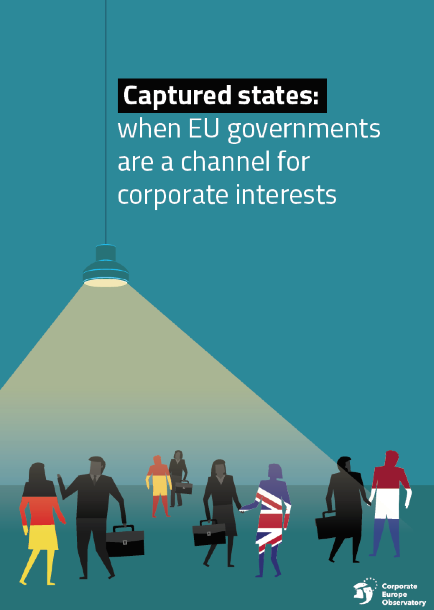
The member states of the European Union are intimately involved in, and responsible for, the EU’s laws and policies. This new  report by the Corporate Europe Observatory focuses on the democratic deficit that sees too many member states, on too many issues, become captured states, allowing corporate interests to malignly influence the decisions they take on EU matters. Instead of acting in the public interest of their citizens and those in the wider EU, they often operate as channels of corporate influence. Many of the ways in which member states feed into EU decision-making are not well-known and are neither transparent nor commonly studied. This report breaks new ground by providing an overview of how member states act as middlemen for corporate interests with a focus on several European institutions.

With the Corporate Europe Observatory report, we hope to alert civil society and decision-makers to the threat that corporate lobbies, influencing member states, have on EU decision-making, and our final recommendations set out some initial steps to start to counter this corporate influence. They include:

  1. Member state governments must adopt national rules and cultures which reduce the risk of corporate influence on EU decision-making, including an end to privileged access for corporate lobbies and full lobby transparency.
  2. Member state parliamentary scrutiny and accountability on government decision-making at EU level must be strengthened. This should include both pre-decision scrutiny and post decision accountability.
  3. Urgent action is needed by the EU institutions to tackle the democratic deficit in how they operate. These will require reforms of the Council of the EU, the European Council , and the European Commission’s comitology process and advisory groups.
  4. We urgently need new models for citizens to both find out more about, and have a say on, the EU matters with which member states are tasked with deciding. This could include participatory hearings, at the national level, on upcoming pieces of EU legislation; on-line consultations; and more.

Increasing disparities in unhealthy food advertising targeted to Hispanic and Black youth

Screen Shot 2019-02-13 at 8.13.53 AM

Unhealthy food marketing aimed at youth under age 18 is a significant contributor to poor diets and diet-related diseases. Therefore, greater exposure to this marketing by Hispanic and Black children and teens, both in the media and in their communities, likely contributes to diet-related health disparities affecting communities of color, including obesity, diabetes, and heart disease. A new report on targeted food marketing by the Rudd Center for Food Policy & Obesity University of Connecticut,  the Council on Black Health , and Salud America! assessed whether the 10 companies with the most targeted advertising spending documented in the Rudd Center’s 2015 report have made changes in their targeted advertising.

By collecting  data on advertising expenditures on Spanish-language and Black-targeted TV programming by company, brand and product category, the study identified  television advertising targeted to Hispanic and Black consumers.

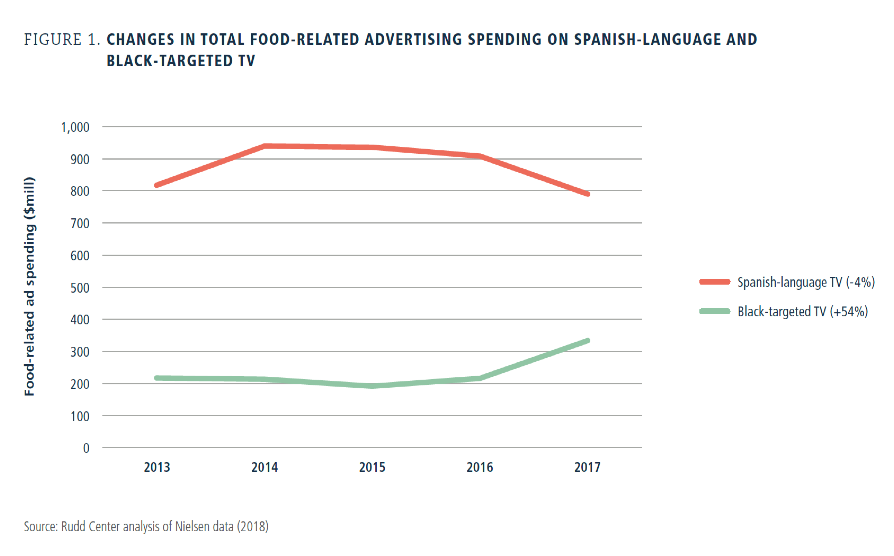
From 2013 to 2017, the total amount that companies spent to advertise restaurants, food, and beverages on all types of TV programming declined by just 4% (from $11.4 billion to $10.9 billion). However, greatly reduced TV viewing by children and teens resulted in large reductions in exposure to food-related TV ads: -28% for children and -43% for teens overall.

Despite this decline, on average children and teens continued to view approximately 10 food-related TV ads per day in 2017. Total food-related advertising spending on Spanish-language TV also declined by 4% over the past five years (from $817 million in 2013 to $787 million in 2017), and reductions in TV viewing and food-related ads viewed by Hispanic youth mirrored declines for all youth. In contrast, total food-related advertising spending on Black-targeted TV increased by more than 50% from 2013 to 2017 ($217 million to $333 million). Disparities between Black and White youth in exposure to all food-related TV ads also increased. In 2013, Black children and teens viewed 70% more food ads than their White peers viewed.

In 2017, these disparities grew to 86% more ads viewed by Black children compared to White children and 119% more ads viewed by Black teens than by White teens. On average in 2017, Black children and teens saw 16.4 and 17.1 food-related TV ads-per-day, respectively. This increased disparity in ads viewed resulted from increased food-related spending on Black-targeted TV advertising as well as greater declines in TV watching among white than Black children.

The authors of the report call on food manufacturers to market healthy products to Black and Hispanic consumers and for fast-food, candy, sugary drink, and unhealthy snack food brands to stop disproportionately targeting their advertising in Spanish-language and Black-targeted media. Public health advocacy campaigns should also focus on improving marketing practices of companies that disproportionately target Hispanic and Black youth and explore opportunities to engage youth of color in campaigns to address targeted food marketing as a social justice issue.

Read the full report.

The Commercial Determinants of Non-Communicable Diseases(NCDs): Developing Strategies for Prevention

IMG_1354


Aadeliah Maker Diedericks, David Sanders, Fran Baum, Carlos Monteiro, Nicholas Freudenberg and Téa Collins at the Prince Mahidol Awards Conference (PMAC).

At the 2019 Prince Mahidol Conference on Global Health held in Bangkok, Thailand on the theme of the political economy of Non Communicable Diseases (NCDs) from January 29 to February 3, 2019, a special session on commercial influences on NCDs analyzed the role of the food, alcohol, tobacco, banking and other sectors in shaping the global prevalence and distribution of non-communicable diseases such as cardiovascular conditions, diabetes, hypertension and some forms of cancer.  Panelists sought to answer these questions:

  • What are the commercial drivers influencing the risk factors of NCDs in different contexts?
  • What is the role of industries such as food and beverage, tobacco, alcohol,  and extractive industries in influencing the commercial determinants?
  • What are the common strategies of marketing to children and adolescents (e.g. particularly digital marketing) and mechanisms to reduce exposure to NCD risk factors, notably alcohol, tobacco and unhealthy foods and beverages?
  • How have governments engaged with industry to mitigate the risk to health and enhance public health benefits? What has worked and what has not?
  • What is the role played by different institutions in facilitating or regulating the commercial determinants, including Governments, and other stakeholders such as WTO, multilateral organizations and civil society?

The panel included these presentations:

The Commercial Determinants of NCDs: Public Health Strategies to Reduce Harmful Influences, Nicholas Freudenberg, Distinguished Professor of Public Health, City University of New York, New York, USA. View presentation

The Role of the Transnational Ultra-Processed Food Industry in the Pandemic of Obesity and its Associated Diseases: Problems and Solutions. Carlos Monteiro, Professor, Center for Epidemiological Studies in Health and Nutrition, University of Sao Paulo, Brazil. View presentation

What’s the Role for Advocacy and Campaigning Body? Aadeliah Maker Diedericks, Coordinator Southern Africa Alcohol Policy Alliance , Cape Town South Africa.  View presentation

A WHO Perspective on Commercial Influences on NCDs. Téa Collins, Adviser, Division of Noncommunicable Diseases and Health Promotion,  World Health Organization, Geneva, Switzerland, View a recent paper on commercial influences by Collins and colleagues.  Link to: http://cdt.amegroups.com/article/view/20806

Reducing the impact of Trans-National Corporations on Non-communicable Disease: the Nutcracker Effect, Fran Baum, Matthew Flinders Distinguished Professor. Southgate Institute, College Medicine and Public Health, Flinders University, Adelaide, Australia. View Presentation

The moderator for the session was David Sanders, Emeritus Professor, School of Public Health, University of the Western Cape and co-founder People’s Health Movement.


Revealed: the free-market groups helping the tobacco industry

Screen Shot 2019-01-29 at 9.31.40 PM

Atlas Network

More than 100 free-market thinktanks from North America to Europe and south Asia took positions helpful to the tobacco industry or donations,  an investigation by The Guardian shows. These thinktanks  have provided a powerful voice of support to cigarette manufacturers in battles against tougher regulations. At least 106 thinktanks in two dozen countries have accepted donations from tobacco companies, argued against tobacco control policies called for by the World Health Organization (WHO), or both, according to The Guardian analysis.

These groups have opposed plain cigarette packaging, written to regulators in support of new tobacco products, or promoted industry-funded research. In one extreme case, an Africa-based thinktank questioned whether the link between cancer and smoking “was yet to be empirically established”, before backing away from the claim.

Patricio Marquez, lead specialist on health global practice at the World Bank, said such activity could impact public health efforts. The thinktanks “have created an arsenal of evidence in order to influence policy-making and decision-making,” he said.

The Guardian examined one of the largest networks of independent free-market thinktanks in the world, organized by Atlas Network, a not-for-profit based near Washington DC in Arlington, Virginia, which it says “connects a global network of more than 475 independent, civil society organizations in over 90 countries to the ideas needed to advance freedom.” The Guardian coverage for this report  was supported by Vital Strategies.

Read The Guardian’s Free-market groups and the tobacco industry database

Soda industry influence on obesity science and policy in China

Screen Shot 2019-01-13 at 9.04.23 PM

Credit

A new report by Susan Greenhalgh in the Journal of Public Health Policy found that soda industry efforts to manipulate obesity science and policy in the US are well documented, yet little is known about whether the industry has pursued similar efforts abroad. In-depth research in China—analyses of interviews with prominent Chinese obesity experts, and of trends in obesity-related activities documented in newsletters of China’s lead organization on obesity, a branch of the International Life Sciences Institute (ILSI), a US-based, corporate-funded, global nonprofit strongly influenced by the Coca-Cola Company—showed that from 1999 to 2015, China’s obesity science and policy shifted markedly toward physical activity as Coca-Cola’s influence in China increased. This shift aligned with Coca-Cola’s message that it is activity, not diet, that matters—a claim few public health scholars accept. These changes correlated with the growing importance of Coca-Cola’s funding, ideas, and affiliated researchers via ILSI-China. In putting its massive resources behind only one side of the science, and with no other parties sufficiently resourced to champion more balanced solutions that included regulation of the food industry, the company, working through ILSI, re-directed China’s chronic disease science, potentially compromising the public’s health.

The Oil Industry’s Covert Campaign to Rewrite American Car Emissions Rules

Screen Shot 2018-12-14 at 8.38.18 PM

Credit

Screen Shot 2018-12-14 at 8.38.27 PM

Credit

When the Trump administration laid out a plan this year that would eventually allow cars to emit more pollution, reports The New York Times, automakers, the obvious winners from the proposal, balked. The changes, they said, went too far even for them.

But it turns out that there was a hidden beneficiary of the plan that was pushing for the changes all along: the nation’s oil industry.

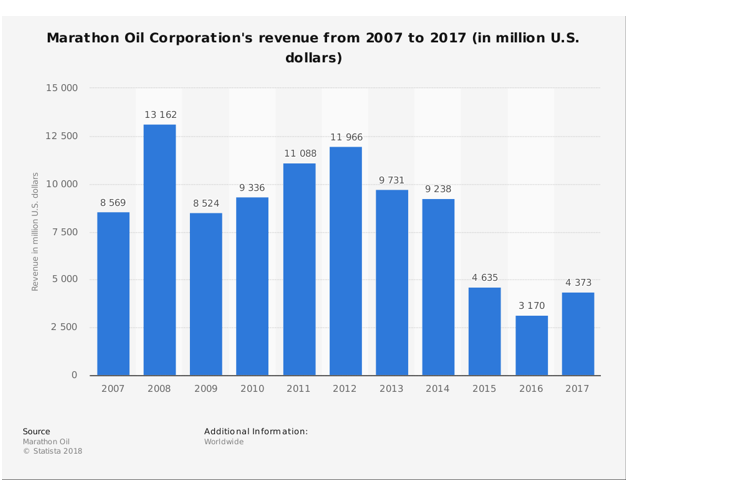
In Congress, on Facebook and in statehouses nationwide, Marathon Petroleum, the country’s largest refiner, worked with powerful oil-industry groups and a conservative policy network financed by the billionaire industrialist Charles G. Koch to run a stealth campaign to roll back car emissions standards, a New York Times investigation has found.

report released at the  First WHO Global Conference on Air Pollution and Health earlier this year found that air pollution – both ambient and household – is estimated to cause 7 million deaths per year, 5.6 million deaths are from noncommunicable diseases and 1.5 million from pneumonia. The wider economic impacts of premature deaths due to ambient air pollution amount to US$ 5.7 trillion in welfare losses, or 4.4% of the global Gross Domestic Product (GDP) in 2016.  Motor vehicles are a primary cause of ambient pollution. The Trump-Marathon plan to allow more automobile pollution will increase this health and economic burden, as well as contribute to global warming.

The Corporatization of Marijuana: Marlboro maker in takeover talks with cannabis firm Cronos

Altria, the maker of Marlboro cigarettes, is in talks about a potential takeover of the Canadian cannabis producer Cronos as it seeks to diversify its business beyond traditional smokers, reports The GuardianCanada legalized recreational use of marijuana this year, and the country is seen as a testing ground for marijuana companies hoping to expand globally as other countries follow suit.  A deal would mark one of the largest combinations between mainstream tobacco and the booming but volatile marijuana sector, which has attracted interest from a variety of large consumer companies that are monitoring the industry for disruptive threats and faster-growing product possibilities.

Last year, the University of California -San Francisco Tobacco Control Policy Making: United States released a report by Rachel Barry and Stanton  Glantz titled  Lessons from Tobacco for Developing Marijuana Legalization Policy