Globalization, Health and Corporations

What are the positive and negative health consequences of globalization?  How do trade pacts influence health?  What role do corporations play in shaping the direction of globalization?  On April 4, 2016, Ron Labonté, Research Chair in  Globalization and Health Equity at the School of Epidemiology, Public Health and Preventive Medicine at the University of Ottawa addressed these and other questions at a talk on “Globalization and the (new) political economy of health”  at the City University of New York School of Public Health.  View the presentation here.

photo credit: Institute of Population Health, 2007
Houston hospitals under fire for offering fast food

Corporate Accountability International (CAI) reports that two national groups have called on several Houston hospitals to remove fast-food chain restaurants from their grounds. One recent campaign by the Physicians Committee for Responsible Medicine focused on Chik-fil-A. It says about 20 hospitals across the country have the franchise, and it launched an advertising and billboard campaign that parodied Chik-fil-A’s slogan, with white-coated doctors asking people to “Eat More Chickpeas.” Taylor Billings, a Houston organizer for CAI, criticized both Texas Children’s and Ben Taub hospital for having a McDonald’s. “To have two of the leading health institutions in Houston hosting the world’s most recognized junk food brand, it just doesn’t make any sense,” Billings said at a protest March 31 outside the headquarters of the Harris Health System in Houston.

Automakers fight to regain trust in wake of VW scandal

Ever since Volkswagen Group confessed last September to cheating diesel emissions tests on an unprecedented scale, reports Automotive News Europe E-Magazine,   Europe’s auto industry has scurried to contain the reputational fallout from the public health risk and to deflect criticism from a technology deemed critical to meeting CO2 reduction targets. Facing an uphill battle to preserve support, automakers have rallied around one simple message: The latest Euro 6 diesels into which they have sunk billions of euros are among the cleanest, most efficient around and without them there would be no chance of curbing fleet CO2 emissions. But a cloud of suspicion has descended on the industry that has left automakers struggling to shape the public debate. More red tape, stricter testing regimens and greater scrutiny as a result of the VW Group’s fraud are only the beginning.

Soda Consumption Falls to 30-Year Low in U.S.

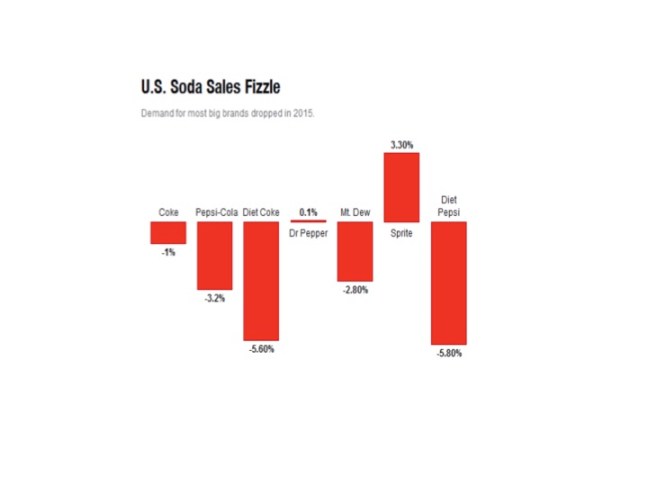
Slumping demand for diet sodas sold by PepsiCo and Coca Cola propelled a decline for the broader industry, as overall sales of carbonated soft drinks dropped for the 11th consecutive year in the U.S., reports Fortune. Total volume declined 1.2% in 2015, an acceleration from 2014’s 0.9% drop, as the biggest three players in the category all reported falling demand, according to a new report from industry tracker Beverage Digest. The group also reported that annual per capita consumption of carbonated soft drinks dropped to about 650 eight-ounce servings in 2015 – the lowest since 1985.

Continue reading Soda Consumption Falls to 30-Year Low in U.S.

Now There’s Proof: Docs Who Get Company Cash Tend to Prescribe More Brand-Name Meds

ProPublica calculated brand-name prescribing rates for doctors who received no payments, $0.01 to $100, $100 to $500, $500 to $1,000, $1,000 to $5,000 and more than $5,000 in payments from drug or device companies in 2014. Source: Centers for Medicare and Medicaid Services; ProPublica analysis. Credit: Sisi Wei/ProPublica

In its ongoing Dollars for Doctors series, on the impact of pharmaceutical industry funding on physicians’ prescribing, ProPublica found that doctors who receive payments from the medical industry prescribe drugs differently on average than their colleagues who don’t. And the more money they receive, the more brand-name medications they tend to prescribe.

The great FLOTUS food fight

In an in-depth assessment of Michelle Obama’s food policy initiatives, Politico make the case that “Obama and her bulldog personal chef engineered and enacted the most aggressive food policy agenda in living memory—a modern example of how a White House spouse can use her unelected platform to wage a genuine Washington policy fight.”

Low Gas Prices Create a Detour on the Road to Greater Fuel Economy

Since agreeing to tough new federal fuel economy standards five years ago, automakers have been methodically improving the gas mileage of their vehicles and reducing emissions harmful to the environment, writes the New York Times. But despite investing billions in fuel-saving technologies and introducing a raft of lower-mileage models and electric cars, the industry will be hard-pressed to meet its target of 54.5 miles per gallon in 2025. Now, with a crucial midterm review of federal fuel-economy rules to begin this summer, automakers are expected to seek adjustments to the government’s formula for increasing mileage and cutting greenhouse gas emissions.

United Kingdom Proposes Soda Tax in Ongoing Fight against Obesity

Last October, writes Take Part, a “social action platform for the conscious consumer”, British Prime Minister David Cameron addressed the question of a soda tax in the United Kingdom, where more than a quarter of children are overweight or obese. “The Prime Minister thinks there are more effective ways of tackling this issue than putting a tax on sugar,” a spokesman said. On Wednesday, March 17, Cameron’s finance minister, Chancellor of the Exchequer George Osborne, introduced a proposal for a national soda tax. “I am not prepared to look back at my time here in this Parliament, doing this job, and say to my children’s generation, ‘I’m sorry. We knew there was a problem with sugary drinks. We knew it caused disease. But we ducked the difficult decisions and we did nothing,’ ” Osborne told Parliament.

7 Corporate Giants Accused of Evading Billions in Taxes

It’s tax season—and that’s apt for companies who are under the microscope of European tax authorities, writes Fortune. In February, reports emerged that the European Commission is considering a proposal that would force multinationals to reveal their tax bills in 28 European countries. Why? Because corporate tax-dodging costs the EU between $54.5 billion and $76.4 billion a year, according to a study by the European Parliamentary Research Service.

The First Amendment And Pharmaceutical Promotion

In Health Affairs, Jerry Avorn from Harvard Medical School writes, “traditionally, communication about medications has been granted a privileged status different from that accorded to other forms of communication. This makes sense for several reasons… (One) reason that the nation has determined that drug promotion should be more restricted than promotional statements about, for example, toasters or computers, is that the consequence of getting a medication-use decision wrong can be catastrophic. This helps explain why so many of us are worried about the growing movement to consider the promotional claims of drug makers to be in a class of commercial free speech protected under the First Amendment. While overtly fraudulent statements would not be permitted (“This pill will make you live forever”), a study used in promotional materials could be inaccurate or misleading in many ways without being overtly fraudulent.”