This essay reviews work in sociology and cognate fields regarding pharmaceutical marketing and its regulation. In particular, it considers how this literature contributes to a better understanding of the process of pharmaceuticalization, defined as “the translation or transformation of human conditions, capabilities, and capacities into opportunities for pharmaceutical intervention.”
The FCTC Turns 10: Lessons From the First Decade
The Framework Convention on Tobacco Control (FCTC) stands as a landmark approach to addressing a global health problem. It represents the first time the World Health Organization (WHO) used its constitutional right to negotiate an international law and the first time the Member States of WHO agreed to a collective response to chronic, noncommunicable diseases. This paper draws lessons from the FCTC’s first decade in force and explores what aspects of the FCTC experience can inform future efforts to address other disease epidemics driven by corporate activity, such as alcohol and food. Wipfli H. J Epidemiol 2016. doi:10.2188/jea.JE20160080
Is free trade making us sick?

On May 20, the Jaime Lucero Institute on Mexican Studies at CUNY and the CUNY Urban Food Policy Institute presented a workshop on free trade, health and nutrition in Mexico. The session was part of the Sobremesa, a festival on the role of food in Mexican communities in the United States and Mexico. The first presentation by Nicholas Freudenberg from City University of New York School of Public Health examined some of the ways that the North American Free Trade Agreement (NAFTA) contributed to diet-related diseases in Mexico. View the presentation here.
Alcohol Advertising Exposure Among Middle School–Age Youth: An Assessment Across All Media and Venues
The purpose of this study which appears in the Journal of Studies on Alcohol and Drugs was to quantify middle school youth’s exposure to alcohol advertisements across media and venues, determine venues of greatest exposure, and identify characteristics of youth who are most exposed.
NRA is now almost entirely a pro-Republican group, spending more money than ever to ensure Congress doesn’t enact any gun safety laws
For four decades, the National Rifle Association has pumped millions of dollars into federal elections, supporting both Republican and Democratic candidates who voted in accordance with the gun group’s strict view of the Second Amendment. That era is over, reports the New York Daily News and The Trace. “What you’re seeing is that the NRA is now operating at the core of the Republican national party coalition,” says Michael Malbin, executive director of the Campaign Finance Institute, a leading think tank on money in politics. “They’ve essentially zeroed out Democrats. They used to give to them as a way to maintain leverage in both parties.”
Leaked TTIP documents released
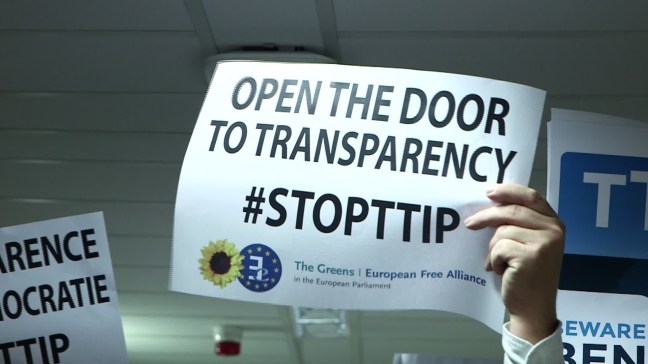
Earlier this month, Greenpeace Netherlands released secret documents from the EU-United States Transatlantic Trade and Investment Partnership negotiations. The 248 leaked pages comprise TTIP negotiating texts, including the US position, and internal EU documents outlining the state of play of the trade talks. They are available at www.ttip-leaks.org. At the release, Jorgo Riss, director of Greenpeace EU, said: “Greenpeace Netherlands has made these documents publicly available to bring some much needed transparency to the debate on TTIP. We have seen grave concerns for environment and public health confirmed, and invite others with expertise in different areas to download these documents and analyse the impacts of this trade deal. The public has a right to know what is being traded away in their name.” The Greenpeace analysis of the documents is available here.
Analysis of the corporate political activity of major food industry actors in Fiji
Non-communicable diseases (NCDs) are the leading cause of mortality in Fiji, a middle-income country in the Pacific. Some food products processed sold and marketed by the food industry are major contributors to the NCD epidemic, and the food industry is widely identified as having strong economic and political power. However, little research has been undertaken on the attempts by the food industry to influence public health-related policies and programs in its favour. The “corporate political activity” (CPA) of the food industry includes six strategies (information and messaging; financial incentives; constituency building; legal strategies; policy substitution; opposition fragmentation and destabilisation). For this study, we aimed to gain a detailed understanding of the CPA strategies and practices of major food industry actors in Fiji, interpreted through a public health lens. Full reference: Mialon M, Swinburn B, Wate J, Tukana I, Sacks G. Analysis of the corporate political activity of major food industry actors in Fiji. Globalization and Health 2016; 12:18 DOI: 10.1186/s12992-016-0158-8
The Potential That Electronic Nicotine Delivery Systems Can be a Disruptive Technology: Results From a National Survey
A new study evaluates the reasons for use and acceptance of Electronic Nicotine Delivery Systems (ENDS) among current and former cigarette smokers to assess if ENDS may become a satisfying alternative to cigarettes. Former smokers (the “Switchers”) report finding ENDS a satisfying alternative to regular cigarettes, with only 15.8% rating ENDS as less enjoyable than regular cigarettes. However, greater than fivefold more current smokers (77.3%) did not find them satisfying and stopped using them. Being less harmful was the most highly rated reason for continuing to use ENDS among “Switchers.” Most (80.9%) “Switchers” reported that ENDS helped them quit cigarettes. Since many current smokers who have tried ENDS reject them as a satisfying alternative to regular cigarettes, ENDS will not replace regular cigarettes unless they improve. Full citation: Pechacek TF, Nayak P, Gregory KR, Weaver SR, Eriksen MP. The Potential That Electronic Nicotine Delivery Systems Can be a Disruptive Technology: Results From a National Survey. Nicotine Tob Res. 2016 May 3. pii: ntw102.
Beyond Obamacare: Stopping Corporations from Making People Sick
Cross-posted from the American Prospect
by Nicholas Freudenberg
The next generation of health reforms should loosen the grip of corporations on the health of Americans, an issue that will resonate with voters angry about special interests in 2016.
Since the sweeping health-care law best known as Obamacare took effect in 2010, Republicans have voted 63 times to repeal or gut it, and Democrats have argued over whether to expand it or scrap it in favor of a public single-payer plan. But not much attention has been given to going beyond the Affordable Care Act to take on the root cause of our nation’s most serious health problems: a corporate system that profits by sickening people.
Continue reading Beyond Obamacare: Stopping Corporations from Making People Sick
What Bernie Gets Wrong About the Soda Tax
“It stunned many progressives to hear Sanders attack Philadelphia’s plan to tax sugary drinks; he called soda taxes regressive and came out swinging”, writes Anne Lappé in Mother Jones. “Like health advocates across the country, I think Sanders got it wrong: These taxes in fact reflect the progressive values he holds dear. It’s the very communities Sanders says he’s trying to protect that have been at the beating heart of campaigns for soda taxes. As a resident of Berkeley, California, the first city in the United States that has passed a tax of this kind, and as someone who has been working to sound the alarm on the epidemic of diet-related illnesses for years, I have had a ringside seat at the battle against Big Soda. And I think that if Sanders had firsthand knowledge of the fight, he too might be moved to see these taxes differently.”
 Corporations and Health Watch