Defining Appropriate Roles for Corporations in Public Health Research and Practice

Does industry sponsorship of health research influence the public health research agenda? Does it shape public health policy and priorities? In an editorial commentary on the report by  Fabbri et al. that is summarized above, Freudenberg notes that developing comprehensive and effective responses that can mitigate or prevent the harmful practices of lethal but legal industries is a vital public health priority. Corporate practices have become primary social determinants of premature death and preventable illnesses from noncommunicable diseases, injuries, and environmental exposures. Modifying harmful practices is a practical strategy for promoting health and reducing health inequalities. What additional research is needed to integrate the finding of Fabbri et al. on the impact of corporate sponsorship of research into a deeper understanding of the cumulative impact of the many industry practices that influence population health?  Several topics have recently attracted research attention. How can public health researchers best reduce conflicts of interest? Conflicts of interest occur when the public obligations of researchers, government officials, or corporations conflict with their private interests. Undetected or undisclosed conflicts of interest taint the validity of findings and threaten the credibility of public  health researchers. In an era when trust in many forms of authority is declining, industry affiliations that pose conflicts of interest could jeopardize the capacity of public health professionals to communicate credibly with the public to address future public health crises.

Another task is to define and assess appropriate roles for industry in setting public health policy. In the case of tobacco, the World Health Organization used the Framework Convention on Tobacco Control to draw a clear boundary for the industry role in shaping public policy. Should this approach also apply to the food, alcohol, and other industries? Or, as industry representatives argue, are the products of these industries so different from tobacco as to suggest another approach? Research that compares the practices of these industries as well as their products may provide more useful evidence for setting policies. Finally, policy research that compares the longer-term impact on the population health of various regulatory regimes can provide policymakers with the evidence needed to find an appropriate balance between government  and industry roles.

Citation: Freudenberg N. Defining Appropriate Roles for Corporations in Public Health Research and Practice. Am J Public Health. 2018 Nov;108(11):1440-1441

Back to School on Corporations and Health Part 5

Screen Shot 2018-09-05 at 7.48.26 AM

Credit

As students and faculty return to school this fall, Corporations and Health Watch continues its series on strategies for integrating the study of corporations and health into public health, social science, business and other educational programs.  This post briefly describes several courses that have been taught in the last few years and provides links to class syllabi.  Instructors who want ideas for readings and topics can consult these course outlines, which present a variety of ideological perspectives.  Links are also provided to previous CHW posts on teaching about corporations and health.

Poisoned Worlds: Corporate Behavior and Public Health  Columbia University

This course traces the historical importance of occupational and environmental diseases related to tobacco and food industries and chemical manufacturers. It outlines the histories of traditional occupational hazards like asbestosis and mesothelioma, lead poisoning and other pollutants. Through the use of documents gathered in lawsuits, searches of medical and public health literature and other documentary sources students evaluate historical debates about responsibility for chronic diseases and environmental damage. The scope of the course will include topics ranging broadly from global warming to obesity and low-level lead poisoning, and PCBs. It will focus on the five decades since Silent Spring and the rise of environmental movement. Central to the course will be investigating the uses of history in adjudicating responsibility for chronic conditions and environmental damage affecting men, women, children, workers and communities of color. It will look at the ways history is used in the court and explore how historical information can be used to advocate for populations.

Health Activism  Wellesley College

The diseases, illnesses, and concerns that come under the purview of the health care, public health and global health systems stem from the interplay among scientific understandings, political and economic forces, and the actions of individuals and groups. In this course, we will examine various kinds of what can be labeled “health activism” over the last two centuries. Themes to be addressed will include: activism both in and against health institutions, roles of race/class/gender/disability/ sexuality in health issues, activism in a global health context, reforms, reactions and radicalism.

Pharmaceutical Geographies, Pharmaceutical Economies  University of Minnesota

This seminar examines the emergence and persistence of global disparities in

pharmaceuticals by providing historical, political, economic, and cultural analyses of the

manufacturing, regulation, and distribution of pharmaceuticals. It covers historical and

contemporary issues that underscore the paradoxical nature of the global pharmaceutical

enterprise.


Corporate Sustainability Strategy  Harvard University Extension School

This course explores sustainability from the perspective of a multi-national corporation. It

provides a number of exemplars in various industries to show how they have applied

sustainability tools to their businesses. These will be publicly traded companies, and so there will

be links provided to various forms of information for you to compare and contrast as we move

through the semester. Information will be presented from academic research, white papers

published by respected scholars and experts, and the actual disclosures of major multi-national

companies. Sustainability officers and other sustainability professionals will serve as guest

speakers in the class throughout the semester.


Global Food Politics and Policy Harvard School of Education

This course reviews the political landscape of both food and farming, in both rich

and poor countries. This is a highly contested political space. Scientists, economists,

commercial farmers, agribusiness and food companies, environmentalists, consumer

organizations, and social justice advocates often hold sharply different views. Policy

actions by national governments frequently conflict with the preferences of international

organizations, private companies, NGOs, social entrepreneurs, and humanitarian relief

agencies. Understanding the foundation of these conflicts is key to effective public

policy making.


Consumers, Corporations and Public Health Harvard Business School

With 18 percent of U.S. GDP now allocated to health care, it is essential for all business people to have some familiarity with the health care system. This half-credit course examines how

corporations assist and, in some cases, impede the solving of public health challenges. Targeting

MPH and MBA students, the course aims to promote dialogue and understanding between public

health and business professionals. Common ground can be found when we use a deep

understanding of consumer behavior as the starting point for debate and collaboration.


Previous CHW posts on teaching about corporations

BRINGING CORPORATIONS INTO THE PUBLIC HEALTH CLASSROOM September 2017

BACK TO SCHOOL BOOKS ON CORPORATIONS AND HEALTH  august 2014

TEACHING ABOUT CORPORATIONS AND HEALTH  June 2010

TEACHING ABOUT CORPORATIONS AND HEALTH: BRINGING CORPORATE PRACTICES INTO PUBLIC HEALTH CLASSROOMS  December 2007

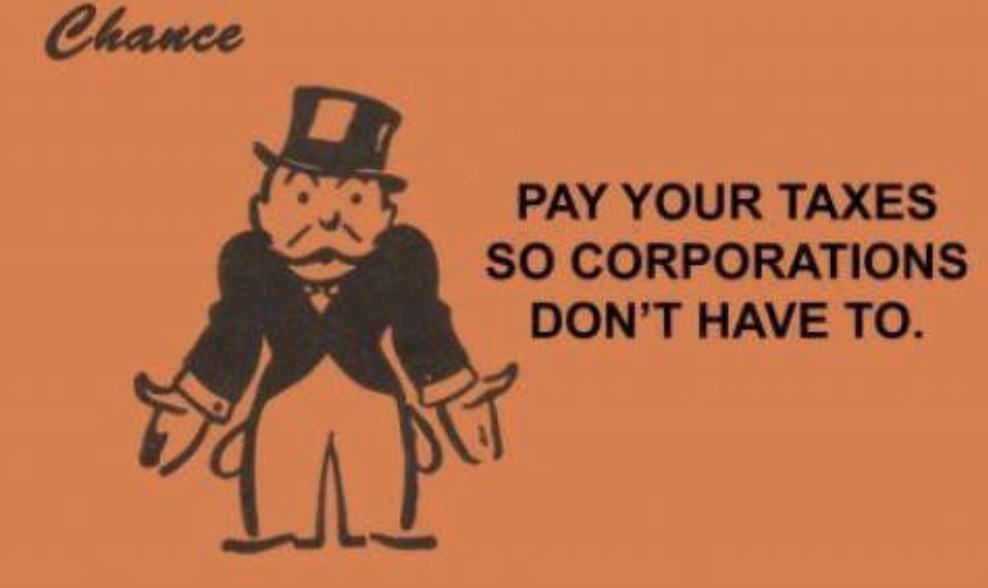
Public Health and Corporate Avoidance of U.S. Federal Income Tax

065A5C2A-0945-43EA-9425-A2F1FDA4ED7C

Credit

The amount of U.S. federal revenue affects the government’s ability to provide public health services, programs, infrastructure, and research to adequately protect the public’s health. Public health funding shortages are chronic. Corporate income tax avoidance is one source of unrealized federal tax revenue that, if collected and allocated to public health, could help offset those shortages. Major corporate methods of tax avoidance, their effect on federal revenue, and recommended policy changes are described. Corporate tax avoidance and government revenue shortages are framed as social determinants of health, and research questions and data sources for public health researchers for examining the issue are suggested. Although there is no guarantee that any additional corporateincome tax revenue would be directed to public health, the subject warrants the attention of public health researchers and policy advocates. The United States serves as a case study for public professionals in other countries to conduct similar analyses.

Citation:  Wiist, WH. Public Health and Corporate Avoidance of U.S. Federal Income Tax . World Medical & Health Policy. First published: 20 August 2018. https://doi.org/10.1002/wmh3.274

Grading PespiCo’s Retiring CEO Indra Nooyi on Public Health

C30CEFA9-AB05-443D-A4B0-850440987023


Credit

When PepsiCo. Inc.’s longtime chief executive, Indra Nooyi, announced that she was stepping down, reports The Wall Street Journal, Ivanka Trump was one of many people to voice her admiration for the departing CEO. “Indra, you are a mentor + inspiration to so many, myself included,” Ms. Trump wrote on Twitter.

Ms. Nooyi is finishing her tenure with a sterling reputation as a manager. She is credited with piloting PepsiCo through a rough period for the industry, as consumer tastes moved away from sugary drinks. She successfully fought off an activist investor’s attempt to break up the company and diversified into healthier snack and drink options before many competitors did. PepsiCo’s annual revenue increased 81% during her tenure to $63.5 billion last year.

Still, from a market perspective, her tenure wasn’t a complete success. PepsiCo’s total shareholder return during her time as CEO trailed both the S&P 500 index and rival Coca-Cola Co. PepsiCo’s market capitalization was $165 billion based on last Friday’s closing price, compared with $200 billion for Coca-Cola. When Ms. Nooyi took over, PepsiCo’s market cap of $106 billion was slightly larger than Coca-Cola’s, at $104 billion.

If Wall Street gives Nooyi, mixed grades, what about public health?  Nooyi is known for her desire to expand PepsiCo’sinvolvement in “good-for-you” foods.  What were the results?

2006

2017

Percent increase

Total PepsiCo revenues

$35 billion

$63.5 billion

81%

Revenues from “healthier” foods

$13.3 billion

$31.8 billion

139%

Revenues from “less healthy” foods

$21.7 billion

$31.7 billion

46%

The table above shows that while the proportion of revenues from “healthier” product increased more than for less healthy products like soda and high salt, high fat snacks, the total annual sales of less healthy products (dubbed by Nooyi as the “fun for you” foods) increased by $10 billion — 46% during  her tenure.  

In other words, the total revenues from PepsiCo  products most associated with diet-related chronic diseases increased significantly  under Nooyi’s leadership. This suggests that PepsiCo’s contribution to the burden of premature deaths and preventable illnesses associated with these products also increased.  This illustrates a classic dilemma for public health.  Even if public health advocates succeed in persuading corporations to alter the mix of products they produce, if the company expands at the same time, its overall health damaging impact may increase even as it produces some healthier products.  Moreover, the products PepsiCo and Nooyi label as “good for you” or healthy are often still high in unhealthy ingredients, even if they are fortified with vitamins or other nutrients.  

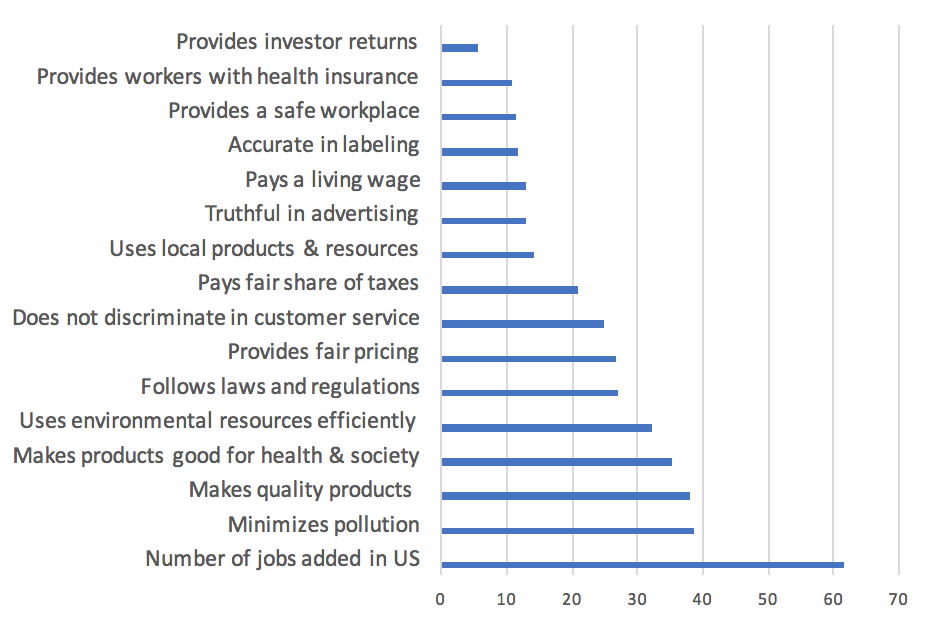
How do Americans rate the fairness of US corporate practices?

Screen Shot 2018-06-14 at 6.47.42 PM

Responses to: Which of these behaviors is most important in evaluating how just a corporation is?   Source

What do Americans think of corporate practices?  And what business practices most disturb Americans?  Each year JUST Capital conducts a poll of a representative sample of U.S. adults to answer these questions.

JUST Capital, a nonprofit group, seeks to “build a more just marketplace that better reflects the true priorities of the American people.”  The group believes that “business, and capitalism, can and must be a positive force for change.”   We believe that if they have the right information, people will buy from, invest in, work for, and otherwise support companies that align with their values. And we believe that business leaders are searching to win back the trust of the public in ways that go beyond money. By shifting the immense resources and ingenuity of the $15 trillion private sector onto a more balanced – and more just – course, we can help build a better future for everyone.

The findings from its 2017 survey of about 4,100 adult US respondents, shown above, provides some informative insights.  First, the outcome most important to corporate managers, i.e., providing returns to investors, is the least important practice that respondents use to rate the fairness of a corporation. Second, the national discourse on jobs and job creation makes that practice by far the highest rated factor in judging a corporation’s fairness. Third, some of the practices of greatest interest to health advocates, such as the health consequences of products (rated as most important by 35.4% of respondents), efforts to minimize pollution (38.6%), and providing a safe workplace (11.5%) rank lower than other factors.

The survey also compares responses by several demographic characteristics, including age, gender, income, region, political party, ideology and investor status.  Of interest, none of these factors predict large differences in beliefs about fairness.  Any survey is of course influenced by the wording of questions and other surveys have shown age and other differences in how Americans view corporations.

JUST Capital provides more detailed reports of their annual surveys from 2014 to 2017. It also publishes Roadmap for Corporate America, its summary of the 2017 survey and recommendations for how corporations can respond to survey findings.

The Public and Nonprofit Sectors: An Alternative to Corporate Control

The practices of the pharmaceutical, unhealthy food and automobile industries contribute to premature deaths and preventable illnesses and injuries throughout the world.  One strategy for reducing these burdens is to strengthen the public and non-profit sectors.  This can create alternative healthier sources for needed goods and services, put pressure on the market sector to address health externalities more directly, and make the common good a higher public goal than profitability. The posts illustrate ways to grow this sector in pharmaceuticals, food, and transportation.

Fast Facts on the Public Health and other Benefits of Public Transportation


  • A person can reduce his or her chance of being in an accident by more than 90% simply by taking public transit as opposed to commuting by car.
  • Traveling by public transportation is 10 times safer per mile than traveling by automobile.
  • Communities that invest in public transit reduce the nation’s carbon emissions by 37 million metric tons annually.
  • The average household spends 18 cents of every dollar on transportation, and 96% of this goes to buying, maintaining, and operating cars, the largest expenditure after housing.
  • A household can save nearly $10,000 by taking public transportation and living with one less car.
  • ​Public transportation’s overall effects save the United States 4.2 billion gallons of gasoline annually.
  • The average household spends 18 cents of every dollar on transportation, and 96% of this goes to buying, maintaining, and operating cars, the largest expenditure after housing.
  • A household can save nearly $10,000 by taking public transportation and living with one less car.
  • Public Transportation Reduces Gasoline Consumption
  • Public transportation’s overall effects save the United States 4.2 billion gallons of gasoline annually.

Source: American Public Transportation Association. Public Transportation Benefits

Can Public Health Advocates in Europe and the United States Together Protect Public Health Regulation?

Screen Shot 2018-05-02 at 9.59.48 AM

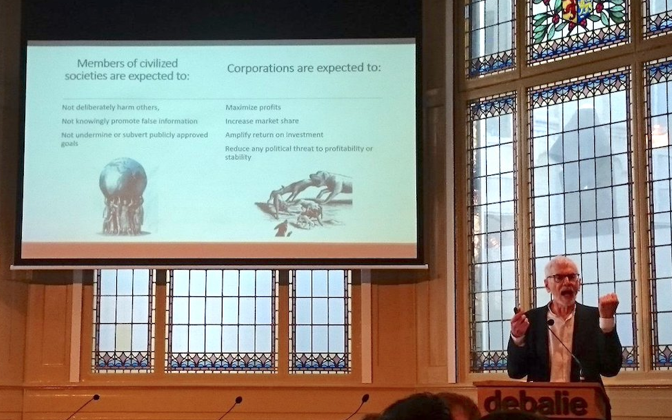
Nicholas Freudenberg speaks on corporations and health at DeBalie, a public lecture hall in Amsterdam.

In both Europe and the United States, public health regulation is under attack.  Despite the Volkswagen Dieselgate emission cheating scandal, the European Union has not yet developed guidelines to prevent future cheating.  Monsanto continues to block stronger regulation of glycophates in Europe and North America. In the United States, President Trump and the Republican Congress are slashing funding and rescinding public health regulations at several federal agencies.  Can public health professionals and advocates in  two of the world’s largest markets join forces to resist these trends?

At a recent series of lectures in Brussels, Amsterdam and The Hague, Nicholas Freudenberg, Distinguished Professor of Public Health at the City University of New York School of Public Health and author of Lethal but Legal: Corporations, Consumption and Public Health examined some of the issues confronting those seeking to reduce corporate practices that harm health.  In his lectures, he suggested five broad goals for a transatlantic agenda to protect public health against corporate efforts to roll back regulations.  These included:

  1. Remove corporations from public health and trade policy decisions
  2. Protect science from corporate manipulation and conflicts of interest
  3. Revitalize public sector in food, medicines and transportation to provide an alternative to corporate control
  4. Protect democracy from corporate interference
  5. Challenge the view that no other world is possible

The lecture and trip was sponsored by Wemos Foundation, a Dutch global health foundation, the European Public Health Alliance and Corporate Europe Observatory, timed to coincide with the translation of Freudenberg’s book into Dutch, Legaal Maar Fataal. Each of these organizations provides useful resources for North American public health professionals who want to better understand recent developments in Europe.

The Wemos Foundation, for example,  sponsored a forum on the interactions between the European Medicines Agency (EMA) and the pharmaceutical industry and explored strategies for reducing conflicts of interest.  A summary of the event is available here.

The European Public Health Alliance(EPHA), an organization of public health NGOs, patient groups, health professionals and disease groups, works to improve health and strengthen the voice of public health in Europe. Several recent reports focus on issues also of concern in the United States:

  • In another recent  report, EPHA and other groups call for the United Nations Institute for Training and Research (UNITAR), to end a newly formed partnership with the world’s largest beer producer, AB InBev.
  • The Unhealthy side effects of CETAexamines the Comprehensive Economic and Trade Agreement (CETA) between the European Union and Canada, the first trade agreement  between  the  EU  and a  major  world economy and  the  most far-reaching  bilateral  trade and  investment  agreement negotiated  to  It concludes that the agreement “limits the  policy  space of  governments  in the  area  of public health, tariff elimination, market access commitments, negative listing of services, its  lack  of recognition  of  the health-relevant  aspects  of the  Sustainable  Development Goals (SDGs) and ignoring key health risk  factors  and threats  such  as alcohol-related  harm  or antimicrobial  resistance.  In short, CETA fails to ensure policy coherence between trade and public health.”

The Corporate Europe Observatoryis a research and campaign group working to expose and challenge the privileged access and influence enjoyed by corporations and their lobby groups in EU policy making.

For public health advocates in the United States, these organizations and their reports can be useful resources for developing strategies to resist deregulation and reduced enforcement.  “As the U.S.  government dismantles the public health regulatory agencies developed over the last 50 years,” said Freudenberg, “researchers need to document the impact of these changes and develop new strategies to protect public health.  By partnering with European scientists and advocates, we can accelerate this process.”

To subscribe to Corporations and Health Watch’s free monthly e-newsletter , click on subscribe on top right of page. 

Judge: Assault weapons ban doesn’t violate 2nd Amendment

Screen Shot 2018-04-12 at 5.34.33 PM

Credit

Assault weapons and large-capacity magazines are not protected by the Second Amendment, a federal judge said in a ruling upholding Massachusetts’ ban on these weapons, reports the Washington PostU.S. District Judge William Young dismissed a lawsuit challenging the 20-year-old ban, saying assault weapons are military firearms that fall beyond the reach of the constitutional right to “bear arms.” Regulation of the weapons is a matter of policy, not for the courts, he said. 

Cutting-edge NHS drugs do more harm than good

Almost all new drugs approved for Britain’s National Health Service  do more harm than good, according to a study using  modelling adopted by the government, reports The Times (London).  Saving a life with a new drug can cost about twice as much as doing the same through more staff or equipment, according to official calculations that led to calls for reform of the way the NHS pays for medicines. The Department of Health and Social Care has implicitly conceded that the cost of most cutting-edge medicines kills more people through diverting money from other NHS services than the treatments themselves save.