Tobacco Control and Trade Agreements: Exploring Strategies for Change

CHW
Credit


This statement reflects views and recommendations that emerged from a consortium meeting convened by the Center for Policy Analysis on Trade and Health (CPATH) and the Center for Tobacco Control Research and Education (CTCRE) at the University of California-San Francisco on Feb. 19, 2013, in San Francisco, to reinvigorate strategies to advance tobacco control in California and the U.S., and to strengthen public health and medical voices to inform trade policy.


Public health and medical organizations in the U.S. and internationally are increasingly engaged in addressing the nexus between tobacco control and global trade. Trade rules and trade agreements, including present efforts to negotiate the Trans Pacific Partnership (TPP), present challenges to tobacco control, at local, state, and national levels. Tobacco companies have recently accelerated their use of trade rules to attempt to delay and reverse tobacco control measures in the U.S., Australia, Uruguay, Norway, and Ireland. In negotiating the TPP, a new agreement for the 21st century, the United States has the opportunity to be a leader to safeguard public health and reduce the enormous burden of disease related to tobacco use.


The following proposals articulate concerns, goals, and key strategies to achieve them, that were discussed during the Consortium Meeting. Many have been consistently advanced by the medical, health care, and public health communities.


Concerns:

  • Tobacco is a unique product. Tobacco use is the leading preventable cause of death worldwide, and the only legal substance that, when used as intended, kills people.
  • Curtailing tobacco use must be a central element of policies to reduce preventable childhood morbidity and mortality, a key goal of the present U.S. Administration.
  • Trade agreements and trade rules offer the tobacco industry powerful tools to undermine and supersede local, state, and national measures to implement and enforce tobacco control measures.
  • The closed process of negotiating and adopting trade agreements uniquely privileges commercial interests, without the benefit of democratic public dialogue and debate, and review of evidence. Public health principles and perspectives are shut out.
  • Current proposals for a Trans-Pacific Partnership, and a trans-Atlantic US-EU trade agreement, present particular and urgent threats to public health.


Strategies for Creating a 21st Century Trade Agreement:

Incorporating Health-Related Concerns into Global Trade Negotiations and Agreements

We call on the United States to advance a trade proposal in the Trans Pacific Partnership negotiations that will safeguard public health, advance tobacco control measures that contribute to reducing the enormous burden of disease related to tobacco use, and prevent incursions by the tobacco industry against those measures.


  1. Trade agreements must guarantee nations’ rights to protect public health from tobacco use.

Incorporate reference to the Framework Convention on Tobacco Control (FCTC) in trade agreements. Acknowledge deference to FCTC principles, as an expression of the international consensus on tobacco control, and affirm the right of nations to protect public health from tobacco and tobacco products in the text of all relevant chapters of trade agreements. (Policy Coherence)


Incorporate in the text of each regional and bilateral trade agreement the WTO Doha Declaration on countries’ rights to protect public health. The 2001 World Trade Organization (WTO) Doha Declaration on the TRIPS Agreement and Public Health affirms that WTO members may use “to the full” the flexibilities in the Agreement on Trade-Related Aspect of Intellectual Property Rights (TRIPS) “to protect public health and, in particular, to promote access to medicines for all…” This right can and should be extended to tobacco control measures. (Policy Coherence)


Strengthen the primacy of public health principles. Strengthen adoption and implementation of FCTC recommendations within and across nations to protect the public’s health from tobacco and tobacco products.


2.  The TPP must not undermine the right and ability of participating countries from exercising their domestic sovereignty in order to adopt or maintain measures to reduce tobacco use and to prevent the harm it causes to public health.

Exclude tobacco control measures from existing and future trade agreements. The medical, health care, and public health community has consistently supported removing tobacco, tobacco products, and tobacco control measures from trade agreements as the most effective solution.


Remove investor-state dispute settlement (ISDS) provisions. Eliminate the rights of tobacco and other corporations to contest governments’ domestic sovereignty over public health and other policies, and to sue nations directly for financial damages through the global trade arena.


3. We must set trade policy through a transparent process that involves the public.

Trade agreements and trade rules which may affect public health, including preventing disease and death from tobacco, should be discussed and debated publicly, and in Congress.


Include effective public health representation in setting trade policies at the national, state, and local levels.


We further propose that advocacy for these goals can be strengthened by identifying and communicating with related constituencies concerned with trade: Labor, environment, access to medicines, sustainable agriculture, sustainable economic development, internet access; policy-makers at the local, state and national levels.


Center for Policy Analysis on Trade and Health

Not your grandfather’s cigar

A new generation of cheap and sweet cigars threatens a new generation of kids

This is the EXECUTIVE SUMMARY of a report released by the Campaign for Tobacco Free Kids.  The full report can be accessed here.


Credit
Credit: Campaign for Tobacco Free Kids

An explosion of cheap, flavored cigars in recent years has driven a two-fold increase in annual sales of cigars in the United States – from 6 billion cigars to more than 13 billion in the last 12 years – and changed the demographics of cigar smoking. Cheap, flavored, small cigars that appeal to young people are marketed aggressively and have resulted in high school kids and young adults being twice as likely as their older counterparts to be cigar smokers. These trends come at a time when some in Congress want to prohibit the Food and Drug Administration (FDA) from regulating certain kinds of cigars rather than pushing it to do so. A 2009 federal law, the Family Smoking Prevention and Tobacco Control Act (the Tobacco Control Act), gave the FDA immediate authority to regulate cigarettes, smokeless tobacco, and roll-your-own tobacco, and authorized the agency to extend its jurisdiction to all other tobacco products, including cigars. The FDA has announced its intention to do so, but has yet to act.


In the absence of FDA regulation of cigars, cigarette manufacturers have manipulated some cigarette brands to qualify as small or even large cigars. By doing so, they have evaded a ban on flavored cigarettes and other regulations intended to prevent kids from using tobacco products and protect public health. In addition, to avoid higher federal taxes and keep their products cheap, some cigarette and small cigar manufacturers have manipulated the weight of their products to qualify for lower tax rates charged on large cigars. Both actions make these manipulated products more appealing and more affordable to our nation’s kids.  This report documents how the proliferation of new cigar products and their marketing has changed the market in ways that threaten our kids and establishes the need for common-sense regulation of cigars. It also explains how tobacco tax policy should be reformed to help prevent kids from falling prey to the lure of cheap, sweet cigars.


The Cigar Landscape


  • Cigars today are no longer the “big stogies” that our grandfathers used to smoke. Instead, the cigar category consists of products that vary widely in sizes, shapes, flavors, and price points, making them appealing to a broader audience, including kids.
  • The common terms used to describe today’s products – “premium cigars,” “cigarillos,” “blunts,” and “little” or “small cigars” – are not mutually exclusive because there is a lot of overlap in the characteristics of different products that allow some to fall in multiple, or in between, categories
  • Annual cigar sales have more than doubled in the past decade. This has been driven by a dramatic increase in the number and types of small cigar products that are flavored, packaged, placed, promoted, and priced to appeal to young people.
  • High school students are about twice as likely (13.1 percent v. 6.6 percent) as adults to report smoking a cigar in the past month, and young adults (18-24 year olds) are even more likely (15.9 percent) to do so. Every state that reports cigar use data for youth shows a higher cigar smoking rate for high school kids than for adults.
  • Each day, about 3,050 kids under age 18 try cigar smoking for the first time – compared to about 3,650 who try cigarettes. In at least six states – Florida, Georgia, Maryland, Massachusetts, Rhode Island, and Wisconsin – youth cigar smoking now equals or surpasses cigarette smoking.
  • Flavored cigars are the most popular among youth and young adults. One state survey showed that nearly three-fourths of its high school cigar smokers smoked flavored cigars.
  • Today’s cigar market is dominated not by large, traditional cigars hand-rolled in whole tobacco leaf, but by an ever-expanding variety of products of all sizes that include filters, flavors and names (e.g. “Da Bomb Blueberry,” “Pinkberry”) with obvious appeal to kids.
  • The most popular cigar brands among youth come in a dizzying array of candy and fruit flavors that underscore how different these products are from your grandfather’s cigar. Swisher Sweets flavors include peach, strawberry, chocolate, grape, and blueberry. White Owl flavors include grape, strawberry, wild apple, pineapple, peach, and watermelon.
  • A lack of regulation of cigars by the FDA enables manufacturers to modify cigarettes to evade the ban on flavored cigarettes and to aggressively market cheap, sweet cigar products that appeal to youth. In addition to being flavored and packaged attractively, they are displayed prominently and sold cheaply.
  • Between 2001 and 2008, the sale of cigars increased by 87 percent. However, that was driven almost entirely by the sale of small cigars, which increased by 158 percent, while large cigar sales increased by only 46 percent.
  • Cigar sales continued to increase between 2008 and 2011. While technically this appears to be driven by an increase in sales of cigars classified as “large,” in actuality it was because small cigar makers slightly increased the weight of their products to meet the definition of large cigars and avoid a higher federal tax on small cigars implemented in 2009 (these “large cigars” continue to be of similar size and shape as cigarettes). Other data sources show that sales of so-called premium large cigars actually declined during this time period.


Health Harms from Cigars


  • According to the National Cancer Institute and the U.S. Surgeon General, regular cigar smoking causes cancer, heart disease, and chronic obstructive pulmonary disease (COPD).
  • Cigar smoke contains the same toxins as cigarette smoke. Any difference in risks between cigars and cigarettes is likely attributable to differences in frequency of use and the fact that not all cigar smokers inhale. However, many new cigar products are more like cigarettes and therefore are more easily smoked and inhaled like cigarettes.
  • Cheap, sweet cigars can serve as an entry product for kids to a lifetime of smoking.


Manipulation to Avoid Regulation and Taxation


  • In recent years, tobacco companies have manipulated their products to avoid regulation and taxation. Federal and state laws distinguish between cigarettes and cigars based on the composition of the wrapper and the weight of the product, while the distinction between small and large cigars is determined by weight.
  • To circumvent the FDA’s ban on fruit- and candy-flavored cigarettes that appealed to kids, some cigarette makers have added tobacco to the wrapper and weight to their products so they meet the definition of small or large cigars, despite still being sold in packs of 20 like cigarettes. These products come in various flavors including wild berry, “Pinkberry,” and lemonade.
  • In addition to avoiding the ban on flavorings, these manipulated cigarettes have also escaped other FDA regulations, including a ban on deceptive terms like “light” and “low-tar” and a requirement that cigarettes be kept behind the counter and out of reach of kids.
  • Some small cigars and cigarettes have added weight to their products to meet the legal definition of large cigars. As a result, they not only avoid the flavor ban, but are taxed at a lower rate. Some of these “large cigars” are still sold with 20 in a pack and with prices as low as 88 cents per pack.


The Need for Regulation of Cigars


  • The Tobacco Control Act gave the FDA’s Center for Tobacco Products the authority to regulate all tobacco products. It gave immediate jurisdiction to the Center to regulate cigarettes, smokeless tobacco, and roll-your-own (RYO) cigarette tobacco and established specific regulations for each (e.g., bans on flavored cigarettes and deceptive terms like “light” and “low-tar”).
  • The Tobacco Control Act also gave the FDA the authority to assert its jurisdiction over all tobacco products through a rule-making process. The FDA has announced its intention to regulate all tobacco products, but has yet to take action to do so.
  • The law gives the FDA flexibility to determine what specific regulations to apply to each type of tobacco product. The FDA would not be required to impose the same regulations over cigars as cigarettes or to regulate all types of cigars in the same way. The agency would base its regulations on what is necessary to best protect the public health, taking into account the harms caused by different products, who uses the products, how the products are marketed, and other evidence-based criteria.
  • Given their success in marketing their products to kids and young adults, it is not surprising that some in the cigar industry are aggressively pressuring Congress to exempt them from any regulation by the FDA. No tobacco product should be exempt from regulation. The FDA should be able to take actions to protect children and consumers from the harms caused by every tobacco product. Consumers should be informed about the contents and health consequences of all tobacco products, and the FDA should be able to prevent practices that appeal to kids, mislead consumers, and/or increase the addictiveness or harm of tobacco use.
  • While supporters say these bills would exempt only so-called premium large cigars, their definitions could exempt some machine-made cigars from FDA oversight and would not prohibit flavored cigars from qualifying for an exemption. The bill also would create incentives for tobacco companies to further manipulate their products to escape regulation, as they have done in the past.

Civil society groups call on WTO to extend patent rules for least developed countries

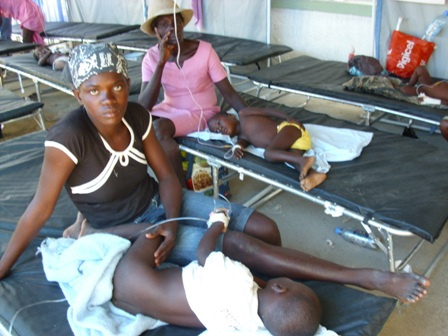
A health care facility in Haiti, the nation initiating request for extension                                                                           Credit
A health care facility in Haiti, the nation initiating request for extension. Credit

On February 21, 2013, 376 civil society organizations sent a letter to members of the World Trade Organization (WTO) calling for a further extension of the transition period for Least Developed Countries (LDCs) under article 66.1 of the TRIPS (Trade Related Aspects of  Intellectual Property Rights) Agreement. (For more on TRIPS).  Excerpts are below:


Dear Members of the World Trade Organization (WTO),


As civil society organizations concerned with access to medicines, to educational resources, to environmentally sound technologies (ESTs), and to other public goods and cultural creations and further concerned with farmers’ rights, food security, human flourishing, sustainable and equitable technological and industrial development in Least Developed Countries (LDCs), we call on WTO Members to unconditionally accord the LDC Group an extension of the transition period as requested by the LDC Group in their duly motivated request to the TRIPs Council (IP/C/W/583).


Article 66.1 of the TRIPS Agreement accorded LDC Members of the WTO a renewable ten-year exemption from most obligations under the TRIPS Agreement in view of the special needs and requirements of the LDC Members, their economic, financial and administrative constraints and their need for flexibility to create a viable technological base.


This exemption was originally due to expire on 31 December 2005. However, a TRIPS Council decision of 27 June 2002, exempted LDCs from having to implement or enforce patents and test data obligations with regard to pharmaceutical products until 1 January 2016. Without prejudice to this extension, the TRIPS Council extended the general TRIPS compliance transition period for LDC Members for all obligations under the TRIPS Agreement, other than Articles 3, 4 and 5, until 1 July 2013 or until such date on which a Member ceases to be an LDC, whichever date is earlier.


On 5 November 2012 the Delegation of Haiti on behalf of the LDC Group submitted a duly motivated request to the WTO TRIPS Council for an extension of the LDC transition period, until a Member ceases to be a LDC. Annexed to the request is a draft decision text for the consideration of the TRIPS Council. The draft decision states: “Least developed country Members shall not be required to apply the provisions of the Agreement, other than Articles 3, 4 and 5, until they cease to be a least developed country Member”.


We are of the view that Article 66.1 obliges the TRIPS Council to approve without conditions the duly motivated request submitted by the LDCs. Thus we strongly urge all WTO Members to urgently support the LDC Group request and to approve the LDC request and proposed draft decision.


LDCs are fully justified in seeking an unlimited extension for so long as any LDC Member is so classified because shorter extensions, even sequential extensions, will not give LDCs adequate time to overcome capacity constraints and to develop a viable and competitive technological base. By definition, LDCs face ongoing resource and human constraints, widening technological gaps, and weak innovative capacities. Overcoming these problems takes contextually specific strategies, policy flexibility, greater financial resources, but it also takes time – decades not years. Similarly, LDCs are fully justified in seeking a group extension rather than individual country extensions and in seeking extensions with respect to all TRIPS obligations rather than select obligations only. LDCs, by definition, are similarly situated with respect to development challenges and they should have full flexibility as a group. LDCs are also fully justified in not promising to maintain current levels of IP protections. LDCs must not be asked to undertake additional obligations.


In conclusion we request that:

  • All WTO Members honor their obligation under Article 66.1 and unconditionally accord to the Least Developed Countries the requested extension. Accordingly all WTO Members should support and agree at the upcoming meetings of the TRIPS Council to the draft decision text presented by the LDC Group that: “Least developed country Members shall not be required to apply the provisions of the Agreement, other than Articles 3, 4 and 5, until they cease to be a least developed country Member”.
  • WTO Members do NOT attach to the extension decision any conditions and limitations that limit the policy space and flexibility available to LDCs under Article 66.1 of TRIPS.


In conclusion, we stress that any attempt to weaken or to refuse Least Developed Countries (LDCs) rights that they are entitled to under the TRIPS Agreement will damage the credibility of the WTO as it will show that the multilateral trading system is unable to benefit the poorest and most vulnerable segment of the international community.


The full text of the letter and a list of the 376 signing organizations is available here.

From activist to EPA: Tejada ready to “speak truth” about environmental justice

Environmental Health News reports that the US EPA is turning to a Houston activist Matthew Tejada, for the past five years the director of Air Alliance Houston, to lead its Office of Environmental Justice. Tejada will bring to the job what he’s learned battling severe pollution problems in Houston’s low-income communities where air pollutants spewed by oil refineries, chemical plants and the shipping industry are linked to cancer and asthma. “Not only do I feel like I have the guts to speak truth, as many environmental justice leaders demand,” Tejada told the EHN, “but I feel like I can do it in a way where people will listen.”

YouTube conversations on corporations and health in 2012


Corporations and Health Watch readers often ask for suggestions for new materials for teaching or speaking in public about the impact of corporations on health.  To meet this request, I suggest a few selections that have been posted in the last year. 


Dr. Marcia Angell, senior lecturer of Harvard Medical School’s Department of Social Medicine and former editor-in-chief of the New England Journal of Medicine, answers that question and more in this installment of the President’s Lecture Series at The University of Montana. This presentation, “The Truth About the Drug Companies”. 

Posted on August 17, 2012: 78 minutes


Dr. Yoni Freedhoff at the University of Ottawa was invited by the food industry to give this talk at an industry breakfast, but, he writes “3 days prior to the event they got cold feet and dis-invited me. The good news is, the internet’s a much larger audience than a room full of food industry folks who likely wouldn’t have cared much about what I had to say in the first place. So here’s my take on what the food industry can do, why they’re not going to do it, and what we can do about it.”       

Posted on December 10, 2012: 13 minutes


Dr.  David Hemenway of Harvard Public Health Institute present facts that show that MORE GUNS = MORE HOMICIDES. After MSNBC Right Wing TV Host of the Cycle read some statistics supporting more guns in America, she was silenced by some startling facts from a real study done nationwide.

Posted December 19, 2012: 4 minutes


Michael Kang , a law professor at Emory University discusses the lasting impact of Citizens United v. Federal Election Commission, the landmark United States Supreme Court case, including what was missed in the original outrage over the decision and where we might see campaign finance reform in the future.

Posted September 13, 2012: 2 minutes


Dr. David Jernigan , Director of the Center on Alcohol Marketing to Youth at Johns Hopkins University delivers a presentation on alcohol marketing as a risk factor for underage drinking during CDC’s Public Health Grand Rounds.

Posted on April 4, 2012: 9 minutes


Bill Moyers interviews Naomi Klein, author of the international bestseller The Shock Doctrine. Klein says says the tragic destruction of Hurricane Sandy can also be the catalyst for the transformation of politics and our economy. She’s been in New York visiting the devastated areas — including those where “Occupy Sandy” volunteers are unfolding new models of relief — as part of her reporting for a new book and film on climate change and the future, discuss hurricanes, climate change, and democracy. “Let’s rebuild by actually getting at the root causes. Let’s respond by aiming for an economy that responds to the crisis both [through] inequality and climate change,” Klein tells Bill. “You know, dream big.”

Posted Nov 17, 2012: 32 minutes


Michele Simon, Attorney and Author of Appetite for Profit–How the Food Industry Undermines Our Health  talks with us about the tens of billions of dollars worth of lobbying, misinformation, fraudulent press releases, misinformation, and massive advertising campaigns used to influence your food choices, as well as agricultural subsidies, the FDA, corporate deregulation, food safety issues, experimental food technologies, obesity, and children (and now that the Supreme Court has made it legal to influence elections), the government itself.

Posted March 12, 2012: 15 minutes

Books on Corporations and Health from 2012

Need one more late holiday gift for a fellow investigator of corporations and health? Looking for something to read yourself on those long dark January nights?  Need some sobering books to relieve too much holiday good cheer and rampant consumerism? This year brought a spate of new books examining the impact of corporations on health.  Here are ten that caught my eye over the last year. 


Paul M. Barrett. Glock: The Rise of America’s Gun.  Crown.                         

The story of the company that makes America’s gun, the favorite of cops and serial killers. 


Sharon Y. Eubanks, Stanton A. Glantz. Bad Acts: The Racketeering Case Against the Tobacco Industry.  American Public Health Association.

The inside story of the legal and political battles against tobacco corporations by Sharon Eubanks,  the lead counsel for the United States in the largest civil Racketeer Influenced and Corrupt Organizations (RICO) enforcement action ever filed, United States v. Philip Morris, et al.,  and veteran tobacco researchers Stanton Glantz. 


Jeremy A. Greene, Elizabeth Siegel Watkins. (Editors) Prescribed: Writing, Filling, Using, and Abusing the Prescription in Modern America.  Johns Hopkins University Press.  

In this edited collection, ten historians examine the role of prescription drugs in the last half of the twentieth century and analyze how drug companies, physicians and patients use and abuse prescription drugs.   


Katherine Gustafson.  Change Comes to Dinner How Vertical Farmers, Urban Growers, and Other Innovators Are Revolutionizing How America Eats.  St Martin’s Griffin.    

The author searches for alternatives to the corporate-driven food system and describes some promising local initiatives.   


Gerard Hastings.  The Marketing Matrix: How the Corporation Gets Its Power – And How We Can Reclaim It.  Routledge.                                                    

A UK marketing professor argues that we live in the simulated world created by the Marketing Matrix and suggests how we might escape its power. 


Martin Lindstrom.  Brandwashed: Tricks Companies Use to Manipulate Our Minds and Persuade Us to Buy.  Kogan Page.                                                     

A marketing insider reveals the strategies advertisers use to persuade us to buy their products.


Robert Proctor.  Golden Holocaust: Origins of the Cigarette Catastrophe and the Case for Abolition.  University of California Press.                                  

Stanford historian presents a history of the tobacco industry in the twentieth century and makes the case for a ban on the manufacture and sale of cigarettes.


Ralph Nader.  The Seventeen Solutions Bold Ideas for Our American Future.  Harper. 

The founder of the modern consumer movement describes the problems America faces and offers seventeen solutions, several focused on changing corporations. 


David Stuckler and Karen Siegel. (Editors and Authors). Sick Societies: Responding to the global challenge of chronic disease Oxford University Press.

This edited collection synthesizes the evidence on the rise of chronic diseases and assesses the role of government, business, and corporations in the etiology and prevention of chronic disease. 


Bill Vlasic. Once Upon a Car: The Fall and Resurrection of America’s Big Three Automakers–GM, Ford, and Chrysler. William Morrow.                                    

An account of the collapse and government-supported resurrection of the domestic auto industry by the Detroit bureau chief for the New York Times. 

Newtown massacre as a public health failure—and opportunity


27 Glocks and Sig Sauers

While the nation grapples with how 27 lives were lost in small-town America last Friday, the bigger question is, how are so many lives lost all year around in cities big and small? The public health profession – whose primary aim is prevention – is at least partly to blame for the nation’s failure to address gun violence.


While conventional medicine treats patients with problems such as lung cancer and gunshot wounds, public health professionals instead focus on the related behaviors, aiming to prevent people, for example, from smoking or drinking too much. Similarly, when it comes America’s gun problem, public health speaks of “violence prevention” or the even more sterile “injury control.”


However, each of these approaches fails to address the underlying factor driving the negative behaviors: massive industries that manufacture and market the products of destruction, whether it’s tobacco, alcohol, or in this case, guns.


Of course it’s not just the market for deadly product these industries create; it’s also the powerful lobbyists that hold our political system hostage to reform. The public health profession has failed miserably in the political arena due to its collective unwillingness to identify and oppose harmful corporate lobbying.


While much has been said about how the National Rifle Association intimidates politicians, this is no excuse for inaction by the public health field. (Some also argue the NRA’s political influence is exaggerated.) Now more than ever public health professionals working in violence prevention need to speak out about the role the firearms industry in destroying lives forever. They need to step out of their academic ivory towers and government offices to tell the truth about how the manufacture, sale, and marketing of guns contribute to our “culture of violence.”


Fortunately, there is no lack of effective policies available to reduce gun violence and the influence of the gun’s industries harmful practices. For example:


1. Taxes on bullets, a strategy designed to make ammunition more expensive and to bypass current interpretations of the Second Amendment;

2. Mandatory trigger locks, in which only the legal owner of the gun can fire the weapon, often using finger print technology, and other such built-in safety devices;

3. Bans on assault weapons and other military style firearms, which have proven helpful in other nations;

4. Stricter enforcement of systems for registration of those banned from owning firearms including those with felony convictions, serious mental illness, and histories of domestic violence and extension of this background check system to gun shows;

5.  Legal liability for gun companies for the consequences of unscrupulous retail distribution practices which make it easy for purchasers to bypass registration system;

6.  Rescinding recent laws that allow people to carry concealed weapons to churches, universities, national parks and other settings;

7.  Licensing systems that would require gun owners, like car owners, to obtain a license to operate a firearm and require periodic re-licensing;

8.  Stricter standards for the manufacture of firearms, now one of the least regulated products on the market;

9. Adequate funding for enforcement of the above measures at local, state and federal levels;

10. An end to the ban on federal funding for research on gun violence, which muzzles public health research, depriving society and policymakers the evidence needed to make informed policy decisions.


No one of these actions alone will end the gun carnage that makes us an outlier among developed nations. But, as we have learned with tobacco, a wide array of evidence-based public health interventions, designed to counter the power of an industry that profits from lethal but legal products can, over time, reduce premature deaths and preventable harm.


What can public health professionals do now to support and amplify public pressure for action to protect the public against the harmful practices of the fire arms industry and its supporters? First, we can educate ourselves. Just as thousands of public health researchers and professionals can now discuss the science and politics of the tobacco industry efforts to undermine health, we need a similar effort to educate the public about the gun industry. The resources below are a few places to start.


Second, we need to take on the collective gun lobby: the National Rifle Association, the National Shooting Sports Foundation, and the gun companies. Like the climate deniers, these groups seek to obfuscate the science about gun control, discredit effective public health measures and stoke fears. In a recent commentary the journalist Bill Moyers called the NRA “the enabler of death—paranoid, delusional and venomous as a scorpion.” This report, Blood Money: How the Gun Industry Bankrolls the NRA examines the close relationship between industry and the NRA. 


Third, we need to mobilize support for specific legislative proposals. It’s not enough to just have the date and educate, we also need to act. The public health profession is great at collecting data and publishing articles, but miserable at taking political action. This requires a fundamental shift in both allocation of resources and in attitude.


Of course, many other important public health measures can also help reduce gun violence such as better prevention and treatment of mental illness and efforts to reduce violent media and violence of all kinds. But what makes the United States stand out is our unwillingness to put the safety of our people ahead of the economic interests of the gun industry. Let’s make sure that the unfortunate window the Newtown massacre has opened doesn’t close before another town has to bury its children.


Books on Gun Violence

  • Barrett PM. Glock: The Rise of America’s Gun.  New York, NY: Crown; 2012.
  • Spitzer RJ. The Politics of Gun Control, 5th Edition, Paradigm, 2011
  • Hemenway D. Private Guns, Public Health.  Ann Arbor, MI: University of Michigan Press; 2004.
  • Diaz T. Making a Killing: The Business of Guns in America. New York, NY: New Press; 1999.

Organizations and Campaigns Challenging Industry Practices

Violence Policy Center
The Brady Center to Prevent Gun Violence
Coalition to Stop Gun Violence
Where Did the Gun Come From?
Harvard Injury Control Research Center
Means Matter Suicide, Guns, and Public Health
Stop Handgun Violence

Corporations, human rights violations, and the U.S. Supreme Court

 On October 1, 2012, the U.S. Supreme Court heard oral arguments for Kiobel v. Royal Dutch Petroleum, a case that concerns the legal treatment of corporations accused of committing human rights violations overseas.


Kiobel is a class action brought by current and former residents of Nigeria, in the Ogoni region, against Royal Dutch Petroleum for alleged conduct in Nigeria in the 1990s. Starting in the late 1950s, Shell Petroleum Development Company of Nigeria, which now falls under the umbrella of Royal Dutch Petroleum, entered Nigeria’s Ogoni region to explore its oil-producing potential. A local group, known as the Movement for Survival of Ogoni People, began to protest these activities out of concern for their impact on the environment. Esther Kiobel (the widow of one of the protestors) and the other plaintiffs allege that, from 1993 to 1994, Royal Dutch Petroleum responded to these actions by working with Nigerian military forces that assaulted, raped, and murdered some of the protestors.[1]


Kiobel’s claim was made under the Alien Tort Statute, a U.S. law enacted in 1789.[2] The statute allows U.S. courts to hear lawsuits over alleged overseas “violation[s] of the law of nations,” also known as customary international law. For a U.S. court to have jurisdiction over a case, the alleged perpetrators must conduct business or otherwise have a presence in the United States. At the time it was passed, the Alien Tort Statute was likely envisioned as a legal tool to address piracy and crimes committed against ambassadors.[3] In 2010, the U.S. Court of Appeals for the 2nd Circuit held that only individuals—not corporations—could be held liable through a claim brought under the Alien Tort Statute. The appellate court explained that, because corporate liability is not a universally accepted concept within customary international law, the Alien Tort Statute could not be employed as a tool to hold corporations liable for international human rights violations. The court noted, however, that individuals could be found liable for such violations under the Alien Tort Statute.[4]


The U.S. Supreme Court originally heard oral arguments for Kiobel in February 2012, with a focus on whether corporations could be sued for alleged overseas human rights violations under the Alien Tort Statute.[5] One month later the Court requested additional oral arguments, which were held in October 2012. This time, the Court specified that the arguments should focus on whether the Alien Tort Statute allows U.S. courts to have jurisdiction over cases that concern activities that occurred outside of the United States.


Interestingly, the last time that the Supreme Court requested additional oral arguments was in 2009, for the Citizens United v. Federal Election Commission case, which the Court decided in 2010.[6] That case concerned the desire of the non-profit corporation Citizens United to promote its movie, Hillary: The Movie—which offered an unflattering portrait of Hillary Clinton—throughout the presidential primaries in 2008. Lower courts had determined that Citizens United could not use television advertisements to promote the film, as this would have violated laws that determined how corporations could engage in political speech.[7]


The U.S. Supreme Court overturned these lower court decisions and, with its Citizens United opinion, expanded the ability of corporations to use their own monies for political speech (i.e., advertisements for or against candidates in advance of an election).[8] The decision received significant attention from the media, as it dramatically altered the role that corporations could play in the political process. As evidenced by the recent presidential and congressional election cycles, corporations now have a more prominent voice in U.S. elections compared to the role that they played before the increased financial freedom granted by Citizens United.


While the Kiobel case raises very different types of legal concerns than those addressed by Citizens United, it has similarly captured the attention of the business community and other stakeholders due to its implications for corporations. For example, the U.S. Chamber of Commerce filed an amicus brief, also known as a friend-of-the-court brief, in support of Royal Dutch Petroleum. The Chamber of Commerce has summarized its position as follows:


“[E]fforts to expand civil liability under the 1789 Alien Tort Statute (ATS) would interfere with U.S. foreign relations, and would have severe economic consequences not just on the domestic economy—by discouraging investment by foreign companies reluctant to be exposed to American-style litigation—but also on developing and post-conflict countries, particularly those where the U.S. government has enlisted the aid of American businesses to ‘constructively engage’ them through commerce.”[9]


Groups such as the Center for Constitutional Rights have filed amicus briefs in support of the Kiobel and the other plaintiffs, arguing that “a general principle of law exists supporting corporate liability and that this principle supports a finding that corporations can be held liable under the ATS.”[10] An amicus brief submitted by Ambassador David J. Scheffer echoes this point. In his brief, he writes: “The Circuit Court majority’s judgment abandoning corporate liability under the Alien Tort Statute . . . stands in stark contrast to the growing number of nations that have embraced corporate liability for atrocity crimes.”[11]


As these arguments suggest, stakeholders believe that the Court’s decision will have a major impact on the global business community and international human rights. The case gives the Court an opportunity to again consider whether corporations should, under the law, be treated in the same way as actual people. In Citizens United, the Court expanded corporations’ political speech rights, bringing them more in line with those enjoyed by actual people. In the appellate court’s treatment of Kiobel, the Second Circuit found that the Alien Tort Statute could apply to actual people but not to corporations. In the coming months, the U.S. Supreme Court will decide whether this distinction will be upheld, with important implications for both corporations and individuals in the U.S. and overseas.


Sarah O. Rodman is a doctoral student in Health Policy and Management and a pre-doctoral fellow at the Center for a Livable Future at the Johns Hopkins Bloomberg School of Public Health.


References


[1] Kiobel v. Royal Dutch Petroleum Co., 621 F.3d 111 (2nd Cir. 2010).

[2] Alien Tort Statute, 28 U.S.C. § 1350 (2012).

[3] Sosa v. Alvarez-Machain, 542 U.S. 692 (2004).

[4] Kiobel v. Royal Dutch Petroleum Co., 621 F.3d 111 (2nd Cir. 2010).

[5] P. Weiss, Should corporations have more leeway to kill than people do? NY Times (Feb. 24, 2012).

[6] A. Liptak, Justices begin term by hearing case again. NY Times (Oct. 1, 2012).

[7] L. Rutkow, J.S. Vernick, S.P. Teret, The potential health effects of Citizens United, N Engl J Med. 2010;362:1356-1358.

[8] Citizen United v. Federal Election Commission, 558 U.S. 310 (2010).

[9] National Chamber Litigation Center, U.S. Chamber of Commerce, Kiobel, et al. v. Royal Dutch Petroleum, http://www.chamberlitigation.com/kiobel-et-al-v-royal-dutch-petroleum.

[10] Center for Constitutional Rights, Kiobel v. Royal Dutch Petroleum Co., http://ccrjustice.org/ourcases/current-cases/kiobel.

[11] Brief of Ambassador David J. Scheffer in Support of the Petitioners, http://harvardhumanrights.files.wordpress.com/2012/01/brief-of-ambassador-david-j-scheffer-12-20-11.pdf.