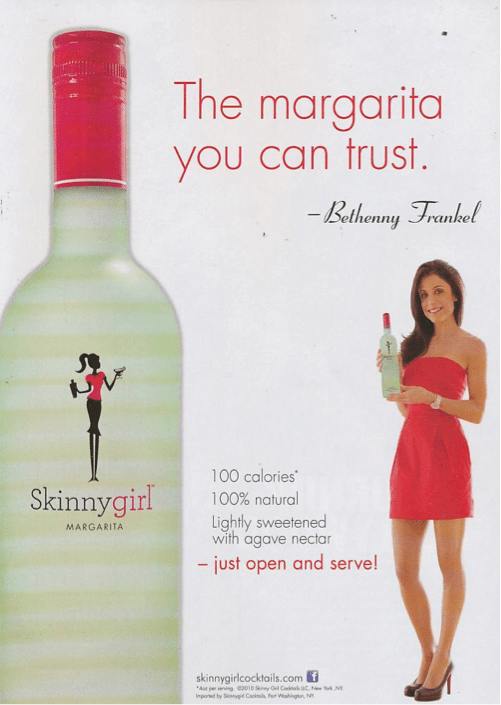
Marketing Alcohol, Tobacco and Unhealthy Food to Women: the New Affirmative Action

credit: Center on Alcohol Marketing to Youth

While the rest of our society still struggles to provide equal employment and educational opportunities for girls and women, the alcohol, tobacco and processed food industries have embraced affirmative action to market their lethal but legal products to women.  A few days after  International Women’s Day, it is worth asking why. 


In recent years, the longevity advantage that women have enjoyed over men has shrunk.   In 1970, women in the United States lived 7.6 years longer than men. By 2011, the advantage was less than five years, a 37 percent decline. Between 1992 and 2006, female mortality rose in more than 40 percent of U.S. counties.  One important reason for this falling gender gap in longevity has been the increased marketing of unhealthy food, tobacco and alcohol to women. 


The recent report from the US Centers for Disease Control that obesity rates for children aged 2 to 5 dropped by 43% in the last decade is welcome news for those who hope for a healthier America in fifty years.  Sadly, the more immediate story from the CDC shows flat or even increasing obesity rates for every other population group. One group that did much worse was women aged 60 and older, of whom 38 percent were obese, an increase of more than 20 percent since 2003-2004.


Since General Mills created Betty Crocker in 1921, the food industry has advertised to women. As more females moved into the workforce, new marketing opportunities arose. With fewer hours for cooking, women turned to makers of processed food and fast food outlets. To relieve the stresses of balancing family and work demands, some women turned to heavily advertised high sugar, fat and salt foods. These “fun-for-you”foods led many women to gain weight which in turn created a growing market for diet and “good for you” foods.  By marketing both products that contribute to obesity and those that claim to help dieters lose weight, companies like PepsiCo, Kellogg and Nestle have found a way to have their cake and eat it.


In the food, alcohol and tobacco industries, as adult male markets became saturated, better off men quit smoking or drinking or cut down on unhealthy foods, and victims of too much alcohol, tobacco and unhealthy food died, marketers of these products targeted women(and young people) to become the new source of profits.  Today, young women are prime markets for Big Alcohol.  For example, as men started to drink less hard liquor, Smirnoff began in 2000 aggressively marketing a new women and youth oriented product Smirnoff Ice, portraying it as a path to glamour and sophistication. Over the next decade, the company’s sales of all vodka products doubled, more than replacing the lost male market.  As one alcohol company executive told Advertising Age, “the beauty of this category is that it brings in new drinkers, people who really don’t like the taste of beer.”


According to CDC’s most recent Youth Risk Behavioral Survey, 34 percent of female seniors in high school reported that they binge drank at least once in the past month; up from 27 percent in 2011. Each year, 25,000 women and girls die from alcohol-related causes


Cumulatively, this targeting of women by food, alcohol and tobacco companies has had an impact on public health.   A 2013 Institute of Medicine report called U.S. Health in International Perspective: Shorter Lives, Poorer Health, found that in comparison to other developed nations, Americans have been dying at younger ages than people in almost all other high-income countries. This disadvantage has been getting worse for three decades, especially among women, which researchers attributed in part to higher U.S. consumption of alcohol, tobacco and unhealthy food.


Today, Washington’s obsessive debates about every detail of the rollout of Obamacare seem to be a distraction from the real health crisis facing this country and especially its women.  Will policy makers continue to allow corporations that value their profits over our health to be the de facto deciders on health policy in this country?   Will Big Business and its allies continue to be able to defeat any effort to restrict aggressive or deceptive marketing of their products?


In 2010, 49% of Americans reported one or more chronic diseases. These conditions account for $3 of every $4 spent on health care.  A recent World Health Organization report on chronic diseases identifies tobacco, alcohol and high fat, sugar and salt foods as leading causes of the global increase in chronic diseases.

To date, the food, alcohol and tobacco industries have warned that any effort to restrict their right to promote their profitable and legal products undermines our freedom to eat, drink or smoke what and when we choose. They further claim that main cause of the rise in chronic diseases is mysterious epidemics of increasing irresponsibility and ignorance rather than their marketing practices.These companies make the faux feminist argument that women’s right to consume sickening products with the guys is an essential part of liberation. 


For women, the women’s movement, health professionals and tax payers, accepting these arguments ensures that women’s longevity advantage will continue to shrink.  It also means that any improvements such as better access to health care and more preventive services that the Affordable Care Act may bring will be overwhelmed by the new increasingly female victims of premature deaths and preventable illnesses from tobacco, food and alcohol related chronic diseases. 



European Union Adds Teeth to Its Anti-Tobacco Legislation

A new European Union anti-tobacco directive presents some victories for health advocates but industry pressure has weakened the final text, say campaigners, reports John Maurice in the Lancet.  The numbers certainly make a strong case for a stronger directive. Every year, on average, 700 000 people in the EU die from tobacco-related causes. The main target of the new directive is young people. Among its provisions is a ban on flavoring of tobacco to give it the taste of, say, vanilla, chocolate, or menthol, and thereby to enhance its appeal to youngsters. Manufacturers must report in detail all additives they put into their tobacco products

How Washington Dooms Millions of Americans to Premature Death

Re-posted from The Daily Beast


credit
credit

Lost in the vitriolic debate over Obama’s health reforms is the simple fact that tobacco, alcohol, and bad food are the leading killers in America. Professor Nicholas Freudenberg on why we need to change our consumption if we’re going to get healthier.


While it’s unrealistic to expect that recent successes in enrolling more people into health insurance will diminish the health care debates in Congress any time before November’s elections, Washington’s obsession with ObamaCare has made the nation lose sight of other strategies for improving health and reducing health care costs.


Advances in public health require not only getting more people insured, but also finding ways to turn off the faucets that are sending floods of Americans with chronic diseases into our emergency rooms, hospitals—and morgues. Chronic diseases cause 7 out of every 10 deaths in the United States and 49% of Americans have one or more chronic diseases. They account for $3 of every $4 spent on healthcare—about $1.5 trillion annually.


The World Health Organization has identified three drivers of the global rise in chronic diseases—excess consumption of tobacco, alcohol and high fat, sugar, and salt foods.  According to a recent study by University of Washington researchers, tobacco, alcohol and diet cause more than 1.2 million annual premature deaths in the United States from heart disease, stroke, cancer, diabetes, and other conditions.


Corporations and their allies claim that choices around food, alcohol and tobacco are a matter of individual responsibility, not public policy.  But this argument doesn’t explain why the prevalence of diabetes has increased 176% in the last 30 years. And it is contradicted by researchers’ estimate that prevention campaigns, higher tobacco taxes and smoking bans have prevented 8 million premature deaths and extended the average lifespan for the people who did not take up smoking by on average almost 20 years. 


We need a better balance between the constitutional protection of commercial speech and a corporation’s responsibility not to misrepresent the health benefits of their products.


To bring about similar advances will require not only spending more on prevention but also creating policies that make it more difficult for tobacco, alcohol and food companies to design products and marketing campaigns that contribute to premature death and preventable illnesses. Critics rightly point out that less than a dime of every health care dollar we spend goes to prevention. 


But the bigger problem is how much our society spends on promoting disease.  Each year the tobacco, alcohol and food industries spend more than $25 billion marketing their products. That’s more than twice the annual expenditures for the entire Centers for Disease Control. As tobacco, alcohol and food companies lose white middle class customers—either to healthier choices or premature death—they ramp up their advertising to new market segments such as women, children, Blacks and Latinos. By targeting these populations, they hope to grow their bottom line and recruit new life-time customers. But what’s good for business is bad for health.  A 2013 study found that in some places in the US, women’s longevity has worsened, in part because of tobacco, food and alcohol consumption.


credit
credit

An article published in JAMA Internal Medicine last week further undermines the “people make stupid choices” argument.  Researchers found that compared to people who obtained less than 10% of their calories from added sugar, those who obtained more than 25% from this source were almost 3 times more likely to die of cardiovascular disease.  Where does that added sugar come from?  Not from the sugar we spoon on our cereal or into our coffee. The highest proportion (37.1%) comes from sugary beverages.  Customers don’t choose how much sugar to add to their soda—they pick what’s on the shelf.  And despite some feel-good commitments to health from Coca Cola and PepsiCo, it’s still sugary soda that drives these companies’ profits— and their marketing dollars.


The public health message is clear: if Americans consumed less added sugar fewer would die prematurely.  But last week PepsiCo rejected calls to sell its North American beverage business.  Rather, it decided to double down on selling sugary drinks. PepsiCo’s CEO explained to investors that “snacks and beverages purchased and consumed together” helped grow business.  In other words, if the company can persuade consumers to quench the thirst its salty FritoLays produce with Pepsi, they can increase sales.  Pepsi estimated it earned up to a billion dollars from such “synergies” which also contribute to more diabetes and salt-induced hypertension.


A vending machine in a hospital.  credit
A vending machine in a hospital.  credit

What policy approaches could make it harder for corporations to profit at the expense of public health?  Strengthening corporations’ duty to disclose what they know about the health effects of their products would help consumer make informed choices. On the legal front, we need a better balance between the constitutional protection of commercial speech and a corporation’s responsibility not to misrepresent the health benefits of their products. Misleading corporate health claims are the slow-motion equivalent of falsely shouting fire in a crowded theater. Another goal is to make it harder for corporations to pass on to tax payers and consumers the health care costs their products generate.  The success of the fast food, gun, pharmaceutical and other industries in getting Congress to limit the rights of injured consumers to file class action lawsuits are steps in the wrong direction. Finally, turning off the faucets of marketing that produce our flood of chronic disease will require a more level political playing field by limiting corporate campaign contributions, lobbying and revolving door employment.


In all likelihood, our national health discussion will continue to be dominated by debates on software for healthcare.gov or whether to delay enrollment deadlines.  But by failing to consider more upstream solutions for preventing disease and reducing health care costs, Washington is dooming millions of Americans to premature death. 


Nicholas Freudenberg, a Professor at the City University of New York School of Public Health and Hunter College is the author of Lethal But Legal: Corporations, Consumption, and Protecting Public Health

Tobacco Lobbying on the Rise Throughout New York

The Wall Street Journal writes that a report by the New York Public Interest Research Group released Wednesday says that the tobacco industry spent $7 million in the first half of 2013 on tobacco lobbying and campaign donations, more than it did on during 2011 and 2012 combined. NYPIRG reports that Altria, formerly Philip Morris, spent the most, with more than $4 million on lobbying and more than $300,000 on campaign contributions.  Altria spokesman David Sutton says the company participates in policy-making that could affect it, shareholders and consumers.

Lethal but Legal: Corporations, Consumption and Protecting Public Health

This week, Oxford University Press releases a new book by Corporations and Health Watch founder Nicholas Freudenberg, Distinguished Professor of Public Health at City University of New York School of Public Health and Hunter College. Here’s an excerpt from the Preface:


bookcover

Never before in human history has the gap between the scientific and economic potential for better health for all and the reality of avoidable premature death been greater. In the past, babies died in infancy, women in childbirth, workers from injuries or occupational diseases, and people of all ages from epidemics of infectious disease exacerbated by inadequate nutrition, contaminated water, and poor sanitation. For the most part, the world lacked the resources and the understanding to eliminate these problems. As societies developed; as science, technology, and medicine advanced; and as people organized to improve their standards of living, more and more of the world’s population attained the living conditions that support better health and longer lives.


Today, the world still confronts the global health challenges of the last century. Epidemics of malaria, HIV infection, tuberculosis, and other communicable diseases still threaten well-being and economic development in many poor countries. More than a billion people live in urban slums where the average lifespan can be 35 years, half of that in better-off places where residents have certain access to adequate nutrition, clean water, and sanitation.


Now new threats have emerged. Deaths from chronic conditions like heart disease, cancer, diabetes, and stroke have surged, today accounting for more than 60 percent of the world’s deaths. Injuries have become the leading cause of death for young people around the world. Everywhere, from the wealthiest nations like the United States to the poorest countries in Africa, Asia, and Latin America, the proportion of deaths from these causes of death are growing. These premature deaths and preventable illnesses and injuries impose new suffering on individuals, families, and communities. They burden economies and taxpayers and jeopardize the improvements in health brought about by the public health advances of the previous two centuries.


Alarmingly, these new epidemics are not the result of the poverty and squalid living conditions that caused illness and death in the past, even though chronic disease and injuries afflict the poor much more than the rich. Nor are they the result of ignorance and inadequate science. For the most part, we understand the causes of these illnesses and injuries enough to prevent them. What we lack is the political will to implement the needed preventive measures. Even worse, in some cases the growing health burden is the result of new science and technology, which have been used to promote profit rather than prevent illness. These new epidemics of chronic diseases and injuries are instead the consequence of what most people thought were the remedies for poverty-related ill health: economic growth, better standards of living, and more comfortable lifestyles.


While many factors contributed to this global health transformation, Lethal but Legal focuses on what I consider to be most important and most easily modifiable cause: the triumph of a political and economic system that promotes consumption at the expense of human health. In this book, I describe how this system has enabled industries like alcohol, automobiles, firearms, food and beverages, pharmaceuticals, and tobacco—pillars of the global consumer economy—to develop products and practices that have become the dominant cause of premature death and preventable illness and injuries. This system was born in the United States and has now spread around the world.


In a global economy that focuses relentlessly on profit, enhancing the bottom line of a few hundred corporations and the income of their investors has become more important than realizing the potential for good health that the world’s growing wealth and the advances in science, technology, and medicine have enabled. This tension between private accumulation and public well-being is not new. But in the twenty-first century, it has come to shape our economy and politics in ways that profoundly threaten democracy, human well-being, and the environment that supports life. Paradoxically, the increasing concentration of power in the small number of the world’s multinational corporations also presents new opportunities to create another healthier and more just future.


Lethal but Legal is available online from: 

amazon-logoBarnes__Noble_t250logo

and bookstores everywhere.

The Cigarette Industry Running Out of Puff

In an analysis of the future of the tobacco industry, The Economist warns that U.S. Surgeon-General Boris Lushniak’s goal of “end-game strategies” to stamp out cigarettes could put America’s three big tobacco firms, Altria, Reynolds and Lorillard, out of business and endanger the viability of Philip Morris International (PMI), which along with Altria makes Marlboro, the top-selling global brand; Japan Tobacco; and British American Tobacco and Imperial Tobacco of Britain.

Top Lessons from 50 Years of Fighting the Tobacco Industry

Cross-posted from The Guardian

credit
credit: Shahbaz Majeed

This month’s 50th anniversary of the First Surgeon General’s Report on Smoking and Health provides a bittersweet reminder of the promise and the limitations of public health activism to curb corporate promotion of behaviors and lifestyles associated with premature death and preventable illness and injury. In the half century since the report was released, the proportion of Americans who smoke has been cut in half. A new report in the Journal of the American Medical Association estimates that tobacco control efforts in the United States have prevented 8 million premature deaths and extended the average lifespan by on average almost 20 years of life for the people who did not take up smoking because of prevention campaigns, higher tobacco taxes or smoking bans. Overall, the success in reducing tobacco use has added 2.3 years to the life of the average American man and 1.6 years to the average American woman.


But this progress could have been achieved in far less time had not every preventive policy been opposed by the tobacco industry and had politicians beholden to the tobacco lobby severed these ties more quickly. These delays doomed many more to tobacco-related illnesses. And despite the progress in this country, the estimated toll from tobacco in this century is 1 billion premature deaths, more than 10 times the toll for the 20th century. The main reason so many more people will fall ill and die painful, early tobacco-related deaths is that the tobacco industry has adapted the lessons on marketing and undermining regulation that it learned in the United States to emerging markets in Asia, Africa and Latin America.


Sadly, the tobacco industry is not alone in contributing to America’s poor health standing among developed nations. In 2010, guns took the lives of 31,076 Americans in homicides, suicides and unintentional shootings, the equivalent of more than 85 deaths each day. Another 73,505 Americans were treated in hospital emergency departments for non-fatal gunshot wounds. While the scientific knowledge and technology to significantly reduce this toll are available, like the tobacco industry, the gun industry and its allies in the National Rifle Association have steadfastly blocked any progress to make guns less accessible or safer.


Similarly, the alcohol industry contributes to alcohol related injuries and illnesses by aggressive marketing, expanding the density of alcohol outlets, and designing products such as wine coolers and malt liquors to appeal to young drinkers. A recent study found that between 2001 and 2009, youth exposure to television alcohol advertising increased by 71%. Excess alcohol consumption accounts for about 4,700 annual deaths among underage drinkers. Another study estimated that the combined market value for the alcohol industry of illegal underage drinking and adult problem drinking accounted for between 37.5 and 48.8% of consumer expenditures for alcohol.


How has it come to pass that corporations now have a stronger influence on the health of Americans than public health officials, doctors or hospitals? How have corporations succeeded in convincing so many officials in the White House, Congress and the supreme court that protecting profits is a higher national priority than protecting public health?


In the last decades, a corporate consumption complex has solidified its influence on American politics and the economy. This web of consumer corporations, the bankers and hedge funds that lend them money, the trade associations that lobby for them, and the global ad agencies that market their products has been able to use its campaign contributions, lobbying and lawsuits to achieve its business goals even when the majority of Americans disagree with these. Like the military industrial complex that Dwight Eisenhower warned about before he left public office, the corporate consumption complex threatens our democracy as well as our health and environment.


Are there lessons from our partial successes in cutting tobacco use that could be applied to reducing the power of the corporate consumption complex and its brand of hyperconsumption? I suggest three.


1. Efforts to reduce tobacco use succeeded when Americans came to believe that the right to breathe clean air trumped the tobacco’s industry’s right to promote its products without public oversight. Today, we need to mobilize parents to demand our children’s right not to be shot and not to be targeted by marketing of fast food, sugary beverages and snacks that have contributed to a 176% increase in the prevalence of diabetes between 1980 and 2011.


2. Part of the success in reducing smoking came from forcing Big Tobacco to reimburse state governments for the costs of caring for people with tobacco-related illnesses. Enacting policies that would require processed food producers to reimburse taxpayers and victims of the diet-related diseases exacerbated by their promotion of high fat, sugar and salt diets and alcohol producers for those injured or killed by the binge drinking.


3. Fund independent hard-hitting prevention campaigns designed to undo the deceptive advertising Big Tobacco had sponsored. We can do the same thing by counterbalancing the media and ad campaigns today targeting young people to eat bad foods and glamorize guns.


In 1964, most observers thought it was politically impossible to defeat the tobacco industry and to bring about significant reductions in tobacco use. Today, changing the practices of the firearms, alcohol and processed food industries seems a similarly daunting task. But if we can apply the lessons from tobacco to accelerate changes in harmful business practices, perhaps we won’t need to wait another 50 years to prevent the deaths, illnesses, injuries and rising healthcare costs that today’s science could avert.


Post script:  219 Guardian readers commented on this column in the week since it was posted.  A review of these comments provides a good overview of public debates about individual and corporate responsibility –as well as the occasional nuttiness of online commentary.


Surgeon General: Smoking to Kill 5.6 Million Kids if We Don’t Act Now

CBS reports that the U.S. Surgeon General’s latest smoking report warns that unless current tobacco use rates fall, another 5.6 million U.S. kids might die prematurely. The Surgeon General’s 2014 report, the first in more than a decade, found that smoking has killed more than 20 million Americans prematurely in the last half century.  

Sugar Health Risk Cannot Be Compared to Smoking, Says Former UK Health Secretary Andrew Lansley

Health experts are wrong to claim that sugar is as dangerous as smoking, the former health secretary Andrew Lansley has said as he clashed with one of his old advisers on obesity, Professor Simon Capewell, reports the Guardian.  Lansley, a senior Conservative and now leader of the house, said people would not accept a rapid reduction in the sugar content of familiar foods, as he rejected calls from the Action on Sugar group for a 20% to 30% drop in the amount added to products. “Sugar is the new tobacco. Everywhere, sugary drinks and junk foods are now pressed on unsuspecting parents and children by a cynical industry focused on profit not health,” Capewell said.

New Year’s Resolutions for a Healthier America


nye
Source

Each New Year, millions of Americans resolve to quit smoking, drink less alcohol and give up the high fat, sugar and salt diets that lead to expanding waistlines and higher risk of diabetes and heart disease.   Sad to say, however, most resolvers fail to realize their goals. According to the US Centers for Disease Control, fewer than one in ten smokers wanting to quit in 2010 actually succeeded.  For the 38 million adult Americans who report binge alcohol drinking, about 80 to 90% of those who try to stop can expect to relapse.  About 45 million Americans go on a diet each year but 80% of dieters fail to lose weight and a third actually gain.  Worse, almost 70% of US adults are now overweight or obese.


The cost of these failed New Year’s resolutions hurts not only the pride and well-being of those who try to make changes in their lifestyle.  According to the World Health Organization, overconsumption of tobacco, alcohol and unhealthy food are main causes of the growing burden of premature deaths and preventable illnesses from chronic diseases like diabetes, heart disease, cancer and stroke in the United States and around the world.  So why is so hard for us to give up the products that lead to early death, pain, and rising costs?


One main reason is that the big alcohol, food, and tobacco corporations that profit from this hyperconsumption have created a world where the easy choice is one that brings them profits, not the one that keeps us healthy.  They load their products with the nicotine, alcohol, sugar and fat that appeal to our vulnerabilities to addiction and our craving for release from stress and anxiety.  They market their products relentlessly, using every technology at their disposal to get under our cognitive radar so they can manipulate our own and our children’s most primitive fears and hopes. In 2012, the fast food industry spent $4.6 billion to advertise mostly unhealthy products, often targeting children and young people. It significantly increased use of internet advertising, allowing advertisers to bypass parental controls of television advertising.  Alcohol, food and tobacco companies make their products ubiquitous, cheaper and easier to find than healthier alternatives. To add insult to injury, these corporations and their trade associations use their political clout and campaign contributions to undermine public policies that protect health or make healthier choices more available. For example, when the Obama Administration suggested voluntary standards to restrict advertising  unhealthy food to children, a Reuters investigation last year found that the big food companies spent more than $175 million over three years lobbying to defeat the proposal.  


Given this corporate effort to promote consumption of products associated with the country’s most serious health problems, it’s hardly surprising that so many of us aren’t able to fulfill our New Year’s resolution to live healthier lives. So this year, let’s try some new resolutions:


1. Elect a Congress more willing to stand up to the tobacco, food, and alcohol industries. In the 2012 election, these three industries contributed more than $60 million to Congressional candidates in expectation of advancing their objectives of less regulation and lower taxes. In 2014, let’s resolve to support candidates who pledge to put protecting our health ahead of protecting corporate profit.


2.  Encourage our cities and towns to use their zoning power to make unhealthy products less ubiquitous.  Research shows that a lower density of alcohol outlets leads to less problem drinking, and fewer fast food outlets make it easier for people to choose healthier food.  Zoning laws were created more than a century ago to protect against earlier threats to health, such as polluted air and water, inadequate sanitation, and unsafe housing. Let’s now update our zoning rules to safeguard our communities against the promotion of alcohol, tobacco, and unhealthy food that cause today’s killer chronic diseases.


3. Encourage our mutual and pension funds, and our religious, hospital and university endowments, to stop investing in companies that profit from promoting diseases. Companies change their business practices when government regulation, consumer and investor pressure and market forces make it less profitable to stay the course than make changes. A few years ago CALPERS, the pension fund of California public employees, dropped all investments in tobacco.  In 2014, let’s resolve to begin a grassroots campaign to reward companies that end health damaging practices, and take our business and investments away from those who don’t.


4.  Support public health officials who seek to restore the visible hand of government to protect public health.  Proponents of market-knows-best have raised the bogey man of the Nanny State to defeat efforts to restrict marketing of tobacco, alcohol, fast food and soda. But it’s Nanny Ronald McDonald, Nanny Marlboro and Nanny Budweiser that are trying to persuade our children and young people to consume sickening products.  This year, let’s resolve to better protect our children from these bad nannies.


5.  Require corporations to pay for the health consequences of what they sell.  One important reason companies continue to profit from promoting unhealthy products is that they can avoid paying for the damage. Instead, they shift the costs for tobacco, alcohol and diet- related diseases to tax payers and consumers. By ending their ability to externalize these costs, new policies and laws could create incentives for companies to create healthier products.


As individuals, we have limited power to resist the pressure to consume the alcohol, tobacco and unhealthy foods that lead to early death and preventable illness. In 2014, let’s together resolve to create the environments and policies that make health the easy choice for all Americans. 


Nicholas Freudenberg is Distinguished Professor of Public Health at the City University of New York School of Public Health and author of  Lethal but Legal Corporations, Consumption and Protecting Public Health (Oxford, Feb. 2014).