Death of a public health champion: Warren Braren

Last week, reported the New York Times, Warren Braren, a critic of the tobacco industry who helped to spark a Congressional ban on tobacco advertising, died at the age of 82. Let’s examine the contributions of this champion of public health.

Continue reading Death of a public health champion: Warren Braren

Trans-Pacific Partnership Agreement Must Protect Nations’ Right to Enact Measures to Reduce Tobacco Use

Statement of Matthew L. Myers, President, Campaign for Tobacco-Free Kids

TPP map
The nations of the Trans Pacific Partnership (credit)

As they complete negotiations on the Trans-Pacific Partnership (TPP) trade agreement, the United States and the 11 other countries involved must ensure the final agreement protects the right of participating nations to adopt public health measures to reduce tobacco use and prevents tobacco companies from using the TPP to attack such measures.

Continue reading Trans-Pacific Partnership Agreement Must Protect Nations’ Right to Enact Measures to Reduce Tobacco Use

Taxes on tobacco, alcohol and sugar sweetened beverages: Linkages and lessons learned

A review of taxes on tobacco, alcohol and sugary beverages in Social Sciences and Medicine concludes that while “specific taxes based on the volume of beverages are likely to reduce the demand for SSBs, policy makers should also consider taxes on alcohol and SSBs that tax the dose of the alcohol and calories in order to create supply-side incentives for producers to lower alcohol and calorie levels in existing products or promote products with lower levels of alcohol and calories.”

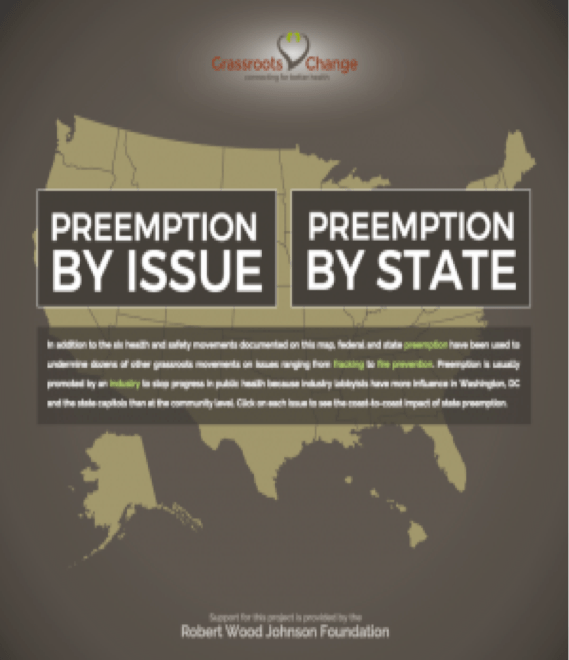
Interactive Map Documents Rising Tide of State Preemption

by Grassroots Change

Since the 1980s, preemption has been used to undermine grassroots movements across public health issues including tobacco, nutrition, housing and gun violence. But over the last few years, opponents of public health have dramatically accelerated the use of preemption to hinder public health. From e-cigarettes to paid sick days, more and more communities are threatened with losing their ability to protect their own residents. This not only affects the community health and safety, but it can kill effective grassroots movements before they even start.

Continue reading Interactive Map Documents Rising Tide of State Preemption

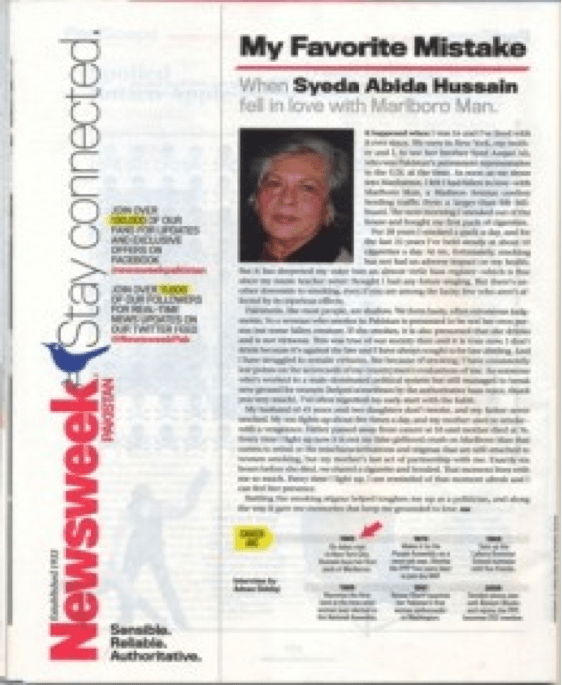
Newsweek Pakistan forced to apologize for love song to the Marlboro Man

The Network for Consumer Protection, a Pakastani consumer protection organization, has won a judgment against Newsweek Pakistan for publishing an article that both implicitly and explicitly promoted tobacco use and the use of Philip Morris products. In the opinion of the Inquiry Commission of the Press Council of Pakistan, this violated the country’s Ethical Code of Practice.

“Tobacco control advocates are celebrating the ruling,” says Dr Ehsan Latif, Director of The Union’s Department of Tobacco Control, “because it strikes back against the tobacco industry’s use of opinion pieces by influential people as a means to circumvent laws, such as Pakistan’s, that ban tobacco advertising.”

The offending article, “My Favorite Mistake: When Syeda Abida Hussain Fell in Love with the Marlboro Man”, is a first-person testimonial by the well-known Pakistani politician that dwells more on the upside of her “mistake” than any downside to smoking. Although the tone is light, she paints a highly misleading picture: attributing some of her success in politics to her husky smoker’s voice, pointing out that her non-smoker father died of cancer at 55, and poignantly describing sharing a last cigarette with her mother just six hours before she died at the much older age of 76.

The article appeared on 24 February 2012 and TheNetwork for Consumer Protection filed a complaint immediately, but the final ruling of Islamabad Inquiry Commission of the Press Council of Pakistan only came on 17 June 2015. While Newsweek Pakistan’s Editor-in-Chief Fasih Ahmed denied that there was any violation if the article was read correctly, the Commission found against it and ruled that the magazine must publish an apology promptly on the same page and space.

U.S. Chamber of Commerce Works Globally to Fight Antismoking Measures

From Ukraine to Uruguay, reports the New York Times, the U.S. Chamber of Commerce and its foreign affiliates have become the hammer for the tobacco industry, engaging in a worldwide effort to fight antismoking laws of all kinds, according to interviews with government ministers, lobbyists, lawmakers and public health groups in Asia, Europe, Latin America and the United States.

WHO calls for action against illicit tobacco trade on World No Tobacco Day

Eliminating the illicit trade in tobacco would generate an annual tax windfall of US$ 31 billion for governments, improve public health, help cut crime and curb an important revenue source for the tobacco industry. Those are the key themes of World No Tobacco Day when WHO urged Member States to sign the “Protocol to Eliminate the Illicit Trade in Tobacco Products”.

Move Bureau of Alcohol, Tobacco, Firearms and Explosives to FBI?

Following an investigation of the Bureau of Alcohol, Tobacco, Firearms and Explosives, or ATF, the Center for American Progress released a report that outlines the challenges that the bureau faces in combating gun crime and regulating the gun industry. The report concludes that to improve federal enforcement of gun laws and industry regulation, ATF should be merged into the Federal Bureau of Investigation.

Campaign for Tobacco Free Kids #StopMarlboro

The Campaign for Tobacco Free Kids is asking those concerned about Philip Morris International’s BeMarlboro global marketing campaign to sign the petition below. Read more about the campaign here.


Dear (Government Officials) (cc PMI): 

The Marlboro Man marketing campaign helped make Marlboro the most popular cigarette brand with youth across the world – fueling a global tobacco epidemic that kills six million people annually and is projected to kill one billion people this century. Over 80 percent of these deaths occur in Continue reading Campaign for Tobacco Free Kids #StopMarlboro

“Fighting a Hurricane”: Tobacco Industry Efforts to Counter Perceived Threat of Islam

A new study in the American Journal of Public Health describes attempts by the tobacco industry to reinterpret Islamic teaching to make smoking acceptable to Muslims and to help develop markets in countries with large Muslim populations. Tobacco companies have perceived Islam as a threat to its attempts to sell more tobacco products in emerging markets in Asia.