After Rio+20: Make Big Food and Agriculture the Focus for Linking Sustainability and Public Health?

Rio+20 UN Conference Cúpula dos Povos People's Summit Cumbre de los pueblos

For public health advocates, the Rio+20 environmental summit last week was an important opportunity to connect better health with sustainability.  The government negotiators from 188 nations and the thousands of activists from around the world who attended the three-day meeting went home with mixed reviews of their success in moving towards “the future we want,” the conference slogan.

The Director-General of the World Health Organization (WHO), Dr. Margaret Chan, called Rio+20 a “victory for health” and said of the final report: “This focus on the links between health and sustainable development is critical. Healthy people are better able to learn, be productive and contribute to their communities. At the same time, a healthy environment is a prerequisite for good health.”  Chan also released a new WHO report, Our Planet, Our Health, Our Future. Human Health and the Rio Conventions: Biological Diversity, Climate Change and Desertification, that describes the links between health and sustainable development. Many nations made commitments for future action or financial support. For instance, the United States agreed to partner with more than 400 companies, including Wal-Mart, Coca-Cola and Unilever, to support their efforts to eliminate deforestation from their supply chains by 2020.

On a more negative note, Greenpeace executive director, Kumi Naidoo, said that, “Rio+20 has been a failure of epic proportions. We must now work together to form a movement to tackle the equity, ecology and economic crises being forced on our children. The only outcome of this summit is justifiable anger, an anger that we must turn into creative, thoughtful and meaningful action.” A coalition of NGOs wrote of their opposition to the final agreement, “The Future We Want is not to be found in the document that bears this name. The Future We Want is not what resulted from the Rio +20 negotiation process. The future that we want has commitment and action, not just promises. It has the urgency needed to reverse the social, environmental and economic crisis, not postpone it. It has cooperation and is in tune with civil society and its aspirations, and not just the comfortable position of governments.”

In my post on Rio+20 last week, I wrote that creating a healthier, more sustainable future will require a willingness to reconsider the role of multinational corporations in today’s world. At first read, the final summit document The Future We Want didn’t provide much hope on this front.  It did, however, address non-communicable diseases directly, an improvement over earlier drafts. 

The report acknowledges “the global burden and threat of non-communicable diseases (NCDs) constitutes one of the major challenges for sustainable development in the twenty-first century.” And, according to the NCD Alliance, a global coalition of NGOs concerned about non-communicable diseases, the report:

  • committed  to strengthen health systems toward the provision of equitable, universal coverage and promote affordable access to prevention, treatment, care and support related to NCDs,
  • committed to establish or strengthen multi-sectoral national policies for the prevention and control of non-communicable diseases, and
  • reaffirmed the right to use TRIPS (trade-related intellectual property rights) flexibilities to protect public health and promote access to medicines for all, and encourage the provision of assistance to developing countries.

A session at the Rio+ 20 Conference
But while the 53 page report used the words “health” or “healthy” 54 times, it used the term “business” only eight times and the words “corporation” or “corporate” only twice. When business was mentioned, it was described as one more partner in global alliances for sustainability. Yet as I noted last week, the Third World Network, an NGO in Malaysia, said in their Rio+20 briefing paper, “If governments want to enable sustainable development, then they must regulate transnational corporations who are drivers of unsustainable development.” As at so many global conferences, multinational corporations remained largely invisible in Rio, immune from the scrutiny needed to reform their unsustainable and unhealthy practices.

One way that environmental and public health activists can move from speeches into action is to identify the specific ways that corporations undermine the environment and health. A good place to start might be to focus on the role of Big Agriculture and Big Food in contributing to human induced climate change and the rise of NCDs.  In a new series on Big Food and Health PLoS Medicine is publishing several articles that outline the health side of the challenge. An introductory editorial notes that “big multinational food companies control what people everywhere eat, resulting in a stark and sick irony: one billion people on the planet are hungry while two billion are obese or overweight.” A recent article in Lancet describes some of the environmental consequences of Big Agricultural practices and a recent report by Deutsche Bank estimates that agriculture accounts for 25 percent of greenhouse gases. What might be the common goals that could bring activists in these two sectors together?  Here are some suggestions for starting points:

1.  Support global, national and local efforts that nurture smaller scale agriculture, subsidize fruit and vegetable production, and reduce meat consumption. 

2.  Restrict advertising and promotion of unhealthy products such as fast food, sugar-sweetened beverages and processed snacks.

3.  Challenge companies that use philanthropic support of environmentalism and sustainability (e.g., Pepsi, Coke and Dr. Pepper, as described in one of the PLoS Big Food articles) to achieve “innocence by association” and to divert attention from their other harmful practices.

4.  Protect science and universities from corporate penetration and establish standards of integrity that prevent corporations from using science and scientists to defend their harmful practices and deliberately create doubt to thwart public health policy. (For a useful description, see the Union of Concerned Scientists report  Smoke, Mirrors & Hot Air.)

5. Affirm the precautionary principal (that requires products or corporate practices to be demonstrated to be safe before widespread dissemination) as a way of protecting public health and the environment.

6. Strengthen agricultural and food trade agreements to protect health and the environment.

Already environmental and public health activists around the world are working on each of these goals.  By developing a global common agenda and bringing together activists, scientists, local and national governments and local, national and global NGOs, we can begin to create the world we want for our children and grandchildren. 


Image Credits:

1. JorgeBRAZIL via Flickr.

2. World Resources via Flickr.

Merck Cribs Page from McDonald’s Playbook

In a complaint filed with the Federal Trade Commission, reports the New York Times, the Public Health Advocacy Institute and 10 other groups called Merck’s marketing strategy for Children’s Claritin dangerous and deceptive, pointing to the inclusion of Madagascar stickers in some boxes of the product, the creation of activity books that parents can download for their children and the enlistment of a team of mothers who blog to hold Claritin-themed Madagascar viewing parties for their children and friends.

Big Food to New York City: Drop Dead

High-profile players in the city’s restaurant and hospitality industries have joined forces to form a new lobbying group, citing frustrations with the city’s health department efforts to strengthen food regulation, reports the Wall Street Journal. “People are really feeling under siege from the health department,” said Rob Bookman, counsel for the group, the New York City Hospitality Alliance. The new trade group marks the first time all segments of the city’s hospitality industry are banding together—from restaurants and nightclubs to hotels and large suppliers, such as Anheuser-Busch InBev. “You speak to a restaurant operator and they’re really at their wit’s end,” said Andrew Rigie, a leader of the new group. “New York City is a very competitive place to run a hospitality business and the last thing they need is the government making it more difficult.”

Rio +20: Aligning Campaigns against Global Warming and Rise of Non-Communicable Diseases

This week, 50,000 delegates will gather in Rio de Janiero for the United Nations Conference on Sustainable Development. While the slogan is ambitious — “the future we want,” in comparison to the first Earth Summit held in Rio in 1992, the goals of this twentieth anniversary celebration are modest. As Andrea Correa de Lago, Brazil’s head of environment at the Ministry of Foreign Affairs and chief negotiator on climate change, said  last February, “It is not an idealistic conference, we are not going to say we are saving the planet through goals and measures that we know are not going to be taken seriously.”

Rather, the opportunity for this meeting is to create a framework for longer term discussion about how best to promote a sustainability agenda. One difference for this year’s conference compared to 1992 will be the active participation of city governments, NGOs, and the private sector. As a result, said Rodrigo Rosa, Rio+20 coordinator at Rio de Janeiro’s Mayor’s Office, “Rio+20’s strength will not be inside the offices, but in the movement. This year we’ll have a great amount of parallel events that didn’t happen in 1992. Politicians are reactive, they take decisions after there’s will in civil society. I think Rio+20 will contribute to that.”

For public health activists seeking to build a movement for sustainability, Rio+20 provides an opportunity to consider the causes and solutions to two of the gravest threats to global sustainability: human-induced climate change and the rise of non-communicable diseases (NCDs) such as cardiovascular disease, diabetes, cancer and respiratory conditions. A recent report in Lancet summarizes the connections between climate change and NCDs, arguing that many of the world’s “development goals have not been achieved partly because social (including health), economic, and environmental priorities have not been addressed in an integrated manner.”

As Manish Bapna, Acting President and Executive Vice President & Managing Director of the World Resources Institute recently observed, developing effective strategies to achieve more sustainable economic growth requires addressing two related trends:

  • The rise of the multinational corporations. Having grown dramatically in size, reach, and number in recent decades, global corporations wield increasing influence over the environment and society. Global supply chains only magnify their role. Today, what happens in a factory in China, South Africa, or Thailand can reverberate around the planet.                             
  • The expansion of the global middle class. Exploding growth in the developing world has created a vast new middle class, which could near five billion by 2030, of whom 66 percent will live in Asia. That is a lot of new consumers. How will they live, eat, shop, and get to work? Will they emulate the worst habits of the developed world, or will they embrace a role as better stewards of the planet?

In fact, the rise of  both NCDs and global warming in the last few decades can be explained in significant part by the efforts of multinational corporations in the automobile, energy, food and beverage, tobacco, alcohol, pharmaceutical and other industries to target these emerging middle classes in China, India, Brazil, Indonesia and elsewhere for their brand of hyper consumption. As markets become saturated in developed nations, these new markets are the corporations’ hope for profitability in this century. But the lifestyle that corporations promote to achieve their business goals is itself a fundamental cause of unsustainable energy use and chronic diseases. Its remedy requires changing not individual behavior but corporate practices. As the Third World Network, an NGO in Malaysia, put it in their Rio+20 briefing paper, “If governments want to enable sustainable development, then they must regulate transnational corporations who are drivers of unsustainable development.”

In past global meetings, much of the focus has been on what governments can and should do, an important and appropriate topic of discussion. But it is equally important to ask what corporations cannot do if sustainable growth is to be achieved. A  Lancet editorial hopes that in the future, Rio+20 “is looked upon as launching a new era for human wellbeing, one that is rooted in principles of equity, social justice, and sustainability.” Achieving that goal will require a willingness to reconsider the role of multinational corporations in today’s world. Rio+ 20 will be judged on its progress in this critical task.

New Report Finds Food Advertising to Children Down Slightly but Still High

A new report from the Rudd Center found that children viewed 5% fewer food and beverage advertisements in 2011 compared with 2010, while adolescent exposure remained flat and adult exposure increased by 4%. The average 2- to 11-year-old saw 12.8 food and beverage ads per day in 2011 compared with 13.4 ads in 2010 and 14.0 ads in 2004 (the peak of children’s food advertising exposure). This 2011 reduction somewhat reversed the dramatic upward trend recorded in 2010, but exceeded children’s average annual ad exposure from 2006 to 2009.

Farm Bill Jackpot – How Much do Corporations Benefit from SNAP?

Cross-posted from Appetite for Profit.

As Congress proposes cuts to hungry families, my new report raises questions about how much food makers, retailers, and big banks profit from food stamps.

With the debate over the 2012 Farm Bill currently underway in the Senate, most of the media’s attention has been focused on how direct payments—subsidies doled out regardless of actual farming—are being replaced with crop insurance, in a classic shell game that Big Ag’s powerful lobby is likely to pull off.

Meanwhile, the Senate may hurt the less powerful by cutting $4.5 billion from the largest piece of the farm bill pie: the Supplemental Nutrition Assistance Program (SNAP, formerly called food stamps). Reducing this lifeline for 46 million struggling Americans (more than 1 in 7—nearly half of them children) has become a sideshow in the farm bill circus, even though SNAP spending grew to $78 billion in 2011, and is projected to go higher if the economy does not improve.

While New York Senator Kristen Gillibrand’s amendment to restore cuts to SNAP by reducing insurance payments is a noble effort, what’s missing from this conversation is the role of corporations. Much attention has focused on how agricultural subsidies fuel our cheap, unhealthy food supply. In reality, the largest and most overlooked taxpayer subsidy to Big Food in the farm bill is SNAP, which now represents more than ten percent of all grocery spending.

In a report I released today—Food Stamps, Follow the Money: Are Corporations Profiting From Hungry Americans?—I examine the role of three powerful industry sectors that benefit from SNAP: 1) major food manufacturers such as Coca-Cola, Kraft, and Mars; 2) leading food retailers such as Walmart and Kroger; and 3) large banks, such as J.P. Morgan Chase, which contract with states to help administer SNAP benefits. Findings from the report include:

  • Powerful food industry lobbying groups such as the American Beverage Association and the Snack Food Association teamed up to oppose health-oriented improvements to SNAP, at times working with anti-hunger groups
  • At least nine states have proposed bills to make health-oriented improvements to SNAP, but none have passed, in part due to opposition from the food industry
  • In one year, nine Walmart Supercenters in Massachusetts together received more than $33 million in SNAP dollars—over four times the SNAP money spent at farmers markets nationwide
  • In two years, Walmart received about half of the one billion dollars in SNAP expenditures in Oklahoma
  • J.P. Morgan Chase holds contracts in 24 states to administer SNAP benefits, indicating concentrated power and a lack of competition
  • In New York, a seven-year deal originally paid J.P. Morgan Chase $112 million for EBT services, and was recently amended to add $14.3 million—an increase of 13 percent
  • States are seeing unexpected increases in administrative costs, while banks and other private contractors are reaping significant windfalls from the economic downturn and increasing SNAP participation.

JP Morgan Chase Tower in NYC
Most details about where SNAP dollars go remains hidden. For example, although such data is readily available, the U.S. Department of Agriculture (which administers food assistance) refuses to make public how much money individual retailers make from SNAP. In addition, Congress does not require data collection on specific SNAP product purchases (such as Coke versus Tropicana), despite such information being critical to effective evaluation of the program.

USDA also does not collect national data on how much money banks make on SNAP. States bear much of the burden of these administrative costs. Are lucrative contracts with private banks the most cost-effective way to administer a critical food assistance program at a time of severe budget cuts? Could we feed more hungry Americans with some of the profits these corporations are making?

Anthony Smukall is a SNAP participant living in Buffalo, New York, where he says his fellow residents are “facing cuts year after year, with no sustainable jobs to be able to get off of programs such as SNAP.” He thinks that “transparency should be mandatory. The people have a right to know where our money is going, plain and simple.” He added: “J.P. Morgan is shaking state pockets, which then rolls down to every tax-paying citizen. I am disgusted with the numbers in this report, it is unimaginable. If the people knew how such programs were run, and how money is taken in by some of the world’s conglomerates, there would be outrage on a grand scale.”

Jennifer L. of Massachusetts is a single mother who recently re-entered the workforce and hopes Congress does not cut SNAP because as she explains: “SNAP makes a huge difference in my ability to support my children and pay the bills. Food prices have been skyrocketing while salaries remain unchanged. Many people I know have two jobs to try to make ends meet.” She added: “I am in favor of making retailers’ and banks’ information regarding SNAP public. What are they hiding?”

Instead of hurting families during these hard times with cuts to SNAP, Congress should require program improvements that would restore its original purpose: providing a safety net for those in need while also helping farmers. Congress should also make SNAP more transparent by mandating accurate tracking of SNAP expenditures. Why should only the likes of Walmart and Coca-Cola know how billions of our tax dollars are spent each year? Is SNAP truly “putting healthy food within reach” as its tagline proclaims?

You can download the full report here.

Update: See Reuters story.


Image 2 Credit:

Gamermp101 via Flickr.

New York City to Add Soft Drinks to List of Health Hazards

Cross-Posted from Appetite for Profit.


Last week, New York City showed the nation once again what it means to be on the cutting edge of public health policy. The city announced a bold plan to limit the size of sugary beverages sold at restaurants and other food establishments. Predictably, much of the media went crazy, and numerous outlets have already proclaimed that this time, Mayor Michael Bloomberg has just gone too far. Banning trans fats was fine, but don’t take away my right to guzzle a gallon of Coke is the lazy reaction of some pundits.


But let’s take a more rational look at what New York is proposing. From both a policy-making and political strategy standpoint, it makes perfect sense. No one is banning anything or restricting anyone’s freedoms. The city is simply placing a reasonable limit on how much soda (or other sugary beverage) can be served in a single container. According to Coca-Cola, in the 1950′s, the “traditional” bottle size was 6.5 ounces. New York’s proposed 16-ounce limit is roughly 2.5 times higher. Seems more than reasonable.


And the policy rationale is solid. New York City health inspectors are already charged with ensuring that food establishments comply with various health and safety measures. Given what we know about the adverse health consequences of consuming too much soda, beverage companies (along with restaurants) are essentially contaminating the food supply in a similar way that meat companies (sometimes) contaminate your hamburger with E. coli or Salmonella. Or when food workers forget to wash their hands. Or any other number of violations of the health and safety code. So if New York City can inspect food establishments to help prevent its residents from getting sick from unsanitary conditions, it follows the city should also be able to limit other health hazards such as soda. I don’t hear any New Yorkers up in arms over their right to eat bacteria-laced foods.


Moreover, government places reasonable limits on all sorts of behaviors and business practices, every single day. Such as speed limits, which are meant to protect you as well as others. Society has also decided (instead of prohibition) to place various rules on how alcohol is produced, sold, and marketed. For example, many states place upper limits on how much alcohol can be in beer–a regulation designed to protect the health and safety of the public. The sky has not fallen, beer sales are doing well, and beer drinkers are happy (mostly).


Finally, the soda proposal is a brilliant political move because it only requires the approval of the city’s board of health, unlike a tax, which failed in the state legislature thanks to heavy lobbying. Of course, industry is already threatening to go to its friends in Albany to try and stop this proposal, but it’s unlikely Governor Andrew Cuomo would support a preemptive bill. Industry may also try to sue, as it did over menu labeling (they lost) but in the meantime, the corporate PR machine is full swing. Full-page ads with images of Mayor Bloomberg dressed as a woman charging “nanny state” indicate that the best response industry can muster is (sexist) name-calling. At least for the moment.


Stay tuned, as things are likely to get ugly. While most of the news has focused on soft drink makers, the restaurant industry will also come out swinging, creating a powerful lobbying and PR combination. (McDonald’s has already expressed its displeasure.) But if it succeeds, and other cities follow New York’s lead, this idea could spark an entire new approach to regulating an unhealthy food supply.


Image Credit:

Mike Licht via Flickr.

Judge Rules POM Wonderful Not Cure for Heart Disease

AP reports that a federal administrative judge ruled last week that POM Wonderful used deceptive advertising when claiming that its pomegranate juice could treat or prevent heart disease, prostate cancer and other illnesses. Chief Administrative Law Judge Michael Chappell sided with federal regulators and ordered POM to halt all claims of health benefits and performance for its beverage. Expert witnesses testified in court that scientific evidence does not support claims made in company advertising, which appeared in national newspapers, magazines and online.

Will World Health Assembly Mandate to Count NCDs Lead to Prevention?

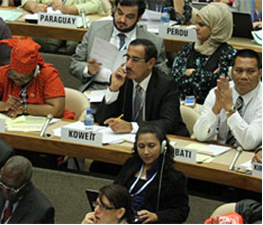
Delegates at last week’s UN World Health Assembly

Last week, the World Health Assembly, the governing body of the World Health Organization, voted in Geneva to adopt a new global target of a 25% reduction in premature mortality from noncommunicable diseases such as cardiovascular disease, cancer, diabetes and chronic respiratory diseases by 2025. All governments will now be obliged to collect data on diabetes and NCD deaths, and report regularly on progress to the United Nations. According to WHO officials, this mandatory target has the potential to drive significant action on heart disease, diabetes, cancer and chronic lung disease across all countries.

Timothy Armstrong, coordinator of Surveillance and Population-based Prevention in the Department of Chronic Diseases and Health Promotion at the WHO, said, “This is a landmark decision on the prevention and control of NCDs. For the first time, we are moving away from aspirational goals to an action-based approach that will be anchored in quantifiable targets.”

Representatives of non-governmental organizations (NGOs) also celebrated this new resolution. Ann Keeling, Chair of the NCD Alliance and CEO of the International Diabetes Federation declared: “The adoption of this bold and ambitious target is a landmark event in the fight against NCDs. For the first time all governments will be accountable for progress on NCDs. The NCD Alliance and its members and partners around the world have worked tirelessly for nearly a year for this. On behalf of the hundreds of millions of people with NCDs, we are delighted to see this result.”

While the vote is a step forward – at the UN High Level Meeting on NCDs in New York City last September, governments concerned about austerity and fiscal constraints and representatives of the food, tobacco, alcohol and pharmaceutical industries worried about threats to profits from a determined global campaign to prevent NCDs joined forces to delay any specific targets for reductions in NCD deaths.

Several daunting challenges face effective action to prevent premature deaths and avoidable illnesses from NCDs. Currently, the provisions of trade agreements negotiated through the World Trade Organization or bilateral or multilateral agreements among nations often preclude the effective regulation of the tobacco, alcohol and food industries that have played a prominent role in creating the current burden of NCDs.  Ron Labonte and his colleagues explain these relationships in a recent report on international trade and chronic disease.    

In addition, these agreements protect the intellectual property rights of pharmaceutical companies, making it more difficult for emerging and low income nations to produce and distribute at affordable prices the medications that can help prevent complications from heart disease, cancer or diabetes. As a public health commentator in Australia asked about last week’s agreement, “Will World Trade Organization (WTO), World Bank and International Monetary Fund (IMF) policies help or exacerbate the problem?” In the past, these organizations have often promoted corporate-managed trade at the expense of public health protection. Another obstacle to effective action is the determined efforts by multinational corporations to avoid public health oversight. In the United States and the United Kingdom, two countries with a long history of public regulation, the food and beverage industries have recently launched mostly successful campaigns to thwart stronger regulation of the products most associated with diet-related chronic conditions. If the governments of two of the wealthiest nations are unable to stand up to special interests, what are the chances for many poorer nations?

In addition, new worries about economic growth in India and China, two countries with the largest number of people predicted to come down with NCDs in coming decades, may limit resources for public health prevention and further tilt these governments to adopt pro-market policies that contribute to NCDs.  As I noted in an earlier post, Coke, Pepsi and fast food companies have targeted China as their next growth area, ensuring a new generation of people with diet-related chronic diseases. 

Some have also questioned whether the UN has the backbone or muscle to stand up to special interest.  WHO is itself going through a complex re-organization, distracting top officials at least to some extent.  Some critics have also warned about the growing dependence of WHO on corporate and philanthropic funding, trends which might compromise its ability to speak clearly for health.

A McDonald's in Beijing, China

The resolution on NCDs passed by the UN General Assembly in September 2012 requires countries to develop and report back to the UN their national NCD plans in 2014. What can public health professionals do to ensure progress by that date?

One concrete starting place is the Rio plus 20 United Nations Conference on Sustainable Development to be held in Rio de Janiero on June 20-22.  At this meeting and in its aftermath, activists and governments can strengthen the ties between organizations and constituencies concerned about sustainable development and those concerned about NCDs.  Solutions to each require charting a new path that ends the promotion of patterns of consumption that threaten the planet’s future and create new epidemics of NCDs.  Charting policies that discourage the corporate promotion of unhealthy and unsustainable lifestyles and strengthening the capacity of governments and international organizations to act to protect public health and the environment are the broader goals of such an alliance.  Such an agenda can begin to catalyze the movements that will have the passion and power to suggest that another road to human development is possible.

Different nations have the potential to play different roles in creating a new ethic of healthy and sustainable consumption.  The wealthiest nations in North America and Europe can find new ways to re-create past successes in public health protection and apply them to the twenty first century challenges of growing inequality, persistent poverty and unsustainable consumption.  Emerging nations like China, India, Brazil and South Africa can experiment with new approaches to bringing the benefits of prosperity to large sectors of their populations without imposing on them the burden of premature mortality, preventable illness and unaffordable  health care costs now observed in many Western nations.   Finally, the poorest nations have the most to gain by continuing progress in reducing infectious diseases without going down the road that will bring them to high levels of NCDs.  All nations will encounter the determined resistance from  the multinational corporations that continue to profit from current patterns of NCDs.  Finding new ways to confront that force will determine whether counting NCDs, as now required by the World Health Assembly, can be a first step towards preventing them.


Image Credits:

1. UN Radio and Media

2. Dave Proffer via Flickr

More Empty Recommendations on Junk Food Marketing to Children

Cross posted from Center for Food Safety.

Institute of Medicine Gives Big Food Another Deadline – or else!

This week, the nation’s top public health experts gathered at a much-trumpeted obesity conference hosted by the U.S. Centers for Disease Control and Prevention called Weight of the Nation. (A quick glance at the agenda reveals nothing that would even begin to challenge the food industry.)

Released at this bland event was an equally uninspired report from the Institute of Medicine (IOM, an advisory arm of Congress) called, Accelerating Progress in Obesity Prevention: Solving the Weight of the Nation.

The irony of the report’s title gets lost among the 478 pages that aim to solve “this complex, stubborn problem” with “a comprehensive set of solutions.”

One of the recommendations intended to speed things up is for the food industry to “take broad, common, and urgent voluntary action to make substantial improvements” to marketing aimed at kids. This is certainly important, as advocates have for years been sounding the alarm about the intractable problem of junk food marketing to children and its connection to poor health. But another part of the IOM dictate sounded vaguely familiar:

If such marketing standards have not been adopted within two years by a substantial majority of food, beverage, restaurant, and media companies that market foods and beverages to children and adolescents, policy makers at the local, state, and federal levels should consider setting mandatory nutritional standards for marketing to this age group to ensure that such standards are implemented.

Two years? Where have I heard that deadline before? Oh yes, it was another IOM report, this one focused entirely on food marketing to children, from 2005, which reviewed the science showing a clear connection between junk food marketing and children’s dietary habits. That report said if voluntary efforts by industry to clean up its act were unsuccessful, “Congress should enact legislation mandating” a shift in advertising. Also, that “[w]ithin 2 years the Secretary [of health] should report to Congress on the progress and on additional actions necessary to accelerate progress.”

So it’s been 5 years since that earlier deadline has passed and now the food industry has 2 more years to show how much it really cares about kids? Did anyone at IOM bother to check its earlier reports before writing this one? But it’s hardly IOM’s fault. If anyone is to blame for lack of action on this issue, it’s Congress and the White House, as two recent reports make painfully clear.

An in-depth investigation by Reuters describes the dirty details of the onslaught of Big Food lobbying in the wake of an effort by the federal government to improve voluntary guidelines on food marketing to kids. Reuters found that food and beverage lobbyists spent more than $175 million lobbying since President Obama took office in 2009, more than double that spent in the previous three years, during the Bush Administration. “In contrast, the Center for Science in the Public Interest, widely regarded as the lead lobbying force for healthier food, spent about $70,000 lobbying last year — roughly what those opposing the stricter guidelines spent every 13 hours.”

Reuters also examined lobbying visits to the White House, finding that a “who’s who of food company chief executives and lobbyists visited the White House” including:

CEOs of Nestle USA, Kellogg, General Mills, and top executives at Walt Disney, Time Warner, and Viacom, owner of the Nickelodeon children’s channel — companies with some of the biggest financial stakes in marketing to children. Those companies have a combined market value of more than $350 billion.

Another damning report emerged this month from the Sunlight Foundation found similar influence from Big Food. The strategy was for industry lobbyists to give money to members of Congress in exchange for their sending letters objecting to federal agency efforts. Here is how Sunlight describes one such transaction:

Days after receiving several campaign checks from the food lobby last May, Sen. Amy Klobuchar, a Minnesota Democrat who is up for re-election this year, sent a letter raising concerns about the Federal Trade Commission’s efforts to develop voluntary guidelines aimed at toning down the marketing of junk food to kids.

Seems Klobuchar wasn’t the only Democrat on the dole. Sunlight found that while most letter-writers were Republicans, lobbyist campaign donations held particular sway with Senate Democrats. Those who wrote letters of objection “collected on average, more than twice as much campaign money from food lobbying interests since 2008 as those who did not write letters.” A similar pattern also held in the House, where 38 Democrats wrote letters of protest.

As Jeff McIntyre, policy director for the advocacy group Children Now told Reuters: “We just got beat. Money wins.” That’s why it’s irrelevant how many more recommendations or deadlines come from the Institute of Medicine or any other panel of experts on how to “accelerate” progress. The only thing getting accelerated is lobbying dollars into politicians’ pockets. And kids’ poor health.

Originally posted at Center for Food Safety.


Image 2 Credit:

Sunlight Foundation