Tracking the effects of corporate practices on health
Food & Beverage
The food and beverage industries supply the world’s population with the food they need to sustain life, but they also contribute to diet-related diseases, rapidly becoming the leading cause of global premature deaths and preventable illnesses, and also to food insecurity and malnutrition. This sector includes food and beverage retailers, distributors, manufacturers, food service and restaurants, food growers and agricultural supply companies.
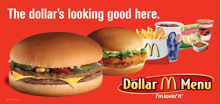
Corporate Accountability International brought six powerful moms and health advocates to Chicago to call on the burger giant to stop spending billions on marketing to kids, co-opting athletes and targeting communities of color while paying poverty wages to their workers. As mom and community health advocate Rosa Perea said, “McDonald’s exploits the massive appeal of athletes like LeBron to target kids and make the brand seem healthier than it really is — yet communities like mine are left footing the bill.” Stories in the Chicago Tribune, the AP and CBS brought news of the event to millions of people, and put the burger giant under additional pressure to change its abusive ways. Read more…
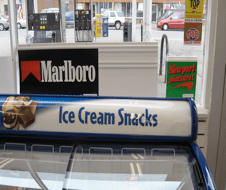
CAI has also launched a campaign to counter Philip Morris International’s Be Marlboro campaign, the latest tactic employed by the corporation to hook kids on tobacco, the world’s No. 1 preventable cause of death. CAI teamed up with Campaign for Tobacco-Free Kids to show up at PMI shareholders’ meeting where the activists made clear PMI can’t get away with such abuses. During the meeting, thousands of CAI members bombarded Leo Burnett, the ad agency in charge of the ad campaign, with emails and tweets taking the company to task. Read more…
Two U.S. senators are making a new attack on the long-targeted ad tax deduction, and this one goes squarely after the food and beverage industries, reports Advertising Age. Tom Harkin, D-Iowa, and Richard Blumenthal, D-Conn., have introduced a bill called the “Stop Subsidizing Childhood Obesity Act,” that would prohibit deductions of expenses from the advertising of foods and beverages of “poor nutritional quality” that are marketed to kids.
According to the Huffington Post, at various moments over the past two decades, Coca-Cola, the massive soft-drink conglomerate, has aligned itself with Mothers Against Drunk Driving in campaigns to promote vehicular safety. But unbeknown to MADD, at the same time that Coca-Cola was helping organizations combat drunk driving, the company was also a member of a trade association that fought tougher drunk driving laws.
Whether or not you believe that Lucky Charms cereal is “magically delicious”, that “life tastes good” when you drink a Coke, or that “there’s lots of joy in Chips Ahoy”, the odds are good that you have heard these and others advertising slogans for sugary foods and drinks.
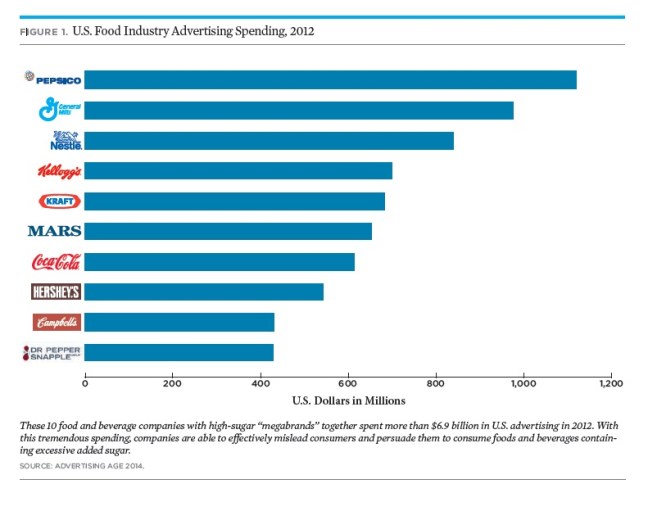
Billions of dollars are spent annually by food and beverage manufacturers along with industry-supported organizations such as trade associations, front groups, and public relations (PR) firms (hereafter “sugar interests”) on emotional appeals such as these. Such ads insert the brands and products into our everyday lives, infuse our psyches with manufactured cravings for them, and shape the complex relationship we have with food.
Evading Science, Engineering Opinion
While it should be no surprise to consumers that cookies and soda contain added sugar, food companies also engineer the image of many foods to appear healthier than they actually are. Many unlikely products contain surprising amounts of added sugar. These foods include breads, crackers, pasta sauces, salad dressings, yogurts, and a wide variety of other processed foods. Yogurt, for example, has nutritional benefits, and General Mills wants us to eat its brand Yoplait because it “tastes SO good” (Yoplait 2014). However, whether we choose the healthy-sounding Blackberry Harvest flavor or the more dessert-themed Boston Cream Pie, Yoplait Original yogurt contains 26 grams of sugar per serving—more than six teaspoons of sugar, which surpasses the American Heart Association’s recommendations for a woman’s total daily consumption. Yoplait Light contains 10 grams of sugar per 90-calorie serving, still a lot of sugar-laden calories for a product marketed for its healthfulness.
Scientific research shows that the overconsumption of added sugar in our diets—not just the actual calories but the sugar itself—has serious consequences for our health. Added sugars—whether from corn syrup, sugar cane, or sugar beets—are a source of harmful calories that displace calories from other, more nutritious foods, especially at the level these sugars are consumed by most Americans (O’Callaghan 2014; Hellmich 2012). As discussed in our forthcoming report Added Sugar, Subtracted Science: How Industry Obscures Science and Undermines Public Health Policy on Sugar, scientific evidence increasingly confirms a relationship between sugar consumption and a rise in the incidence of chronic metabolic diseases—obesity, diabetes, cardiovascular disease, high triglycerides, and hypertension (Basu et al. 2013; Lustig, Schmidt, and Brindis 2012; Tappy 2012; Stanhope et al. 2011; Johnson et al. 2007; Jacobson 2005). Also, new research suggests that a higher percentage of calories from sugar is associated with an increased risk of heart disease, independent of the link between sugar and obesity (Yang et al. 2014). This scientific evidence has led several scientific and governmental bodies, including the World Health Organization, the American Heart Association, the U.S. Department of Health and Human Services, and the U.S. Department of Agriculture, to recommend sugar intake limits far below typical American consumption levels. In March 2014, the World Health Organization proposed new draft guidelines that recommend, as did the organization’s 2002 guidelines, that sugar should not exceed 10 percent of a person’s total energy intake per day (which amounts to a maximum of 50 grams per day or 12 teaspoons for a 2000-calorie diet). The 2014 guidelines further suggest that a reduction of sugar to below 5 percent of the total calorie intake per day—that is, six teaspoons—would have additional benefits, especially in slowing tooth decay, which is now globally prevalent (WHO 2014). Yet despite the existence of a great deal of scientific evidence linking excessive sugar intake to a range of health problems, and despite these science-based recommendations by prominent national and international organizations, Americans have continued to consume high levels of added sugar. One factor that has kept our sugar consumption so high is the deceptive and exploitative marketing strategies of industry sugar interests. Through advertising, marketing, and Sugar-coating Science 3 PR, sugar interests influence public opinion and consumer behavior at the cost of scientific evidence.
Their tactics trigger psychological, behavioral, social, and cultural responses that distract and manipulate consumers and divert their attention away from science-based health and nutrition information. Some companies have engaged in blatantly false advertising, and major industry trade groups have financed sophisticated PR campaigns that emphasize consumer freedom but facilely overlook the influence of sugar interests in shaping consumers’ perceptions of available food choices. The industry also targets children, women, minorities, and low-income populations—strategic for the industry, but a problem for public health. Children are unable to recognize persuasive intent the way adults do, women are exploited as the primary food decision makers in most families, and minorities and low-income groups in the United States have disproportionately high obesity rates driven by sugar interests’ concern for their profits rather than for public health. Together, sugar interests’ actions interfere with how the public responds to scientific information about added sugar, distorts our understanding of our food choices, and contributes to our continued high consumption of foods with added sugar.
Huff Post writes that General Mills, the cereal company, last week revealed a new rule that prevented people from joining class action lawsuits if they “joined [its] online communities.” Such actions might include company contest, or liking the company on Facebook. Those who violated the rule would have been limited to arbitration or informal negotiations as a means of conflict resolution. But in a blogpost on its corporate website a few days later, General Mills said it was changing back to its old legal terms.
Last month, an unusual scuffle played out between two federal agencies over a controversial proposal by the U.S. Department of Agriculture to increase the speed of kill lines for poultry in slaughterhouses. But with testing from Consumer Reports last year revealing that 97 percent of raw chicken breasts purchased at retailers are contaminated with harmful bacteria, and with poultry workers already suffering from numerous job-related injuries, advocacy groups are vigorously opposed to the idea. The rule would also reduce the number of USDA inspectors required to ensure food safety, transferring some of that responsibility to the chicken and turkey companies themselves. But as one former inspector (who worked both for the USDA and the chicken industry) warned, plant workers are not properly trained for inspection, and they are too scared for their jobs to speak up. That’s why groups such as Food and Water Watch are taking out newspaper ads calling the proposal the “Filthy Chicken Rule.”
Ever since the idea was first floated in 2012, food safety and worker advocacy groups have been complaining that the USDA is putting profits over health and safety. In March, 68 members of Congress sent a letter charging the agency with inadequately addressing serious concerns about public health, worker safety and animal welfare.
In the wake of the controversy, the National Institute for Occupational Safety and Health (NIOSH) released a study (PDF) that expressed grave concerns for worker safety — from musculoskeletal disorders to traumatic injuries — after reviewing data from a Pilgrim’s Pride poultry processing plant in South Carolina. Yet to prop up its flawed proposal, the USDA twisted those findings into good news, claiming that “the increase in evisceration line speeds was not a significant factor in worker safety.” (The USDA does not have jurisdiction over worker safety — the Occupational Safety and Health Administration does — so its line speed rule can ignore workers.) In a highly unusual rebuke, the director of the NIOSH wrote a public letter on April 7 chastising the head of the USDA’s Food Safety and Inspection Service for misinterpreting the data and making “misleading” statements.
Safety last on kill lines
But let’s back up a bit. As Mother Jones magazine explained last year, “Currently, each factory-scale slaughterhouse has four USDA inspectors overseeing kill lines churning out up to 140 birds every minute. Under the USDA’s new plan, a single federal inspector would oversee lines killing as many as 175 birds per minute.”
USDA Secretary Tom Vilsack defends the proposal under the guise of modernization (an industry code word for deregulation) and claims the new standard would actually reduce bacterial contamination. However, Food and Water Watch found numerous food safety problems with the USDA’s pilot project owing to company inspectors missing defects such as “feathers, lungs, oil glands, trachea and bile still on the carcass.”
The rule is especially terrible for workers, who already suffer unsafe conditions, resulting in serious injuries and even lifelong disabilities. Last year the Southern Poverty Law Center released a disturbing account of worker injuries and health problems in Alabama poultry slaughterhouses due to what it called “punishing” line speeds. Workers were made to “endure debilitating pain in their hands, gnarled fingers, chemical burns and respiratory problems.” Also, for many immigrant workers, as the law center put it, “Threats of deportation and firing are frequently used to keep them silent,” making the USDA’s attempt to spin the recent NIOSH data particularly disturbing.
Federal agencies appear to be ganging up on the USDA — and rightly so. The Government Accountability Office published a report last year criticizing the USDA’s plan on the basis of inadequate and faulty safety data. Of course, the chicken industry loves the proposal. In fact, the National Chicken Council would prefer not having any limits on line speeds at all.
Failing on antitrust
None of this comes as a surprise to Christopher Leonard, a fellow at the New America Foundation and author of the recently released book “The Meat Racket,” a stunning history of the rise of Tyson Foods — the world’s largest meat company, spanning beef, chicken and pork — and how it transformed the entire chicken industry.
Leonard told me the proposed rules are just another sign of the power of the meat industry. Not showing much confidence in the USDA’s leadership, he said, “It shows what kind of laws can effectively be passed under the tenure of Tom Vilsack.”
The devastating effects of meat industry consolidation on rural America are vastly underreported and largely ignored by policymakers.
The meat industry is so powerful because over the decades, production has consolidated into the hands of a few players. As a result, small farmers and ranchers have either been squeezed out or made to operate under challenging conditions; with so little competition, the major players call the shots. That’s why as a presidential candidate (and in his “Blueprint for Change”) Barack Obama touted the importance of meat industry economic reform. Specifically, he promised to “strengthen anti-monopoly laws and strengthen producer protections to ensure independent farmers have fair access to markets, control over their production decisions, and fair prices for their goods.” The USDA did try to enforce antitrust law and promulgate new regulations to protect farmers and ranchers from unfair business practices. But after much internal debate at the USDA (and with the White House) that resulted in key agency staffers resigning in disgust, the final rule was all but gutted.
The Obama administration ultimately caved to industry pressure, which took the form, in part, of an information campaign that portrayed the proposal to protect small producers “as the first step toward economic ruin of the meat business,” according to Leonard. This sky-is-falling scaremongering is a typical industry tactic to maintain the status quo.
The failed attempt to enforce antitrust law in the meat industry proved to be an especially painful experience for the many farmers and ranchers who attended a series of workshops co-hosted by the USDA and the Department of Justice in 2010. The idea was for the feds to hear directly from the small producers to learn about the challenges they face. I attended the last event in Washington, D.C., and talked to chicken growers from Arkansas who had come to the capital to share their struggles, such as earning only pennies on the dollar for their labor. But as “The Meat Racket” shows, the devastating effects of meat industry consolidation on rural America are vastly underreported and largely ignored by policymakers.
Leonard’s book dramatically describes how Tyson pioneered the vertically integrated system, in which the company owns every step of production, from hatching the eggs to slaughtering and packaging the final products. One step in the process remains “independent” because it’s the least profitable: raising the birds. Still, Tyson retains very tight controls over the growers and their operations, resulting in a kind of serf system. One chicken grower from North Carolina told the USDA at one of the 2010 hearings: “This system takes hardworking farmers and makes them indentured servants on their own land. I can’t tell you how many times I’ve heard that our contract would be canceled if we did such and such.”
Big Chicken running scared
The National Chicken Council, according to Leonard, “started attacking the book within hours of its publication,” posting one-star reviews on Amazon, putting up a page on its website called “Meat Racket Myths” (PDF) and circulating the Twitter hashtag #meatracketmyths. But Leonard said he was most surprised by “the deluge of anonymous people from inside the industry who thanked me for writing the book. Many of them — manager types who work for Tyson and ConAgra — said that things are worse than I portrayed them.”
What is the chicken industry so afraid of? Maybe it’s that if too many people hear the real story about meat production in this country and learn more about the industry’s unsavory practices, they will realize that the heartless corporation behind their boneless chicken patty is destroying rural America. As Leonard told me, “Consumers don’t want to think that the American farmers raising their meat are ensnared in a form of modern sharecropping. The chicken lobby knows how indefensible most of these practices are, so they have to attack the messenger rather than entertaining the truth, which might lead to reform.”
Those reforms would include slowing down, not speeding up, the kill lines in poultry slaughterhouses to improve safety for workers and consumers; ensuring that farmers and ranchers are paid a fair price for their hard work; and enforcing antitrust laws to encourage a more competitive marketplace. But these are the sorts of reforms that we seem to hear about only in campaign promises.
Food & Climate: Connecting the Dots, Choosing the Way Forward, a new report by the Center for Food Safety, warns that climate change “has the potential to damage irreversibly the natural resource base on which agriculture depends” and could create widespread scarcity, economic disruption, and social unrest, with grave consequences for global food security.
Millions of dollars are funneled into LeBron James’s pocket each year by McDonald’s and other unhealthy brands. He accepts these sponsorships in return for hooking kids who look up to him as a role model on greasy, fatty, unhealthy foods. Year after year, McDonald’s uses LeBron to contribute to the global epidemic of food-related health problems. Tell LeBron James to #SlamJunk and drop his McDonald’s sponsorship. Read CAI’S Open Letter to LeBron.
USA Today reports that McDonald’s is slowly moving toward becoming a coffee shop. This might sound ludicrous to those who grew up while eating burgers and fries at McDonald’s, but any company that wants to succeed will implement initiatives that match industry trends or find itself dying a slow and painful death. This doesn’t mean McDonald’s will stop serving burgers and fries. However, one thing is certain: because of the rise of the health-conscious consumer, burgers and fries will not be the company’s growth catalyst.
6. Create monopolies that reduce bargaining power of consumers and government
7. Support candidates who oppose public health policies
8. Lobby against laws that protect public health
Some of the companies that support the American Legislative Exchange Council (ALEC), a legislative group that takes corporate money to write business friendly laws. credit
9. Threaten to take jobs out of communities that oppose their policies
When New York State considered a tax on sugary beverages, PepsiCo threatened to move out of Purchase, New York.
10. Organize Astroturf groups to oppose public health policies
A television ad paid for the American Beverage Association on behalf of New Yorkers Against Unfair Taxes
Ten Community Strategies to Combat Lethal but Legal Products
How can communities and community groups bring an end to food, alcohol, tobacco and other corporations’ harmful practices?
Read this list of 10 possible strategies.
1. Strengthen right to know and duty to disclose rules.
2. Create health zones free of commercial promotion of unhealthy products.
3. Use zoning laws to limit density of unhealthy outlets.
4. Encourage young people to create counter-advertising campaigns















 Corporations and Health Watch