“After aggressive lobbying, Congress declared pizza a vegetable to protect it from a nutritional overhaul of the school lunch program this year. The White House kept silent last year as Congress killed a plan by four federal agencies to reduce sugar, salt and fat in food marketed to children.” In a special investigative report on food industry lobbying, Duff Wilson and Janet Roberts write for Reuters that “during the past two years, each of the 24 states and five cities that considered “soda taxes” to discourage consumption of sugary drinks has seen the efforts dropped or defeated. At every level of government, the food and beverage industries won fight after fight during the last decade. They have never lost a significant political battle in the United States despite mounting scientific evidence of the role of unhealthy food and children’s marketing in obesity.”
Cigarette Companies and Their Underhanded Tactics
“As a former cigarette company employee, I have no sympathy for their attempts to challenge the Federal Government’s plain packaging” writes David Donovan, a former tobacco company employee, in an op ed in Independent Australia in response to the Australian tobacco industry’s efforts to reverse new packaging rules. “Cigarette companies have bribed and subverted the political process for too long. I know this, because for three years in the mid-1990s, I worked for a cigarette company in Brisbane, where I saw this company blatantly try to ensure employees, including myself, were hooked on nicotine, as well as their bribery of politicians and public officials.”
Are Cola Companies Behaving Like Cigarette Companies In The U.S.?
As soda consumption declines in the United States, asks Forbes, are soda companies following the tobacco industry by promoting its products in developing nations? In these countries, consumption per capita is low, regulations are lax and there isn’t enough consumer awareness regarding health repercussions due to excessive soda consumption. So, there is plenty of scope to expand in terms of cola consumption.
Merck Settles on Vioxx in New York and Sentenced in Massachusetts
The New York Attorney General Eric T. Schneiderman announced last week that he has secured a settlement with Merck Sharp & Dohme Corp., a unit of Merck & Co., resolving civil and criminal charged that the pharmaceutical giant marketed its drug Vioxx for uses not approved by the United States Food and Drug Administration, and misrepresented the cardiovascular safety of the drug. As part of the multistate and federal agreement, Merck will pay a total of $615 million in civil damages and penalties to compensate Medicaid, Medicare and other governmental healthcare programs – over $61 million of which will be paid to New York State, Schneiderman said. In addition, , the U.S. Attorney’s Office for the District of Massachusetts said that Merck, Sharp & Dohme was sentenced by U.S. District Court Judge Patti B. Saris to pay a criminal fine in the amount of $321.64 million in connection with its guilty plea related to its promotion and marketing of the painkiller Vioxx (rofecoxib).
China’s Choices on Autos to Shape Global Health
A recent trip to China has persuaded me that the choices the Chinese people and government make about consumption, health and economic development will shape global patterns of chronic disease and injuries for the rest of this century. Last week, I wrote about Coca Cola and PepsiCo’s plans to encourage increased sugary beverage consumption in the world’s largest market—and the likely implications for China’s growing obesity and diabetes epidemics. In this post I consider the future of the Chinese automobile industry and the implications for health. China’s choices in this and other sectors will affect not only the well-being of the Chinese people but also establish a model that other emerging economics like Brazil, India, Mexico and South Africa may follow.
World’s Largest Auto Market

China is now the world’s largest auto market. According to a recent report by the J.D Power Associates, an automotive information resource, new-vehicle shoppers in China have the world’s widest range of choices, with 94 brands and 476 models from which to choose. That compares with fewer than 40 brands and nearly 100 fewer models available in the U.S. market, the second-largest automotive market in the world in 2011. LMC Automotive forecasts a nine percent growth in passenger-vehicle sales in 2012, a much lower rate than in previous years when China’s new-vehicle sales surged at double-digit rates. China’s passenger-vehicle market is expected to grow at a compounded annual rate of 12.4 percent during the next four years and will reach an estimated 20.9 million units annually by 2015.
Despite the recent slowdown in auto sales, the rapid growth in automobiles has created some serious problems, reports China’s Xinhua News Agency, including traffic grid-lock, pollution and energy shortages. “China’s auto industry is caught in a dilemma in the wake of energy supply strains, deteriorating environment and traffic woes,” Cui Jingshu, an auto dealer in Changchun, capital city of the northeastern Jilin Province, told Xinhua. Jiang Jun, a researcher with Jilin Academy of Social Sciences, noted that given that each car uses about a ton of oil a year, “the current 200 million tons of annual gasoline and diesel oil supply can only support a maximum of 200 million vehicles.” China currently registers 219 million motor vehicles, of which about 100 million are automobiles.
Motor vehicle exhaust is now a major source of air pollution in the country, adding to the nation’s already serious coal-related pollution. “About one third of the 100 major cities across the country failed to meet air quality standards during recent years, for which vehicle emissions should be blamed,” Jiang said. China has vowed to reduce both energy consumption and carbon emissions per unit of economic output by 18 percent over the next five years, as part of its wider plan to cut the carbon use per unit of GDP by 40 to 45 percent by 2020 from 2005 levels.
Many cities, including Beijing, recently adopted measures to reduce auto use including higher parking charges in downtown areas and a car-quota system, which allows only 240,000 new cars to be registered in the city this year, compared with the 800,000 units that took to the streets in 2010.
One influence that helped persuade China to take action on pollution was the 2008 Olympics and the hope that the millions of visitors might see some blue sky through Beijing’s notorious smog. Another influence may have been the social media. In an interview with Yale Environment 360, Ma Jun, a former journalist, author, and founder of the Beijing nonprofit Institute for Public and Environmental Affairs, said that one reason air pollution has recently become such a pressing public issue is because of the concurrent rise of social-media platforms in China — especially the microblogging sites Sina Weibo and Tencent Weibo. Ma Jun went on to explain:
Last year, Beijing suffered from several long spells of hazy days — people began to feel that their quality-of-life and work productivity were impacted, and they worried about the health of their children. Also, so many flights got canceled because of the smog… Even with an ambitious plan, Beijing will probably not be able to meet air-quality standards for 18 or 20 years.
Role of US Auto Industry
China’s domestic auto industry is growing and emphasizes electric cars. But US and European automakers are also rushing to grow their share of business in the world’s largest car market. According to the Wall Street Journal, General Motors:
…plans to add 600 dealerships in China this year, about a 20 percent increase, as the auto maker looks to bolster its presence here amid growing competition and an economic-growth slowdown. Chief Executive Dan Akerson…outlined steps GM is taking to boost sales and market share in China, where it is the largest foreign auto maker. The addition of 600 dealerships would bring the company’s dealer network in China to 3,500 stores, up from 2,900 at the end of 2011. At that size, China’s dealers would begin to rival the company’s U.S. network of 4,400.
General Motors has announced that it will partner with China’s SAIC Motor Corporation on the

development of an all-new electric vehicle. The final product will be sold in China under the SAIC brand, but GM will benefit from the deal by having a new electric vehicle platform which can be used to spawn new vehicles in other global markets. Ford is also an active player in China and GM’s expansion comes as Ford sales have declined in the slowing Chinese auto market.
One consequence of the current slowdown in auto sales in China, reports the Wall Street Journal this week, is that it is leading Chinese auto makers to increase their exports. According to Forbes, in coming years, China hopes to enter the US auto market, competing in the plug-in electric market and using battery technology from China. Forbes predicts that Chinese auto manufacturers:
…will forgo the internal combustion engine altogether. The Chinese have been putting money into research and development on electric vehicles for years. CODA, a privately held American company based in Los Angeles, makes a sedan that, like the Chevy Volt, will be priced over $40,000 and be eligible for a $7,500 federal tax credit. CODA also happens to make its “glider” — a vehicle without a powertrain — in China. CODA will import a sedan glider for use as electric vehicle. The battery it runs on: also imported from China. “Because we build the glider in China, technically ours will be the first Chinese manufactured car sold in the U.S.,” said CODA representative Larkin Hill.

Implications for Health
The United States, birthplace of the corporate-led autocentric mode of development, has no moral authority to tell China or any other country not to make cars more available to its consumers. But this country’s experience with automobile-related air pollution, climate change, clogged highways, inactivity-related obesity and other health problems and auto-distorted urban development has much to say about the perils of letting the automobile industry dictate economic development. Can the US public health community find respectful ways to share these lessons with colleagues and governments in emerging nations? Our success could alter the rising global tide of deaths, illness and injury related to the world’s growing number of motor vehicles.
Image Credits:
1. Sergio Rozas via Flickr
2. Nicholas Freudenberg
3. Neil Banas via Flickr.
NRA and Gun Industry Love New York Politicians
In the last nine years, reports the New York Daily News, the National Rifle Association has sent New York politicians more campaign donations than in any other in state in the nation. Since 2003, the NRA has reported giving New York legislators and political committees $217,400 — the organization’s largest outlay over that period. In addition, the National Shooting Sports Foundation, the firearms industry trade association, contributed another $103,500, including $80,000 to the Senate Republican Campaign Committee in 2010. In addition, the two groups have also spent a combined $159,000 in lobbying in New York since 2009. The prime target – successful so far — has been to defeat Mayor Bloomberg’s push for microstamping of bullet casings, which backers say would be an effective crime fighting tool. Ironically, Bloomberg is also a large donor to New York State Senate Republicans.
Coke and Pepsi in China: the New Opium Trade?
In 1842, the United Kingdom and the Qing Dynasty of China signed the Treaty of Nanjing to end the first Opium War. A few years earlier, concerned about its trade imbalance with China, Great Britain began to export opium from India to China in order to cover its growing trade deficit generated by British imports of Chinese silk and tea. China resisted by confiscating Britain’s opium. In response, the British navy attacked China in 1839 and three years later China was forced to sign a treaty that required it to allow the importation of opium, an important precedent in global trade and China’s subsequent struggles with opium addiction.
Coke and Pepsi Expand
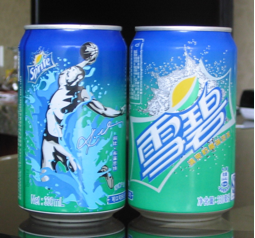
Last month, Muhtar Kent, Chairman and CEO of The Coca-Cola Company, inaugurated the opening of its 42nd bottling plant located in Yingkou, Liaoning, the largest Coca-Cola production facility in China. The new plant represents a US $160 million (1 billion in Chinese renminbi) investment in China, a small part of a three-year, US $4 billion investment plan announced last year. “China is a vast growth market for Coca-Cola. As we work to double the size of our global business in this decade, China will play a critical role,” said Kent. At its completion, the Liaoning plant is expected to reach an annual production capacity of more than 5 billion servings of sparkling and still beverages, including Coca-Cola, Sprite, Minute Maid and Ice Dew.
 |
| Sprite, one of Coca Cola’s 500 branded products available in China |
Coca Cola, the world’s largest beverage company, offers its customers more than 500 sparkling and still brands including Coke, Diet Coke, Fanta, Sprite, Coca-Cola Zero, vitaminwater, Powerade, Minute Maid, Simply, Georgia and Del Valle. These beverages refresh consumers in more than 200 countries who drink more than 1.7 billion servings of its products a day. Coca Cola’s global beverage portfolio includes 15 brands that generate more than one billion dollars annually.
Nor is Coca Cola alone in expanding in China. In March, PepsiCo, Inc., the world’s second-largest food and beverage business (after Nestle) and the owner of 22 billion-dollar-a-year brands, announced a new partnership to create “a strategic beverage alliance” with the Tingyi (Cayman Islands) Holding Corp, one of the leading food and beverage companies in China. As part of the alliance, a Tingyi subsidiary – Tingyi-Asahi Beverages Holding Co Ltd (TAB), one of China’s leading beverage manufacturers – will become PepsiCo’s franchise bottler in China.
In 2010, PepsiCo announced plans to invest US $2.5 billion in its China business over the next few years. Later this year, Pepsi plans to open its largest research and development center in Asia and a pilot plant in Shanghai, reports China Daily. The research center will employ more than 100 scientists who will develop new food and beverage products for China and the rest of Asia.
“China will soon surpass the United States to become the largest beverage market in the world,” said PepsiCo Chairman and CEO Indra Nooyi. “As a result of this new alliance with Tingyi, PepsiCo is extremely well positioned for long-term growth in China. Tingyi is an outstanding operator with a proven track record of success. By leveraging the complementary strengths of each company, we’ll be able to significantly enhance our beverage business in China, reach millions of new consumers throughout the country, and create value for Tingyi and PepsiCo shareholders.”
 |
| Pepsi for sale in a Chinese supermarket |
US Soda Sales Go Flat
Together, Coca Cola and PepsiCo accounted for more than one quarter of the global beverages industry in 2010, according to Datamonitor, a global business research group. In the United States, however, reports Beverage Digest, soda consumption is going flat. Throughout most of the 1990s, soda sales in the United States grew about 3 percent annually but started to slow in 1999. Since 2005, sales have been in decline as consumers concerned about health turn to options they see as healthier, such as bottled water, juice and tea. In 2011, US soda consumption fell 1 percent. According to Beverage Digest, the top four sodas — Coke, Diet Coke, Pepsi-Cola and Mountain Dew — all saw declining sales last year. Of those, Coke’s market share was flat, while the other three lost share. In part, then, Coke and Pepsi’s enthusiasm for the China market is a response to this fizzling market for sugary beverages in the United States and Europe.
To boost sales and profits, Coke and Pepsi are aggressively marketing their sugary beverages in China. Coke hired Knicks basketball superstar Jeremy Lin (actually born in Taiwan) to sell its products both in New York and overseas. In early March,reports Bloomberg News, about 100 million people in China watched the Knicks-Dallas Mavericks game on TV, offering Coke the opportunity of associating its Chinese logo with a rising sports star. “For a global marketer like Coca-Cola,” Mark O’Brien, an executive with the advertising firm DDB, told a WNYC radio reporter, “you’ve expanded your audience reach from maybe amounts that are in the millions to amounts that are in the tens to hundreds of millions.”
 |
| Coke’s new salesman in China: Jeremy Lin |
In its agreement with the Chinese company Tingyi, PepsiCo will retain control of branding and marketing its drinks while Tingyi is to oversee manufacturing, sales and distribution in China. As CEO Indra Nooyi said, “The strength of both companies will help make the products available for Chinese consumers in an affordable way.” In other words, PepsiCo’s global advertising savvy will be used to seek to bring a few hundred million Chinese into the Pepsi Generation.
Health Impact of Rising Soda Sales
From one perspective, growing the market for sugary beverages in China makes perfect sense. It offers two leading American companies an opportunity to grow as sales decline in their domestic market. In theory, it offers the United States an opportunity to balance its trade deficit with China, a perennial concern for American businesses and politicians. In practice, however, Coke and Pepsi do not make the drinks they sell in China in the US and in China, they hire mostly Chinese workers. Some portion of the profits does return to the United States and this constitutes a growing share of both companies’ revenues and return on investment.
But from a health perspective, the new trade in sugary beverages constitutes a disaster. In a 2010 article in the New England Journal of Medicine, Yang and colleagues estimated that 92.4 million adults in China have diabetes with an age-standardized prevalence of diagnosed and undiagnosed diabetes of 9.7 percent and of prediabetes, a precursor condition, of 15.5 percent. Moreover, like other countries around the world, China is experiencing rising rates of child obesity. In 2005, the prevalence of child obesity and overweight in big northern coastal cities in China reached 32.5 percent for boys and 17.6 per cent for girls, prevalence rates similar to many developed nations. One recent study concluded, “China is undergoing a remarkable, but undesirable, rapid transition…characterized by high rates of diet-related non-communicable diseases.”
While many factors contribute to rising rates of diabetes and obesity, increased consumption of sugar sweetened beverages (SSBs) plays an especially important role in these conditions and makes a logical target for intervention. A recent literature review by researchers at the Harvard School of Public Health concluded that “higher consumption of sugar-sweetened beverages is associated with development of metabolic syndrome and type 2 diabetes” as well as weight gain. The authors noted that “these data provide empirical evidence that intake of SSBs should be limited to reduce obesity-related risk of chronic metabolic diseases.” To increase production and marketing of sugary beverages in a country struggling with epidemics of overweight and diabetes is like pouring gasoline on a fire.
In assessing the impact of the Opium Wars and the Treaty of Nanjing, the eminent U.S. China scholar John K. Fairbankdescribed the British opium trade as “the most long-continued and systematic international crime of modern times.” Clearly, caffeinated sugary beverages are different from opium, although a new body of research does note the similarity between “hyperpalatable foods” such as fast food and sugary beverages and the neuronal pathways activated by opioid addiction. And clearly Coke and Pepsi’s new agreements with China violate no current laws or international standards of corporate conduct.
But it is also evident that the expanded production and marketing of sugary beverages in a country caught in the throes of epidemics of obesity and diabetes dooms many, many millions of people to premature death and preventable illnesses. Soda marketing will also impose huge burdens on China’s health care system, diverting resources from other national goals such as environmental protection and improved education.
In the 1970s and 1980s, health professionals and public health advocates succeeded in dramatically reducing tobacco use in the United States and other developed nations, preventing millions of deaths. But the unintended consequences of these public health victories were to push the tobacco industry to accelerate its marketing in developing nations. In the twentieth century, 100 million people died prematurely as a result of tobacco use, but in this century it is estimated that tobacco will cause one billion premature deaths, mostly in Asia, Africa and Latin America. Now it looks like Coca Cola, Pepsi and other multinational beverage makers will follow the tobacco play book, building markets in nations that have not yet begun to turn away from sugary beverages. In the next century, will our failure to prevent this assault on health rank as “the most long-continued and systematic international crime” of our times?
Image Credit for photo 3:
Teamstickergiant via Flickr.
Arkansas Judge Fines Johnson & Johnson $1.1 Billion for Hiding Drug Risks
An Arkansas judge has fined Johnson & Johnson and a subsidiary more than $1.1 billion after a jury found the companies downplayed and hid risks associated with an antipsychotic drug, reports CBS News. Judge Tim Fox found nearly 240,000 violations under Arkansas’ Medicaid-fraud law over Risperdal. Each violation came with a $5,000 fine, setting the total penalty at more than $1.1 billion. Arkansas sued Johnson & Johnson and subsidiary Janssen pharmaceuticals Inc. in 2007 over the drug.
A Different Kind of Urban-Rural Linkage
A March presentation on the Farm Bill by Adam Warthesen of the Minnesota Land Stewardship Project started with a pop quiz. Match the projected 10-year farm-program expenditure with its name. The options were as follows:
| $771.6 billion | A. Conservation Support |
| $90.1 billion | B. Crop Insurance |
| $67.3 billion | C. Nutrition and Food Support |
| $65.7 billion | D. Commodity Program |
When most Americans think about the Farm Bill, they don’t think about crop insurance. However, the cost of crop insurance to taxpayers has more than doubled in the past decade. Brian DeVore reports that today it is ($90.1 billion) second only to nutrition and food support programs ($771.6 billion). The cost of commodity subsidies ($67.3 billion) and conservation support ($65.7 billion) come in a close third and fourth.

While most coverage of the crop insurance issue has focused on rural audiences, those of us living in cities should be concerned that the sources of our food security may be under increasing threat. Anyone concerned about the social justice and public health implications of rising food prices, diminishing farm yields, climate change, and escalating land speculation should know about how the ever-growing cost of crop insurance for US taxpayers is working against our health and social equity goals.
A Short History of US Crop Insurance
The United States Department of Agriculture’s Risk Management Agency runs the federal crop insurance program. Started in 1938, the program was the government’s response to the droughts and Dust Bowl of the 1930s. Its goal was to protect the profitability of farming so that the country could support the population of farmers it needed to grow food and fiber.
The 1990s were a decade of big changes to the US’s federal crop insurance program. Many of these changes set the stage for the problems farmers identify with the program today. For example, the USDA stopped requiring that farmers have soil conservation practices in operation before they can collect insurance indemnities. Also during this period the subsidized percentage of crop insurance premiums started its rise from 25% to today’s subsidy rate of nearly 60%. This period saw the crop insurance innovation of coverage for revenue aside from crop yield. Today, crop insurance for farm yield covers only 17% of US farmland.
By 2010, federally subsidized crop insurance covered 255 million acres of land, three-quarters of which were growing corn, cotton, soybeans, and wheat. As a Congressional Research Service report on this issue explains, “insurance policies are sold and completely serviced through 16 approved private insurance companies. The insurance companies’ losses are reinsured by USDA, and their administrative and operating costs are reimbursed by the federal government.” In 2010, the USDA capped subsidies to companies issuing crop insurance at $1.3 billion. Over 10 years this cap adds up to a $6 billion subsidy reduction, enough to make insurers balk at the proposal, but not enough to damage their profitability, or the profitability of the program.
 |
| United States Department of Agriculture |
Agricultural Land Grabs
Insurance for farm revenues creates incentives for some of the largest farmers to leverage their size and personal yield histories into insured guarantees on revenue for new land that they rent or purchase. Our current crop insurance policies allow this, regardless of the suitability of that land for farming. This incentive to grow has led to a rural land grab where rental rates and land prices have snowballed. One major effect of this skyrocketing in the cost of farmland is increased pressure for farm consolidation and dramatically increased financial barriers for new farmers.
Climate Change
Unsurprisingly, decoupling soil conservation from crop insurance has also led to a pattern of increases in both environmentally unsustainable farm practices and indemnity payouts resulting from unpredictable droughts and floods. For example, farmers collected a record high $10 billion in such payments in 2011. At the same time organic farmers who presumably use more environmentally sustainable food growing practices are currently required to pay a five-percent surcharge on crop insurance and reduced payments in the event of a crop failure.
Moral Hazards
By decoupling soil conservation from crop insurance, the USDA has also created an agricultural moral hazard, a term used to describe a tendency to take undue risks because the costs are not borne by the party taking the risk. Land that is not suitable for production can now be profitably farmed, even as a yield failure. Insurance guarantees income regardless of yield. When the income insurance only costs the farmer 40% of the policy premium because taxpayers subsidize the rest, there are profit incentives to knowingly planting to fail.
The Bottom Line
When food and nutrition advocates think about the farm bill we are accustomed to focusing on increasing funding for nutrition and food support programs and decreasing funding for commodity subsidies. In reality, the federal crop insurance programs costs significantly more than the commodity program and leads to many of the same problematic food system outcomes – land and business consolidation, support for corporate farming rather than small farmers, high prices for crops we consider food, and environmentally unsustainable farm practices. The National Corn Growers Association reportedlyexpressed willingness to give up direct payments from commodity subsidies in the farm bill. They can now hedge their bets on profit with crop insurance and stay profitable. All while the federal government would appear to be responding to our calls for reduced corn subsidies.
This farm bill season provides both urban and rural taxpayers and eaters with an opportunity to ask elected officials harder questions about crop insurance. Should taxpayers be subsidizing the insurance of farm profits, not farm yields? Why should crop insurance policies be based on the historic productivity of the farmer and not the land? Why can’t we return to requiring that insured cropland be conservation compliant? By raising these and similar questions, food advocates can help to create farm policies that better support the environment, health and democracy.
Kimberly Libman is a doctoral student in environmental psychology at City University of New York and a research fellow at Corporations and Health Watch.
Image Credits:
1. formalfallacy via Flickr.
2. meironke via Flickr.
WTO Dents U.S. Ban on Clove Cigarettes
The World Trade Organization on Wednesday dealt a blow to a U.S. law barring the sale of clove-flavored cigarettes to discourage children from smoking, saying it was unfair to Indonesia because menthol cigarettes can still be sold in the United States. Reuters reported that Nkenge Harmon, a spokeswoman for the U.S. Trade Representative’s Office, observed that, “The United States is very disappointed with the outcome of this dispute. The ban on cigarettes with flavors is part of landmark U.S. legislation to combat the public health crisis caused by tobacco products.” Indonesia, the world’s top producer of clove cigarettes and the source of the vast majority of those smoked in the United States, brought the World Trade Organization case in April 2010.
 Corporations and Health Watch