The average fuel economy of new vehicles sold in the United States dropped in June for the third straight month, according to a study by University of Michigan researchers. Falling gas prices and higher sales of SUVs and light trucks contributed to the decline in fuel economy. Less efficient cars generate more air pollution.
Tobacco Companies Manipulate Czech Policies on Excise Tax and Advertising
A new article in PLoS Medicine examines how transnational tobacco companies sought to influence tobacco policy in the Czech Republic, a nation with one of the poorest tobacco control records in Europe. The authors focus on efforts to shape excise tax policies, one of the most effective means of reducing tobacco consumption, and an important determinant of tobacco companies’ competitiveness.
Cleavages and co-operation in the alcohol industry on minimum pricing in the UK
A new report in BMC Public Health examines the differing interests of actors within alcohol industry on contemporary debates concerning the minimum pricing of alcohol in the UK, the cleavages which emerged between them on this issue and the impact of these differences on their ability to organize themselves collectively to influence the policy process.
PLoS Medicine on Manufacturing Epidemics
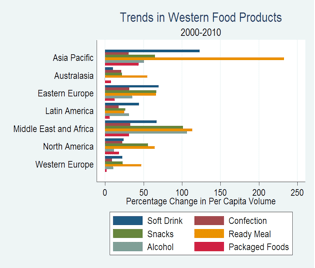
In a new report in the PLoS Medicine series on Big Food, David Stuckler, Martin McKee, Shah Ebrahim and Sanjay Basu describe the role of the alcohol, tobacco, and food and beverage industries in rising rates of consumption of unhealthy commodities, especially in low- and middle income countries. They write:
Unhealthy commodities are highly profitable because of their low production cost, long shelf-life, and high retail value. These market characteristics create perverse incentives for industries to market and sell more of these commodities. Coca-Cola’s net profit margins, for example, are about one-quarter of the retail price, making soft drink production, alongside tobacco production, among the most profitable industrial activities in the world. Indeed, transnational corporations that manufacture and market unhealthy food and beverage commodities, including Coca-Cola, PepsiCo, and Cadbury Schweppes, are among the leading vectors for the global spread of NCD risks. Increasingly, they target developing countries’ markets as a major area for expansion.
Unweighted Trends in Unhealthy Commodities, by Geographic Region,
2000-2010 and 2010-2015. Source: PLoS Medicine

Their article examines two main questions:
(1) Where is the consumption of unhealthy commodities rising most rapidly?
(2) What determines the pace and scale of these increases?
Based on analysis of market data on commodity sales in 80 countries, they offer five observations:
Observation 1. Growth of snacks, soft drinks and processed foods is fastest in LMICs (i.e. GDP≤USD12,500). Little or no growth is expected in HICs in the next 5 years.
Observation 2. The pace of increase in consumption of unhealthy commodities in several LMIC is projected to occur at a faster rate than historically in HICs.
Observation 3. Multinational companies have already entered food systems of middle-income countries to a similar degree observed in HICs.
Observation 4. Tobacco and alcohol are joint risks with unhealthy food commodities.
Observation 5. Substantial increases in consumption of unhealthy commodities are not an inevitable consequence of economic growth.
Observation 6. Foreign direct investment increases risks of rising unhealthy commodities among LMICs.
Trends in Tobacco and Alcohol Commodities, 1997-2010 and projected to 2016
Source: PLoS Medicine

The authors conclude that:
NCDs are the current and future leading causes of global ill health; unhealthy commodities, their producers, and the markets that power them, are their leading risk factors. Until health practitioners, researchers, and politicians are able to understand and identify feasible ways to address the social, economic, and political conditions that lead to the spread of unhealthy food, beverage, and tobacco commodities, progress in areas of prevention and control of NCDs will remain elusive.
For related posts on the role of the alcohol, tobacco and food industries in the production of NCDs , see here and here and here.
After Rio+20: Make Big Food and Agriculture the Focus for Linking Sustainability and Public Health?

For public health advocates, the Rio+20 environmental summit last week was an important opportunity to connect better health with sustainability. The government negotiators from 188 nations and the thousands of activists from around the world who attended the three-day meeting went home with mixed reviews of their success in moving towards “the future we want,” the conference slogan.
The Director-General of the World Health Organization (WHO), Dr. Margaret Chan, called Rio+20 a “victory for health” and said of the final report: “This focus on the links between health and sustainable development is critical. Healthy people are better able to learn, be productive and contribute to their communities. At the same time, a healthy environment is a prerequisite for good health.” Chan also released a new WHO report, Our Planet, Our Health, Our Future. Human Health and the Rio Conventions: Biological Diversity, Climate Change and Desertification, that describes the links between health and sustainable development. Many nations made commitments for future action or financial support. For instance, the United States agreed to partner with more than 400 companies, including Wal-Mart, Coca-Cola and Unilever, to support their efforts to eliminate deforestation from their supply chains by 2020.
On a more negative note, Greenpeace executive director, Kumi Naidoo, said that, “Rio+20 has been a failure of epic proportions. We must now work together to form a movement to tackle the equity, ecology and economic crises being forced on our children. The only outcome of this summit is justifiable anger, an anger that we must turn into creative, thoughtful and meaningful action.” A coalition of NGOs wrote of their opposition to the final agreement, “The Future We Want is not to be found in the document that bears this name. The Future We Want is not what resulted from the Rio +20 negotiation process. The future that we want has commitment and action, not just promises. It has the urgency needed to reverse the social, environmental and economic crisis, not postpone it. It has cooperation and is in tune with civil society and its aspirations, and not just the comfortable position of governments.”
In my post on Rio+20 last week, I wrote that creating a healthier, more sustainable future will require a willingness to reconsider the role of multinational corporations in today’s world. At first read, the final summit document The Future We Want didn’t provide much hope on this front. It did, however, address non-communicable diseases directly, an improvement over earlier drafts.
The report acknowledges “the global burden and threat of non-communicable diseases (NCDs) constitutes one of the major challenges for sustainable development in the twenty-first century.” And, according to the NCD Alliance, a global coalition of NGOs concerned about non-communicable diseases, the report:
- committed to strengthen health systems toward the provision of equitable, universal coverage and promote affordable access to prevention, treatment, care and support related to NCDs,
- committed to establish or strengthen multi-sectoral national policies for the prevention and control of non-communicable diseases, and
- reaffirmed the right to use TRIPS (trade-related intellectual property rights) flexibilities to protect public health and promote access to medicines for all, and encourage the provision of assistance to developing countries.

One way that environmental and public health activists can move from speeches into action is to identify the specific ways that corporations undermine the environment and health. A good place to start might be to focus on the role of Big Agriculture and Big Food in contributing to human induced climate change and the rise of NCDs. In a new series on Big Food and Health PLoS Medicine is publishing several articles that outline the health side of the challenge. An introductory editorial notes that “big multinational food companies control what people everywhere eat, resulting in a stark and sick irony: one billion people on the planet are hungry while two billion are obese or overweight.” A recent article in Lancet describes some of the environmental consequences of Big Agricultural practices and a recent report by Deutsche Bank estimates that agriculture accounts for 25 percent of greenhouse gases. What might be the common goals that could bring activists in these two sectors together? Here are some suggestions for starting points:
1. Support global, national and local efforts that nurture smaller scale agriculture, subsidize fruit and vegetable production, and reduce meat consumption.
2. Restrict advertising and promotion of unhealthy products such as fast food, sugar-sweetened beverages and processed snacks.
3. Challenge companies that use philanthropic support of environmentalism and sustainability (e.g., Pepsi, Coke and Dr. Pepper, as described in one of the PLoS Big Food articles) to achieve “innocence by association” and to divert attention from their other harmful practices.
4. Protect science and universities from corporate penetration and establish standards of integrity that prevent corporations from using science and scientists to defend their harmful practices and deliberately create doubt to thwart public health policy. (For a useful description, see the Union of Concerned Scientists report Smoke, Mirrors & Hot Air.)
5. Affirm the precautionary principal (that requires products or corporate practices to be demonstrated to be safe before widespread dissemination) as a way of protecting public health and the environment.
6. Strengthen agricultural and food trade agreements to protect health and the environment.
Already environmental and public health activists around the world are working on each of these goals. By developing a global common agenda and bringing together activists, scientists, local and national governments and local, national and global NGOs, we can begin to create the world we want for our children and grandchildren.
Image Credits:
1. JorgeBRAZIL via Flickr.
2. World Resources via Flickr.
Merck Cribs Page from McDonald’s Playbook
In a complaint filed with the Federal Trade Commission, reports the New York Times, the Public Health Advocacy Institute and 10 other groups called Merck’s marketing strategy for Children’s Claritin dangerous and deceptive, pointing to the inclusion of Madagascar stickers in some boxes of the product, the creation of activity books that parents can download for their children and the enlistment of a team of mothers who blog to hold Claritin-themed Madagascar viewing parties for their children and friends.
Big Food to New York City: Drop Dead
High-profile players in the city’s restaurant and hospitality industries have joined forces to form a new lobbying group, citing frustrations with the city’s health department efforts to strengthen food regulation, reports the Wall Street Journal. “People are really feeling under siege from the health department,” said Rob Bookman, counsel for the group, the New York City Hospitality Alliance. The new trade group marks the first time all segments of the city’s hospitality industry are banding together—from restaurants and nightclubs to hotels and large suppliers, such as Anheuser-Busch InBev. “You speak to a restaurant operator and they’re really at their wit’s end,” said Andrew Rigie, a leader of the new group. “New York City is a very competitive place to run a hospitality business and the last thing they need is the government making it more difficult.”
Rio +20: Aligning Campaigns against Global Warming and Rise of Non-Communicable Diseases
This week, 50,000 delegates will gather in Rio de Janiero for the United Nations Conference on Sustainable Development. While the slogan is ambitious — “the future we want,” in comparison to the first Earth Summit held in Rio in 1992, the goals of this twentieth anniversary celebration are modest. As Andrea Correa de Lago, Brazil’s head of environment at the Ministry of Foreign Affairs and chief negotiator on climate change, said last February, “It is not an idealistic conference, we are not going to say we are saving the planet through goals and measures that we know are not going to be taken seriously.”
Rather, the opportunity for this meeting is to create a framework for longer term discussion about how best to promote a sustainability agenda. One difference for this year’s conference compared to 1992 will be the active participation of city governments, NGOs, and the private sector. As a result, said Rodrigo Rosa, Rio+20 coordinator at Rio de Janeiro’s Mayor’s Office, “Rio+20’s strength will not be inside the offices, but in the movement. This year we’ll have a great amount of parallel events that didn’t happen in 1992. Politicians are reactive, they take decisions after there’s will in civil society. I think Rio+20 will contribute to that.”
For public health activists seeking to build a movement for sustainability, Rio+20 provides an opportunity to consider the causes and solutions to two of the gravest threats to global sustainability: human-induced climate change and the rise of non-communicable diseases (NCDs) such as cardiovascular disease, diabetes, cancer and respiratory conditions. A recent report in Lancet summarizes the connections between climate change and NCDs, arguing that many of the world’s “development goals have not been achieved partly because social (including health), economic, and environmental priorities have not been addressed in an integrated manner.”
As Manish Bapna, Acting President and Executive Vice President & Managing Director of the World Resources Institute recently observed, developing effective strategies to achieve more sustainable economic growth requires addressing two related trends:
- The rise of the multinational corporations. Having grown dramatically in size, reach, and number in recent decades, global corporations wield increasing influence over the environment and society. Global supply chains only magnify their role. Today, what happens in a factory in China, South Africa, or Thailand can reverberate around the planet.
- The expansion of the global middle class. Exploding growth in the developing world has created a vast new middle class, which could near five billion by 2030, of whom 66 percent will live in Asia. That is a lot of new consumers. How will they live, eat, shop, and get to work? Will they emulate the worst habits of the developed world, or will they embrace a role as better stewards of the planet?
In fact, the rise of both NCDs and global warming in the last few decades can be explained in significant part by the efforts of multinational corporations in the automobile, energy, food and beverage, tobacco, alcohol, pharmaceutical and other industries to target these emerging middle classes in China, India, Brazil, Indonesia and elsewhere for their brand of hyper consumption. As markets become saturated in developed nations, these new markets are the corporations’ hope for profitability in this century. But the lifestyle that corporations promote to achieve their business goals is itself a fundamental cause of unsustainable energy use and chronic diseases. Its remedy requires changing not individual behavior but corporate practices. As the Third World Network, an NGO in Malaysia, put it in their Rio+20 briefing paper, “If governments want to enable sustainable development, then they must regulate transnational corporations who are drivers of unsustainable development.”
In past global meetings, much of the focus has been on what governments can and should do, an important and appropriate topic of discussion. But it is equally important to ask what corporations cannot do if sustainable growth is to be achieved. A Lancet editorial hopes that in the future, Rio+20 “is looked upon as launching a new era for human wellbeing, one that is rooted in principles of equity, social justice, and sustainability.” Achieving that goal will require a willingness to reconsider the role of multinational corporations in today’s world. Rio+ 20 will be judged on its progress in this critical task.
New Report Finds Food Advertising to Children Down Slightly but Still High
A new report from the Rudd Center found that children viewed 5% fewer food and beverage advertisements in 2011 compared with 2010, while adolescent exposure remained flat and adult exposure increased by 4%. The average 2- to 11-year-old saw 12.8 food and beverage ads per day in 2011 compared with 13.4 ads in 2010 and 14.0 ads in 2004 (the peak of children’s food advertising exposure). This 2011 reduction somewhat reversed the dramatic upward trend recorded in 2010, but exceeded children’s average annual ad exposure from 2006 to 2009.
England’s Government Councils Investments in Tobacco Companies Pose Potential Conflict
A new report from the BBC finds the government councils that will have responsibility for leading local efforts to reduce the burden of death and disease from smoking beginning in 2013 have substantial investments in the tobacco industry, presenting potential conflict of interest. BBC reports that Councils across the east of England that are to take a lead role in NHS anti-smoking campaigns have invested more than £167m (US$ 259 million) in tobacco firms.
 Corporations and Health Watch