In December 2012, the World Trade Organization ruled part of the Ontario Green Energy and Green Economy Act (GEA) illegal. According to the Council of Canadians, one of seven environmental, labor and student groups that defended the Green Energy Act, the WTO panel decided that “Buy Local” conditions on wind and solar power projects, designed to ensure local development and jobs benefits to Ontarians, violate international free-trade rules. This decision exposes the very real barrier that these rules put in front of economic and environmental policy options, and to the idea of sustainable development more generally.
Charged with Bribery, Wal-Mart Ad Touts “American Success Story”
The Wall Street Journal reports that Wal-Mart has launch a new ad campaign that depicts the world’s largest retailer as an American success story. Faced with a drop in brand perception among college-educated adults last year because of charges of bribery, contracting with Bangladeshi factories where fires killed workers, and paying US workers low wages with few benefits, the multi-million dollar campaign seeks to correct the misperceptions of people who “don’t know the whole story,” according to a Wal-Mart spokesman.
When will FDA stand up to Big Tobacco?
Cross-posted from Corporate Accountability International

Many food advocates mistakenly believe that we just need to follow in the footsteps of the tobacco control movement and then we will win. It’s certainly true impressive gains have been made in reducing smoking rates in the United States. And the World Health Organization’s global tobacco treaty has tremendous potential to save lives around the world. Nevertheless, the public health crisis caused by tobacco remains quite serious.
Smoking is still the leading cause of preventable death, with more than 440,000 Americans dying prematurely from tobacco-related illnesses each year. And millions more are dying globally, as tobacco corporations shift to overseas markets.
You might also think that debates over having tobacco industry representatives involved in public health decision-making would be a thing of the past, but not so. In 2009, after decades of failed attempts, Congress finally passed legislation giving the Food and Drug Administration authority to regulate tobacco products. Of course, that didn’t completely solve the problem. Next came the fight over the make-up of a key FDA body: the Tobacco Products Scientific Advisory Committee.
Back in 2009 when Congress was finalizing its legislation giving FDA new authority, Corporate Accountability International (and others) strongly recommended that no industry representatives be allowed to serve on the science committee, explaining that doing so “would be worse than inviting the fox to guard the hen house.” But Congress didn’t listen. Instead, three tobacco industry representatives were appointed, just without voting power. But even that wasn’t good enough for an industry that gives the word “chutzpah” whole new meaning.
A lawsuit filed by industry giants Lorillard and R.J. Reynolds is currently pending that according to CBS news: “alleges financial conflicts of interest and bias by several members of the Tobacco Products Scientific Advisory Committee and asks the court to stop the federal agency from relying on the panel’s recommendations.”
Yes, you read that right: industry is alleging conflict of interest. This is the industry that created an entire front group called the Tobacco Institute whose mission was to obstruct, misdirect, and delay scientific research related to the deadly impacts of smoking. The Tobacco Institute was disbanded only because of public outcry and litigation brought by several state attorneys general in the late 1990s.
This same tobacco industry is now whining to a federal court that its interests are not being served by a scientific advisory board whose mission is to save a few of those 400,000 deaths occurring each year from the industry’s own products.
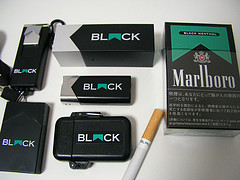
A lot is at stake. One of the most contentious issues on FDA’s plate is menthol-flavored cigarettes. For decades, health experts, tobacco control advocates and others have argued that the tobacco industry deliberately adds menthol to mask the harsh taste of cigarettes. Especially of concern are youth and African-American smokers, two groups that industry targets aggressively with menthol products. Overall, menthol cigarettes make up 30 percent of the market.
At least one research study concluded that “menthol is a prominent design feature used by cigarette manufacturers to attract and retain new, younger smokers.” And African-American smokers are four times more likely to choose menthol cigarettes then white smokers. The most popular menthol-flavored brand is Newport, which is owned by Lorillard, the company that also happens to have one of the three coveted industry seats on the FDA scientific advisory committee.
Still, in 2011, that committee’s report on menthol recommended “removal of menthol cigarettes from the marketplace” to “benefit public health in the United States.” Meanwhile a report industry submitted to the committee claimed “there is no scientific basis to support the regulation of menthol cigarettes any differently than non-menthol cigarettes.”
Nice try.
Recently, Corporate Accountability International joined a coalition of groups calling on the FDA to ban menthol cigarettes, citing a number of familiar corporate stall tactics and dirty tricks, including filing intimidation lawsuits, buying off critics and promoting junk science. This desperate Lorillard-sponsored website, www.understandingmenthol.com makes familiar scaremongering arguments against a ban, such as the alleged creation of a black market.
Lorillard has even stooped so low as to buy up various website domain names to keep them out of the hands of critics, including: MentholKillsMinorities.com, MentholAddictsYouth.com, and FDAMustBanMenthol.com. (Those are pretty good ones.) No wonder Lorillard is freaking out. One survey showed 40 percent of Newport smokers would likely try to quit upon a menthol ban.
While FDA has yet to act on the committee’s recommendations, there is some hope it will do so soon. Last month, the FDA’s Center for Tobacco Products got a new leader in Mitch Zeller, who public health advocates praise as a promising choice. In the 1990s, Zeller worked at FDA laying the groundwork for his current stint by pressing Congress to give the agency more legal authority.
Long-time tobacco industry critic and University of California at San Francisco professor Stan Glantz recently called Zeller the “perfect person for the job.” But he also wondered if President Obama would let the new appointee do his job.
The number one measure Glantz will use to answer to that question? FDA’s policy on menthol:
The FDA’s inaction on menthol has become the defining issue among many public health professionals and the media for whether or not the Agency will be seriously engaging the tobacco industry.
Many lives can be saved if FDA ignores decades-old tobacco industry scare tactics and does the right thing by protecting public health. The Obama Administration does not have a great track record in supporting its regulatory agencies, at least when it comes to food marketing. High time to change that.
New EPA auto pollution standards save lives and money
For the past few weeks, the EPA has been holding hearings in Philadelphia, Chicago and other cities to solicit comments on new standards for cleaner burning gasoline which lowers life- threatening tailpipe pollution. A new report from The American Lung Association, “A Penny for Prevention: The Case for Cleaner Gasoline and Vehicle Standards ” estimates that by 2030, these standards would prevent more than 2500 early deaths each year, prevent more than 3.3 million missed days at school and work each year and provide up to $22 billion in health and economic benefits each year.
Community coalitions can reduce density of alcohol outlets
A new report in Preventing Chronic Disease by CHW writer David Jernigan and his colleagues examines the role of community coalitions in reducing the density of alcohol outlets. They conclude that “public health agencies have a vital and necessary role to play in efforts to reduce alcohol outlet density. They are often unaware of the potential of this strategy and have strong potential partners in the thousands of community coalitions nationwide that are focused on reducing alcohol-related problems.”
Corporate Research for Public Health


In a recent article in the Journal of Public Health Management and Practice, Corporations and Health Watch contributing writer Lainie Rutkow and her colleagues at the Johns Hopkins School of Public Health conclude that schools of public health face a curricular gap, with relatively few offerings courses that teach students about the relationship between the private sector and the public’s health. While 75% of the 46 accredited programs they surveyed offered at least one course on the private sector and public health, more than 40% of the courses reported focused on a single industry such as health insurance or pharmaceuticals. Few focused on business and corporations as a social determinant of health and it did not appear that any emphasized teaching students how to investigate the health impact of corporation’s business and political practices.
A new resource that can help public health researchers and students to fill this gap is Strategic Corporate Research, a new website developed by Tom Juravich, Professor of Labor Studies and Sociology at the University of Massachusetts and graduate students in the UMass Labor Center. Although the resource is based largely on union corporate campaigns, its method for researching corporate structures and practices will be of value to planners of public health campaigns to modify health damaging corporate practices. The site includes information sources on US and Canadian publicly traded corporations, privately held firms and nonprofits and charities. It also offers a practical tutorial for aspiring corporate researchers.
More than 50 years ago – way before the internet was invented, notes Juravich, sociologist C. Wright Mills argued that we were being overwhelmed by information and that what we needed is not more information but a framework to make sense of that information. The website introduces a framework and a visual representation of the 24 areas (see below) where corporate researchers can focus their effort. Juravich explains this framework in Beating Global Capital: a Framework and Method for Union Strategic Corporate Research and Campaigns and on the website.

Previous CHW posts that described additional resources for public health researchers on studying corporations include:
Bringing Corporations and Health into the Public Health Curriculum September 12 , 2012
New Resource: Beating Goliath Examines Successful Campaigns Against Corporations March 14, 2012
LittleSis: A Tool for Activists and Researchers November 9, 2011
Corporations and Health Watch Goes Back to School: 10 Ways to Bring the Health Impact of Business Practices into the Classroom September 7, 2011
How to Disarm the NRA and Gun Industry Lobbyists
Last year, writes J. Adam Skaggs of the Brennan Center for Justice in the New York Times, the N.R.A. outspent the leading gun control lobby 73 to 1. Senators facing tough re-election campaigns ignore the wishes of 90 percent of Americans because they fear the gun lobby could mount a $9 million ad campaign against them. The solution to this political dysfunction is to empower regular voters as a counterweight to big political money. The Empowering Citizens Act, sponsored by Representatives David Price and Chris Van Hollen, would do precisely that. By matching grass-roots donations from regular voters with public funds, the system would give Congressional candidates an alternative path to victory in which they depend on constituents and voters, instead of deep-pocketed donors seeking political favors.
Review of Salt Sugar Fat: How the Food Giants Hooked Us
Corporations and Health Watch contributing writer Bill Wiist reviews “Salt Sugar Fat: How the Food Giants Hooked Us” by Michael Moss on PLOS Medicine Community Blog. He writes that Moss shows that “the industry deliberately manipulates the level of sugar, salt and fat in their products so that consumers crave the products, or according to some scientists, become “addicted.” But, he goes on “ I was appalled by the proposed solution with which Moss concluded the book. After detailing the industry’s intentional manipulations, subterfuge, deceit, and carefully crafted products and advertising, his solution was the age-old ‘blame the victim’ platitude about raising consumer awareness to make better choices, a model that public health has been moving away from for decades.”
Tobacco Control and Trade Agreements: Exploring Strategies for Change
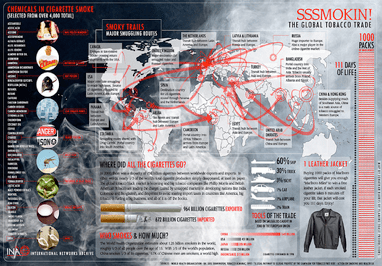

This statement reflects views and recommendations that emerged from a consortium meeting convened by the Center for Policy Analysis on Trade and Health (CPATH) and the Center for Tobacco Control Research and Education (CTCRE) at the University of California-San Francisco on Feb. 19, 2013, in San Francisco, to reinvigorate strategies to advance tobacco control in California and the U.S., and to strengthen public health and medical voices to inform trade policy.
Public health and medical organizations in the U.S. and internationally are increasingly engaged in addressing the nexus between tobacco control and global trade. Trade rules and trade agreements, including present efforts to negotiate the Trans Pacific Partnership (TPP), present challenges to tobacco control, at local, state, and national levels. Tobacco companies have recently accelerated their use of trade rules to attempt to delay and reverse tobacco control measures in the U.S., Australia, Uruguay, Norway, and Ireland. In negotiating the TPP, a new agreement for the 21st century, the United States has the opportunity to be a leader to safeguard public health and reduce the enormous burden of disease related to tobacco use.
The following proposals articulate concerns, goals, and key strategies to achieve them, that were discussed during the Consortium Meeting. Many have been consistently advanced by the medical, health care, and public health communities.
Concerns:
- Tobacco is a unique product. Tobacco use is the leading preventable cause of death worldwide, and the only legal substance that, when used as intended, kills people.
- Curtailing tobacco use must be a central element of policies to reduce preventable childhood morbidity and mortality, a key goal of the present U.S. Administration.
- Trade agreements and trade rules offer the tobacco industry powerful tools to undermine and supersede local, state, and national measures to implement and enforce tobacco control measures.
- The closed process of negotiating and adopting trade agreements uniquely privileges commercial interests, without the benefit of democratic public dialogue and debate, and review of evidence. Public health principles and perspectives are shut out.
- Current proposals for a Trans-Pacific Partnership, and a trans-Atlantic US-EU trade agreement, present particular and urgent threats to public health.
Strategies for Creating a 21st Century Trade Agreement:
Incorporating Health-Related Concerns into Global Trade Negotiations and Agreements
We call on the United States to advance a trade proposal in the Trans Pacific Partnership negotiations that will safeguard public health, advance tobacco control measures that contribute to reducing the enormous burden of disease related to tobacco use, and prevent incursions by the tobacco industry against those measures.
- Trade agreements must guarantee nations’ rights to protect public health from tobacco use.
Incorporate reference to the Framework Convention on Tobacco Control (FCTC) in trade agreements. Acknowledge deference to FCTC principles, as an expression of the international consensus on tobacco control, and affirm the right of nations to protect public health from tobacco and tobacco products in the text of all relevant chapters of trade agreements. (Policy Coherence)
Incorporate in the text of each regional and bilateral trade agreement the WTO Doha Declaration on countries’ rights to protect public health. The 2001 World Trade Organization (WTO) Doha Declaration on the TRIPS Agreement and Public Health affirms that WTO members may use “to the full” the flexibilities in the Agreement on Trade-Related Aspect of Intellectual Property Rights (TRIPS) “to protect public health and, in particular, to promote access to medicines for all…” This right can and should be extended to tobacco control measures. (Policy Coherence)
Strengthen the primacy of public health principles. Strengthen adoption and implementation of FCTC recommendations within and across nations to protect the public’s health from tobacco and tobacco products.
2. The TPP must not undermine the right and ability of participating countries from exercising their domestic sovereignty in order to adopt or maintain measures to reduce tobacco use and to prevent the harm it causes to public health.
Exclude tobacco control measures from existing and future trade agreements. The medical, health care, and public health community has consistently supported removing tobacco, tobacco products, and tobacco control measures from trade agreements as the most effective solution.
Remove investor-state dispute settlement (ISDS) provisions. Eliminate the rights of tobacco and other corporations to contest governments’ domestic sovereignty over public health and other policies, and to sue nations directly for financial damages through the global trade arena.
3. We must set trade policy through a transparent process that involves the public.
Trade agreements and trade rules which may affect public health, including preventing disease and death from tobacco, should be discussed and debated publicly, and in Congress.
Include effective public health representation in setting trade policies at the national, state, and local levels.
We further propose that advocacy for these goals can be strengthened by identifying and communicating with related constituencies concerned with trade: Labor, environment, access to medicines, sustainable agriculture, sustainable economic development, internet access; policy-makers at the local, state and national levels.
Center for Policy Analysis on Trade and Health
Ridding schools of fast food, junk food, and soda pushers

Cross –posted from Appetite for Profit
 Corporations and Health Watch