Corporations and Health Watch: A Resource for Those Seeking to Reduce Corporate Harms to Health

Photo: gtmcknight

This week Corporations and Health Watch introduces its redesigned website, created to help health researchers, professionals, activists and students to learn more and exchange information about the role of corporations in premature death and preventable illnesses and injuries.   

The new design enables readers to email posts to friends or colleagues and share CHW news on Twitter, Facebook, Reddit, and other social network sites.  We also improved our site search function and re-organized our archives.

Corporations and Health Watch started five years ago with the goal of creating a space for those concerned about the role of corporations in producing health and disease today.  Its focus is on six industries –alcohol, automobiles, firearms, food and beverages, pharmaceuticals and tobacco—that play a central and growing role in global morbidity and mortality and contribute to health inequalities.  We selected these six because of their well-documented public health significance, the centrality of these industries to the global consumer economy – and because each has sparked resistance from individuals, organizations, government, and social movements.  We understand that other industries, e.g., energy, military, finance, and health care, also play an important role in health but choose to focus on those whose primary harm is through exposure of consumers to their products and practices. 

CHW is based on several basic principles:

  1.  The products and the business and political practices of corporations are an important social determinant of health, especially of chronic diseases and injuries, two growing threats to health.
  2. Modifying corporate practices that harm health holds promise as an effective strategy to reduce the world’s most serious health problems.
  3. Individuals and organizations seeking to change the practices of a single industry (e.g., tobacco, food and beverages, firearms) can learn from analyzing the successes and failures of those working to change practices of other industries.
  4. Although corporations are only one part of our current free market economy,  their decisions have a major influence on health.  Expanding the public health paradigm to include changing the behavior of corporations and their allies as well as individuals has the potential to enhance our effectiveness.
  5. Analyzing the pathways and mechanisms by which specific corporate practices influence health and the comparative effectiveness of various strategies to reduce harmful practices are major public health scientific priorities.

Each week, CHW posts an essay analyzing current developments and a few short news items.  Every month, we distribute electronically a free newsletter summarizing our stories of the past month.  To subscribe, click here.  Our writers are public health researchers and activists based at universities, research institutes, or advocacy organizations. 

We ask readers to share this resource with interested colleagues, students and friends.  We look forward to your comments, questions and contributions. 

PLoS Medicine on Manufacturing Epidemics

In a new report in the PLoS Medicine series on Big Food, David Stuckler, Martin McKee, Shah Ebrahim and Sanjay Basu describe the role of the alcohol, tobacco, and food and beverage industries in rising rates of consumption of unhealthy commodities, especially in low- and middle income countries.  They write:


Unhealthy commodities are highly profitable because of their low production cost, long shelf-life, and high retail value. These market characteristics create perverse incentives for industries to market and sell more of these commodities. Coca-Cola’s net profit margins, for example, are about one-quarter of the retail price, making soft drink production, alongside tobacco production, among the most profitable industrial activities in the world. Indeed, transnational corporations that manufacture and market unhealthy food and beverage commodities, including Coca-Cola, PepsiCo, and Cadbury Schweppes, are among the leading vectors for the global spread of NCD risks. Increasingly, they target developing countries’ markets as a major area for expansion.


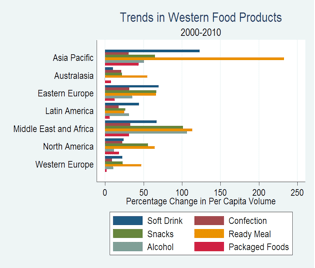
Unweighted Trends in Unhealthy Commodities, by Geographic Region,

2000-2010 and 2010-2015.  Source: PLoS Medicine

Their article examines two main questions:

(1) Where is the consumption of unhealthy commodities rising most rapidly?
(2) What determines the pace and scale of these increases?


Based on analysis of market data on commodity sales in 80 countries, they offer five observations:

Observation 1.  Growth of snacks, soft drinks and processed foods is fastest in LMICs (i.e. GDP≤USD12,500). Little or no growth is expected in HICs in the next 5 years.

Observation 2.  The pace of increase in consumption of unhealthy commodities in several LMIC is projected to occur at a faster rate than historically in HICs.

Observation 3. Multinational companies have already entered food systems of middle-income countries to a similar degree observed in HICs.

Observation 4. Tobacco and alcohol are joint risks with unhealthy food commodities.

Observation 5. Substantial increases in consumption of unhealthy commodities are not an inevitable consequence of economic growth.

Observation 6. Foreign direct investment increases risks of rising unhealthy commodities among LMICs.


Trends in Tobacco and Alcohol Commodities, 1997-2010 and projected to 2016

Source: PLoS Medicine

The authors conclude that:

NCDs are the current and future leading causes of global ill health; unhealthy commodities, their producers, and the markets that power them, are their leading risk factors. Until health practitioners, researchers, and politicians are able to understand and identify feasible ways to address the social, economic, and political conditions that lead to the spread of unhealthy food, beverage, and tobacco commodities, progress in areas of prevention and control of NCDs will remain elusive.


For related posts on the role of the alcohol, tobacco and food industries in the production of  NCDs , see here and here and here.

After Rio+20: Make Big Food and Agriculture the Focus for Linking Sustainability and Public Health?

Rio+20 UN Conference Cúpula dos Povos People's Summit Cumbre de los pueblos

For public health advocates, the Rio+20 environmental summit last week was an important opportunity to connect better health with sustainability.  The government negotiators from 188 nations and the thousands of activists from around the world who attended the three-day meeting went home with mixed reviews of their success in moving towards “the future we want,” the conference slogan.

The Director-General of the World Health Organization (WHO), Dr. Margaret Chan, called Rio+20 a “victory for health” and said of the final report: “This focus on the links between health and sustainable development is critical. Healthy people are better able to learn, be productive and contribute to their communities. At the same time, a healthy environment is a prerequisite for good health.”  Chan also released a new WHO report, Our Planet, Our Health, Our Future. Human Health and the Rio Conventions: Biological Diversity, Climate Change and Desertification, that describes the links between health and sustainable development. Many nations made commitments for future action or financial support. For instance, the United States agreed to partner with more than 400 companies, including Wal-Mart, Coca-Cola and Unilever, to support their efforts to eliminate deforestation from their supply chains by 2020.

On a more negative note, Greenpeace executive director, Kumi Naidoo, said that, “Rio+20 has been a failure of epic proportions. We must now work together to form a movement to tackle the equity, ecology and economic crises being forced on our children. The only outcome of this summit is justifiable anger, an anger that we must turn into creative, thoughtful and meaningful action.” A coalition of NGOs wrote of their opposition to the final agreement, “The Future We Want is not to be found in the document that bears this name. The Future We Want is not what resulted from the Rio +20 negotiation process. The future that we want has commitment and action, not just promises. It has the urgency needed to reverse the social, environmental and economic crisis, not postpone it. It has cooperation and is in tune with civil society and its aspirations, and not just the comfortable position of governments.”

In my post on Rio+20 last week, I wrote that creating a healthier, more sustainable future will require a willingness to reconsider the role of multinational corporations in today’s world. At first read, the final summit document The Future We Want didn’t provide much hope on this front.  It did, however, address non-communicable diseases directly, an improvement over earlier drafts. 

The report acknowledges “the global burden and threat of non-communicable diseases (NCDs) constitutes one of the major challenges for sustainable development in the twenty-first century.” And, according to the NCD Alliance, a global coalition of NGOs concerned about non-communicable diseases, the report:

  • committed  to strengthen health systems toward the provision of equitable, universal coverage and promote affordable access to prevention, treatment, care and support related to NCDs,
  • committed to establish or strengthen multi-sectoral national policies for the prevention and control of non-communicable diseases, and
  • reaffirmed the right to use TRIPS (trade-related intellectual property rights) flexibilities to protect public health and promote access to medicines for all, and encourage the provision of assistance to developing countries.

A session at the Rio+ 20 Conference
But while the 53 page report used the words “health” or “healthy” 54 times, it used the term “business” only eight times and the words “corporation” or “corporate” only twice. When business was mentioned, it was described as one more partner in global alliances for sustainability. Yet as I noted last week, the Third World Network, an NGO in Malaysia, said in their Rio+20 briefing paper, “If governments want to enable sustainable development, then they must regulate transnational corporations who are drivers of unsustainable development.” As at so many global conferences, multinational corporations remained largely invisible in Rio, immune from the scrutiny needed to reform their unsustainable and unhealthy practices.

One way that environmental and public health activists can move from speeches into action is to identify the specific ways that corporations undermine the environment and health. A good place to start might be to focus on the role of Big Agriculture and Big Food in contributing to human induced climate change and the rise of NCDs.  In a new series on Big Food and Health PLoS Medicine is publishing several articles that outline the health side of the challenge. An introductory editorial notes that “big multinational food companies control what people everywhere eat, resulting in a stark and sick irony: one billion people on the planet are hungry while two billion are obese or overweight.” A recent article in Lancet describes some of the environmental consequences of Big Agricultural practices and a recent report by Deutsche Bank estimates that agriculture accounts for 25 percent of greenhouse gases. What might be the common goals that could bring activists in these two sectors together?  Here are some suggestions for starting points:

1.  Support global, national and local efforts that nurture smaller scale agriculture, subsidize fruit and vegetable production, and reduce meat consumption. 

2.  Restrict advertising and promotion of unhealthy products such as fast food, sugar-sweetened beverages and processed snacks.

3.  Challenge companies that use philanthropic support of environmentalism and sustainability (e.g., Pepsi, Coke and Dr. Pepper, as described in one of the PLoS Big Food articles) to achieve “innocence by association” and to divert attention from their other harmful practices.

4.  Protect science and universities from corporate penetration and establish standards of integrity that prevent corporations from using science and scientists to defend their harmful practices and deliberately create doubt to thwart public health policy. (For a useful description, see the Union of Concerned Scientists report  Smoke, Mirrors & Hot Air.)

5. Affirm the precautionary principal (that requires products or corporate practices to be demonstrated to be safe before widespread dissemination) as a way of protecting public health and the environment.

6. Strengthen agricultural and food trade agreements to protect health and the environment.

Already environmental and public health activists around the world are working on each of these goals.  By developing a global common agenda and bringing together activists, scientists, local and national governments and local, national and global NGOs, we can begin to create the world we want for our children and grandchildren. 


Image Credits:

1. JorgeBRAZIL via Flickr.

2. World Resources via Flickr.

Rio +20: Aligning Campaigns against Global Warming and Rise of Non-Communicable Diseases

This week, 50,000 delegates will gather in Rio de Janiero for the United Nations Conference on Sustainable Development. While the slogan is ambitious — “the future we want,” in comparison to the first Earth Summit held in Rio in 1992, the goals of this twentieth anniversary celebration are modest. As Andrea Correa de Lago, Brazil’s head of environment at the Ministry of Foreign Affairs and chief negotiator on climate change, said  last February, “It is not an idealistic conference, we are not going to say we are saving the planet through goals and measures that we know are not going to be taken seriously.”

Rather, the opportunity for this meeting is to create a framework for longer term discussion about how best to promote a sustainability agenda. One difference for this year’s conference compared to 1992 will be the active participation of city governments, NGOs, and the private sector. As a result, said Rodrigo Rosa, Rio+20 coordinator at Rio de Janeiro’s Mayor’s Office, “Rio+20’s strength will not be inside the offices, but in the movement. This year we’ll have a great amount of parallel events that didn’t happen in 1992. Politicians are reactive, they take decisions after there’s will in civil society. I think Rio+20 will contribute to that.”

For public health activists seeking to build a movement for sustainability, Rio+20 provides an opportunity to consider the causes and solutions to two of the gravest threats to global sustainability: human-induced climate change and the rise of non-communicable diseases (NCDs) such as cardiovascular disease, diabetes, cancer and respiratory conditions. A recent report in Lancet summarizes the connections between climate change and NCDs, arguing that many of the world’s “development goals have not been achieved partly because social (including health), economic, and environmental priorities have not been addressed in an integrated manner.”

As Manish Bapna, Acting President and Executive Vice President & Managing Director of the World Resources Institute recently observed, developing effective strategies to achieve more sustainable economic growth requires addressing two related trends:

  • The rise of the multinational corporations. Having grown dramatically in size, reach, and number in recent decades, global corporations wield increasing influence over the environment and society. Global supply chains only magnify their role. Today, what happens in a factory in China, South Africa, or Thailand can reverberate around the planet.                             
  • The expansion of the global middle class. Exploding growth in the developing world has created a vast new middle class, which could near five billion by 2030, of whom 66 percent will live in Asia. That is a lot of new consumers. How will they live, eat, shop, and get to work? Will they emulate the worst habits of the developed world, or will they embrace a role as better stewards of the planet?

In fact, the rise of  both NCDs and global warming in the last few decades can be explained in significant part by the efforts of multinational corporations in the automobile, energy, food and beverage, tobacco, alcohol, pharmaceutical and other industries to target these emerging middle classes in China, India, Brazil, Indonesia and elsewhere for their brand of hyper consumption. As markets become saturated in developed nations, these new markets are the corporations’ hope for profitability in this century. But the lifestyle that corporations promote to achieve their business goals is itself a fundamental cause of unsustainable energy use and chronic diseases. Its remedy requires changing not individual behavior but corporate practices. As the Third World Network, an NGO in Malaysia, put it in their Rio+20 briefing paper, “If governments want to enable sustainable development, then they must regulate transnational corporations who are drivers of unsustainable development.”

In past global meetings, much of the focus has been on what governments can and should do, an important and appropriate topic of discussion. But it is equally important to ask what corporations cannot do if sustainable growth is to be achieved. A  Lancet editorial hopes that in the future, Rio+20 “is looked upon as launching a new era for human wellbeing, one that is rooted in principles of equity, social justice, and sustainability.” Achieving that goal will require a willingness to reconsider the role of multinational corporations in today’s world. Rio+ 20 will be judged on its progress in this critical task.

Will World Health Assembly Mandate to Count NCDs Lead to Prevention?

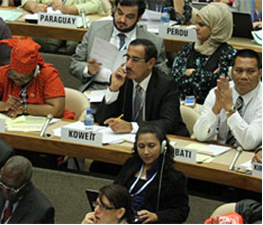
Delegates at last week’s UN World Health Assembly

Last week, the World Health Assembly, the governing body of the World Health Organization, voted in Geneva to adopt a new global target of a 25% reduction in premature mortality from noncommunicable diseases such as cardiovascular disease, cancer, diabetes and chronic respiratory diseases by 2025. All governments will now be obliged to collect data on diabetes and NCD deaths, and report regularly on progress to the United Nations. According to WHO officials, this mandatory target has the potential to drive significant action on heart disease, diabetes, cancer and chronic lung disease across all countries.

Timothy Armstrong, coordinator of Surveillance and Population-based Prevention in the Department of Chronic Diseases and Health Promotion at the WHO, said, “This is a landmark decision on the prevention and control of NCDs. For the first time, we are moving away from aspirational goals to an action-based approach that will be anchored in quantifiable targets.”

Representatives of non-governmental organizations (NGOs) also celebrated this new resolution. Ann Keeling, Chair of the NCD Alliance and CEO of the International Diabetes Federation declared: “The adoption of this bold and ambitious target is a landmark event in the fight against NCDs. For the first time all governments will be accountable for progress on NCDs. The NCD Alliance and its members and partners around the world have worked tirelessly for nearly a year for this. On behalf of the hundreds of millions of people with NCDs, we are delighted to see this result.”

While the vote is a step forward – at the UN High Level Meeting on NCDs in New York City last September, governments concerned about austerity and fiscal constraints and representatives of the food, tobacco, alcohol and pharmaceutical industries worried about threats to profits from a determined global campaign to prevent NCDs joined forces to delay any specific targets for reductions in NCD deaths.

Several daunting challenges face effective action to prevent premature deaths and avoidable illnesses from NCDs. Currently, the provisions of trade agreements negotiated through the World Trade Organization or bilateral or multilateral agreements among nations often preclude the effective regulation of the tobacco, alcohol and food industries that have played a prominent role in creating the current burden of NCDs.  Ron Labonte and his colleagues explain these relationships in a recent report on international trade and chronic disease.    

In addition, these agreements protect the intellectual property rights of pharmaceutical companies, making it more difficult for emerging and low income nations to produce and distribute at affordable prices the medications that can help prevent complications from heart disease, cancer or diabetes. As a public health commentator in Australia asked about last week’s agreement, “Will World Trade Organization (WTO), World Bank and International Monetary Fund (IMF) policies help or exacerbate the problem?” In the past, these organizations have often promoted corporate-managed trade at the expense of public health protection. Another obstacle to effective action is the determined efforts by multinational corporations to avoid public health oversight. In the United States and the United Kingdom, two countries with a long history of public regulation, the food and beverage industries have recently launched mostly successful campaigns to thwart stronger regulation of the products most associated with diet-related chronic conditions. If the governments of two of the wealthiest nations are unable to stand up to special interests, what are the chances for many poorer nations?

In addition, new worries about economic growth in India and China, two countries with the largest number of people predicted to come down with NCDs in coming decades, may limit resources for public health prevention and further tilt these governments to adopt pro-market policies that contribute to NCDs.  As I noted in an earlier post, Coke, Pepsi and fast food companies have targeted China as their next growth area, ensuring a new generation of people with diet-related chronic diseases. 

Some have also questioned whether the UN has the backbone or muscle to stand up to special interest.  WHO is itself going through a complex re-organization, distracting top officials at least to some extent.  Some critics have also warned about the growing dependence of WHO on corporate and philanthropic funding, trends which might compromise its ability to speak clearly for health.

A McDonald's in Beijing, China

The resolution on NCDs passed by the UN General Assembly in September 2012 requires countries to develop and report back to the UN their national NCD plans in 2014. What can public health professionals do to ensure progress by that date?

One concrete starting place is the Rio plus 20 United Nations Conference on Sustainable Development to be held in Rio de Janiero on June 20-22.  At this meeting and in its aftermath, activists and governments can strengthen the ties between organizations and constituencies concerned about sustainable development and those concerned about NCDs.  Solutions to each require charting a new path that ends the promotion of patterns of consumption that threaten the planet’s future and create new epidemics of NCDs.  Charting policies that discourage the corporate promotion of unhealthy and unsustainable lifestyles and strengthening the capacity of governments and international organizations to act to protect public health and the environment are the broader goals of such an alliance.  Such an agenda can begin to catalyze the movements that will have the passion and power to suggest that another road to human development is possible.

Different nations have the potential to play different roles in creating a new ethic of healthy and sustainable consumption.  The wealthiest nations in North America and Europe can find new ways to re-create past successes in public health protection and apply them to the twenty first century challenges of growing inequality, persistent poverty and unsustainable consumption.  Emerging nations like China, India, Brazil and South Africa can experiment with new approaches to bringing the benefits of prosperity to large sectors of their populations without imposing on them the burden of premature mortality, preventable illness and unaffordable  health care costs now observed in many Western nations.   Finally, the poorest nations have the most to gain by continuing progress in reducing infectious diseases without going down the road that will bring them to high levels of NCDs.  All nations will encounter the determined resistance from  the multinational corporations that continue to profit from current patterns of NCDs.  Finding new ways to confront that force will determine whether counting NCDs, as now required by the World Health Assembly, can be a first step towards preventing them.


Image Credits:

1. UN Radio and Media

2. Dave Proffer via Flickr

Obesity Prevalence and Costs Rise; House of Representatives and Supreme Court Hamstring Fight Against Obesity

A new report to be published in the American Journal of Preventive Medicine estimates a 33 percent increase in obesity prevalence and a 130 percent increase in severe obesity prevalence over the next two decades. By 2030, according to this forecast, 42 percent of Americans will be obese and 11 percent severely obese. The authors conclude that “if these forecasts prove accurate this will further hinder efforts for healthcare cost containment.” The authors also conclude that if obesity rates stayed at the 2010 levels, the combined savings in medical expenditures by 2030 would be $549.5 billion.

Another new report published in the Journal of Health Care Economics estimated that the total cost of health care associated with U.S. obesity is now $190.2 billion a year, or 20.6 percent of total U.S. health spending – twice as much as previously reported.

Last month, the US House of Representatives voted to eliminate the Prevention and Public Health Fund in order to pay for legislation dealing with student loans. Although the measure is not expected to pass the Senate and President Obama has vowed to veto it, by this vote the House proposed to eliminate one of the few streams of funding to support preventive measures to reduce obesity and other health problems that contribute to diabetes, heart disease and cancer.

Last week Public Citizen and the National Association of Consumer Advocates released a report called Justice Denied One Year Later. The report notes that in the one year since the U.S. Supreme Court’s decision in AT&T Mobility v. Concepcion, consumers have regularly been blocked from pursuing class-action cases. In its Concepcion decision, the court vastly expanded the reach of arbitration by ruling that corporations could block the consumers they force into arbitration from pursuing cases as a class.

According to the report:

Since Concepcion, judges have cited the case in decisions that stopped at least 76 potential class-action lawsuits from going forward. Several judges have expressed frustration that the decision has forced them to stop consumer actions that are best suited to proceed as class actions. Class-action lawsuits historically have provided a means to combat illegal payday lending practices, contest poor business practices and confront discriminatory auto lending. But Concepcion has left many consumers without a means to pursue redress.

In the case of tobacco, public health experts agree that class action lawsuits played a vital role in strengthening public health protection against a tobacco industry determined to make profits even at the expense of their customers’ health.

Whatever the intentions, by seeking to de-fund one of the few federal funding streams for prevention of obesity and other diet-related diseases and by denying consumers a powerful tool to change food industry practices that have been shown to contribute to obesity, the House of Representatives and the Supreme Court have voted to endorse the status quo of rising obesity rates.


Image Credits:

1. allgoodprovisions.com

Obesity Prevalence and Costs Rise: House of Representatives and Supreme Court Hamstring Fight Against Obesity

A new report to be published in the American Journal of Preventive Medicine estimates a 33 percent increase in obesity prevalence and a 130 percent increase in severe obesity prevalence over the next two decades. By 2030, according to this forecast, 42 percent of Americans will be obese and 11 percent severely obese. The authors conclude that “if these forecasts prove accurate this will further hinder efforts for healthcare cost containment.” The authors also conclude that if obesity rates stayed at the 2010 levels, the combined savings in medical expenditures by 2030 would be $549.5 billion.

Another new report published in the Journal of Health Care Economics estimated that the total cost of health care associated with U.S. obesity is now $190.2 billion a year, or 20.6 percent of total U.S. health spending – twice as much as previously reported.

Last month, the US House of Representatives voted to eliminate the Prevention and Public Health Fund in order to pay for legislation dealing with student loans. Although the measure is not expected to pass the Senate and President Obama has vowed to veto it, by this vote the House proposed to eliminate one of the few streams of funding to support preventive measures to reduce obesity and other health problems that contribute to diabetes, heart disease and cancer.

Last week Public Citizen and the National Association of Consumer Advocates released a report called Justice Denied One Year Later. The report notes that in the one year since the U.S. Supreme Court’s decision in AT&T Mobility v. Concepcion, consumers have regularly been blocked from pursuing class-action cases. In its Concepcion decision, the court vastly expanded the reach of arbitration by ruling that corporations could block the consumers they force into arbitration from pursuing cases as a class.

According to the report:

Since Concepcion, judges have cited the case in decisions that stopped at least 76 potential class-action lawsuits from going forward. Several judges have expressed frustration that the decision has forced them to stop consumer actions that are best suited to proceed as class actions. Class-action lawsuits historically have provided a means to combat illegal payday lending practices, contest poor business practices and confront discriminatory auto lending. But Concepcion has left many consumers without a means to pursue redress.

In the case of tobacco, public health experts agree that class action lawsuits played a vital role in strengthening public health protection against a tobacco industry determined to make profits even at the expense of their customers’ health.

Whatever the intentions, by seeking to de-fund one of the few federal funding streams for prevention of obesity and other diet-related diseases and by denying consumers a powerful tool to change food industry practices that have been shown to contribute to obesity, the House of Representatives and the Supreme Court have voted to endorse the status quo of rising obesity rates.


Image Credits:

1. allgoodprovisions.com

New Report on Policies to Slow Down Fast Food


On the heels of a new study in the Journal of Health Economics, which finds that the U.S. spends more than $190 billion a year on medical costs associated with obesity, Corporate Accountability International and Dr. Nicholas Freudenberg and Monica Gagnon of The City University of New York have released a report that will serve as a tool to address the rising epidemic of diet-related disease.

The report, Slowing Down Fast Food: A policy guide for healthier kids and families, documents ways in which city and county policymakers can address the toll that diet-related disease is taking on their municipalities and on their communities’ health.

It offers specific solutions to curb a primary contributor to the problem – the overconsumption of fast food and the ubiquitous marketing of fast food to children.

“Parents and policymakers have long felt at a disadvantage to counter the ubiquity of junk food and its marketing,” said Dr. Freudenberg. “This guide will empower families and communities to create healthier food environments for current and future generations.” Slowing Down Fast Food focuses on four local policy approaches: school policy, “healthy” zoning, curbing kid-focused marketing, and redirecting subsidies to healthier businesses.

As case studies in the report demonstrate, dedicated grassroots initiatives can overcome the food industry’s staunch opposition and build the political will sufficient for the passage of strong public health policies. For example, in San Francisco, the groundbreaking Healthy Meals Incentive Ordinance set basic nutritional standards for kids’ meals that are accompanied by toy giveaways. It was the power of grassroots initiatives involving parents, health professionals, and community leaders that helped secure the passage of this ordinance.

“What we can take from the city’s action is that all cities and towns could pursue and institute like-minded policies,” said San Francisco City Supervisor Eric Mar, the sponsor of the measure. “While no single community or organization can match the political and economic might of the fast food industry, we can make change on the community level that effectively challenges the fast food industry’s negative impact on public health.”

Such policies have positive and direct effects, but also have helped provoke critical changes across the food industry at large. While McDonald’s and its trade association attempted to block the ordinance, ultimately the burger giant and its competitors altered their practices internationally. For example, shortly after the San Francisco ordinance passed, Jack in the Box, the nation’s fifth largest burger chain, pulled the toy giveaways from its kids’ meals.

National media coverage of the San Francisco ordinance also helped foster public discourse and a deeper understanding of the harmful impact of marketing fast food to children. A growing number of studies have found that ending junk food marketing directed at kids could spare the health of millions of children. In June, the American Academy of Pediatrics even urged a ban on junk food advertising to children as part of a new research review published in the Pediatrics journal.

The report also identifies the obstacles to the passage of policies addressing fast food, namely industry opposition, interference, cooption and avoidance of regulation. It documents how fast food corporations use their political and financial clout to advance their interests, even when their products or practices jeopardize health. While this type of pervasive corporate interference has translated into inaction in Congress, local policy solutions have proven an effective means of countering special interests and protecting public health.

“Corporate influence may be drowning out the will of the people in our nation’s capital right now, but it cannot be allowed to remain this way,” said Kelle Louaillier, executive director of Corporate Accountability International. “Change needs to and can start at the local level, and the policies in this report are a critical place to start.”

The report and its companion Action Guide offer specific, practical guidance for putting policy concepts into motion, offering additional resources from a wide range of organizations engaged in protecting our health from the abuses of fast food corporations.

Individuals and policymakers can access and download the report at Slowing Down Fast Food: A policy guide for healthier kids and families.

Corporate Accountability International (formerly Infact) is a membership organization that, for the last 35 years, has successfully advanced campaigns protecting health, the environment and human rights. Value [the] Meal is Corporate Accountability International’s campaign dedicated to reversing the global epidemic of diet-related disease by challenging the fast food industry to curb a range of its practices.

China’s Choices on Autos to Shape Global Health

A recent trip to China has persuaded me that the choices the Chinese people and government make about consumption, health and economic development will shape global patterns of chronic disease and injuries for the rest of this century. Last week, I wrote about Coca Cola and PepsiCo’s plans to encourage increased sugary beverage consumption in the world’s largest market—and the likely implications for China’s growing obesity and diabetes epidemics. In this post I consider the future of the Chinese automobile industry and the implications for health. China’s choices in this and other sectors will affect not only the well-being of the Chinese people but also establish a model that other emerging economics like Brazil, India, Mexico and South Africa may follow.

World’s Largest Auto Market

Traffic jam in Shanghai

China is now the world’s largest auto market. According to a recent report by the J.D Power Associates, an automotive information resource, new-vehicle shoppers in China have the world’s widest range of choices, with 94 brands and 476 models from which to choose. That compares with fewer than 40 brands and nearly 100 fewer models available in the U.S. market, the second-largest automotive market in the world in 2011. LMC Automotive forecasts a nine percent growth in passenger-vehicle sales in 2012, a much lower rate than in previous years when China’s new-vehicle sales surged at double-digit rates. China’s passenger-vehicle market is expected to grow at a compounded annual rate of 12.4 percent during the next four years and will reach an estimated 20.9 million units annually by 2015.

Despite the recent slowdown in auto sales, the rapid growth in automobiles has created some serious problems, reports China’s Xinhua News Agency, including traffic grid-lock, pollution and energy shortages. “China’s auto industry is caught in a dilemma in the wake of energy supply strains, deteriorating environment and traffic woes,” Cui Jingshu, an auto dealer in Changchun, capital city of the northeastern Jilin Province, told Xinhua. Jiang Jun, a researcher with Jilin Academy of Social Sciences, noted that given that each car uses about a ton of oil a year, “the current 200 million tons of annual gasoline and diesel oil supply can only support a maximum of 200 million vehicles.” China currently registers 219 million motor vehicles, of which about 100 million are automobiles.

Motor vehicle exhaust is now a major source of air pollution in the country, adding to the nation’s already serious coal-related pollution. “About one third of the 100 major cities across the country failed to meet air quality standards during recent years, for which vehicle emissions should be blamed,” Jiang said. China has vowed to reduce both energy consumption and carbon emissions per unit of economic output by 18 percent over the next five years, as part of its wider plan to cut the carbon use per unit of GDP by 40 to 45 percent by 2020 from 2005 levels.

Many cities, including Beijing, recently adopted measures to reduce auto use including higher parking charges in downtown areas and a car-quota system, which allows only 240,000 new cars to be registered in the city this year, compared with the 800,000 units that took to the streets in 2010.

One influence that helped persuade China to take action on pollution was the 2008 Olympics and the hope that the millions of visitors might see some blue sky through Beijing’s notorious smog. Another influence may have been the social media. In an interview with Yale Environment 360, Ma Jun, a former journalist, author, and founder of the  Beijing nonprofit Institute for Public and Environmental Affairs, said that one reason air pollution has recently become such a pressing public issue is because of the concurrent rise of social-media platforms in China — especially the microblogging sites Sina Weibo and Tencent Weibo. Ma Jun went on to explain:

Last year, Beijing suffered from several long spells of hazy days — people began to feel that their quality-of-life and work productivity were impacted, and they worried about the health of their children. Also, so many flights got canceled because of the smog… Even with an ambitious plan, Beijing will probably not be able to meet air-quality standards for 18 or 20 years.

Role of US Auto Industry

China’s domestic auto industry is growing and emphasizes electric cars. But US and European automakers are also rushing to grow their share of business in the world’s largest car market. According to the Wall Street Journal, General Motors:

…plans to add 600 dealerships in China this year, about a 20 percent increase, as the auto maker looks to bolster its presence here amid growing competition and an economic-growth slowdown. Chief Executive Dan Akerson…outlined steps GM is taking to boost sales and market share in China, where it is the largest foreign auto maker. The addition of 600 dealerships would bring the company’s dealer network in China to 3,500 stores, up from 2,900 at the end of 2011. At that size, China’s dealers would begin to rival the company’s U.S. network of 4,400.

General Motors has announced that it will partner with China’s SAIC Motor Corporation on the

Photoshoot for the new GM SAIC automobile in Yangshuo, China

development of an all-new electric vehicle. The final product will be sold in China under the SAIC brand, but GM will benefit from the deal by having a new electric vehicle platform which can be used to spawn new vehicles in other global markets. Ford is also an active player in China and GM’s expansion comes as Ford sales have declined in the slowing Chinese auto market.

One consequence of the current slowdown in auto sales in China, reports the Wall Street Journal this week, is that it is leading Chinese auto makers to increase their exports.  According to Forbes, in coming years, China hopes to enter the US auto market, competing in the plug-in electric market and using battery technology from China. Forbes predicts that Chinese auto manufacturers:

…will forgo the internal combustion engine altogether. The Chinese have been putting money into research and development on electric vehicles for years. CODA, a privately held American company based in Los Angeles, makes a sedan that, like the Chevy Volt, will be priced over $40,000 and be eligible for a $7,500 federal tax credit. CODA also happens to make its “glider” — a vehicle without a powertrain — in China. CODA will import a sedan glider for use as electric vehicle. The battery it runs on: also imported from China. “Because we build the glider in China, technically ours will be the first Chinese manufactured car sold in the U.S.,” said CODA representative Larkin Hill.

Air pollution, Beijing

Implications for Health

The United States, birthplace of the corporate-led autocentric mode of development, has no moral authority to tell China or any other country not to make cars more available to its consumers. But this country’s experience with automobile-related air pollution, climate change, clogged highways, inactivity-related obesity and other health problems and auto-distorted urban development has much to say about the perils of letting the automobile industry dictate economic development. Can the US public health community find respectful ways to share these lessons with colleagues and governments in emerging nations? Our success could alter the rising global tide of deaths, illness and injury related to the world’s growing number of motor vehicles.


Image Credits:

1. Sergio Rozas via Flickr

2. Nicholas Freudenberg

3. Neil Banas via Flickr.

Coke and Pepsi in China: the New Opium Trade?

In 1842, the United Kingdom and the Qing Dynasty of China signed the Treaty of Nanjing to end the first Opium War. A few years earlier, concerned about its trade imbalance with China, Great Britain began to export opium from India to China in order to cover its growing trade deficit generated by British imports of Chinese silk and tea. China resisted by confiscating Britain’s opium. In response, the British navy attacked China in 1839 and three years later China was forced to sign a treaty that required it to allow the importation of opium, an important precedent in global trade and China’s subsequent struggles with opium addiction.

Coke and Pepsi Expand

Last month, Muhtar Kent, Chairman and CEO of The Coca-Cola Company, inaugurated the opening of its 42nd bottling plant located in Yingkou, Liaoning, the largest Coca-Cola production facility in China. The new plant represents a US $160 million (1 billion in Chinese renminbi) investment in China, a small part of a three-year, US $4 billion investment plan announced last year. “China is a vast growth market for Coca-Cola. As we work to double the size of our global business in this decade, China will play a critical role,” said Kent. At its completion, the Liaoning plant is expected to reach an annual production capacity of more than 5 billion servings of sparkling and still beverages, including Coca-Cola, Sprite, Minute Maid and Ice Dew.

Sprite, one of Coca Cola’s 500 branded products available in China

Coca Cola, the world’s largest beverage company, offers its customers more than 500 sparkling and still brands including Coke, Diet Coke, Fanta, Sprite, Coca-Cola Zero, vitaminwater, Powerade, Minute Maid, Simply, Georgia and Del Valle. These beverages refresh consumers in more than 200 countries who drink more than 1.7 billion servings of its products a day. Coca Cola’s global beverage portfolio includes 15 brands that generate more than one billion dollars annually.

Nor is Coca Cola alone in expanding in China. In March, PepsiCo, Inc., the world’s second-largest food and beverage business (after Nestle) and the owner of 22 billion-dollar-a-year brands, announced a new partnership to create “a strategic beverage alliance” with the Tingyi (Cayman Islands) Holding Corp, one of the leading food and beverage companies in China.  As part of the alliance, a Tingyi subsidiary – Tingyi-Asahi Beverages Holding Co Ltd (TAB), one of China’s leading beverage manufacturers – will become PepsiCo’s franchise bottler in China.

In 2010, PepsiCo announced plans to invest US $2.5 billion in its China business over the next few years. Later this year, Pepsi plans to open its largest research and development center in Asia and a pilot plant in Shanghai, reports China Daily. The research center will employ more than 100 scientists who will develop new food and beverage products for China and the rest of Asia.

“China will soon surpass the United States to become the largest beverage market in the world,” said PepsiCo Chairman and CEO Indra Nooyi. “As a result of this new alliance with Tingyi, PepsiCo is extremely well positioned for long-term growth in China. Tingyi is an outstanding operator with a proven track record of success. By leveraging the complementary strengths of each company, we’ll be able to significantly enhance our beverage business in China, reach millions of new consumers throughout the country, and create value for Tingyi and PepsiCo shareholders.”

Pepsi for sale in a Chinese supermarket

US Soda Sales Go Flat

Together, Coca Cola and PepsiCo accounted for more than one quarter of the global beverages industry in 2010, according to Datamonitor, a global business research group. In the United States, however, reports Beverage Digest, soda consumption is going flat. Throughout most of the 1990s, soda sales in the United States grew about 3 percent annually but started to slow in 1999. Since 2005, sales have been in decline as consumers concerned about health turn to options they see as healthier, such as bottled water, juice and tea. In 2011, US soda consumption fell 1 percent. According to Beverage Digest, the top four sodas — Coke, Diet Coke, Pepsi-Cola and Mountain Dew — all saw declining sales last year. Of those, Coke’s market share was flat, while the other three lost share. In part, then, Coke and Pepsi’s enthusiasm for the China market is a response to this fizzling market for sugary beverages in the United States and Europe.

To boost sales and profits, Coke and Pepsi are aggressively marketing their sugary beverages in China.  Coke hired Knicks basketball superstar Jeremy Lin (actually born in Taiwan) to sell its products both in New York and overseas. In early March,reports Bloomberg News, about 100 million people in China watched the Knicks-Dallas Mavericks game on TV, offering Coke the opportunity of associating its Chinese logo with a rising sports star.  “For a global marketer like Coca-Cola,” Mark O’Brien, an executive with the advertising firm DDB, told a WNYC radio reporter, “you’ve expanded your audience reach from maybe amounts that are in the millions to amounts that are in the tens to hundreds of millions.”

Coke’s new salesman in China: Jeremy Lin

In its agreement with the Chinese company Tingyi, PepsiCo will retain control of branding and marketing its drinks while Tingyi is to oversee manufacturing, sales and distribution in China. As CEO Indra Nooyi said, “The strength of both companies will help make the products available for Chinese consumers in an affordable way.” In other words, PepsiCo’s global advertising savvy will be used to seek to bring a few hundred million Chinese into the Pepsi Generation.

Health Impact of Rising Soda Sales

From one perspective, growing the market for sugary beverages in China makes perfect sense. It offers two leading American companies an opportunity to grow as sales decline in their domestic market. In theory, it offers the United States an opportunity to balance its trade deficit with China, a perennial concern for American businesses and politicians. In practice, however, Coke and Pepsi do not make the drinks they sell in China in the US and in China, they hire mostly Chinese workers. Some portion of the profits does return to the United States and this constitutes a growing share of both companies’ revenues and return on investment.

But from a health perspective, the new trade in sugary beverages constitutes a disaster. In a 2010 article in the New England Journal of Medicine, Yang and colleagues estimated that 92.4 million adults in China have diabetes with an age-standardized prevalence of diagnosed and undiagnosed diabetes of 9.7 percent and of prediabetes, a precursor condition, of 15.5 percent. Moreover, like other countries around the world, China is experiencing rising rates of child obesity. In 2005, the prevalence of child obesity and overweight in big northern coastal cities in China reached 32.5 percent for boys and 17.6 per cent for girls, prevalence rates similar to many developed nations. One recent study concluded, “China is undergoing a remarkable, but undesirable, rapid transition…characterized by high rates of diet-related non-communicable diseases.”

While many factors contribute to rising rates of diabetes and obesity, increased consumption of sugar sweetened beverages (SSBs) plays an especially important role in these conditions and makes a logical target for intervention. A recent literature review by researchers at the Harvard School of Public Health concluded that “higher consumption of sugar-sweetened beverages is associated with development of metabolic syndrome and type 2 diabetes” as well as weight gain. The authors noted that “these data provide empirical evidence that intake of SSBs should be limited to reduce obesity-related risk of chronic metabolic diseases.” To increase production and marketing of sugary beverages in a country struggling with epidemics of overweight and diabetes is like pouring gasoline on a fire.

In assessing the impact of the Opium Wars and the Treaty of Nanjing, the eminent U.S. China scholar John K. Fairbankdescribed the British opium trade as “the most long-continued and systematic international crime of modern times.” Clearly, caffeinated sugary beverages are different from opium, although a new body of research does note the similarity between “hyperpalatable foods” such as fast food and sugary beverages and the neuronal pathways activated by opioid addiction. And clearly Coke and Pepsi’s new agreements with China violate no current laws or international standards of corporate conduct.

But it is also evident that the expanded production and marketing of sugary beverages in a country caught in the throes of epidemics of obesity and diabetes dooms many, many millions of people to premature death and preventable illnesses. Soda marketing will also impose huge burdens on China’s health care system, diverting resources from other national goals such as environmental protection and improved education.

In the 1970s and 1980s, health professionals and public health advocates succeeded in dramatically reducing tobacco use in the United States and other developed nations, preventing millions of deaths. But the unintended consequences of these public health victories were to push the tobacco industry to accelerate its marketing in developing nations. In the twentieth century, 100 million people died prematurely as a result of tobacco use, but in this century it is estimated that tobacco will cause one billion premature deaths, mostly in Asia, Africa and Latin America. Now it looks like Coca Cola, Pepsi and other multinational beverage makers will follow the tobacco play book, building markets in nations that have not yet begun to turn away from sugary beverages. In the next century, will our failure to prevent this assault on health rank as “the most long-continued and systematic international crime” of our times?


Image Credit for photo 3:

Teamstickergiant via Flickr.