Last month, the U.S. fast food corporation Burger King (BK) announced that it planned to buy Tim Horton’s, the Canadian coffee and doughnut chain for $11 billion to create the world’s second largest fast food chain. Media and political commentary on the deal has focused on BK’s decision to move the merged company to Canada, a so-called tax inversion that can lower BK’s tax rate. U.S. Senator Sherrod Brown (Dem-Ohio) called the decision unpatriotic and urged Americans to boycott BK. “Burger King’s decision to abandon the United States means consumers should turn to Wendy’s Old Fashioned Hamburgers or White Castle sliders,” companies that happen to be based in Ohio, said Brown. “To help business grow in America, taxpayers have funded public infrastructure, workforce training and incentives to encourage [research and development] and capital investment. Runaway corporations benefited from those policies but want US companies to pay their share of the tab.”
Fast Food Goes Global
But BK, like other fast food companies, had already become a global corporation, with closer ties to international capital than any government. The financial shenanigans leading up to the acquisition illustrate the globalization of the fast food industry. In 2002, Bain Capital, TPG Capital and Goldman Sachs Capital Partners took BK public. In 2010, however, they sold off a majority stake to 3G Capital, a Brazilian private equity firm. By 2012, according to the Guardian, the company’s profits had fallen in half and 3G pushed BK to go public again. It used a merger with an already public shell company Justice Holdings, to expedite the public offering. The Brazilian 3G Capital will be the owner of the new company, in which BK will continue to be based in Miami and Tim Horton’s in Oakville, Ontario. 3G also owns Heinz, another multinational processed food company that brags about being “famous for our iconic brands on six continents.” A major investor in both BK and Heinz (as well as in Dairy Queen) is the billionaire investor Warren Buffett of Berkshire Hathaway.
Both BK and Horton’s have a global presence. BK has approximately 12,000 outlets in the U.S. and 73 countries and U.S. territories worldwide. Tim Horton’s operates in Canada and the US. In 2011, it signed an agreement with a company based in Dubai to open up to 120 multi-format restaurants in markets in the Middle East.
How might the BK/Horton’s marriage affect population health? In the absence of data, only informed speculation is possible. In general, market concentration shifts power away from consumers to producers. It allows bigger companies to spend more on marketing and research and development, activities carried out to further consolidate market share and enhance profitability. For these two companies, whose business depends on selling inexpensive high calorie, low nutrient food to people around the world, expansion means reaching more eaters with products known to contribute to obesity, diabetes and other diet-related diseases.
For BK, the acquisition offers an opportunity to cash in on the only growing sector of the fast food market—take out breakfast. Adding Tim Horton’s will allow BK to compete more with a main rival, Dunkin Donuts, the only fast food company that has not lost customers in recent years, according to Harry Balzer, vice-president of the NPK Group. Like other fast food companies, BK hopes to gain round the clock stomach share for fast food. Compared to other fast food meals, breakfast has even more potential to add calories, fat, sugar and salt to consumers’ diets since it replaces the often healthier home alternatives.
Concentration also gives industries more leeway to compete on price since they can achieve economies of scale and afford to lower prices in order to drive smaller competitors out of business. By making its energy-dense nutrient-poor fare more affordable to low income populations, the new company may further contribute to already high inequalities in diet-related disease among the poor and the better off.
The sad truth is that today no local, national or global organization has the mandate, resources or commitment for assessing the health impact of mergers or acquisitions like the one between Burger King and Tim Horton’s. Until that changes, we can expect these deals will continue to be good for profits but bad for public health.
Last week, Coca Cola, the world’s largest soda company, paid $2.15 billion to buy a minority share in the energy drink maker Monster Beverages, the Number 2 energy drink maker in the United States. The deal, which also includes a trade of brands between the two companies, provides a useful illustration of what happens when big companies get worried about falling revenues. The Wall Street Journal called Coke’s purchase of a 16.7% stake in Monster “a risky bid to jolt sagging sales”, noting that “Coke badly needs some big new ideas” after a third straight year of sagging global sales.
What makes energy drinks so attractive? Last year Monster’s revenues rose 9% to $2.2. billion and its deal with Coke may allow it edge out Red Bull, the nation’s largest energy drink maker. The stake in Monster gives Coca Cola a chance to become dominant in another part of the drinks market, a sector that until recently was expanding even as soda sales fell. In recent months, Coca Cola has struggled to change its image. As Businessweek noted recently, “Coke (has been) on the wrong side of just about every consumer lifestyle trend.” The new head of Coke’s North American division, Sandy Douglas was hired to reverse Coke’s declining sales. His goal is to refocus the company on the one thing it does best: sell bottles of Coke. This is the beginning, he says, of “what I might call the phased relaunch of Coca-Cola in the U.S.” But will buying Monster contribute to that goal?
In buying a stake in Monster, Coca Cola risks adding to its reputation as one of the world’s leading contributors to obesity, diabetes and other diet related disease an additional set of health concerns. A 2009 article in Drug and Alcohol Dependencewarned that caffeinated energy drinks present growing health problems—include caffeine intoxication and dependence and a gateway to dependence on other drugs. A 2014 report from the CDC shows that energy drinks contain caffeine that ranges from 50 mg to 500 mg per can or bottle and other ingredients that claim to boost energy. Used in excess, they can lead to elevated blood pressure and dehydration because of their high caffeine content. The American Academy of Pediatrics in 2011 recommended that because the stimulants in energy drinks, they should never be consumed by children or adolescents. Earlier this summer, the Center for Science in the Public Interest released a report showing that the FDA had learned of 276 adverse events related to energy drinks since 2004, including 34 deaths. Eleven of these deaths were linked to Monster drinks.
In choosing to buy a stake in Monster, Coca Cola stakes its future on dominating beverage industry sectors that contribute most to global health problems. Faced with a choice between products that have the potential to hook customers and healthier, less addictive or habituating alternatives, food and beverage companies—like tobacco and alcohol corporations– have consistently chosen to invest in products that keep their customers coming back for more.
In a society where government agencies fulfilled their mandate to protect public health against private profit, Coke’s strategy could be risky. But history shows that Coca Cola’s optimism that regulators will not dent their profits is based on experience. In 1981, reports Leonid Bershidsky in Bloomberg News, it was Pepsi Cola that convinced the FDA that caffeine was a “flavor enhancer”, not regulated by the agency, rather than a psychoactive ingredient which could have been regulated as a drug. Now Coca Cola spends $4.8 million a year on lobbying, more than twice as much as Pepsi, to make sure Congress heeds its regulatory and other concerns.
The bottom line is that Coke’s decision to invest in Monster connects it to another product associated with premature death and aggressive and deceptive marketing. For those who wonder whether Coca Cola’s decision to improve its image represents a public relations ploy or a serious effort to scale back its damage to the health of the world’s population, the decision to invest in Monster provides a clear answer.
Calories, sugar, sodium and caffeine in Coca Cola and two Monster Beverage products, Peace Tea and Monster Energy Drink.
For those who make a living teaching about health, August means getting ready for returning to the classroom and introducing new students to what we think is important. A basic premise of Corporations and Health Watch is that every health professional should understand something about the ways corporations influence health and what can be done to prevent or modify corporate practices that harm health.
To help CHW readers contribute to that goal, I suggest five books to add to public health, medical, nursing, social work or related course readings and discussions. These books have been published or updated in the last year or so, are available for less than $30, and can be used in a variety of courses including introductory public health, health policy, social and behavioral health, epidemiology or social epidemiology and more specialized courses.
I suggest books –in addition to the texts and journal articles we usually assign—because they give students an opportunity to read in more depth on a single topic, evaluate the range of evidence that authors present, and react to the opinions the authors draw from this evidence. The brief descriptions of each book are those provided by the publisher.
Corporations Are Not People: Reclaiming Democracy from Big Money and Global Corporations
By Jeff Clements, Updated Edition, 2014, Berrett and Kohler
Describes the new fabrication of rights and power for corporations and money, at the expense of the rights of human beings and of democracy itself. A resource for everyone who want to join the historic work to overcome partisan divides and re-engage in self-government by all Americans — community by community, state by state, and, ultimately, in Washington itself. This 2014 edition is updated throughout with surprising information and analysis about the impacts of unlimited money in federal, state, and even local elections; the spreading “corporate capture of the courts” resulting from the dangerous fabrication of “corporate rights” in the Constitution; and the growing, historic response from people of all political viewpoints to defend democracy and rebuild government of the people. A completely new chapter—“Do Something”- shows how thousands of so-called ordinary people are working to build the “most dynamic, grass-roots movement in the United States,” and offers “portals” for people to connect and act.
The Gun Debate What Everyone Needs to Know
Philip J. Cook and Kristin A. Goss, Oxford University Press, 2014
No topic is more polarizing than guns and gun control. From a gun culture that took root early in American history to the mass shootings that repeatedly bring the public discussion of gun control to a fever pitch, the topic has preoccupied citizens, public officials, and special interest groups for decades. The Gun Debate: What Everyone Needs to Know® delves into the issues that Americans debate when they talk about guns. With a balanced and broad-ranging approach, noted economist Philip J. Cook and political scientist Kristin A. Goss thoroughly cover the latest research, data, and developments on gun ownership, gun violence, the firearms industry, and the regulation of firearms. The authors also tackle sensitive issues such as the effectiveness of gun control, the connection between mental illness and violent crime, the question of whether more guns make us safer, and ways that video games and the media might contribute to gun violence. No discussion of guns in the U.S. would be complete without consideration of the history, culture, and politics that drive the passion behind the debate. Cook and Goss deftly explore the origins of the American gun culture and the makeup of both the gun rights and gun control movements.
Lethal But Legal Corporations, Consumption, and Protecting Public Health
Nicholas Freudenberg, Oxford University Press, 2014
Decisions made by the food, tobacco, alcohol, pharmaceutical, gun, and automobile industries have a greater impact on today’s health than the decisions of scientists and policymakers. As the collective influence of corporations has grown, governments around the world have stepped back from their responsibility to protect public health by privatizing key services, weakening regulations, and cutting funding for consumer and environmental protection. Today’s corporations are increasingly free to make decisions that benefit their bottom line at the expense of public health. Lethal but Legal examines how corporations have influenced — and plagued — public health over the last century, first in industrialized countries and now in developing regions. It is both a current history of corporations’ antagonism towards health and an analysis of the emerging movements that are challenging these industries’ dangerous practices. The reforms outlined here aim to strike a healthier balance between large companies’ right to make a profit and governments’ responsibility to protect their populations. While other books have addressed parts of this story, Lethal but Legal is the first to connect the dots between unhealthy products, business-dominated politics, and the growing burdens of disease and health care costs. By identifying the common causes of all these problems, then situating them in the context of other health challenges that societies have overcome in the past, this book provides readers with the insights they need to take practical and effective action to restore consumers’ right to health.
Bad Pharma: How Drug Companies Mislead Doctors and Harm Patients by Ben Goldacre (New paperback edition, 2014) Macmillan Publishers.
We like to imagine that medicine is based on evidence and the results of fair testing and clinical trials. In reality, those tests and trials are often profoundly flawed. We like to imagine that doctors who write prescriptions for everything from antidepressants to cancer drugs to heart medication are familiar with the research literature about these drugs, when in reality much of the research is hidden from them by drug companies. We like to imagine that doctors are impartially educated, when in reality much of their education is funded by the pharmaceutical industry. We like to imagine that regulators have some code of ethics and let only effective drugs onto the market, when in reality they approve useless drugs, with data on side effects casually withheld from doctors and patients. All these problems have been shielded from public scrutiny because they are too complex to capture in a sound bite. Ben Goldacre shows that the true scale of this murderous disaster fully reveals itself only when the details are untangled. He believes we should all be able to understand precisely how data manipulation works and how research misconduct in the medical industry affects us on a global scale. With Goldacre’s characteristic flair and a forensic attention to detail, Bad Pharma reveals a shockingly broken system in need of regulation. This is the pharmaceutical industry as it has never been seen before.
Food Politics: How the Food Industry Influences Nutrition and Health by Marion Nestle, University of California Press, Revised and Updated Paperback, 2013
We all witness, in advertising and on supermarket shelves, the fierce competition for our food dollars. In this engrossing exposé, Marion Nestle goes behind the scenes to reveal how the competition really works and how it affects our health. The abundance of food in the United States—enough calories to meet the needs of every man, woman, and child twice over—has a downside. Our overefficient food industry must do everything possible to persuade people to eat more—more food, more often, and in larger portions—no matter what it does to waistlines or well-being. Like manufacturing cigarettes or building weapons, making food is very big business. Food companies in 2000 generated nearly $900 billion in sales. They have stakeholders to please, shareholders to satisfy, and government regulations to deal with. It is nevertheless shocking to learn precisely how food companies lobby officials, co-opt experts, and expand sales by marketing to children, members of minority groups, and people in developing countries. We learn that the food industry plays politics as well as or better than other industries, not least because so much of its activity takes place outside the public view.
Late last month, the New York State Court of Appeals ruled that the New York City Board of Health exceeded the scope of its regulatory authority by adopting the “Sugary Drinks Portion Cap Rule”. The majority opinion concluded that in choosing this policy goal, the Board of Health “without any legislative delegation or guidance engaged in law-making and thus infringed upon the legislative jurisdiction of the City Council of New York.”
The New York Times called the decision “a major victory for the American soft-drink industry, which had fought the plan.” New York City Health Commissioner Mary Bassett noted that “Today’s ruling does not change the fact that sugary drink consumption is a key driver of the obesity epidemic, and we will continue to look for ways to stem the twin epidemics of obesity and type 2 diabetes by seeking to limit the pernicious effects of aggressive and predatory marketing of sugary drinks and unhealthy foods.”
So the strategy of reducing diet-related premature deaths and preventable illnesses by limiting portion sizes of sugary beverage appears to be off the policy table in New York for now. But the defeat of this approach to reducing sugar consumption does not change two simple truths.
First, all Americans—from the tax payers who pick up the burden of sugar-related health care to the low-income, Black and Latino populations that experience the highest burdens of obesity and diabetes—will benefit from reduced sugar consumption. Since most sugar we consume is “added sugar” – put in our food by food manufacturers rather than Mother Nature or our own spoons, the goal of health policy has focused on reducing these added sugars.
Second, most independent scientists agree that soda and other sugary beverages have played a major role in our epidemics of diet-related disease. Like the climate deniers, Coca Cola, PepsiCo and other Big Sugar producers (and the scientists they hire) work hard to undermine this growing consensus, but most international health organizations now agree that reducing global sugar consumption should be a priority for controlling diet-related diseases, after tobacco the world’s leading preventable killer.
The defeat of NYC’s portion cap provides health professionals and the food movement with the opportunity—and the responsibility— to deliberate on what policies might be most effective and feasible in reducing sugar consumption.
Eight Approaches to Reducing Added Sugar Consumption
Fortunately, many policy tools are available for lowering sugar consumption. The defeat of New York City’s soda portion cap provides public health and nutrition professionals and the food movement with the opportunity—and the responsibility— to deliberate on what policies might be most effective and feasible in reducing sugar consumption. In the last few years, advocates have often advanced soda policies without considering the range of options or strategizing what it would take to win. To avoid repeating this mistake, I briefly describe several of the policy approaches that have been proposed, then consider the characteristics of a good sugar policy. My goal is to encourage intense discussion among health advocates on next steps for sugar policy.
Education includes policies and programs that inform people about the risks of excess sugar consumption. It is based on the premise that changing people’s understanding of sugar and disease will lead to individual decisions to reduce consumption. Nutrition education that includes information about sugar can be offered in schools, health care institutions, community centers, churches, SNAP programs and in mainstream and digital media. More sugar education can be the result of other approaches described below, e.g., regulations for mandatory labeling of added sugar. Examples of sugar-focused education include the NYC Department of Health and Mental Hygiene’s Pouring on the Pounds media campaign, mandated sugar labeling or sugar warning on packaged food, and counter-advertising campaigns that adapt the lessons from the truth campaign, an effective anti-tobacco campaign that appealed to rebellious youths’ resistance to being manipulated by the tobacco industry that looked to profit at their expense.
A poster from Healthy CUNY’s student created Fight the Fizz Campaign.
Regulation describes government rules that result in less added sugar in our food. Regulations can require:
Government agencies to set standards for amount of sugar in food they serve (e.g., USDA rules for school food, New York City Food Standards for meal programs in city agencies)
Food makers or public agencies that serve food to limit size of portions or number of vending machines slots dedicated to sugary beverages or licensed retailers to limit portion size (e.g., defeated portion cap rule)
Food industry to label amount of sugar in product, post calories or put warning labels on front of packages of high sugar foods.
Public Benefits such as WIC and SNAP (food stamps) could set rules that limit the use of such benefits for products with high levels of added sugar. They could also provide incentives that encourage users to purchase only lower sugar foods. Currently, significant portions of the money spent on food benefit programs ends up as profits for manufacturers of high added sugar products, a case of public subsidies for these manufacturers and retailers and thus the diet-related diseases they cause. One study found that low-income children receiving SNAP benefits consumed 43 percent more sugar-sweetened beverages than low-income children not receiving SNAP, an uncomfortable finding that warrants policy attention. One proposal calls for incentives that would offer higher benefits for healthier foods. WIC recently set new food standards that included products with reduced sugar.
Public food programs in schools, hospitals, jails, child care, afterschool and senior centers use public dollars to buy food they serve their populations. Creating procurement policies that encourage reductions in added sugar can lower sugar intake for many at risk of diet-related diseases.
Taxation policies allow local, state or national to tax sugar or sugary products. Among the proposals have been:
Others have suggested alternative strategies to increase prices of sugary beverages including rules that set a minimum price for an ounce of soda (an approach to alcohol control in Scotland) and prohibitions on coupons and discounting.
Lower dietary guidelines for sugar consumption can contribute to public discussions and institutional and individual choices about food. Most such guidelines recommend limits on sugar consumption, although the levels vary widely. Americans now consume an average of 16 percent of their calories from added sugar. The USDA 2010 Dietary Guidelines urge American “to reduce the intake of calories from solid fats and added sugars” but do not give a quantitative goal for added sugar. A recent draft report from the British Scientific Advisory Committee on Nutrition recommended that the “dietary reference value for free sugars should be set at a population average of around 5% of dietary energy for age groups from 2.0 years upwards.” The World Health Organization has also recently proposed a 5 percent limit on calories from added sugar, acknowledging that such a target is now “aspirational”.
Ending Sugar Subsidies could reduce sugar consumption by increasing the price of added sugar. Currently several government programs subsidize sugar and the promotion of sugary diets. These include agricultural subsidies for growing sugar, tax breaks for the costs of advertising high sugar foods and for Big Sugar’s lobbying expenses, and the SNAP subsidy to producers and sellers of high sugar products.
Divesting from industries that continue to promote sugar consumption could lead some brand name companies to change their marketing practices. Corporate social responsibility campaigns forced Nestle to change its global marketing practices for infant formula, hastened the defeat of the apartheid government in South Africa and is now leading some universities to divest their holdings from coal companies. In the past, CALPERS, the nation’s largest health and pension fund that represents California state workers, has divested from tobacco and gun companies based on public health concerns. If every university and hospital decided to divest its endowment and pension funds from companies that continued to promote added sugar products to children, might that change food marketing practices?
Community Campaigns to cut sugar could enlist schools, hospitals, child care programs, universities and the other public and nonprofit institutions that serve food to millions of Americans to take a voluntary pledge to reduce the added sugar they serve by a fixed amount each year. Consumer groups could organize a similar campaign for chain restaurants, urging “buycotts” at outlets that took the pledge and boycotts of those that did not.
Lessons from Other Industries
In my book Lethal but Legal Corporations, Consumption and Protecting Public Health (Oxford University Press, 2014), I analyze the lessons that public health advocates can learn by comparing the strategies that the food and beverage, alcohol, automobile, pharmaceutical firearms and tobacco industries use to advance their business and political objectives. What guidance does such a comparison suggest for those promoting policies to reduce sugar consumption?
First, there is no magic bullet. None of these eight policy approaches can by itself reverse added sugar’s contribution to diet-related diseases. Each approach has strengths and weaknesses. But what tobacco activists taught us is that over time, multiple synergistic approaches lead to reductions in tobacco use. Sadly, it took fifty years to cut U.S. smoking rates in half, a delay that contributed to hundreds of thousands of premature deaths. By accelerating our multi-pronged efforts to reduce added-sugar, we can save more lives.
Second, we need to re-frame the debate from the rights of individuals to choose whatever products they want to the right of corporations to profit at the expense of public health. Corporations have spent billions in advertising, public relations and lobbying to frame the choice as individual freedom to choose Pepsi or Coke; 8 ounces or 40 ounces; highly sugared, substitute sugared or no sugar. By doubling down on what they perceive as a winning frame, Big Sugar hopes to delay action indefinitely. When tobacco activists succeed in changing the frame from the industry-favored “right to smoke” to the more public health oriented “right to breathe clean air”, policy victories followed.
What are the frames and slogans that will catalyze a similar transformation in the fight against Big Sugar? Some I like are: Which is more important: The right of parents and individuals to protect their children against marketing associated with preventable illnesses or the right of corporations to advertise as they please? Who do you trust more to look out for your children’s well-being: public health officials or the CEOs of Pepsi and Coke? When we succeed in getting elected officials, parents associations, professional organizations, and civil rights groups debating these questions, we’ll be on the road to policy successes.
Third, to change the debate, we need to focus public attention on corporate obfuscation of science, manipulation of democracy, and deceptive marketing. In tobacco policy, the revelations that tobacco industry executives were lying to Congress and misrepresenting what they knew about the addictive and harmful effects of tobacco helped convince elected officials and the public that the industry was not a credible partner in policy debates. Two recent reports by the Union of Concerned Scientists lay out how the business and political practices of the sugar industry and its allies mislead the public, obscure science, and undermine health policy. Bringing this evidence into the policy debates on sugar can help to create a more favorable environment for better policy.
Fourth, we need to engagecommunities, constituencies and coalitions in creating and advocating for better sugar policy. Across the industries and anti-corporate campaigns that I examined, top-down strategies, ones that made no effort to elicit opinions from diverse constituencies, engage in respectful dialogue, or create broad-based coalitions were more likely to fail than campaigns that did listen, respect and involve. The most powerful asset that sugar reformers have is the power and desire of parents, families and communities to protect health, especially the health of children. Strategies that build this human capital are more likely to overcome the greater political and financial capital of Big Sugar and its supporters.
With “victories” like the portion cap rule, the soda industry may need some defeats
Finally, in planning next steps, we need to carefully considerwhat constitute victory or defeat. The prolonged debate on portion caps forced Big Soda to spend probably tens of millions dollars to defeat these policies in New York City and much more nationally. Money spent on lobbying and campaign contributions was money not spent on marketing sugary beverages or going into company profits. And during the debate, soda consumption in NYC fell even more than in the nation as a whole, as shown below. With “victories” like this, the soda industry may need some defeats. Policy and media debates that keep the public focused on the harms of soda consumption contribute to reduced soda consumption and pressure the industry to respond to public health concerns.
Source: New York City Department of Health and Mental Hygiene
In my view, it would be wrong to conclude that the failure of the portion cap rule suggest public health advocates should seek an accommodation with Big Sugar — a solution on which industry and advocates could agree. In the short run, the appeal of such appeasement is evident. But as we have learned in tobacco, industry efforts to reach accommodation with critics are often an attempt to co-opt stronger, more effective regulations and divide and weaken public health advocates. Conversely, the more public the debate about tobacco became, the more that industry was forced to make compromises.
Characteristics of good sugar policy
So here’s what a good strategy for added sugar policy should include. It should unite rather than divide potential supporters. Any single measure should be part of a comprehensive portfolio of policy approaches. Proponents should engage rather than lecture allies. Policies should focus attention on the practices of Sugar Industry and its supporters and not on the consumption patterns or choices of individuals. Its ultimate goal should be significant reductions in consumption of added sugar in order to reduce the incidence of diet-related diseases.
So together, let’s figure out how we get from where we are to where we want to be. Your summer assignment from this professor is to read some of the recent reports on sugar policy listed below. Talk with your colleagues and organizational partners about which policies can muster support now and which would be better as second steps. Anticipate Big Sugar opposition and plan how we can counter it. In the coming months, let’s see if we can find some ways that health and public health professionals, nutrition groups and the food movement can act together to prevent the premature deaths and preventable illnesses that those who profit from added sugar are imposing on our society.
Mejia P Nixon L, Cheyne A, Dorfman L Quintero F. Two communities, two debates:News coverage of soda tax proposals in Richmond and El Monte. Issue 21 Berkeley Media Studies Group, 2014.
Scientific Advisory Committee on Nutrition. Draft Report Carbohydrates and Health. This draft report from the United Kingdom’s top nutrition scientific group urges reduction in calories from sugar to 5%.
Zhen C, Brissette IF, Ruff RR. By Ounce or by Calorie: The Differential Effects of Alternative Sugar-Sweetened Beverage Tax Strategies. American Journal of Agricultural Economics. 2014; published online June 2.
“What GM did was break the law,” Anthony Foxx, the secretary of transportation, announced as a news conference on Friday. The National Highway Safety and Transportation Agency imposed a $35 million penalty on General Motors, the largest ever imposed on an automaker, for its failure to correct and its cover up of known defects in the ignition switch of the Cobalt, a problem that contributed to at least 13 deaths.
While the fine and the multiple continuing federal investigations of GM may deter future wrong doing, they risk closing the garage door after car has crashed. GM is not alone. Toyota and Ford both recently paid hefty fines for misleading the public and regulators or failing to recall defective vehicles.
Something is wrong — and the problem goes beyond cars. In January, Freedom Industries tanks spilled thousands of gallons of chemicals into West Virginia’s Elk River, an industrial chemical spill in the Elk River, contaminating the drinking water for 300,000 people and sickening hundreds. The spill came after Freedom had failed to carry out regulators’ recommendations made after previous spills. Last month, federal investigators concluded that the explosion at the West Fertilizer Company in Texas that last year killed 14 people and injured more than 200 was due to a lack of oversight and regulations at the local, state and federal levels.
Americans rely on health and safety regulations to ensure that the products we use – and the processes that make them – won’t kill us. But today America’s health and safety enforcers are weaker than they have been in decades.
Once, the United States led the world in protecting public health from corporate excess. Between 1960 and 1980, spurred by the environmental and consumer movements, 49 federal laws were passed that set rules for the health and environmental practices of nearly every industry. Majorities of the public and both parties supported these regulations. And these regulations saved lives. After NHTSA was created, the United States motor vehicle death rate per 100,000 fell from 25.9 in 1966 to 10.8 in 2012, although countries with stronger regulations saved even more lives.
Beginning in the late 1970s, however, corporate America launched a counter-offensive. Using President Ronald Reagan’s 1981 inaugural claim that “government is not the solution to our problem, government is the problem,” corporate leaders began a systematic effort to roll back, underfund, and delay regulations. Corporations bankrolled advocacy campaigns that won support of lawmakers from both parties – advocacy campaigns that continue in 2014. It is this legacy that sowed the seeds for today’s regulatory failures in the auto, food, pharmaceutical and other industries.
What are the health consequences? Today chronic diseases and injuries are the nation’s leading causes of premature death and preventable illnesses and injuries. Three of every four health care dollars is spent treating chronic diseases. Injuries, especially those related to automobiles, firearms, and alcohol, are the leading causes of death for young people. The practices and products of the tobacco, food, alcohol, firearms and automobile industries are major contributors to the most common chronic conditions and injuries. The decisions the United States makes about regulation of these industries will determine whether we can reverse the growing burden of chronic diseases and injuries.
Three changes could help. First, all companies should have a duty to disclose what they know about the harmful effects of their products and executives who withhold such evidence should be subject to criminal penalties. Second, making false health claims (for example, claiming that sugary cereals with a few added vitamins are healthy) should be subject to sanctions that are tough enough to deter violations. Third, regulatory agencies should use the full scope of their existing powers to protect public health. This could include more forceful regulation of tobacco, more aggressive and timely analysis and investigation of consumer complaints about the safety of cars and trucks, and bigger penalties for drug or device makers who fail to report adverse events promptly.
Reform will not be easy. For four decades, corporate America has campaigned effectively to roll back health and safety rules. But unless citizens and health and consumer organizations push back, Americans will increasingly be guinea pigs for risky products.
Nicholas Freudenberg is Distinguished Professor of Public Health at City University of New York and author of Lethal But Legal: Corporations, Consumption and Protecting Public Health (Oxford University Press, 2014). He has written about corporations and health for Slate, Salon, the Guardian, the Daily Beast, the American Interest and numerous scientific journals and is a member of the Scholars Strategy Network.
As the United States continues to grapple with developing sensible gun policies, a few numbers illustrate the magnitude of the problems our nation faces.
Total Incidents of Gun Violence in United States since January 1, 2014
14,899
Total deaths
3,842
Total injuries
6,539
Total gun deaths between Newtown shooting and December 31, 2013:
12,042
% of firearms transfers that occur between private parties:
40
Number of federally licensed firearms dealers in US
>50,000
% of firearm dealers not inspected within 5 years:
58
Number of firearms stolen from federally licensed dealers in 2012:
16,667
Firearms reported stolen or lost by other than dealers
173,000
Results of survey of federally licensed firearm retailers in 43 states % who favored five year prohibitions of purchasing a gun for:
Publicly displaying a firearm in a threatening manner
84.8
Possession of equipment for illegal drug use
80.7
Multiple DUI convictions
70.7
Assault & battery without lethal weapon or serious injury
67.4
Resisting arrest
53.1
Number of personalized firearms commercially available in US:
0
Public opinion on guns in 2013:% supporting background checks for all gun sales:
American public
89
Republicans
86
Guns owners
84
Members of National Rifle Association
74
Number of members of NRA
5 million
% of US adults belonging to NRA
2
Gun rights groups expenditures on lobbying to Congress 2013
$15,292,052
Gun rights groups contributions to Congress 1990 to 2014
Nearly fifty years ago, shortly after Ralph Nader’s 1965 book Unsafe at Any Speed charged that General Motors knowingly distributed Chevrolet Corvairs despite design defects, GM CEO James Roche hired former FBI agent Vincent Gillen to investigate Nader to, in Gillen’s words “ determine what makes him tick,” examining “his real interest in safety, his supporters if any, his politics, his marital status, his friends, his women, boys, etc., drinking, dope, jobs, in fact all facets of his life.”
The recent media and Congressional investigations of General Motors decision not to replace a defective ignition switch on Chevrolet Cobalts –a part that cost less than one dollar—despite evidence that the defect had contributed to more than a dozen deaths again put the spotlight on GM. And once again, GM senior management seemed to be consulting the same playbook that Roche had apparently followed in responding to Nader’s charges. According to the New York Times, although the company learned in 2009 that a potentially fatal defect existed in hundreds of thousands of cars, for the next five years, “GM told the families of accident victims and other customers that it did not have enough evidence of any defect in their cars… In one case, GM threatened to come after the family of an accident victim for reimbursement of legal fees if the family did not withdraw its lawsuit. In another instance, it dismissed a family with a terse, formulaic letter, saying there was no basis for claims.”
From a review of this record of five decades, we’re pleased to offer General Motors Quick Guide to Crisis Management. We hope this will help GM managers and other corporate leaders to respond rapidly when the next round of design defects is revealed.
1. Ignore the problem in the hope it will go away.
The first step in corporate crisis management is to hope for the best. Creating a communications system that keeps engineering, safety, legal and public relations departments units separate also helps. After all, you can’t be liable for what you don’t know, can you?
2. Withhold relevant information from regulators.
Regulators can’t take action in problems they don’t know about. GM failed to report the defect to the National Highway Transportation and Safety Administration (NHSTA) for years. Last week NHTSA Administrator David Friedman testified before Congress that his agency would have acted differently had GM not withheld information.
3. Attack and threaten your critics.
In the unlikely event that a problem does come to light, warn your critics that further action could result in lawsuits, staggering legal fees and smear campaigns. GM emphasized that several of those killed in the Cobalt crashes had been drinking prior to the event. It also threatened families contemplating lawsuits that GM would aggressively seek to require these families to pay the company’s legal fees.
4. Apologize, apologize and apologize.
In the unlikely event the company is caught misrepresenting the record of what it knew when, company executives are urged to apologize profusely and repeatedly.
At the 1966 Senate hearing to examine GM safety record and its investigation of Ralph Nader, CEO Roche explained to the committee that GM had begun its investigation of Nader to determine if Nader was involved in the Corvair damage claims. He testified, “I am not here to excuse, condone or justify in any way our investigation” of Nader. He deplored “the kind of harassment to which Mr. Nader has apparently been subjected” and was “just as shocked and outraged” as the senators were.
And last month, Mary Barra, the current CEO of GM said, “Something went very wrong in our processes in this instance, and terrible things happened.” At subsequent Congressional hearings, media interviews and meetings with families of Cobalt victims, she has apologized more than a dozen times.
5. Hire experts to give some time and deflect legal or regulatory action.
GM has hired a raft of experts to conduct internal investigations of the Cobalt affair. It has also hired Ken Feinberg, the master craftsman of plans to manage corporate risk after disasters to come up with a possible compensation plan for victims and their families.
6. Lobby aggressively to protect industry against undue regulatory influence.
Media attention on auto defects waxes and wanes but it is Congress who writes the laws that regulate the auto industry. To ensure a welcome reception on Capitol Hill, GM lobbies aggressively in good times and bad. In 2013, GM reported spending $8.8 million on lobbying. According to Open Secrets, between 2002 (when the parts maker Delphi first told GM there was a problem in the ignition switch that was later installed in Cobalts) through 20013, GM spent more than $114 million on federal lobbying.
7. Support auto friendly politicians.
Since 1989, according to the Sunlight Foundation, GM has contributed more than $12.3 million dollars to candidates in federal campaigns. Its top 10 recipients include 5 Democrats and 5 Republicans, showing the company’s commitment to bipartisan appeals to currying favor.
Unfortunately, even these steps can’t guarantee that all problems will go away. But in the long run, they help GM to keep its focus on profitability and to manage the inevitable distractions from that goal.
A design problem in a General Motors car contributes to dozens of automobile crashes and numerous deaths. Charging that the company failed to correct a known defect, lawyers file more than 100 lawsuits against the company. GM responds by hiring investigators to question the motives of its critics. Eventually, as congressional and media scrutiny increase, the head of GM apologizes for the company’s behavior. Sound familiar? You may have been reading about such a case over the past month. But actually, this story is from 1965 when Ralph Nader published Unsafe at Any Speed, a book that charged General Motors with knowingly selling unsafe Corvairs and the auto industry as a whole with putting profit above safety.
Now almost 50 years later, why is the United States still struggling to ensure that cars companies make safe cars? And why must we still question whether regulatory agencies take their mandate to protect public health seriously? In 1966, the emerging consumer movement persuaded Congress to pass the National Highway Safety and Transportation Act to correct some of the abuses Nader had documented. In the decades since, car safety has improved, with United States motor vehicle death rates falling from 25.9 per 100,000 people in 1966 to 10.8 per 100,000 in 2012. This is a clear indication that regulations save lives. But other nations have done much better. According to the latest report from the International Transport Forum, a body that monitors global road safety, the auto death rate in the United States is more than three times higher than the rate in Sweden, a country that has made auto safety a priority. If the United States had achieved Sweden’s rate, in 2011 more than 20,000 U.S. automobile deaths would have been averted.
Since its inception, however, the auto industry has resisted regulation, failed to disclose problems, and refused to correct problems when they were detected. In the past few weeks, General Motors has recalled 1.6 million Cobalts and other small cars to repair defective ignition switches that have been associated with at least 12 deaths. The company had first learned of this and other defects a decade ago—in 2004, before the first Cobalt was released. On March 17th, Mary Barra, the chief executive of GM, observed, “Something went very wrong in our processes in this instance, and terrible things happened.”
In a separate action, General Motors has recalled 1.33 million sports utility vehicles because air bags failed to deploy after crashes. Another review of GM air bag failures from 2003 to 2012 found that they may have contributed to more than 300 deaths. GM is not alone in its safety problems. Toyota recently agreed to pay $1.2 billion to settle federal criminal charges related to sudden acceleration of its vehicles.
For the past 50 years, too many corporate leaders in the auto industry as well as in the food, pharmaceutical, firearms, and other industries have chosen to follow the playbook written by the tobacco industry. They have challenged the evidence justifying regulation, exaggerated the economic costs of safer products, and used their political and financial clout to defeat public health policies and underfund the agencies charged with enforcement. These behaviors have become so normalized they seem inevitable rather than immoral or criminal.
In the case of the auto industry, resistance to regulation has caused preventable deaths, illnesses, and injuries. From the 1960s through the 1980s, the automobile industry initially opposed standard seatbelts, airbags, better brakes, and better emission standards. For more than 15 years, the U.S. auto industry successfully opposed regulations to require either airbags or automatically closing seat belts in automobiles. Finally, in 1986, the Supreme Court ordered the National Highway Transportation Safety Administration to implement the rules. A 1988 study estimated this delay contributed to at least 40,000 deaths and 1 million injuries at a cost to society of more than $17 billion. The auto industry’s resistance to regulation kills people indirectly as well. Earlier this week, the World Health Organization released a report showing that global deaths from air pollution were twice as high as previously thought, largely through air pollution’s role in in cardiovascular deaths. In the United States, automobiles are a primary source of air pollution, and the auto industry has long opposed or delayed stricter emission standards.
No corporate executives will say publicly that they prefer profits to preventing deaths, even though their actions prove otherwise. The damage control advice of the day seems to be to encourage CEOs to make rapid and profuse apologies for corporate cover-ups after they are disclosed. But as long as the public tolerates allowing corporations and their allies to have veto power over public health policy, our nation will continue to experience preventable deaths and avoidable illness and injuries. In the hearings into GM this week, Congress is correct to pursue who in GM and the NHTSA knew what when. But the deeper task should be to strengthen the visible hand of government in protecting public health so we aren’t still facing this issue 50 years from now. As a first step, Congress should provide the highway safety agency with the resources needed to meet its mandates fully; in 2014, the agency received 10 percent less than it requested. Congress should also monitor agency enforcement of safety standards regularly, not just when defects are publicly disclosed. In addition, the safety agency should hold auto executives who fail to disclose defects criminally as well as civilly liable for the resulting deaths and injuries.
6. Create monopolies that reduce bargaining power of consumers and government
7. Support candidates who oppose public health policies
8. Lobby against laws that protect public health
Some of the companies that support the American Legislative Exchange Council (ALEC), a legislative group that takes corporate money to write business friendly laws. credit
9. Threaten to take jobs out of communities that oppose their policies
When New York State considered a tax on sugary beverages, PepsiCo threatened to move out of Purchase, New York.
10. Organize Astroturf groups to oppose public health policies
A television ad paid for the American Beverage Association on behalf of New Yorkers Against Unfair Taxes
Ten Community Strategies to Combat Lethal but Legal Products
How can communities and community groups bring an end to food, alcohol, tobacco and other corporations’ harmful practices?
Read this list of 10 possible strategies.
1. Strengthen right to know and duty to disclose rules.
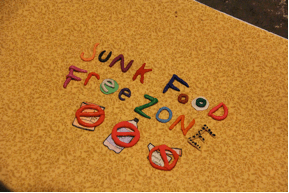
2. Create health zones free of commercial promotion of unhealthy products.
3. Use zoning laws to limit density of unhealthy outlets.
4. Encourage young people to create counter-advertising campaigns
While the rest of our society still struggles to provide equal employment and educational opportunities for girls and women, the alcohol, tobacco and processed food industries have embraced affirmative action to market their lethal but legal products to women. A few days after International Women’s Day, it is worth asking why.
In recent years, the longevity advantage that women have enjoyed over men has shrunk. In 1970, women in the United States lived 7.6 years longer than men. By 2011, the advantage was less than five years, a 37 percent decline. Between 1992 and 2006, female mortality rose in more than 40 percent of U.S. counties. One important reason for this falling gender gap in longevity has been the increased marketing of unhealthy food, tobacco and alcohol to women.
The recent report from the US Centers for Disease Control that obesity rates for children aged 2 to 5 dropped by 43% in the last decade is welcome news for those who hope for a healthier America in fifty years. Sadly, the more immediate story from the CDC shows flat or even increasing obesity rates for every other population group. One group that did much worse was women aged 60 and older, of whom 38 percent were obese, an increase of more than 20 percent since 2003-2004.
Since General Mills created Betty Crocker in 1921, the food industry has advertised to women. As more females moved into the workforce, new marketing opportunities arose. With fewer hours for cooking, women turned to makers of processed food and fast food outlets. To relieve the stresses of balancing family and work demands, some women turned to heavily advertised high sugar, fat and salt foods. These “fun-for-you”foods led many women to gain weight which in turn created a growing market for diet and “good for you” foods. By marketing both products that contribute to obesity and those that claim to help dieters lose weight, companies like PepsiCo, Kellogg and Nestle have found a way to have their cake and eat it.
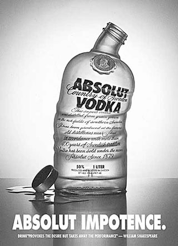
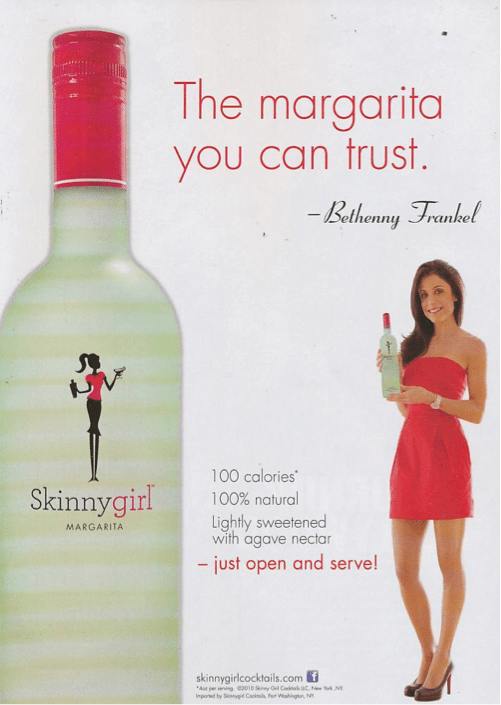
In the food, alcohol and tobacco industries, as adult male markets became saturated, better off men quit smoking or drinking or cut down on unhealthy foods, and victims of too much alcohol, tobacco and unhealthy food died, marketers of these products targeted women(and young people) to become the new source of profits. Today, young women are prime markets for Big Alcohol. For example, as men started to drink less hard liquor, Smirnoff began in 2000 aggressively marketing a new women and youth oriented product Smirnoff Ice, portraying it as a path to glamour and sophistication. Over the next decade, the company’s sales of all vodka products doubled, more than replacing the lost male market. As one alcohol company executive told Advertising Age, “the beauty of this category is that it brings in new drinkers, people who really don’t like the taste of beer.”
According to CDC’s most recent Youth Risk Behavioral Survey, 34 percent of female seniors in high school reported that they binge drank at least once in the past month; up from 27 percent in 2011. Each year, 25,000 women and girls die from alcohol-related causes.
Cumulatively, this targeting of women by food, alcohol and tobacco companies has had an impact on public health. A 2013 Institute of Medicine report called U.S. Health in International Perspective: Shorter Lives, Poorer Health, found that in comparison to other developed nations, Americans have been dying at younger ages than people in almost all other high-income countries. This disadvantage has been getting worse for three decades, especially among women, which researchers attributed in part to higher U.S. consumption of alcohol, tobacco and unhealthy food.
Today, Washington’s obsessive debates about every detail of the rollout of Obamacare seem to be a distraction from the real health crisis facing this country and especially its women. Will policy makers continue to allow corporations that value their profits over our health to be the de facto deciders on health policy in this country? Will Big Business and its allies continue to be able to defeat any effort to restrict aggressive or deceptive marketing of their products?
In 2010, 49% of Americans reported one or more chronic diseases. These conditions account for $3 of every $4 spent on health care. A recent World Health Organization report on chronic diseases identifies tobacco, alcohol and high fat, sugar and salt foods as leading causes of the global increase in chronic diseases.
To date, the food, alcohol and tobacco industries have warned that any effort to restrict their right to promote their profitable and legal products undermines our freedom to eat, drink or smoke what and when we choose. They further claim that main cause of the rise in chronic diseases is mysterious epidemics of increasing irresponsibility and ignorance rather than their marketing practices.These companies make the faux feminist argument that women’s right to consume sickening products with the guys is an essential part of liberation.
For women, the women’s movement, health professionals and tax payers, accepting these arguments ensures that women’s longevity advantage will continue to shrink. It also means that any improvements such as better access to health care and more preventive services that the Affordable Care Act may bring will be overwhelmed by the new increasingly female victims of premature deaths and preventable illnesses from tobacco, food and alcohol related chronic diseases.






















 Corporations and Health Watch

