More on New York City Soda Limits Proposal

Cross-posted from the Center for Food Safety

2.5 liters of Coke: Credit


Last week I had the pleasure of lending my support, on behalf of the Center for Food Safety, to New York City’s proposal to limit the size of sugary beverages sold at food service outlets. (I wrote previously about why this policy makes sense.) The hearing room at New York’s health department was packed with media outlets and hundreds of folks eager to witness the showdown with Big Soda.


Interestingly, no one from an actual soda company spoke up. But we did hear from several trade associations, along with members of the city council, several of whom objected to the idea over potential negative impacts on small business. As I explained in my own remarks, this talking point is a classic misdirect put up by major corporations. Here are a few excerpts from my comments:


This isn’t about choice or any other distracting rhetoric.


The soda industry, because it does not have science (or even common sense) on its side, is resorting to methods of distraction such as claiming that this proposal is an affront to consumer choice. Of course, this proposal doesn’t take anybody’s choice away. New Yorkers who wish to consume more than 16 ounces are free to purchase more.


But let’s take a closer look at the concept of choice. It is the soda industry that has taken away the choice of reasonable portion sizes. Nobody demanded larger beverages. Cups got larger and larger over the years because the soda industry (in coordination with food service outlets) realized it has a gold mine on its hand. When the beverage industry and its cohorts use the word “choice,” it’s really code for threatened profit margins — which are estimated to be as high as 90 percent. 90 percent.


The soda industry is acting like Big Tobacco.


One tried and true tactic of the tobacco industry is inventing “grassroots” smokers’ organizations, a strategy known as Astro-turfing (as in fake grass). It’s a great way for companies that don’t want their fingerprints on a controversial campaign to hide behind a front group. Such groups tend to garner public sympathy and support while attracting media attention.


New York City Hall: Credit

“New Yorkers for Beverage Choices” is a classic Astro-turfing campaign led by the American Beverage Association, the soft drink industry’s lobbying group, which has retained powerful political and PR consultants. Who made this list of alleged New Yorkers so concerned with their choices? For starters, other lobbying groups outside of New York, such as:


  • The Grocery Manufacturers Association
  • The International Franchise Association
  • The National Association of Concessionaires
  • The National Association of Theater Owners
  • The National Restaurant Association


Also, restaurant chains like Chick-Fil-A, Denny’s, and Darden Restaurants, owner of Olive Garden and Red Lobster, among others. Not quite the sort of grassroots activism members you hope for in a campaign about personal choice.


Additional Big Tobacco-style tactics from the soda lobby include:

  • Shooting the messenger and name-calling, by depicting Mayor Bloomberg as a “nanny” in full-page ads taken out by the industry front group, Center for Consumer Freedom, which not coincidentally, began with funding from Philip Morris and is run by notorious tobacco lobbyist Rick Berman;
  • Claiming to take the side of small businesses because they know the public and the press have more sympathy for the little guy than multinational corporations such as Coca-Cola and PepsiCo;
  • Claiming to care about the economic plight of poor people, never mind the fact that the soda industry targets these same populations with advertising designed to get them hooked for life on their unhealthy products.


Ultimately, the tobacco industry lost all credibility with the American public (along with most policymakers) by engaging in such deceitful tactics.


In conclusion, the soda industry is running scared because they know the jig is up; that the public health crisis their products have helped create means that industry cannot keep enjoying the same unfettered regulatory environment. This common sense proposal will catch on as other cities take New York’s lead. This is an idea whose time has come.


You can read the submitted comments here.  A decision by New York’s Board of Health is expected in September.

Farm Bill Jackpot – How Much do Corporations Benefit from SNAP?

Cross-posted from Appetite for Profit.

As Congress proposes cuts to hungry families, my new report raises questions about how much food makers, retailers, and big banks profit from food stamps.

With the debate over the 2012 Farm Bill currently underway in the Senate, most of the media’s attention has been focused on how direct payments—subsidies doled out regardless of actual farming—are being replaced with crop insurance, in a classic shell game that Big Ag’s powerful lobby is likely to pull off.

Meanwhile, the Senate may hurt the less powerful by cutting $4.5 billion from the largest piece of the farm bill pie: the Supplemental Nutrition Assistance Program (SNAP, formerly called food stamps). Reducing this lifeline for 46 million struggling Americans (more than 1 in 7—nearly half of them children) has become a sideshow in the farm bill circus, even though SNAP spending grew to $78 billion in 2011, and is projected to go higher if the economy does not improve.

While New York Senator Kristen Gillibrand’s amendment to restore cuts to SNAP by reducing insurance payments is a noble effort, what’s missing from this conversation is the role of corporations. Much attention has focused on how agricultural subsidies fuel our cheap, unhealthy food supply. In reality, the largest and most overlooked taxpayer subsidy to Big Food in the farm bill is SNAP, which now represents more than ten percent of all grocery spending.

In a report I released today—Food Stamps, Follow the Money: Are Corporations Profiting From Hungry Americans?—I examine the role of three powerful industry sectors that benefit from SNAP: 1) major food manufacturers such as Coca-Cola, Kraft, and Mars; 2) leading food retailers such as Walmart and Kroger; and 3) large banks, such as J.P. Morgan Chase, which contract with states to help administer SNAP benefits. Findings from the report include:

  • Powerful food industry lobbying groups such as the American Beverage Association and the Snack Food Association teamed up to oppose health-oriented improvements to SNAP, at times working with anti-hunger groups
  • At least nine states have proposed bills to make health-oriented improvements to SNAP, but none have passed, in part due to opposition from the food industry
  • In one year, nine Walmart Supercenters in Massachusetts together received more than $33 million in SNAP dollars—over four times the SNAP money spent at farmers markets nationwide
  • In two years, Walmart received about half of the one billion dollars in SNAP expenditures in Oklahoma
  • J.P. Morgan Chase holds contracts in 24 states to administer SNAP benefits, indicating concentrated power and a lack of competition
  • In New York, a seven-year deal originally paid J.P. Morgan Chase $112 million for EBT services, and was recently amended to add $14.3 million—an increase of 13 percent
  • States are seeing unexpected increases in administrative costs, while banks and other private contractors are reaping significant windfalls from the economic downturn and increasing SNAP participation.

JP Morgan Chase Tower in NYC
Most details about where SNAP dollars go remains hidden. For example, although such data is readily available, the U.S. Department of Agriculture (which administers food assistance) refuses to make public how much money individual retailers make from SNAP. In addition, Congress does not require data collection on specific SNAP product purchases (such as Coke versus Tropicana), despite such information being critical to effective evaluation of the program.

USDA also does not collect national data on how much money banks make on SNAP. States bear much of the burden of these administrative costs. Are lucrative contracts with private banks the most cost-effective way to administer a critical food assistance program at a time of severe budget cuts? Could we feed more hungry Americans with some of the profits these corporations are making?

Anthony Smukall is a SNAP participant living in Buffalo, New York, where he says his fellow residents are “facing cuts year after year, with no sustainable jobs to be able to get off of programs such as SNAP.” He thinks that “transparency should be mandatory. The people have a right to know where our money is going, plain and simple.” He added: “J.P. Morgan is shaking state pockets, which then rolls down to every tax-paying citizen. I am disgusted with the numbers in this report, it is unimaginable. If the people knew how such programs were run, and how money is taken in by some of the world’s conglomerates, there would be outrage on a grand scale.”

Jennifer L. of Massachusetts is a single mother who recently re-entered the workforce and hopes Congress does not cut SNAP because as she explains: “SNAP makes a huge difference in my ability to support my children and pay the bills. Food prices have been skyrocketing while salaries remain unchanged. Many people I know have two jobs to try to make ends meet.” She added: “I am in favor of making retailers’ and banks’ information regarding SNAP public. What are they hiding?”

Instead of hurting families during these hard times with cuts to SNAP, Congress should require program improvements that would restore its original purpose: providing a safety net for those in need while also helping farmers. Congress should also make SNAP more transparent by mandating accurate tracking of SNAP expenditures. Why should only the likes of Walmart and Coca-Cola know how billions of our tax dollars are spent each year? Is SNAP truly “putting healthy food within reach” as its tagline proclaims?

You can download the full report here.

Update: See Reuters story.


Image 2 Credit:

Gamermp101 via Flickr.

New York City to Add Soft Drinks to List of Health Hazards

Cross-Posted from Appetite for Profit.


Last week, New York City showed the nation once again what it means to be on the cutting edge of public health policy. The city announced a bold plan to limit the size of sugary beverages sold at restaurants and other food establishments. Predictably, much of the media went crazy, and numerous outlets have already proclaimed that this time, Mayor Michael Bloomberg has just gone too far. Banning trans fats was fine, but don’t take away my right to guzzle a gallon of Coke is the lazy reaction of some pundits.


But let’s take a more rational look at what New York is proposing. From both a policy-making and political strategy standpoint, it makes perfect sense. No one is banning anything or restricting anyone’s freedoms. The city is simply placing a reasonable limit on how much soda (or other sugary beverage) can be served in a single container. According to Coca-Cola, in the 1950′s, the “traditional” bottle size was 6.5 ounces. New York’s proposed 16-ounce limit is roughly 2.5 times higher. Seems more than reasonable.


And the policy rationale is solid. New York City health inspectors are already charged with ensuring that food establishments comply with various health and safety measures. Given what we know about the adverse health consequences of consuming too much soda, beverage companies (along with restaurants) are essentially contaminating the food supply in a similar way that meat companies (sometimes) contaminate your hamburger with E. coli or Salmonella. Or when food workers forget to wash their hands. Or any other number of violations of the health and safety code. So if New York City can inspect food establishments to help prevent its residents from getting sick from unsanitary conditions, it follows the city should also be able to limit other health hazards such as soda. I don’t hear any New Yorkers up in arms over their right to eat bacteria-laced foods.


Moreover, government places reasonable limits on all sorts of behaviors and business practices, every single day. Such as speed limits, which are meant to protect you as well as others. Society has also decided (instead of prohibition) to place various rules on how alcohol is produced, sold, and marketed. For example, many states place upper limits on how much alcohol can be in beer–a regulation designed to protect the health and safety of the public. The sky has not fallen, beer sales are doing well, and beer drinkers are happy (mostly).


Finally, the soda proposal is a brilliant political move because it only requires the approval of the city’s board of health, unlike a tax, which failed in the state legislature thanks to heavy lobbying. Of course, industry is already threatening to go to its friends in Albany to try and stop this proposal, but it’s unlikely Governor Andrew Cuomo would support a preemptive bill. Industry may also try to sue, as it did over menu labeling (they lost) but in the meantime, the corporate PR machine is full swing. Full-page ads with images of Mayor Bloomberg dressed as a woman charging “nanny state” indicate that the best response industry can muster is (sexist) name-calling. At least for the moment.


Stay tuned, as things are likely to get ugly. While most of the news has focused on soft drink makers, the restaurant industry will also come out swinging, creating a powerful lobbying and PR combination. (McDonald’s has already expressed its displeasure.) But if it succeeds, and other cities follow New York’s lead, this idea could spark an entire new approach to regulating an unhealthy food supply.


Image Credit:

Mike Licht via Flickr.

More on Slowing Down Fast Food: A Guide to Fighting Fast Food in Your Own Back Yard

Cross posted from Appetite for Profit.

It’s hard not to get depressed over the politics of food these days, given the massive power of the food industry to influence everything from the farm bill to childhood obesity.

So a new report, Slowing Down Fast Food: A policy guide for healthier kids and families, on how we can fight back couldn’t come at a better time. A joint project of Corporate Accountability International and Dr. Nicholas Freudenberg and Monica Gagnon of The City University of New York, the guide focuses on four local policy approaches: school policy, “healthy” zoning, curbing kid-focused marketing, and redirecting subsidies to healthier businesses. (Full disclosure: I am a consultant for Corporate Accountability.)

Source: Influence and lobbying: lobbying database. Open Secrets.org Center for Responsible Politics.

While it’s true that things in Washington are pretty hopeless, many viable policy options exists at the local level and this report offers case studies and tips for success, plus a whole lot of inspiration.

For example, St. Paul Public Schools (Minnesota’s second largest school district with 64 schools) formed a wellness committee and got a strong policy passed that (among other provisions) prohibits marketing of brands promoting low-nutrition foods and beverages. Advocates brought in researchers from the nearby university, who helped make the connection between food and academic achievement. The policy has been so successful that a nearby hospital has expressed interest in following the school district’s lead. That’s how good local policy ideas can spread.

The guide’s section on zoning restrictions provides several examples of local policies that have been enacted across the country. For example, restrictions on chain restaurants (either outright bans or limits on the number permissible) exist in several California cities, as well as cities in Massachusetts and Maine. An ordinance dating back to 1978 in Detroit prohibits fast food outlets within 500 feet of schools, thus reducing children’s exposure to harmful marketing messages.

In my own neighborhood in Oakland, California in 2004, I was part of a successful effort to keep McDonald’s from moving in directly across the street from my beloved Grand Lake farmers market. It just took a few dedicated leaders to organize to stop the fast food monster, along with supportive policymakers. I spoke to an overflow crowd at the local church and was never more proud of my community. (I also worried about what other neighborhood that franchisee probably went to instead.)

In another inspiring success story, in 2008, the city of Los Angeles placed a one-year moratorium on new fast food outlets in south and east L.A, two particularly poor areas with a high density of fast food. Steps that helped get the job done included surveys and other data gathering, finding a champion in the city council, speaking out at council meetings, and of course, a ton of organizing and coalition building. This was the first time a government placed a moratorium on fast food for health reasons. Last year, the city council extended the moratorium indefinitely.

Another success story I wrote about in 2010, when San Francisco enacted a law to place nutrition standards on kids’ meals that include a toy incentive. Of course, the fast food industry, especially McDonald’s, fought the effort vociferously. But a broad coalition of Bay Area groups, working in coordination with Corporate Accountability International, was able to overcome the lobbying onslaught through true grassroots mobilization.

The specific tactics that the fast food industry deployed in this fight are instructive and included:

1) Stakeholder status. McDonald’s attempted to insert itself into the policy-making process, proposing changes to the bill that would have gutted it;

2) Scare tactics. Once they realized that wouldn’t work, McDonald’s and friends shifted to threatening the city with legal action, regardless of how baseless their claims were;

3) Distractions with PR. McDonald’s hired a PR firm, which (among other tactics) tried to convince ordinance author Supervisor Eric Mar that voluntary standards would work.

Despite the hard-won victory, as I wrote about last December, McDonald’s cynically found a way around complying with the law. However, much was gained in the process, including bringing greater awareness to the issue. Also, soon after the bill’s passage, Jack in the Box pulled toys from its kids’ meals.

Another promising local approach is ending public subsidies such as tax incentives and zoning breaks. Some cities offer small business subsidies to fast food franchises, which seems rather ironic for multinational corporations like Subway and KFC. As Manhattan Borough President Scott Stringer has noted, “There is no defensible policy rationale for subsidizing fast food restaurants.”

The guide also lists numerous other ideas, including restrictions on marketing to children, menu labeling, taxation, and counter-marketing strategies. The authors conclude while no one community can do every action, “everyone can do something that will help to create food environments that will guarantee the health of our children and our communities.”

Also included is a handy Action Guide, with specific steps for how to get your community engaged such as, assessing the political landscape, framing and messaging, and most importantly, building community support.

There has never been a better time to get active and take a stand against the infiltration of fast food in your neighborhood. We certainly cannot wait for policymakers in Washington to protect the people. Download Slowing Down Fast Food and start mobilizing your community. I guarantee it will be a challenging yet rewarding experience.

Then be sure to tell me how it goes, so I can write about your success story next.

More Empty Recommendations on Junk Food Marketing to Children

Cross posted from Center for Food Safety.

Institute of Medicine Gives Big Food Another Deadline – or else!

This week, the nation’s top public health experts gathered at a much-trumpeted obesity conference hosted by the U.S. Centers for Disease Control and Prevention called Weight of the Nation. (A quick glance at the agenda reveals nothing that would even begin to challenge the food industry.)

Released at this bland event was an equally uninspired report from the Institute of Medicine (IOM, an advisory arm of Congress) called, Accelerating Progress in Obesity Prevention: Solving the Weight of the Nation.

The irony of the report’s title gets lost among the 478 pages that aim to solve “this complex, stubborn problem” with “a comprehensive set of solutions.”

One of the recommendations intended to speed things up is for the food industry to “take broad, common, and urgent voluntary action to make substantial improvements” to marketing aimed at kids. This is certainly important, as advocates have for years been sounding the alarm about the intractable problem of junk food marketing to children and its connection to poor health. But another part of the IOM dictate sounded vaguely familiar:

If such marketing standards have not been adopted within two years by a substantial majority of food, beverage, restaurant, and media companies that market foods and beverages to children and adolescents, policy makers at the local, state, and federal levels should consider setting mandatory nutritional standards for marketing to this age group to ensure that such standards are implemented.

Two years? Where have I heard that deadline before? Oh yes, it was another IOM report, this one focused entirely on food marketing to children, from 2005, which reviewed the science showing a clear connection between junk food marketing and children’s dietary habits. That report said if voluntary efforts by industry to clean up its act were unsuccessful, “Congress should enact legislation mandating” a shift in advertising. Also, that “[w]ithin 2 years the Secretary [of health] should report to Congress on the progress and on additional actions necessary to accelerate progress.”

So it’s been 5 years since that earlier deadline has passed and now the food industry has 2 more years to show how much it really cares about kids? Did anyone at IOM bother to check its earlier reports before writing this one? But it’s hardly IOM’s fault. If anyone is to blame for lack of action on this issue, it’s Congress and the White House, as two recent reports make painfully clear.

An in-depth investigation by Reuters describes the dirty details of the onslaught of Big Food lobbying in the wake of an effort by the federal government to improve voluntary guidelines on food marketing to kids. Reuters found that food and beverage lobbyists spent more than $175 million lobbying since President Obama took office in 2009, more than double that spent in the previous three years, during the Bush Administration. “In contrast, the Center for Science in the Public Interest, widely regarded as the lead lobbying force for healthier food, spent about $70,000 lobbying last year — roughly what those opposing the stricter guidelines spent every 13 hours.”

Reuters also examined lobbying visits to the White House, finding that a “who’s who of food company chief executives and lobbyists visited the White House” including:

CEOs of Nestle USA, Kellogg, General Mills, and top executives at Walt Disney, Time Warner, and Viacom, owner of the Nickelodeon children’s channel — companies with some of the biggest financial stakes in marketing to children. Those companies have a combined market value of more than $350 billion.

Another damning report emerged this month from the Sunlight Foundation found similar influence from Big Food. The strategy was for industry lobbyists to give money to members of Congress in exchange for their sending letters objecting to federal agency efforts. Here is how Sunlight describes one such transaction:

Days after receiving several campaign checks from the food lobby last May, Sen. Amy Klobuchar, a Minnesota Democrat who is up for re-election this year, sent a letter raising concerns about the Federal Trade Commission’s efforts to develop voluntary guidelines aimed at toning down the marketing of junk food to kids.

Seems Klobuchar wasn’t the only Democrat on the dole. Sunlight found that while most letter-writers were Republicans, lobbyist campaign donations held particular sway with Senate Democrats. Those who wrote letters of objection “collected on average, more than twice as much campaign money from food lobbying interests since 2008 as those who did not write letters.” A similar pattern also held in the House, where 38 Democrats wrote letters of protest.

As Jeff McIntyre, policy director for the advocacy group Children Now told Reuters: “We just got beat. Money wins.” That’s why it’s irrelevant how many more recommendations or deadlines come from the Institute of Medicine or any other panel of experts on how to “accelerate” progress. The only thing getting accelerated is lobbying dollars into politicians’ pockets. And kids’ poor health.

Originally posted at Center for Food Safety.


Image 2 Credit:

Sunlight Foundation

Whistleblower to Maker of Pink Slime: “Quit Harassing Me”

Cross-posted from Appetite for Profit.

This past week, the media woke up to the shocking reality that our meat supply is in fact industrialized. Long gone are the days of your friendly local butcher grinding meat for your kids’ hamburgers. Taking its place is a corporate behemoth you probably never heard of called Beef Products Inc.

BPI now finds itself on the receiving end of consumer outrage over its ammonia-treated ground beef filler a former USDA official coined “pink slime.” Thus far, a petition aimed at getting current USDA officials to stop using the scary stuff in school lunches has garnered more than 200,000 signatures in about a week.

All the hullaballoo reminded me of a dramatic talk I witnessed about a year ago on this very topic. Last February, I spoke at a conference organized by the Government Accountability Project’s Food Integrity Campaign called “Employee Rights and the Food Safety Modernization Act” in Washington, D.C. The event’s focus was the little-known, but critical aspects of the newly-enacted food safety law that would give whistleblowers added protection.

The show-stopping presentation came from Kit Foshee, a whistleblower fired by Beef Products Inc., the very same company now in the news for pink slime.

So I went back to watch his presentation again, which the conference organizers were kind enough to make available. (But only after Foshee’s attorneys gave their approval – it will soon become apparent why that huddle was needed.)

What made Foshee’s talk so remarkable was its content – he spoke in great detail about BPI’s ammoniated beef process – but also his bravery at confronting his former employers, who just happened to be in the room.

A few minutes into his talk, as Foshee was pointing out the absurdity of BPI’s food safety awards on their website, he dramatically turned to his left to the BPI attorneys and asked if they were there to protect whistleblowers and to support the Food Safety Modernization Act, like the rest of us were?

I stopped taking notes and looked over, as everyone else in the room did. I can’t recall ever being at a conference hearing a whistleblower speak, let alone one that was confronting the company that fired him. The tension in the room was palpable but Foshee plowed ahead, with some nervousness in his voice.

He answered for the BPI reps, who weren’t interested in dialogue:

No, I am going to tell you right now, they’re not here to protect whistleblowers. This is about me. They’re here with their tape recorder because they are going to find a way to shut me up. They’ve got sealed documents, that if I say anything about, they’re going to persecute me. So we’re going to stick with the publicly available information, from their website, to stay safe.

(Foshee was referring to sealed court documents that resulted from his wrongful termination lawsuit against BPI.)

He described the adding of ammonia as “Mr. Clean.” He asked if people would buy hamburgers if they knew BPI used ammonia “to clean it up,” and spoke of the awful smell of the filler material. But “you don’t know that,” he said, and “you should be able to make a choice.”

The main way BPI and the meat industry has defended using ammonia (see this silly website just up – http://pinkslimeisamyth.com) is by claiming the safety benefits in reducing bacteria. This, by the way, was soundly disputed back in 2009 in an award-winning expose by the New York Times.

Foshee (who worked as BPI’s Corporate Quality Assurance Manager for ten years) – disputed the company’s safety claims in great detail. He called claims of reduced levels of the deadly strain of E. coli 0157:H7 “totally misleading.”

He said BPI would manipulate test results in various ways, including raising pH levels and not using the most effective testing methods available for detection. He called BPI’s claims that its testing was the best in the industry “a farce” and that “all they wanted was a test to give a negative result” and move on.

He added, directing his remarks to the BPI attorneys in the audience, “you want to promote that you’re a safe company to further your sales” but (pointing to their webpage) “this is false advertising.”

He noted that BPI is actually a detriment to food safety because many companies eliminated their own testing, relying instead on BPI’s claims of safety. “I don’t blame companies for believing it, because what idiot would claim that?”

In another dramatic moment, he challenged the BPI reps by saying “You want to sue me? Sue me, but quote your own studies correctly. It’s on your website. Quit trying to mislead consumers to thinking that if they buy from a company’s that uses BPI products in its ground beef, it’s safer – that’s absolutely false.”

In keeping with the theme of the conference, he explained why we need to protect whistleblowers: “because companies falsify data. This is still happening. This is real. This is a company is still falsely advertising right now. Their product is in all the ground beef that you’re eating every day.”

He also explained how painful it was to get fired. He divorced because of the toll the experience took on his marriage. “You try to explain to your spouse why you’re giving up $30,000 bonuses.” He had made over $100,000, but no more.

He finished with a challenge directed at the BPI attorneys in the room:

I wonder if there’s something in those sealed documents that they don’t want to know about, that I can’t talk about right now. I challenge BPI: why don’t you come here to promote whistleblowers and instead of to persecute me? Let’s open up these documents and see who’s lying? Let’s get this all out into the open. Why don’t you quit harassing me?

Why indeed. What’s in those documents? What is BPI trying to hide?

Next time you read sorry excuses from BPI like these, check out Foshee’s talk online and ask yourself, is this really a reliable company?

According to Amanda Hitt, director of the Food Integrity Campaign, within hours of Foshee’s talk, BPI removed entire sections of its website. She also disputes BPI’s claims of food safety and says the goal was to offer up cheap filler for hamburgers: “This product was never about safety, it’s about economics.”

Meantime, pink slime is just one of many problems with industrialized meat, so let’s not lose sight of that bigger picture. What to do about it? Demand labeling, buy organic, or just don’t eat ground beef.

Read more about Foshee and the Government Accountability Project’s Food Integrity Campaign. Thanks to brave whistleblowers like Kit Foshee for speaking out and let’s hope the media pays more than just passing attention to these critical issues.


Image Credit:

Appetite for Profit

PepsiCo: Master of Corporate Spin?

Cross-posted from Appetite for Profit.

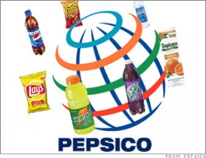
When I ask people to name the largest food company in America, most don’t realize the answer is PepsiCo. You may just think soft drinks when you hear the name, but PepsiCo actually owns a dizzying array of food and beverage brands across five massive divisions: Pepsi-Cola, Frito-Lay, Gatorade, Tropicana, and Quaker Oats. As I recently told CNBC for their documentary, Pepsi’s Challenge, perhaps the leading maker of sugary drinks and salty snacks should bear some responsibility for America’s bad eating habits.

To examine the company further, I ask in a lengthy article just published online in the City University of New York Law Review, “PepsiCo and Public Health: Is the Nation’s Largest Food Company a Model of Corporate Responsibility or Master of Public Relations?”

The article describes how PepsiCo utilizes an array of public relations maneuvers to convince Americans to keep buying its products, despite copious health advice to the contrary. Moreover, PepsiCo engages in lobbying and other underhanded behavior that defy its self-proclaimed “Performance with Purpose” image. These tactics include:

  • Describing questionable products such as baked chips and diet soda as “better for you” while attempting to engineer healthier junk food with such novelties as “drinkable oats.”
  • Exploiting an increasing desire for local food with “farmwashing” ad campaigns for potato chips.
  • Hiring respected public health experts and medical doctors to represent the company, creating an illusion of having a health-oriented mission, instead of being driven by profit.
  • Continuing to market its unhealthy products to children, despite numerous promises to the contrary, and lobbying to undermine federal policy aimed at reducing junk food marketing to kids.
  • Inserting its self-serving public relations message into a respected annual scientific report funded by top health foundations.
  • Buying off nonprofits by engaging in a host of philanthropic efforts such as its ubiquitous Pepsi Refresh program, all the name of moving more products.
  • Aggressively marching into the developing world to ensure continued growth globally as western markets become saturated with salt, sugar, and fat.

Throughout the article, I show how PepsiCo uses deliberately vague language in its annual report and other documents in which the company claims to be a responsible corporate citizen, thereby making evaluating such claims impossible. We cannot trust PepsiCo or any other food company to “do the right thing” when it comes to fixing the mess they got us into in the first place.

Download the full article, published in Volume 15.1 of the City University of New York Law Review here.


Image Credit:

Appetite for Profit

SNAP: the Other Corporate Subsidy in the Farm Bill?

Cross posted from Appetite for Profit.

This week Congress begins hearings on the 2012 farm bill, the massive piece of legislation that gets updated about every five years and undergirds America’s entire food supply, but that few mortals can even understand. As nutrition professor Marion Nestle recently lamented, “no one has any idea what the farm bill is about. It’s too complicated for any mind to grasp.”

Nestle also called the Supplemental Nutrition Assistance Program (SNAP, formerly known as food stamps) “the huge elephant in the farm bill” because its enormity trumps everything else. This entitlement program (the budget expands as more people enroll) provides modest monthly benefits for food purchases and represents a critical lifeline to many people in need.

In recent years, public health and food policy experts have sounded the alarm about how farm bill programs supporting all the wrong crops (think corn and soy) contribute to America’s epidemic of obesity and diet-related diseases. This is certainly true, along with a host of other economic drivers.

But are we focusing too much on the commodity title and not enough on the nutrition title when it comes to how the farm bill truly subsidizes Big Food? After all, even if the commodity title was completely eliminated, most economists believe it would have minimal impact on healthy food consumption.

SNAP spending dwarfs all farm bill programs

According to federal data, food assistance made up 68 percent of the farm bill budget in 2008 and SNAP accounts for almost that entire amount. (Other food assistance programs such as school meals are funded through other legislation.) In contrast, the next three largest farm bill programs were commodity support (12 percent), crop insurance (10 percent), and conservation (9 percent).

Looking at the dollars and cents, the U.S. Department of Agriculture reported that in fiscal year 2011, taxpayers spent $71.8 billion on SNAP benefits, compared to $64.7 billion in 2010. The total number of enrolled participants was 44.7 million last year compared to 40.3 million in 2010. Obviously these increasing numbers reflect our struggling economy, and SNAP benefits are a crucial component of addressing hunger in the U.S. Sadly, estimates are that about 30 percent of Americans who qualify for SNAP aren’t even enrolled.

So how exactly was close to $72 billion of the taxpayers’ money spent last year? Good question. Unfortunately, we have little clue. We have somewhat better information on commodity payments. See for example, the Environmental Working Group’s handy Farm Subsidy Database. (But EWG also warns of an increasing lack of transparency in farm bill commodity and insurance subsidies.)

Other than broad categories of retailers (e.g., large versus small) we don’t know where SNAP dollars go because USDA does not require retailers to report specific purchase data; rather, all the agency wants to know is the total amount to be reimbursed.

Bill would require retailers to report SNAP receipts

In December, Senator Ron Wyden (D-OR) introduced the FRESH Act (Fresh Regional Eating for Schools and Health), which (in addition to other provisions) aims to “increase accountability” in the SNAP program by requiring corporations receiving more than $1 million a year “to provide taxpayers with an itemized receipt for their share” of the SNAP program.

Sounds pretty reasonable, since any retailer large enough to rake in over a million bucks a year from SNAP is almost certain to have the technology necessary to send an electronic report to USDA on how that money was spent.

Such information is a crucial factor in the debate over restricting benefits, which is once again heating up in states around the country, with Florida being the most recent example. (However, that measure appears to be dead for now.)

In 2010, New York City applied to USDA for a waiver to conduct a 2-year pilot test to exclude unhealthy beverages such as soda from the SNAP-eligible food list. (The feds denied the request, citing complexity.) An unfortunate divide exists between public health experts targeting “sugar-sweetened beverages” as enemy number one and anti-hunger advocates, who vociferously oppose any SNAP restrictions.

But conveniently left on the sidelines of this very public debate, and laughing all the way to the bank, has been the food and beverage industry. Of course, they made their voices heard loud and clear through their usual behind-the-scenes lobbying efforts.

Senator Wyden’s bill should spark a conversation that’s long overdue: exactly how much does Big Soda and Big Food benefit from SNAP funding? Some of my colleagues are concerned that such data could backfire by giving more fodder to certain politicians who will use any excuse to cut benefits for the poor.

Yes, the data is likely to show that SNAP participants’ purchase habits parallel those of other Americans, who are also consuming too many empty calories. But that’s not a valid reason to fear collecting the information. The “personal responsibility” argument – that individuals alone are responsible for how they eat regardless of their environment and shear lack of affordable healthy options – will continue with or without Uncle Sam picking up the tab.

But how will we ever improve and strengthen SNAP if we cannot accurately evaluate it? How else will we truly integrate public health into our food assistance programs? Why should Walmart—probably the single largest beneficiary of SNAP—have access to information that the USDA doesn’t?

Now more than ever we need to ensure the nation’s largest food assistance program is truly helping those in need, instead of just lining the pockets of Corporate America.


Image Credit:

Thomas Hawk via Flickr.

Is Walmart’s March into Cities Helping or Hurting?

Cross-posted from Food Safety News.

Having saturated the rural landscape, shuttering local stores in small town America along the way, now, in the wake of stagnant sales and increased competition, Walmart desperately needs to expand into urban markets.

And what better urban market than one full of eight million people? While the big box retailer is eager to enter the Big Apple, challenges loom large. Given the negative reputation Walmart has earned for being hostile to workers among other problems, many New Yorkers are skeptical, to put it mildly.

To counter the opposition, Walmart is positioning itself as the solution to urban food deserts – areas where finding real food is next to impossible. But as Anna Lappé has eloquently argued, the big box chain isn’t the answer: “Let’s be clear, expanding into so-called food deserts is an expansion strategy for Walmart. It’s not a charitable move.”

Research Shows Walmart Kills Both Jobs and Food Access

Now a report released last month by Manhattan Borough President Scott Stringer concludes that not only would bringing Walmart to Harlem spell disaster for labor, but it could also make an already dire food access problem there even worse.

Based on data from Chicago’s negative experience, the report found that within two years of a Walmart store opening in New York:

– Between 48 and 66 fresh food retailers could go out of business, representing a net loss of between 56,500 to 82,000 square feet of food retail within a one-mile radius;

– Closure of these stores would represent a loss of 50 to 57 percent of the fresh food retail square footage added in recent years by New York City’s incentive program;

– All of this would negate more than $4 million in public finance investment and four years of effort to improve fresh food access in the area.

As Stringer explained, Walmart shouldn’t be undermining city programs to improve fresh food availability: “Walmart would be a bane, not a boon, to the health food economy of Harlem – or any other New York City neighborhood.”

Moreover, previous economic analysis has shown that Walmart’s promise of jobs doesn’t pan out either. In a report from last summer called “The Walmartization of New York City,” researchers at the City University of New York concluded that, “despite Walmart’s promises of jobs and lower prices for the community, the longer term impact is actually the opposite.”

Assuming Walmart opened the 159 stores needed to reach 21 percent grocery market share in New York City (the same proportion the company enjoys nationally), the impact would be a net loss of almost 4,000 jobs, and a loss of more than $453 million in wages per year for all remaining workers.

What about the new Walmart jobs? According to the report, 4,279 new low-wage Walmart workers would have to “rely on social services to make ends meet, costing New York taxpayers over $4 million per year” in health care benefits alone. This, in a city where the mayor has asked for $2 billion in budget cuts.

Current Walmart Locations Confirm Bleak Outlook

Other areas of the country have already had real world experiences to back up these projected findings. According to New York’s Food for Thought report, of all the employers in Ohio, Walmart has the greatest number of associates and dependents enrolled in Medicaid, which in 2009 cost taxpayers $44.8 million.

Similarly, a 2004 study found that for each of California’s whopping 44,000 Walmart employees, taxpayers had to spend $730 on health care and $1,222 on other forms of state and federal assistance such as (ironically) food stamps.

In 2006, Walmart entered Chicago and recently convinced local officials to approve two additional locations, including (after a long battle) on the city’s South Side. How have things fared so far in the original Chicago location? Not so well.

A three-year study released by Loyola University Chicago in 2010 revealed that Walmart had not enhanced retail activity or even employment opportunities. In fact, “the probability of a local retailer going out of business during the study period was significantly higher for establishments close to Walmart’s location.” Specifically, researchers found that a nearby business had about a 40 percent chance of closing over a two-year period – not very good odds.

If You Can’t Beat Them, Buy Them

Of course Walmart paints an entirely different picture, and is spending a ton of money to hide these sobering facts in a massive PR campaign. According to the Walmartization report, in the first half of 2011 alone, the company spent $2.1 million lobbying in New York, as much as they spent there in the past four years combined. There’s even a dedicated website complete with a “fact-checker” and the heartwarming tagline, “Helping NYC Save Money and Live Better.”

Philanthropy is another time-honored corporate tactic, often used to buy silence from critics, curry favor with community leaders, or, in this case, grease the wheels to gain entry into a reluctant-but-lucrative market.

In December, Walmart announced a combined gift of $250,000 to five various New York City charities, including a home food delivery service and a soup kitchen. Of course $250K is chump change to a company whose net sales topped $405 billion in 2010, but to these five groups it no doubt means a lot. Moreover, in its press release, Walmart made sure to point out the company’s “more than $13 million” in donations in New York City since 2007. (Similarly, Walmart pledged to donate $20 million to Chicago charities.)

But Walmart will need a lot more than a few million dollars in tax-deductible contributions to make up for all the job losses, decrease in available fresh food (and even increased obesity) that could befall New Yorkers.

Other cities should also brace themselves, as the company is opening four stores in Washington, D.C. later this year, with additional area sites planned. Other locations on the agenda include Boston and San Francisco. But mostly the company is keeping quiet about its urban expansion agenda, at least publicly. Last year in Boston, the company was said to be “quietly chatting up city officials” while scouting neighborhoods.

I shudder to think of the consequences to American’s already suffering urban populations if Walmart succeeds in duplicating its rural retail takeover. What to do about it? Support the United Food and Commercial Workers, which has an important campaign called Making Change at Walmart. See also the Big Box Tool Kit, which is chock-full of news and practical resources. Communities can work together to fight back, we just have to act before it’s too late.

———————

© Food Safety News

See reader comments.

2012: The Year to Stop Playing Nice

Cross-posted from Appetite for Profit.

Instead of a potentially depressing year-in-review post, I decided to look ahead. (But do see Andy Bellatti’s amusing compilation of 2011 food news.) Given all the defeats and set-backs this year due to powerful food industry lobbying, the good food movement should by now be collectively shouting: I am mad as hell and I’m not going to take it anymore.

If you feel that way, I have two words of advice: get political.

I don’t mean to ignore the very real successes: increases in farmers markets, innovative and inspiring programs such as Food Corps, and an increasingly diverse food justice movement, just to name a few. But lately, at least when it comes to kids and junk food, we’ve been getting our butts kicked.

And it’s not just because corporations have more money to lobby, of course they do. It’s that too often, we’re not even in the game. Or, we tend to give up too easily. While I know many food justice advocates who understand this is a political fight over control of the food system, sadly I cannot say the same thing about some of my public health colleagues. Too many nonprofits, foundations, and professionals are playing it safe, afraid to take on the harder fights.

A politician from Maine I interviewed for my book was complaining to me about how food industry lobbyists were in his state capital every single day, while public health sent the occasional volunteer. His sage advice to us advocates: “You may be out-gunned, but you have to bring a gun.”

Moreover, many groups have shown that you don’t always even need a bigger gun. The small but impressive organization, Campaign for a Commercial-Free Childhood proved that this summer when it won an important victory against Scholastic regarding its corporate-sponsored materials. How did they do it? A combination of smart campaigning and effective media. Not by playing nice.

Campaign for a Commercial Free Childhood Logo

Many public health folks I know are more comfortable with research and data than politics and lobbying. But if we are to make real progress, that has to change. Back in May, after a series of defeats, my colleague Nancy Huehnergarth wrote a great call-to-action. She noted how public health advocates and its funders are “very genteel” and that when industry lobbying beats us back, advocates just want more science, believing that the new data “will finally convince policymakers and the public to take action.” But it doesn’t work that way, as she explains:

The reality is that when going up against deep-pocketed, no-holds barred opponents like Big Food, Big Beverage and Big Agriculture, public health’s focus on science and evidence is easily trumped by money and messaging. If public health advocates don’t start rolling up their sleeves and using some of the same tactics used by industry, progress in this fight to create a safe, healthy, sustainable food system is going to move very slowly.

OK, now for some good news. We are already seeing positive signs that indeed, the food movement is getting more political. Recent defeats are helping to mobilize people even more, as folks realize the food industry is not playing nice, so we can’t either. Here then, are just a few signs of hope for 2012:

1)  The growing political movement opposing genetically-engineered foods, which includes a huge Just Label It campaign with an impressive list of supporters. Stay tuned also for the 2012 ballot initiative in California to label GMOs.

2) Powerful nonprofit organizations (who don’t shy away from politics) getting involved for the first time in nutrition policy. For example, the Environmental Working Group’s recent report on sugary cereals called out the utter failure of Big Food’s voluntary nutrition guidelines on marketing to children. Given EWG’s one million-plus supporters, I can’t wait to see where they go with this issue in 2012.

3) Increasing coverage in mainstream media that food industry marketing (and not just personal responsibility) bears much of the blame for the nation’s public health crisis. Examples include a front page story in a recent Sunday edition of the San Francisco Chronicle and Mark Bittman’s weekly Opinionator column in the New York Times, which is consistently smart and hard-hitting.

4) Speaking of media, as traditional investigative journalism outlets have become more scarce, a new breed of reporters may be born from an innovative project just launched in November: Food and Environmental Reporting Network. Its mission is to “produce investigative journalism on the subjects of food, agriculture, and environmental health in partnership with local and national media outlets.” Judging from its first in-depth report on dairy CAFOs in New Mexico, I am looking forward to more in 2012.

5) Finally, the Occupy movement, while still very young, has already inspired a number of food politics offshoots. As I wrote after Food Day, several others have penned calls to action showing the deep connections between corporate control of the food supply and economic injustice. (If you read just one, Tom Philpott’s Foodies, Get Thee to Occupy Wall Street should convince you.) Also, the amazing grassroots organization Food Democracy Now (based in Iowa) recently organized an “Occupy Wall Street Farmers’ March” to bring the message that family farmers are also the 99%. (Read organizer Dave Murphy’s moving account of the successful event and watch the videos of the passionate speakers – I promise you will be inspired.)

There are many other amazing groups, farmers, and eaters organizing all over the country (and the world) to take back our food supply from corporate profiteers. We’ve got plenty of challenges ahead, with the farm bill up for renewal and more school food nutrition standards to fight for, just for starters. I am hopeful that next year we will see the food movement get even more political. I just hope I can also say, by the end of 2012, that it was the year more of my public health colleagues joined in.


Image Credits:

1.  Natalie Maynor via Flickr.

2.  Campaign for a Commercial-Free Childhood

3.  Just Label It Blog

4.  Environmental Working Group