Retailer just says no to exploiting children

Cross posted from Corporate Accountability International

Sign at Mom's Organic Market
Sign at Mom’s Organic Market


As the frequent bearer of bad news about the food industry, I am thrilled to share a positive story. Last month, MOM’s Organic Market, a small retail chain based in the Baltimore area, announced it would stop carrying products featuring children’s cartoon characters:


Products ranging from Dora the Explorer frozen soybeans to Elmo juice boxes will be discontinued and replaced with organic alternatives in cartoon-free packaging.


Company CEO Scott Nash blogged last August about how his young daughter begged for a cereal she never tasted because of “Clifford the Big Red Dog” on the box, putting the store’s policy into motion. The company sent me this list of discontinued items, which includes numerous Earth’s Best products, along with a few other natural food companies.


While MOM’s is a small chain targeting a specific audience, the move is still significant, especially considering the greenwashing many natural and organic companies engage in. MOM’s community outreach representative Laura Holley-Poole told me many food makers were taken by surprise:


Several producers said they thought their products would be OK because they used mostly organic ingredients, or because they choose cartoon characters who had a positive or educational message. But they may be missing how using cartoon characters to target kids doesn’t go over to well with a lot of parents who buy their products.


As an example, she pointed to this confused apology from green household products maker Seventh Generation, in the wake of customer outcry over the company’s decision to co-brand its diapers with Dr. Seuss’ “The Lorax.”


The move is very significant in the current discourse over the ongoing problem of marketing to children.


As I’ve written before, our federal government has turned its back on this issue so the only place left to demand change is with industry. But food companies are engaging in a massive public relations charade designed to make us believe they are making positive changes.


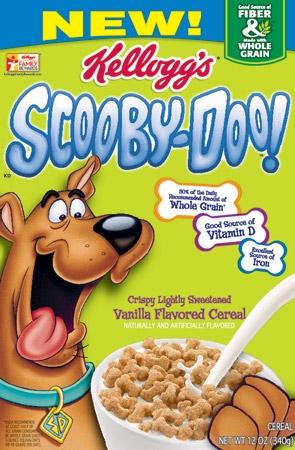
For example, Kellogg has a new product, Scooby-Doo! That’s the actual name of the cereal – Scooby Doo! – but this is less important the image on the box. Some think this product is a positive development because it contains “only” six grams of sugar per serving. But it’s very likely that Kellogg’s motivation was to be eligible for the very lucrative WIC (Women, Infants, and Children federal assistance program) market, for which six grams of sugar per serving is the maximum allowed. Kellogg says as much on this community feedback page where it also appears not everyone is so happy with the product, leading Marion Nestle to ponder if the product will last very long.


When I asked MOM’s CEO Scott Nash about marketing “healthy food” to children, he answer was simple: “The ends don’t justify the means. Marketing to children is wrong, no matter what is being marketed.” He believes marketing to children “should be illegal.” I couldn’t agree more and that’s why I support Corporate Accountability International’s ongoing campaign to stop McDonald’s from exploiting children (as opposed to just making “healthier” Happy Meals).


Supermarket News described the market’s announcement as “bold” and showing leadership but noted that “MOM’s caters to a specific demographic, so this kind of action wouldn’t float at a mainstream retailer.” Still, the article noted “taking a stand is controversial, but it’s empowering; it defines the retailer against the backdrop of everyone else.” This is exactly the point: the policy creates a new standard for other retailers to follow. Are you listening Whole Foods CEO John Mackey?


The company also hopes others, such as progressive co-ops and independent retailers follow its lead. Holley-Poole told me the largest impact would be on product manufacturers in the organic food industry. “I would not be surprised to see many of the discontinued items re-introduced with new cartoon-free packaging in a couple years,” she said. Susan Linn, director of the Campaign for a Commercial-Free Childhood praised the new policy:

Using beloved media characters to sell kids on a particular brand of food is wrong, even if it’s healthy food. Children should not be trained to pick foods based on the cartoon on the box. We congratulate MOM’s for taking this courageous stance on behalf of families and urge other companies to follow suit.


I am often asked: who in the food industry is doing it right? I am very happy to finally have an answer to that question.
 

Fighting the other NRA (National Restaurant Association) – Resources to support workers

Cross-posted from Appetite for Profit

2.20CHW


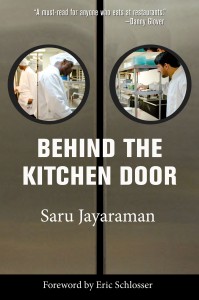
This week I’ve been writing about the National Restaurant Association (the other NRA) and why we should care about food workers, in part to bring attention to the new book Behind the Kitchen Door by labor advocate Saru Jayaraman. Today I want to offer practical resources for how to help improve the lives of the 20 million food workers who help us put food on our own tables every day.


Get Informed


In addition to buying the book, Behind the Kitchen Door, the following books and reports will help arm you with the information you need.


  • American Way Eating: This book by Tracie McMillan opened my eyes to the plight of workers in the three settings where she went undercover for a first-hand experience: the farm fields of California, a Walmart in Michigan, and an Applebee’s in New York City.
  • Fast Food Nation: This 2001 best-selling book by Eric Schlosser still resonates today, especially the description of the horrific dangers workers face in meat slaughterhouses, as well the exploitation of fast food workers.
  • Hands that Feed Us: This report by the Food Chain Workers Alliance is the best overview I’ve seen on workers in every sector of the food industry: 1) production – farmworkers; 2) processing – slaughterhouse and other facilities; 3) distribution – warehouse workers; 4) retail – grocery workers; and 5) service – restaurant and other settings.
  • Serving While Sick: This report from the Restaurant Opportunities Center based on national surveys revealed that 63% of workers reported cooking or serving while sick and that most faced high rates of exposure to dangerous working conditions.
  • Dime a Day: This report from the Food Labor Research Center at University of California, Berkeley (which Jayaraman directs) explains how a reasonable increase in the minimum wage would have a minimal impact on food prices. As I have explained, scaremongering about higher food prices is a favorite talking point of the National Restaurant Association, regardless of the facts not supporting lobbyist claims.
  • Tipped Over the Edge: This report from the Restaurant Opportunities Center documents disturbing gender inequalities in the restaurant industry. (71% of servers are female.) Women are kept in lower paying jobs and suffer from sexual harassment, among other mistreatment.
  • The Color of Food: This report from the Applied Research Center examines the gender and racial divides across various food sectors, revealing a disturbing pattern of discrimination that keeps women and workers of color at the bottom of the food chain.
  • Good Food and Good Jobs for All: Building upon the Color of Food, this report connects the dots between the good food movement and the dire need for labor reforms, recommending that we combine efforts.


Get Active


In addition to supporting campaigns to raise the minimum wage, both federally and in cities and states across the nation (sign this petition), please support the following organizations and campaigns:

  • Coalition for Immokalee Workers: CIW’s hard work on behalf of farmworkers in Florida has resulted in numerous victories against such corporate behemoths as Taco Bell, McDonald’s, and Burger King. Check out their Fair Food Standards Council, which monitors conditions for tomato growers, their Anti-Slavery Campaign, which helps investigate the worst labor abuses, resulting in criminal charges, and join their March for Rights, Respect and Fair Food from March 3-17.
  • Fast Food Forward: A movement of New York City fast food workers to raise the minimum wage, which is a paltry $7.25 an hour thanks to the powerful restaurant lobby there.
  • Food Chain Workers Alliance: this amazing coalition of organizations brings together those who “plant, harvest, process, pack, transport, prepare, serve, and sell food, organizing to improve wages and working conditions for all workers along the food chain.”
  • Restaurant Opportunities Center United: The group co-founded by Saru Jayaraman that works to improve the lives of 10 million restaurant workers. They have numerous locations in cities around the nation, as well as targeted corporate campaigns, such as Dignity at Darden. You can also download their handy Diner’s Guide (and app of course), which ranks the most popular restaurant chains on worker treatment.
  • Unite Here Food Service: As anyone working on school food knows, food service workers are among the least respected professionals. Unite Here represents food service workers across the U.S. and Canada, in colleges, K-12 schools, corporate cafeterias, airports, stadiums and event centers.
  • United Food and Commercial Workers Union: UFCW advocates for better conditions for 1.3 million workers in the U.S. and Canada, in grocery and retail stores and in the food processing and meat packing industries. Their largest locals include UFCW Local 1500 in New York City and UFCW Local 770 in Southern California.
  • Warehouse Workers United: Among the least visible workers are those (mostly immigrants) moving tons of goods through the nation’s busiest ports often under deplorable conditions, en route to huge retailers such as Walmart. In 2011, I spoke on a panel with a warehouse worker who told his harrowing tale of abuse through a translator. He said the workers were treated like cattle. It was a humbling experience.


Finally here are a few tips about dining out that Saru Jayaraman suggests in Behind the Kitchen Door: 1) Talk to the workers to find out how they are treated; 2) ask restaurant managers about their promotion policies; and 3) adopt a definition of “sustainable food” that includes labor practices. As Jayaraman puts it so bluntly: it’s not enough to obsess over corn syrup or farm-raised salmon: “we absolutely must care about the health and sustainability of the workforce preparing, cooking, and serving our meals.”


Read Michele Simon’s other recent posts on food workers


Top 10 Reasons to Care About Food Workers

How the Other NRA is Making Us Sick

Why the Other NRA Loves the First Lady

The Other NRA: National Restaurant Association

McDonald’s “educating” nutrition professionals

 Cross-posted from  Corporate Accountability International

 CHW 1In the report I recently released, (covered by the New York Times) “And Now a Word from Our Sponsors,” I described the various ways the food industry influences the largest trade group of nutrition professionals – the Academy of Nutrition and Dietetics – through corporate sponsorship. While other corporations such as Coca-Cola play a more prominent role by being an “Academy Partner,” McDonald’s engaged in its trademark health-washing at the Academy’s annual meeting last fall.


To visit McDonald’s booth at the event’s expo hall, you would never know that it was the nation’s leading fast-food corporation. While several other companies (such as Kellogg) tried to get registered dietitians (RDs) to come to their booths for a free breakfast, McDonald’s was the most successful with this strategy. But they weren’t serving up the corporation’s common breakfast items like the Egg McMuffin or Sausage Biscuit. Rather, to visit the McDonald’s booth, you’d think the fast-food giant only sold oatmeal and smoothies. As I approached, a McDonald’s rep offered me some oatmeal, insisting that I just try it. (I declined, explaining that I make my own at home; I later learned that default version of McDonald’s oatmeal contains a whopping 32 grams of sugar.)


I asked a few RDs why they were there and they just said they were hungry. Fair enough, but it was clear that McDonald’s had succeeded in positioning itself as a purveyor of healthy food while feeding RDs breakfast. In addition, most of the banners at the McDonald’s booth showed images of healthy foods like smoothies, never mind the McRib or Big Macs. (See photos.)


McDonald’s also was spinning tall tales at an education session called “Making a Difference: Improving Nutrition at QSRs.” (QSR stands for quick service restaurant, industry’s euphemism for fast food.) While numerous other sessions were listed in the program as officially sponsored, this one was not. Moderating the panel was Ilene Smith, an RD with Porter Novelli, a public relations firm with a long list of Big Food clients, including McDonald’s.


The first panelist was a consultant to numerous fast-food chains who goes by “Dr Jo®” – yes, she actually trademarked her name. The other was Cindy Goody, director of nutrition for McDonald’s. Goody introduced the “McDonald’s nutrition team” (most were wearing red jackets, like a sports team), including several RDs and chefs.


This session was a 90-minute infomercial for the fast-food giant. In fact, when I turned to an RD sitting next to me afterward, that’s exactly what she called it. She told me she was disappointed because she came to the panel expecting substantive information about what chain restaurants were doing about nutrition. Instead, we saw slide after slide about how wonderful McDonald’s is for posting calories on its menus (never mind how the company lobbied for decades against menu labeling) and for adding apple slices to Happy Meals. Goody touted McDonald’s “commitment to children’s well-being… Now parents feel better feeding their kids Happy Meals.” But not a word about how the Happy Meals still contain hamburgers or fried chicken, and are marketed to young children. (Goody’s slides from that presentation are available online.)


When it came time for questions and answers, I was the only one willing to challenge what we just heard. I asked Goody why McDonald’s continued to market to children as young as age two, despite calls from public health professionals and others to stop exploiting kids. She simply repeated the same PR line about alleged nutrition improvements, without addressing the ongoing problem of marketing to kids. I was cut off when I tried to ask a follow-up.


Later I had a troubling conversation with an RD friend about this session. As I began to tell her about it, she countered that McDonald’s did not “have a session” at the event. I had to insist that I had witnessed it myself to convince her. This exchange demonstrated the problem with how the sessions are listed in the program. Because this particular panel did not say “Sponsored by McDonald’s,” this RD had no idea it was in fact a McDonald’s-run session.


Which made me wonder, how did McDonald’s get on the program in the first place, if it weren’t an official sponsor like the other food companies? Did Cindy Goody (or someone else at McDonald’s) actually submit an abstract to the Academy of Nutrition and Dietetics and apply to be a speaker? According to the Academy submission guidelines, proposals are “reviewed based on their individual merit and their application to the Academy’s strategic mission, vision and goals.” But how could McDonald’s PR spin possibly apply to the Academy’s stated vision of “optimizing the nation’s health through food and nutrition”?


I would expect McDonald’s to push its public relations agenda at a nutrition conference, but shame on the Academy of Nutrition and Dietetics for so readily offering up the forum in which to do so. You can read my full report (or the executive summary) on corporate sponsorship of the Academy, see photos of the expo and read what former members are saying about why they left.

Are America’s Nutrition Professionals in the Pocket of Big Food?

Cross posted from Appetite for Profit


Are America’s nutrition professionals in the pocket of Big Food? While the Academy of Nutrition and Dietetics’ 74,000-member trade group partners with the likes of Coke and Hershey’s, the nation’s health continues to suffer from poor diet.  That’s the question Michele Simon asks in her new report, Are America’s Nutrition Professionals in the Pocket of Big Food? Here’s the Executive Summary.


By any measure, the nation is currently suffering from an epidemic of diet-related health problems. According to the U.S. Centers for Disease Control and Prevention,1 chronic diseases – such as heart disease, stroke, cancer, and diabetes – “are among the most common, costly, and preventable of all health problems.”


Against this backdrop, we must ask: what is the role of the Academy of Nutrition and Dietetics (AND)—the nation’s largest association of nutrition professionals—in preventing or at least stemming the tide of diet-related health problems? What responsibility does this influential group of registered dietitians bear to be a leading advocate for policy changes to make eating healthfully more accessible? Does forming partnerships with the food industry compromise such a group’s credibility? And what does the food industry gain from such partnerships?


Why does it matter? As this report will show, the food industry’s deep infiltration of the nation’s top nutrition organization raises serious questions not only about that profession’s credibility, but also about its policy positions. The nation is currently embroiled in a series of policy debates about how to fix our broken food system. A 74,000-member health organization has great potential to shape that national discourse – for better and for worse.


Findings:

  • Beginning in 2001, AND listed 10 food industry sponsors; the 2011 annual report lists 38, a more than three-fold increase.
  • The most loyal AND sponsor is the National Cattleman’s Beef Association, for 12 years running (2001-2012).
  • Processed food giants ConAgra and General Mills have been AND sponsors for 10 of the last 12 years.
  • Kellogg and the National Dairy Council have been AND sponsors for 9 of the last 12 years.
  • Companies on AND’s list of approved continuing education providers include Coca-Cola, Kraft Foods, Nestlé, and PepsiCo.
  • Among the messages taught in Coca-Cola-sponsored continuing education courses are: sugar is not harmful to children; aspartame is completely safe, including for children over one year; and the Institute of Medicine is too restrictive in its school nutrition standards.
  •  At AND’s 2012 annual meeting, 18 organizations – less than five percent of all exhibitors – captured 25 percent of the total exhibitor space. Only two out of the 18 represented whole, non-processed foods.
  • Based on square footage, only about 12 percent of the expo floor was taken up by fruit and vegetable vendors, using AND’s own generous classification.
  • The AND Foundation sells “nutrition symposia” sponsorships for $50,000 at the annual meeting. In 2012, Nestlé presented a session on “Optimal Hydration.” • The Corn Refiners Association (lobbyists for high fructose corn syrup) sponsored three “expo impact” sessions at the AND 2012 annual meeting.
  • Roughly 23 percent of annual meeting speakers had industry ties, although most of these conflicts were not disclosed in the program session description.
  • In an independent survey, 80 percent of registered dietitians said sponsorship implies Academy endorsement of that company and its products.
  • Almost all RDs surveyed (97 percent) thought the Academy should verify that a sponsor’s corporate mission is consistent with that of the Academy prior to accepting them.
  • A majority of RDs surveyed found three current AND sponsors “unacceptable.” (Coca-Cola, Mars, and PepsiCo.)
  • The AND lobbying agenda reveals mostly safe issues benefiting registered dietitians. To date, AND has not supported controversial nutrition policies that might upset corporate sponsors, such as limits on soft drink sizes, soda taxes, or GMO labels.
  • AND’s sponsors and their activities appear to violate AND’s own sponsorship guidelines.
  • In 2011, AND generated $1.85 million in sponsorship revenue, which represents about 5% the total revenue. This is down from 9% in both 2010 and 2009.
  • For the AND Foundation, corporate contributions were the single largest source of revenue in 2011: $1.3 million out of a total of $3.4 million or 38 percent.
  • In 2011, the AND Foundation reported more than $17 million in net assets, more than six times its expenses for that year.


Recommendations

1) Greater Transparency: AND should make more details available to the public (or at least to members) regarding corporate sponsorship—far beyond what it currently provides in its annual reports.

2) Request Input from Membership: Trade group policies should reflect the desires of its members. Many RDs object to corporate sponsorship but don’t know how to make their voices heard.

3) Meaningful Sponsorship Guidelines: AND should implement much stronger and more meaningful sponsorship guidelines, possibly looking to the Hunger and Environmental Nutrition Dietetic Practice Group’s stricter guidelines as a model.

4) Reject Corporate-Sponsored Education: AND should reject outright corporate-sponsored continuing education, as well as corporate-sponsored education sessions at its annual meeting. AND should also consider placing more distance between its credentialing arm and the main organization.

5) Increased Leadership on Nutrition Policy: In recent years, AND’s leadership has taken important steps to improve its policy agenda and create a positive presence in Washington. However, while the staff in the D.C. office is lobbying on behalf of AND’s membership, “education sessions” are being taught to RDs by Coke and Hershey’s. This disconnect will continue to undermine AND’s credibility on critical policy issues until the conflicts are resolved.


The full report is available here.

Is the New York Post now an arm of the alcohol lobby?

Cross posted from Appetite for Profit 


 Alcohol policy doesn’t get nearly as much attention as it should. Federal estimates are that excessive alcohol consumption costs us $223 billion a year, not to mention the 79,000 deaths nationally. And yet on the rare occasion a political leader tries to even talk about the need to stem the tide of alcohol-related harm, all hell can break loose. This is true especially in New York, where the governor can be found hosting summits pledging to help promote beer and wine produced in the state. No wonder that New York State, at a mere 30 cents per gallon, has one of the lowest rates of wine excise taxes in the nation and at only 14 cents a gallon, one of the lowest on beer.


So when the New York Health State Department of Health recently released its “prevention agenda” for the next five years, perhaps it should come as no surprise that politics once again trumped public health. And yet, the way it happened is still shameful and alarming.


The action plan, written by a committee of health professionals, is intended to “serve as the blueprint for state and local community action to improve the health of New Yorkers and address health disparities.” In the draft version released in November, in the section to “promote mental health and prevent substance abuse” was the following language (page 10):

Increase evidence-based environmental strategies that prevent and reduce underage drinking, such as:

  • Increase taxation on alcohol sales.
  • Decrease alcohol outlet density.
  • Increase motor vehicle sobriety checkpoints.
  • Alcohol outlet compliance checks; alcohol outlet server/seller training.

Nothing too radical here: just a few policy ideas stemming from decades of scientific research on the most effective ways to reduce alcohol harm.


Enter the New York Post. In an alarmist December 3 article, Carl Campanile wrote:

Critics are furious with the proposals, which they said are another example of health zealots run amok. “It’s one gigantic nanny state we’re dealing with here,” fumed New York Conservative Party Chairman Mike Long, a former Brooklyn liquor-store owner.


The very next day, the Post ran a celebratory article taking credit for how Governor Cuomo “shot down” the state health department’s proposals. “The governor doesn’t support raising this tax, or the other measures,” state Health Department spokesman Bill Schwarz told the Post, which also boasted:

The rejection from Cuomo’s office came hours after The Post reported the state Public Health and Health Planning Council was pushing the proposal in its five-year “Prevention Agenda” for 2013-2017. But state Health Commissioner Dr. Nirav Shah will request that the anti-booze provisions be dropped from the plan in a vote Thursday because they are “contrary” to Cuomo’s position.


Sure enough, the health commissioner played the good soldier and caved to his boss’s political will. In the final version of the document released this month is this more vague and tepid language (p. 11):

Consider evidence based strategies to reduce underage drinking such as those promulgated by the U.S. Surgeon General and the Centers for Disease Control and Prevention.


To recap: A panel of independent health professionals made scientifically-sound policy recommendations in a planning document only meant to guide local decision-making, not even close to being an actual policy agenda. A local rag got wind of it, blew it out of proportion, got the governor’s office to place a phone call to the health commissioner, who in turn, scrubbed the document.


And this isn’t the first time the Rupert Murdoch-owned Post has influenced alcohol-related public health. Last January, the same “reporter” Carl Campanile wrote this incendiary article about alcohol policy in New York City, where Mayor Bloomberg is a constant butt of jokes over his willingness to put public health over profits. Same outrage, same result. The city quickly backed off its alcohol prevention agenda.


So the question is when did the New York Post become a de facto arm of the alcohol lobby?


Nicholas Freudenberg is Distinguished Professor of Urban Public Health at Hunter College, City University of New York. He told me this episode is “an ominous reminder of how often profit trumps health.” He added:

That a Governor with political ambitions thinks it’s more important to placate the alcohol industry than take action to reduce a leading cause of premature death and preventable illness and injury is disturbing. That a health commissioner accepts this policy interference is equally disappointing.


No wonder we can’t get anywhere on alcohol policy in New York, or anywhere else for that matter.

Lies, Dirty Tricks, and $45 Million Kill GMO Labeling in California

Cross-posted from Appetite for Profit


California’s Proposition 37, which would have required labeling of GMO foods, died a painful death last night. Despite polling in mid-September showing an overwhelming lead, the measure lost by 53 to 47 percent, which is relatively close considering the No side’s tactics.


As I’ve been writing about, the opposition has waged a deceptive and ugly campaign, fueled by more than $45 million, mostly from the leading biotech, pesticide, and junk food companies. Meanwhile, the Yes side raised almost $9 million, which is not bad, but being outspent by a factor of five is tough to overcome.


While we can always expect industry to spend more, the various groups fighting GMOs for years probably could have been better coordinated. I was dismayed and confused by all the fundraising emails I received from different nonprofits on Prop 37 and wondered why they weren’t pooling their resources.


But would more money and better strategy have made a difference? Given the opposition’s tactics, it seems unlikely. I am not easily shocked by corporate shenanigans but the No on 37 campaign is my new poster child for propaganda and dirty tricks. It’s worth recapping the most egregious examples.


Lying in the California voter guide: The No campaign listed four organizations in the official state document mailed to voters as concluding that “biotech foods are safe.” One of them, the American Council on Science and Health, is a notorious industry front group that only sounds legit. Another, the Academy of Nutrition and Dietetics, actually has no position and complained about being listed. (I was attending the group’s annual meeting when this came to light and promptly notified the Yes campaign, but the damage was already done.) The other two organizations, the National Academy of Sciences and the World Health Organization, in fact have more nuanced positions on GMOs than just “safe.”


Misuse of a federal seal and quoting the Food and Drug Administration: This one caused even my jaded draw to drop. In a mailer sent to California voters, the No campaign printed the following text along side the FDA logo: “The US Food and Drug Administration says a labeling policy like Prop 37 would be “inherently misleading.” That is exactly how they wrote it, with the incorrectly-placed quotation marks. How can a $45 million campaign make a mistake like that? They can’t, it’s deliberately confusing. It also may even be a violation of criminal law to use a federal seal in this manner. I am told that some California voters were fooled into thinking FDA opposed the measure. Of course, that was the idea.


Misrepresenting academic affiliation: More than once, the No campaign gave the false impression that its go-to expert Henry Miller was a professor at Stanford University, in violation the school’s own policy. (In fact, he’s with the Hoover Institute, housed on the Stanford campus.) Only when Stanford complained did the No campaign edit the TV ad, but many already saw it, and then they repeated the lie in a mailer.


Deploying unfounded scare tactics: I fully expected the No side to use distracting arguments to scare voters while ignoring the merits of issue. But they took this common industry strategy to new heights, making wild claims about higher food prices, “shakedown lawsuits,” and “special interest exemptions.” While each of these claims is easily debunked, being outspent on ad dollars makes it hard to compete, especially when all you can really say is, “that’s not true.”


Additional lies and dirty tricks: 1) claiming the San Francisco Examiner recommended a no vote when in fact the paper endorsed yes; 2) putting up doctors and academic experts on the dole from Big Biotech as spokespeople without disclosing the conflict of interest; 3) securing a major science group’s endorsement just two weeks before Election Day; 4) somehow convincing every major California newspaper to endorse a no vote, often with the very same industry talking points; and 5) placing ads in deceptive mailers that looked like they came from the Democratic party, cops, and green groups.


Each of these tactics, combined with a $45 million megaphone to spread the lies and deceit, simply overwhelmed the yes side. Some on Twitter criticized Californians for voting no on 37, but do not under-estimate the effectiveness of scare tactics such as claims of higher food prices. Industry uses them because they work. And voters believe the arguments not because they are stupid or don’t care about the food they eat, but because they are pummeled with ads, getting only one side of the story. This is a problem inherent to the proposition process. (I live in California and have seen scare tactics work on everything from tobacco taxes to gay marriage.)


Indeed, the California experience may seem like déjà vu’ all over again to Oregonians who recall the ballot initiative there to label GMO foods in 2002. It lost miserably (70 percent voted no) and guess what the winning argument was then? And that measure also enjoyed an overwhelming lead in early polling, but a muli-million dollar ad blitz in the final weeks claiming higher food costs turned that right around.


While a lot has changed in 10 years for the food movement, the same industry tactics still work. (At least we came a lot closer here in California.) Advocates have also tried in 19 states to go through the legislature and failed there too, thanks to industry lobbying.


It’s a shame because we really need a win at the state level to boost the federal Just Label It campaign, which aims to get the FDA to require labeling. I disagree with Gary Hirshberg, chairman of Stonyfield Farms and leader of Just Label It, for putting all his eggs in the federal basket. While Hirshberg and his company endorsed 37, he donated relatively little to the campaign and was even quoted in the New York Times saying he doesn’t think this problem can be solved state by state. Obviously not, but how does Hirshberg ever expect to get anywhere at the federal level unless and until we can gain traction locally? This is exactly how most policy change is made, especially when we face massive industry opposition. Some are already predicting that the California loss will set back the effort nationally.


But the campaign is still an important step forward in the larger political fight against Big Food, one that raised a lot of awareness about GMOs, food production, and corporate tactics, both in California and nationally. As Twilight Greenaway noted at Grist, win or lose, the effort to pass Proposition 37 in California demonstrates a “bona fide movement gathering steam.”


Now we have to keep gathering more and smarter steam. It was never enough to just be right, or even to have the people on our side. Not when the food industry gets to lie, cheat, and steal its way to victory.

Serving science or Monsanto?

Cross posted from Appetite for Profit

Credit

With about a week to go before California voters head to the polls to decide the fate of Proposition 37, which would require GMO foods to be labeled, I expected an already ugly campaign to get even uglier.


But the latest gift to the No on 37 campaign smells especially bad. Last week, the American Association for the Advancement of Science (AAAS – goes by “Triple A-S”) released this “statement” on GMO labeling that sounds like it was drafted by Monsanto. The statement ends with the non-scientific but very quote-worthy conclusion that “mandating such a label can only serve to mis­lead and falsely alarm consumers.” While Prop 37 is never mentioned, what purpose could the timing serve other than persuading Californians to vote no on the measure?


This paragraph of the AAAS press release sounds especially familiar:


Several current efforts to require labeling of GM foods are not being driven by any credible scientific evidence that these foods are dangerous… Rather, GM labeling initiatives are being advanced by “the persistent perception that such foods are somehow ‘unnatural,’” as well as efforts to gain competitive advantages within the marketplace, and the false belief that GM crops are untested.


These talking points come straight from the No on 37 campaign. For example, “gain competitive advantages”? What does that have to do with science? Nothing, but it’s a favorite refrain from the No side, which I know because it showed up on the mailer sent to my home.


Also, it’s not a “false belief” that GM crops are untested, it’s scientific fact. According to David Schubert, professor and Laboratory Head Cellular Neurobiology Laboratory at the Salk Institute: “Any statement suggesting extensive safety testing of all genetically modified crops is absolutely false. A majority of the new GM crops coming through the agriculture biotech pipeline have had zero testing done on them.”


Also, Michael Hansen, senior staff scientist with Consumers Union, notes that unlike in other countries, the U.S. Food and Drug Administration does not require safety testing for genetically-engineered plants or foods. He also says the AAAS statement “is filled with distortion and misleading statements. If mandatory labeling of GM foods would ‘mislead and alarm consumers,’ does the AAAS really believe that 60 other countries are misleading and alarming their consumers?”


Just as suspicious for its pro-biotech spin is how the AAAS statement lists other organizations as claiming that GMO foods are safe to consume, using rhetoric that strongly echoes the No campaign:


The World Health Organization, the American Medical Association, the U.S. National Academy of Sciences, the British Royal Society, and every other respected organization that has examined the evidence has come to the same conclusion…


Where did this handy list come from? The No campaign listed three of these four groups – the World Health Organization, the American Medical Association, and the National Academy of Sciences – in the official California voter guide as concluding GMO foods are safe. But in fact, the World Health Organization says that ongoing risk assessments are needed and that “GM foods and their safety should be assessed on a case-by-case basis and that it is not possible to make general statements on the safety of all GM foods.” Meanwhile, the American Medical Association favors pre-market safety testing, which the FDA does not require. How did a science organization miss all of that?


But back to the suspicious timing of the statement’s release: who exactly instigated it? The statement says it’s from the AAAS board of directors. Who are they? The board chair, Nina Federoff has an impressive pedigree, including a stint as science advisor to Condoleezza Rice. Curiously, Federoff has been listed as a leading scientist on the No on 37 website since June, where she is quoted as being “passionately opposed to labeling.” Maybe her previous board membership with Sigma-Aldrich Chemical Company helped drive that passion.


And perhaps the anti-GMO labeling statement from AAAS has been in motion at least since June, timed to be released as Election Day neared. Looking over this page of AAAS “policy statements,” others also seem well-timed, but they are on bland issues that warrant little scientific debate. For example, in March AAAS urged the Tennessee legislature to reject a silly bill aimed at undermining science education on evolution and climate change. Other letters appear to take similarly uncontroversial scientific positions or are simply asking Congress not to cut federal funding for science programs.


So the question remains: Why this position right now? Why would such a mainstream scientific organization stick its neck out on a highly controversial issue just days before the election? And how we can trust any future AAAS statements to be based on science, instead of what this looks like: A carefully-orchestrated political and public relations maneuver that puts the AAAS motto to shame: “Advancing science, serving society.” The only interests this charade serves are those of the biotech, chemical, and junk food industries.


University of California at Davis Reports Make Dubious Claims on Prop 37

Cross posted from Appetite for Profit


Last week I wrote about how the No on 37 campaign – the California ballot initiative that would require labeling of GMOs foods – is relying on experts with questionable credentials to do its bidding. Over the past few weeks, two expert reports have emerged from the No campaign that also warrant closer scrutiny.


The first, entitled “California’s Proposition 37: Effects of Mandatory Labeling of GM Food,” was co-authored by University of California at Davis professor Colin Carter and published in the newsletter of the University of California Giannini Foundation of Agricultural Economics. It’s not clear if the report was funded by the No campaign since the article doesn’t say one way or the other.


Regardless of the financial support, the article contains at least one glaring error that’s big enough to call into question the entire piece, along with the authors’ credibility. And right in the first paragraph: “The California initiative would implement a zero-tolerance policy for accidental presence of small amounts of GM substances.” In fact, Prop 37 specifically focuses on the deliberate use of GMO ingredients and exempts accidental occurrences. (This can happen due to drifting of GMO seeds to organic or non-GMO crops.)


To be clear, Prop 37 does not require labels on foods that were unintentionally and/or unknowingly contaminated by genetically engineered seed or food. If you don’t believe me, read the language yourself.


Much of the article is based on this erroneous assertion. For example, the authors complain about how farmers could not adhere to this standard; that the standard is higher than that of other nations, and even higher than the U.S. organic standard. But none of this is true, which makes reading the entire article very confusing.


Parke Wilde, a professor at the Friedman School of Nutrition Science and Policy at Tufts University, recently blogged about Carter’s error and how the Oakland Tribune picked up on it, furthering the confusion about what initiative requires.


In his post entitled, “Incorrect reports say that California’s Prop 37 has zero tolerance for accidental GMO content,” Wilde says that even when he emailed Carter about the matter, he “didn’t really back up this claim that the initiative takes a zero-tolerance position on accidental contamination.” So a University of California professor gets the basic facts wrong and then when asked about it by a colleague, evades the question. Not exactly a trustworthy source.


A rally in Florida by Millions Against Monsanto


The article comes to other exaggerated conclusions such as “certified non-GM processed food products will virtually disappear from food stores” but without any actual analysis or scientific basis for such a dramatic claim. The article contains no citations; presumably this is the format of the publication, but it makes understanding the basis for the authors’ conclusions almost impossible.


A second report also from University of California at Davis professors makes similarly unsubstantiated claims about how non-GMO foods would just disappear from the market, along with wild predictions about increased food costs.


That article, entitled, “Proposition 37 – California Food Labeling Initiative: Economic Implications for Farmers and the Food Industry if the Proposed Initiative were Adopted,” is co-authored by UC Davis professors Julian Alston and Daniel Sumner. According to the report, “The work for this project was undertaken with partial funding support from No on 37.” The Los Angeles Times reported that the No campaign paid the authors “at least $30,000.”


Alston has previous ties to Monsanto, according to this Sacramento Bee article from 2004, which explains the relationship:


In July 2002, UC Davis farm economics professor Julian Alston found a patron in the private sector: Monsanto, one of the world’s five largest crop biotechnology firms. The official announcement came in the form of a letter. “Dear Dr. Alston,” it read. “Please find enclosed a check for $40,000 that represents an unrestricted gift in support of your research program.”


That same in-depth story (well worth the long read) paints UC Davis as a research incubator for Big Biotech: “You name it, and biotechnology companies help pay for it at UC Davis: laboratory studies, scholarships, post-doctoral students’ salaries, professors’ travel expenses, even the campus utility bill.”


The No on 37 campaign released the recent report with this dramatic headline: “UC Davis Professors of Agricultural Economics Release New Report that Shows Proposition 37 Will Increase Costs for California Farmers and Food Processors by $1.2 Billion.” The report makes a number of other claims, mostly based on questionable assumptions. As for the $1.2 billion in increased food costs, the figure assumes food makers would substitute non-GMO ingredients, which the authors base upon what happened in Europe upon mandatory labeling. However, there is no evidence to suggest the food industry will respond the same way here. The European Union has a much longer history of opposing GMOs then we do in the U.S. so it’s really not a fair comparison. At the very least, we just don’t know. Proposition 37 only requires labeling, not reformulation.


Once again, most of the authors’ additional conclusions are based on this one faulty assumption. For example, they claim that passage of Prop 37 and the ensuing “complete switch to GE varieties” would cause harm to farmers and the environment, result in high compliance costs for industry, as well as place California agriculture at a competitive disadvantage. But these are just the authors’ speculative opinions, based on faulty assumptions.


Moreover, this report is not published in a peer-reviewed publication; in fact, it’s not published anywhere, except on the No on 37 website. And while the No campaign made sure we knew the two authors are UC Davis professors (it’s mentioned several times on this page) apparently the authors needed to include this disclaimer next to their bios: “Titles are for identification only. The report is the authors’ independent work and not a product of the University of California.”


So both the authors and the No on 37 campaign gets to have it both ways. They can claim the University of California affiliation without making their work a product of UC. Whatever the affiliation or funding source, both of these reports should be dismissed as merely the unsubstantiated opinions of a few academics, as opposed to reliable scientific analysis backed up by peer review.


McDonald’s and Coca-Cola – An Unhealthy Alliance

Cross posted from Appetite for Profit


McDonalds-Coca Cola Disposable Camera

This week, the New York City Board of Health is expected to approve Mayor Michael Bloomberg’s proposal to limit the size of sugary soft drinks. Motivated by rising diet-related chronic diseases (along with healthcare costs), the mayor’s attempt to rein in out of control portion sizes caused quite a media firestorm. Predictably, the soda lobby has come out swinging, complete with an industry front group called, “New Yorkers for Beverage Choices.”


A better name would be, “Soda Pushers for Continued Profits.”


According to Beverage Digest, fountain sales (versus packaged) make up about 24 percent of the 9.3 billion cases of soda sold each year, or $18 billion in a total market worth $75.7 billion.


Coca-Cola will be especially impacted by cup size limits, as that company controls 70 percent of U.S. fountain sales, followed by Pepsi with 19 percent and Dr Pepper Snapple with 11 percent.


While it’s obvious that the soda industry would be on the defense, largely missing from the debate so far has been the role of the fast food and restaurant industry as a significant driver of soft drink sales. (Due to legal constraints, the city’s soda proposal would only apply to food service establishments and not retailers.)


The fast food industry has gotten plenty of flak for pushing a diet of cheeseburgers, French fries, and other highly processed pseudo-foods, but they should also be recognized as a major purveyor of sugary beverages.


For example, McDonald’s should be held accountable for its role in allowing the creeping up of cup sizes from a reasonable 7 ounces in 1955, to the current large of 32 ounces (310 calories for Coke), a more than 4-fold increase. Even a child size at 12 ounces is almost twice as large as the original.


The fast food king has already expressed its displeasure with cup size limits, suggesting instead “a more collaborative and comprehensive approach.”


No wonder, since Edward Jones estimates that five percent of McDonald’s revenue comes from soft drinks. Last year, McDonald’s revenue reached a record $27 billion; therefore at least $1.35 billion came from beverages.


That figure may be an underestimate because according to the research firm Technomic, carbonated soft drinks account for about 10 percent of fast-food and fast-casual restaurants sales in the U.S.


Factor in the profit margins on such beverages—estimated to top 90 percent—and as Ad Age noted, “the potential impact on the bottom line becomes clear.”


Whatever the figures, the money at stake here is huge—for both the beverage industry and the fast food industry.


This explains why among those listed as alleged “New Yorkers for Beverage Choices” are not only the major soft drink companies but numerous restaurant chains, including: Carls’ Jr, Chick-Fil-A, Domino’s Pizza, Hardee’s, and of course, the National Restaurant Association, whose members include McDonald’s.


That trade group, along with its network of state restaurant associations, boasts more than 200 national, state, and local lobbyists. The restaurant industry has fought against every common sense nutrition policy over the decades, including menu labeling and regulating marketing to children.


Speaking of children, the downsizing of soft drinks will have an important impact on them as well. Children learn acceptable standards by what appears normal. McDonald’s has been teaching kids that supersized fries, Big Macs, and large sodas are A-OK. By bring cups down to size, children get a better message.


And that’s another reason McDonald’s and the rest of the fast food industry is teaming up with the soft drink lobby to stop this proposal. They don’t want kids to grow up thinking 16 ounces is normal, because that means setting kids up for a lifetime of saner (and healthier) drinking habits.


Industry also knows that if limits are enacted in New York City, it’s only a matter of time before other cities around the nation follow Mayor Bloomberg’s lead.


Get ready for the next front group to pop up in your area, but don’t fall for it. Instead, let’s tell McDonald’s and Coca-Cola that enough is enough.


This post originally appeared on the Corporate Accountability blog.

Big Tobacco Shills Trying to Stop GMO Labeling in California

Cross-posted from Appetite for Profit


The food industry really hates it when you compare them to Big Tobacco. They try to deny the negative association by claiming that food is different than tobacco. Of course that’s true, but why are the same consultants that have worked for the tobacco industry now shilling for Big Food, opposing the ballot initiative that would require labeling of all foods containing GMO ingredients?


Hiring Secret Consultants for the Dirty Work


The latest financial filings in California for the “No on 37: Coalition Against the Deceptive Food Labeling Scheme” – reveal a $7,500 payment to the Sacramento-based political consulting firm, MB Public Affairs. Here is how the Los Angeles Times described the firm last year:


MB Public Affairs is headed by Mark Bogetich, a garrulous operative known to his friends as “Bogey,” who has helped a number of Republican candidates neutralize their opponents. In recent years, MB Public Affairs has worked for Altria, once known as the Phillip Morris Cos. …


Bogetich has also been called “the go-to guy for [the Republican] party,” and “the only game in town.” The L.A. Times article explains how last year MB Public Affairs filed more than 50 public record act requests to dig up dirt on a small but effective group called the Los Angeles Alliance for a New Economy. No wonder, since the organization has scored such important victories as a living wage for workers, which would threaten plenty of businesses.


But which ones? Who knows, because by hiring MB Public Affairs to do its dirty work, industry gets to keep its nose clean – a classic Big Tobacco tactic. Well-known brands such as PepsiCo (which I wrote about last week) and Kraft don’t want to be associated with negative campaigning, so they farm out the job to consulting firms. In this case, they went right to the top, or the bottom. Things are likely to get ugly.


Creating Front Groups for the Dirty Work


Another tactic honed by Big Tobacco is to form a front group, which appears to be made up of small businesses and others designed to give the impression of a grassroots campaign, but in reality is funded by large corporations. This tactic, known as an Astroturfing, is alive and well with “No on 37,” which describes itself as, “A broad coalition of family farmers, scientists, doctors, taxpayers, small businesses, labor, food companies, biotechnology companies and grocers.


Small farmers and small businesses? I don’t see any listed on the “Who We Are” page. I do see many not-so-small trade groups representing numerous not-so-small corporations, some of them from outside California, including CropLife America, which is a trade group for the biotech and pesticide industry.


Also, the “No on 37” campaign is represented by the law firm, Bell, McAndrews & Hiltachk, which has a sordid history of stealth tactics such as Astroturfing. And no wonder, with former Phillip Morris outside council Tom Hiltachk as the campaign’s treasurer. (His firm’s address is listed on the webpage for where to send donations; can’t get much cozier with the No campaign than that.)


Hiltachk had this disingenuous quote about the GMO labeling initiative back in February: “Farmers and food producers strongly oppose this costly, ill-conceived labeling proposition.” There are those invisible farmers again.


No stranger to California politics, Hiltachk’s firm represents the California Republican Party and helped make Arnold Schwarzenegger governor by orchestrating the statewide recall campaign of former Governor Gray Davis.


According to PolluterWatch, Tom Hiltachk and his firm are well known for creating front groups that promote or attack ballot initiatives at the behest of the firm’s wealthy corporate clients: “In the past Hiltachk has attacked anti-smoking initiatives while being paid by major tobacco corporations.”


And this scathing article at ThinkProgress from 2010 describes Hiltachk’s attempt to repeal California’s clean energy policy and says his “under-the-radar tactics of shifting money around and using phony groups are nothing new.” Specifically:


During the eighties and nineties, Hiltachk and his law partners helped the tobacco industry, with funding from Philip Morris and R.J. Reynolds, coordinate a variety of stealth front groups. While his law firm received over a million from tobacco interests, Hiltachk helped organize “Californians for Smokers’ Rights,” a supposedly “grassroots” group that relied on tobacco industry consumer lists to mobilize opposition to anti-smoking initiatives.


Another Big Tobacco front group Hiltachk’s firm managed wasCalifornians for Fair Business Policy,” which fought local efforts to enact smoke-free bans in California in the early 1990s.


This is going to be a busy election season for Hiltachk, as he is also the mastermind behind the deceptive union-busting Proposition 32, about which a local California paper writes: “if you liked Citizens United, you will love Prop 32.” As the New Yorker sums it up in an article describing the firm’s shady operations, “They specialize in initiatives that are the opposite of what they sound like.”


Another group with Big Tobacco origins now spreading lies about the GMO labeling initiative is the unsubtle front group, “California Citizens Against Lawsuit Abuse,” whose executive director recently warned us to “beware of trial lawyers lurking in your food.” (It seems lawyers are scarier than altering the genetic code of the food supply.) According to the Center for Media and Democracy’s Sourcewatch, Philip Morris is a primary funder of various “Citizens Against Lawsuit Abuse” groups, which under the guise of tort reform aim to make it harder to bring lawsuits for problems caused by hazardous products.


Doubt is Their Product


In sum, the food industry, to oppose a simple labeling law, is hiring lawyers and consultants with ties to the tobacco industry, to deploy stealth tactics such as creating front groups, digging up dirt on opponents, and spreading outright lies.


For decades the tobacco industry and its shills hid the truth by deploying its most effective weapon: manufacturing doubt about the health hazards of smoking. How many millions of Americans died as a result of Big Tobacco’s deceptive and cynical campaign? Why would we trust these same operators now?


You can hardly blame industry for calling on such shady characters. Big Food has seen the polling data showing that more than 90 percent of consumers want to see GMO foods labeled. When you don’t have the people or the truth on your side, all you have left is playing dirty.