Last year, writes J. Adam Skaggs of the Brennan Center for Justice in the New York Times, the N.R.A. outspent the leading gun control lobby 73 to 1. Senators facing tough re-election campaigns ignore the wishes of 90 percent of Americans because they fear the gun lobby could mount a $9 million ad campaign against them. The solution to this political dysfunction is to empower regular voters as a counterweight to big political money. The Empowering Citizens Act, sponsored by Representatives David Price and Chris Van Hollen, would do precisely that. By matching grass-roots donations from regular voters with public funds, the system would give Congressional candidates an alternative path to victory in which they depend on constituents and voters, instead of deep-pocketed donors seeking political favors.
Review of Salt Sugar Fat: How the Food Giants Hooked Us
Corporations and Health Watch contributing writer Bill Wiist reviews “Salt Sugar Fat: How the Food Giants Hooked Us” by Michael Moss on PLOS Medicine Community Blog. He writes that Moss shows that “the industry deliberately manipulates the level of sugar, salt and fat in their products so that consumers crave the products, or according to some scientists, become “addicted.” But, he goes on “ I was appalled by the proposed solution with which Moss concluded the book. After detailing the industry’s intentional manipulations, subterfuge, deceit, and carefully crafted products and advertising, his solution was the age-old ‘blame the victim’ platitude about raising consumer awareness to make better choices, a model that public health has been moving away from for decades.”
Tobacco Control and Trade Agreements: Exploring Strategies for Change
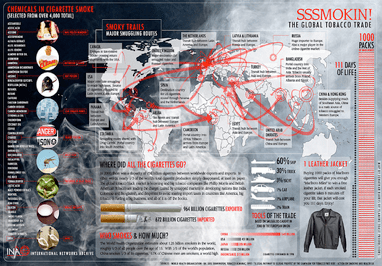

This statement reflects views and recommendations that emerged from a consortium meeting convened by the Center for Policy Analysis on Trade and Health (CPATH) and the Center for Tobacco Control Research and Education (CTCRE) at the University of California-San Francisco on Feb. 19, 2013, in San Francisco, to reinvigorate strategies to advance tobacco control in California and the U.S., and to strengthen public health and medical voices to inform trade policy.
Public health and medical organizations in the U.S. and internationally are increasingly engaged in addressing the nexus between tobacco control and global trade. Trade rules and trade agreements, including present efforts to negotiate the Trans Pacific Partnership (TPP), present challenges to tobacco control, at local, state, and national levels. Tobacco companies have recently accelerated their use of trade rules to attempt to delay and reverse tobacco control measures in the U.S., Australia, Uruguay, Norway, and Ireland. In negotiating the TPP, a new agreement for the 21st century, the United States has the opportunity to be a leader to safeguard public health and reduce the enormous burden of disease related to tobacco use.
The following proposals articulate concerns, goals, and key strategies to achieve them, that were discussed during the Consortium Meeting. Many have been consistently advanced by the medical, health care, and public health communities.
Concerns:
- Tobacco is a unique product. Tobacco use is the leading preventable cause of death worldwide, and the only legal substance that, when used as intended, kills people.
- Curtailing tobacco use must be a central element of policies to reduce preventable childhood morbidity and mortality, a key goal of the present U.S. Administration.
- Trade agreements and trade rules offer the tobacco industry powerful tools to undermine and supersede local, state, and national measures to implement and enforce tobacco control measures.
- The closed process of negotiating and adopting trade agreements uniquely privileges commercial interests, without the benefit of democratic public dialogue and debate, and review of evidence. Public health principles and perspectives are shut out.
- Current proposals for a Trans-Pacific Partnership, and a trans-Atlantic US-EU trade agreement, present particular and urgent threats to public health.
Strategies for Creating a 21st Century Trade Agreement:
Incorporating Health-Related Concerns into Global Trade Negotiations and Agreements
We call on the United States to advance a trade proposal in the Trans Pacific Partnership negotiations that will safeguard public health, advance tobacco control measures that contribute to reducing the enormous burden of disease related to tobacco use, and prevent incursions by the tobacco industry against those measures.
- Trade agreements must guarantee nations’ rights to protect public health from tobacco use.
Incorporate reference to the Framework Convention on Tobacco Control (FCTC) in trade agreements. Acknowledge deference to FCTC principles, as an expression of the international consensus on tobacco control, and affirm the right of nations to protect public health from tobacco and tobacco products in the text of all relevant chapters of trade agreements. (Policy Coherence)
Incorporate in the text of each regional and bilateral trade agreement the WTO Doha Declaration on countries’ rights to protect public health. The 2001 World Trade Organization (WTO) Doha Declaration on the TRIPS Agreement and Public Health affirms that WTO members may use “to the full” the flexibilities in the Agreement on Trade-Related Aspect of Intellectual Property Rights (TRIPS) “to protect public health and, in particular, to promote access to medicines for all…” This right can and should be extended to tobacco control measures. (Policy Coherence)
Strengthen the primacy of public health principles. Strengthen adoption and implementation of FCTC recommendations within and across nations to protect the public’s health from tobacco and tobacco products.
2. The TPP must not undermine the right and ability of participating countries from exercising their domestic sovereignty in order to adopt or maintain measures to reduce tobacco use and to prevent the harm it causes to public health.
Exclude tobacco control measures from existing and future trade agreements. The medical, health care, and public health community has consistently supported removing tobacco, tobacco products, and tobacco control measures from trade agreements as the most effective solution.
Remove investor-state dispute settlement (ISDS) provisions. Eliminate the rights of tobacco and other corporations to contest governments’ domestic sovereignty over public health and other policies, and to sue nations directly for financial damages through the global trade arena.
3. We must set trade policy through a transparent process that involves the public.
Trade agreements and trade rules which may affect public health, including preventing disease and death from tobacco, should be discussed and debated publicly, and in Congress.
Include effective public health representation in setting trade policies at the national, state, and local levels.
We further propose that advocacy for these goals can be strengthened by identifying and communicating with related constituencies concerned with trade: Labor, environment, access to medicines, sustainable agriculture, sustainable economic development, internet access; policy-makers at the local, state and national levels.
Center for Policy Analysis on Trade and Health
Automobile Pollution and Chronic Disease Progression
A recent study in the European Respiratory Journal examined the role of auto pollution on chronic disease progression. Investigators estimated the burden of childhood asthma attributable to air pollution in 10 European cities by calculating the number of cases of asthma caused by near road traffic-related pollution and of acute asthma events related to urban air pollution levels. They concluded that pollutants along busy roads are responsible for a large and preventable share of chronic disease and related acute exacerbation in European urban areas.
New Study on Pharmaceutical Sales Representatives Finds Gaps in Patient Safety
A new study published online by the Journal of Internal General Medicine compared information provided by pharmaceutical sales representatives to primary care physicians in cities in Canada, France and the United States. “Minimally adequate safety information” did not differ in the US and Canadian sites, despite regulatory differences. In France, consistent with stricter standards, more harm information was provided. However, the authors found that in all sites, physicians were rarely informed about serious adverse events, raising questions about whether current approaches to regulation of sales representatives adequately protect patient health.
Google stops alcohol ads
Search engine operator and online marketing company Google has decided to stop advertisements of alcohol and alcoholic beverages in Finland from Tuesday, reported the Financial Times. The decision follows introduction of a new rule by Google in its advertisement policy that bans advertisement of alcoholic products. The ban will be also applicable in China, Poland, Vietnam, and South Korea. Google decided to ban advertisements of alcoholic products on its own volition, its product manager Sami Kankkuan said, adding that no country had directed them in this regard.
UN General Assembly approves Small Arms Trade Treaty
The New York Times reported last week that the United Nations General Assembly voted overwhelmingly to approve a pioneering treaty aimed at regulating the enormous global trade in conventional weapons, for the first time linking sales to the human rights records of the buyers. Although implementation is years away and there is no specific enforcement mechanism, proponents say the treaty would for the first time force sellers to consider how their customers will use the weapons and to make that information public. The goal is to curb the sale of weapons that kill tens of thousands of people every year.
Indian high court preserves access to low-cost medications
People in developing countries worldwide will continue to have access to low-cost copycat versions of drugs for diseases like H.I.V. and cancer, at least for a while, reports the New York Times. While advocates for the pharmaceutical industry argue that liberal rules on patents spur innovation, a growing number of countries are questioning why they should pay high prices for new drugs. Production of the generic drugs in India, the world’s biggest provider of cheap medicines, was ensured on Monday in a ruling by the Indian Supreme Court. Specifically, the decision allows Indian makers of generic drugs to continue making copycat versions of the drug Gleevec, used to treat forms of leukemia, which is made by Novartis. The ruling will also help India maintain its role as the world’s leading provider of inexpensive medicines. Gleevec, for example, can cost as much as $70,000 a year, while Indian generic versions cost about $2,500 a year.
EPA proposes new auto pollution standards
New standards for cleaner fuel and vehicles proposed last week will reduce air pollution and help prevent thousands of deaths and hospitalizations each year, the U.S. Environmental Protection Agency (EPA) says. The EPA’s proposals to slash emissions of harmful pollutants include reducing smog-forming volatile organic compounds and nitrogen oxides by 80 percent, reducing fuel vapor emissions to near zero and cutting vehicle emissions of toxic air pollutants by up to 40 percent. By 2030, the new regulations will help prevent up to 2,400 premature deaths, 23,000 cases of respiratory ailments in children, and 3,200 hospital admissions and asthma-related emergency room visits a year, the EPA estimates.
China imposes strict fuel economy standards on automobile industry
China imposed stringent new fuel economy standards, reports Reuters, imposing new burdens on cash-strapped domestic auto makers in China but promising easier breathing and less respiratory disease for the people of China.
 Corporations and Health Watch