New report expected to boost push to make company climate-risk disclosures mandatory

Screen Shot 2018-11-30 at 7.28.04 AM

Credit

The latest alarm bell to be rung on climate change — last Friday’s government report warning that the damage caused by the warming planet could shrink the U.S. economy by 10% by the end of the century — is expected to support the push for mandatory climate-risk disclosures among corporations, according to experts, writes MarketWatch, a business newsletter.

But much remains to be done to get companies to consistently make disclosures on how climate-change-related events, such as the recent deadly wildfires in California, are impacting business. ‘[W]e are looking at an economic crisis that, not unlike the subprime meltdown, will impact every sector of the economy and company within it”, says Mindy Lubber, chief executive of the sustainability-oriented nonprofit Ceres.  According to Lubber, the report differed from other climate studies in one respect: most climate research is science-based and tends to seek to generate a sense of urgency around time frames, public health and the future of the planet. “This one zeroed in on the economic impact, and that’s very important because we are looking at an economic crisis that, not unlike the subprime meltdown, will impact every sector of the economy and company within it,” she said.

In 2017, The Guardian reported that since 1988,  just 100 companies, mostly in the energy sector, were responsible for 71% of the world’s carbon emissions, suggesting that action by a limited number of corporations could yield significant reductions.

What rules for e-cig?

Screen Shot 2018-11-23 at 6.49.54 PM

Credit

Earlier this month, the U.S. Food and Drug Administration proposed new rulesthat would restrict  flavored e-cigarettes and tobacco products that have lured young people into vaping and smoking.Fast Company, a media outlet that “chronicles how changing companies create and compete”, recently published a profileof  Juul, a company founded in 2017 to make and sell  e-cigarettes.   Juul is now valued at more than $16 billion and controls 72% of the U.S. e-cigarette market.   It’s also hooking teens on nicotine and drawing scrutiny from the FDA. Can the company innovate its way out of a crisis it helped create, asks Fast Company?

Another story last week, this one in The New York Times, describes how Matt Murphy, a high school senior then 17 years old in Reading , Massachusetts, become addicted to Juul.  “It was love at first puff,” said Matt, now 19.  As the United States debates what rules will govern the marketing of e-cigarettes, public health researchers and advocates will have to digest and synthesize a growing body of literature — and misleading claims.   Two recent reviews, cited  below, can help readers to begin to sort through this evidence.

Breitbarth AK, Morgan J, Jones AL. E-cigarettes-An unintended illicit drug delivery system. Drug and alcohol dependence. 2019(88): 144-149.

Unger M, Unger DW. E-cigarettes/electronic nicotine delivery systems: a word of caution on health and new product development. Journal of thoracic disease. 2018;10(Suppl 22):S2588.

Systems Thinking as a Framework for Analyzing Commercial Determinants of Health

Screen Shot 2018-11-14 at 8.10.01 PM

Credit

The high burden of noncommunicable diseases (NCDs) is politically salient and eminently preventable. However, effective solutions largely continue to elude the public health community. Two pressing issues heighten this challenge: the first is the public health community’s narrow approach to addressing NCDs, and the second is the involvement of corporate actors in policymaking. While NCDs are often conceptualized in terms of individual-level risk factors, the authors argue that they should be reframed as products of a complex system. This article explores the value of a systems approach to understanding NCDs as an emergent property of a complex system, with a focus on commercial actors.  Drawing on Donella Meadows’s systems thinking framework, this article examines how a systems perspective may be used to analyze the commercial determinants of NCDs and, specifically, how unhealthy commodity industries influence public health policy. The authors find that unhealthy commodity industries actively design and shape the NCD policy system, intervene at different levels of the system to gain agency over policy and politics, and legitimize their presence in public health policy decisions.

Citation: Knai C, Petticrew M, Mays N, Capewell S, Cassidy R, Cummins S, Eastmure E, Fafard P, Hawkins B, Jensen JD, Katikireddi SV. Systems Thinking as a Framework for Analyzing Commercial Determinants of Health.The Milbank Quarterly. 2018;96(3):472-98.

The 2020 Election: Putting Regulating Corporations to Protect Public Health on the Agenda

Screen Shot 2018-11-09 at 6.24.48 PM

credit

The mixed results of the 2018 midterm elections open the season for the 2020 election.  In the coming months, Corporations and Health Watchwill raise some of the  issues that warrant discussion in this election. Today’s focus is on public health regulation of corporations.  Two recent reports provide a starting point for the national conversation that is needed.

4 Takeaways from the Trump-Era Plunge in Corporate Penalties

At a time when the Trump administration is loosening rules established in the aftermath of the 2008 financial crisis, writes The New York Times,  financial penalties imposed on companies and big banks accused of wrongdoing have fallen precipitously since the Obama administration, according to analyses by The New York Times.

In consultation with outside experts, The Times conducted separate examinations of enforcement activity at the Securities and Exchange Commission and the Justice Department, comparing cases filed during the first 20 months of the Trump presidency with those in the final 20 months of the Obama administration.

The analysis found a 62 percent drop in penalties imposed and illicit profits ordered returned by the S.E.C. At the Justice Department, the analysis found a 72 percent decline in corporate penalties from criminal prosecutions, and a similar percent drop in certain civil penalties against financial institutions. Read the full story “Trump Administration Spares Corporate Wrongdoers Billions in Penalties.”

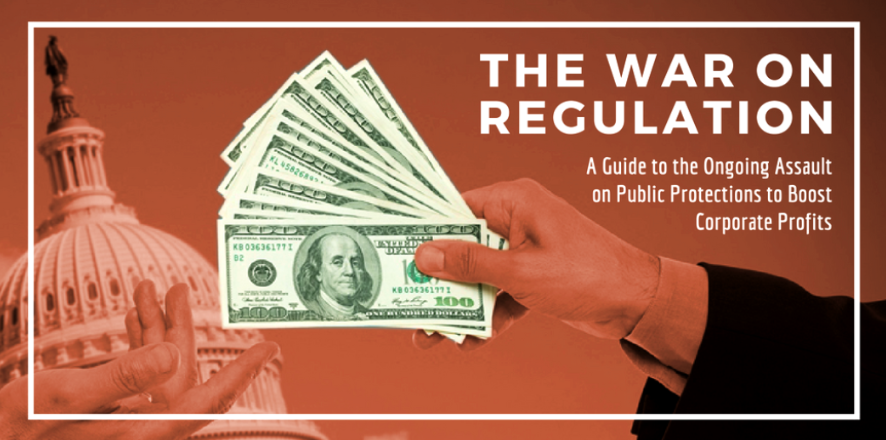
The War on Regulation: A Guide to the Ongoing Assault on Public Protections to Boost Corporate Profits

The war on regulation – carried out by the Trump administration, conservatives in Congress and private industry – is premised on a great deal of misinformation and misleading claims.  A recent report by the Coalition for Sensible Safeguards, a national alliance of more than 160 consumer, labor, scientific, research, public health and other groups, provides readers with what they  need to know to understand what’s at stake in the war on regulation and why regulatory safeguards matter. Read the full report.

2018 Lobbying and  Campaign Contributions from the Pharmaceutical and Food Industries

This week is Election Day and thanks to the Center for Responsive Politics  OpenSecrets.Org, the most comprehensive resource for federal campaign contributions, lobbying data and analysis available anywhere, voters can see what the Pharmaceutical/Health Care Products, Food and Beverages and other industries have spent on lobbying and campaigns contributions this election cycle and in the past.  The industries have already made their choices known in the 2018 midterm elections. Have you?

Total 2018 Lobbying Spending for Pharmaceuticals/Health Products Sector: $216,134, 421

Total Number of Clients Reported: 384

Total Number of Lobbyists Reported: 1,407

 2018 Campaign Contributions from this industry  $33.1 million 

 Pharmaceuticals/Health Products: Long-Term  Campaign Contribution Trends

Food and Beverages

Total  2018 Lobbying  Spending for Food & Beverage Sector: $22,393,837
Total Number of Clients Reported: 61
Total Number of Lobbyists Reported: 294                                                                                               Total Campaign Spending 2018:  $15 million

Food & Beverage: Long-Term Campaign Contribution Trends

The Capital NCD-Nexus: The Commercial Determinants of Health and Global Capital Flows

Screen Shot 2018-10-22 at 8.22.44 PM

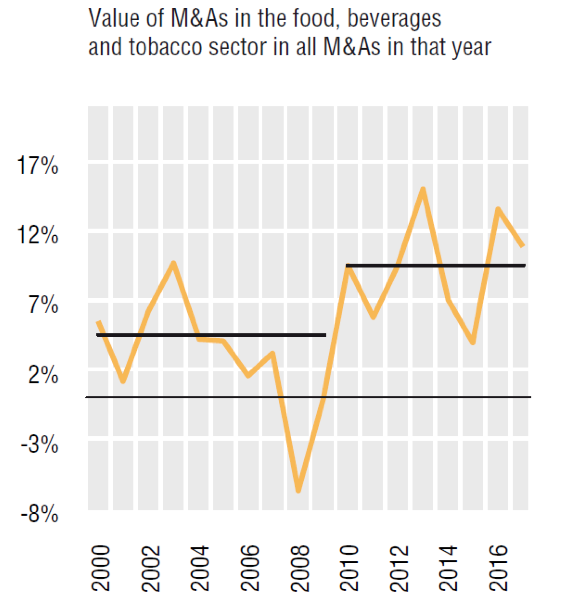
Cross-border Merger and Acquisitions  purchases in food, beverages, and tobacco. Source: World Investment Report 2018, Table 10 (Annex); calculations and illustrations by CPC Analytics. Note: The average M&A value in the sectors food, beverages, and tobacco between 2000 – 2009 is calculated by excluding the two crisis years. Credit

In the past, the role of global capital flows for health has not been considered in the debate about key risk factors of Noncommunicable Diseases (NCDs). This is a blind spot in public health. A significant share of the global food and beverage industry is owned by institutional investors. Cross-border mergers and acquisition volumes in the food, beverage, and tobacco industries have substantially increased. Progress on preventing and controlling NCDs requires the public health community to engage in a forward-looking discussion to address investors’ responsibility in relation to global health in general and the tsunami of NCDs in particular.

Citation: Franz C, Kickbusch I. The Capital NCD-Nexus: The Commercial Determinants of Health and Global Capital Flows  Eurohealth 2018;24(3): 21-25.

The Influence of Industry Sponsorship on the Research Agenda: A Scoping Review

Corporate interests have the potential to influence public debate and policymaking by influencing the research agenda, namely the initial step in conducting research, in which the purpose of the study is defined and the questions are framed. In this scoping review, authors identified  and synthesized studies that explored the influence of industry sponsorship on research agendas across different fields.

The 36 articles reviewed included nineteen cross-sectional studies that quantitatively analyzed patterns in research topics by sponsorship and showed that industry tends to prioritize lines of inquiry that focus on products, processes, or activities that can be commercialized. Seven studies analyzed internal industry documents and provided insight on the strategies the industry used to reshape entire fields of research through the prioritization of topics that supported its policy and legal positions. Ten studies used surveys and interviews to explore the researchers’ experiences and perceptions of the influence of industry funding on research agendas, showing that they were generally aware of the risk that sponsorship could influence the choice of research priorities.

The authors concluded that corporate interests can drive research agendas away from questions that are the most relevant for public health. Strategies to counteract corporate influence on the research agenda are needed, including heightened disclosure of funding sources and conflicts of interest in published articles to allow an assessment of commercial biases. They also recommended policy actions beyond disclosure such as increasing funding for independent research and strict guidelines to regulate the interaction of research institutes with commercial entities. The results of the scoping review support the need to develop strategies to counteract corporate influence on the research agenda.

Citation: Fabbri A, Lai A, Grundy Q, Bero LA.The Influence of Industry Sponsorship on the Research Agenda: A Scoping Review. American journal of public health. 2018 Nov;108(11):e9-16.

Defining Appropriate Roles for Corporations in Public Health Research and Practice

Does industry sponsorship of health research influence the public health research agenda? Does it shape public health policy and priorities? In an editorial commentary on the report by  Fabbri et al. that is summarized above, Freudenberg notes that developing comprehensive and effective responses that can mitigate or prevent the harmful practices of lethal but legal industries is a vital public health priority. Corporate practices have become primary social determinants of premature death and preventable illnesses from noncommunicable diseases, injuries, and environmental exposures. Modifying harmful practices is a practical strategy for promoting health and reducing health inequalities. What additional research is needed to integrate the finding of Fabbri et al. on the impact of corporate sponsorship of research into a deeper understanding of the cumulative impact of the many industry practices that influence population health?  Several topics have recently attracted research attention. How can public health researchers best reduce conflicts of interest? Conflicts of interest occur when the public obligations of researchers, government officials, or corporations conflict with their private interests. Undetected or undisclosed conflicts of interest taint the validity of findings and threaten the credibility of public  health researchers. In an era when trust in many forms of authority is declining, industry affiliations that pose conflicts of interest could jeopardize the capacity of public health professionals to communicate credibly with the public to address future public health crises.

Another task is to define and assess appropriate roles for industry in setting public health policy. In the case of tobacco, the World Health Organization used the Framework Convention on Tobacco Control to draw a clear boundary for the industry role in shaping public policy. Should this approach also apply to the food, alcohol, and other industries? Or, as industry representatives argue, are the products of these industries so different from tobacco as to suggest another approach? Research that compares the practices of these industries as well as their products may provide more useful evidence for setting policies. Finally, policy research that compares the longer-term impact on the population health of various regulatory regimes can provide policymakers with the evidence needed to find an appropriate balance between government  and industry roles.

Citation: Freudenberg N. Defining Appropriate Roles for Corporations in Public Health Research and Practice. Am J Public Health. 2018 Nov;108(11):1440-1441

Reducing Harmful Corporate Influences on Diet-Related Non-Communicable Diseases

Cross-posted from CUNY Urban Food Policy Institute

91E15F57-33B4-4202-BBE6-CC329273C59B

Seven years ago, the first United Nations High Level Meeting on Non-Communicable Diseases (NCDs — the public health term for chronic diseases) met to discuss the growing health, social and economic burdens NCDs were imposing on high, middle- and low-income countries around the world. A World Health Organization report prepared for the UN meeting concluded that four risk factors — tobacco use, unhealthy diets, alcohol use and physical inactivity accounted for the vast majority of the rising prevalence of premature deaths and preventable illnesses from conditions like cardiovascular disease, diabetes, stroke, hypertension and some forms of cancer. Later, the UN and WHO set the goal of reducing premature deaths — those before age 70 — by 25% by 2025, a goal that has proved elusive. Here in the United States and New York City and around the world, NCDs are a leading cause of persistent inequities in health between the better off and the poor and in the US between Blacks and other people of color and whites. 

In seeking to achieve these reductions, the public health community has launched three different — although sometimes intersecting — strategies. The first seeks to change individual behavior through education, counseling and support. These strategies encourage and support people to quit or not start smoking, eat healthier diets, stop or reduce alcohol consumption and become more physically active. This approach is an essential foundation for reducing NCDs but by itself it has shown disappointing results in bringing about population level change.

The second strategy is to change the behavior and practices of health care systems– provide more people with access, emphasize clinical and community prevention, and ensure that every health care worker applies what is known about prevention and early intervention for NCDs. This too is an essential foundation for reducing the burden of NCDs. But as public health researchers deepen our understanding of the profound influence of what are called social determinants of health and the challenge of transforming health care systems that have mostly focused on treatment rather than prevention, the limits of this strategy of changing health care to reduce NCDs have also been recognized.

The third strategy, the focus of the CUNY Urban Food Policy Institute’s Forum on Reducing Harmful Corporate Influences on Diet-Related Non-Communicable Diseases on September 26, 2018, seeks to change the behavior of the corporations that have played such a powerful role in promoting the behaviors that contribute to NCDs. This approach examines the business practices of food, alcohol, tobacco and pharmaceutical corporations — their marketing, product design, pricing and retail practices — to identify opportunities for changing practices that contribute to NCDs. It also puts the spotlight on corporation’s political practices such as lobbying, campaign contributions, sponsored science and philanthropy to illuminate their influence in weakening or strengthening public health protection. By limiting corporate political practices that undermine public health, we can prevent disease and perhaps strengthen democracy.

To explore these topics, three speakers summarized some of what we have learned in the last seven years.

Jeff Collin, Professor of Global Health Policy at the University of Edinburgh discussed Limiting Corporate Interference in Health Policy: Lessons from across Tobacco, Alcohol and FoodView his presentation here.

Paula Johns, General Director, ACT Health Promotion – Brazil spoke on The Role of Global and National Civil Society Groups in Reducing Harmful Corporate Influences on Food Policy.

Neena Prasad, Director of Obesity Prevention Program, Bloomberg Philanthropies, described  Lessons from the Obesity Prevention Program, a multi-year effort to support public health policies aimed at improving the food environment in Mexico, Brazil, Colombia, the Caribbean and South Africa.

Nicholas Freudenberg, Distinguished Professor of Public Health at the CUNY Graduate School of Public Health and Health Policy and Director of the CUNY Urban Food Policy Institute moderated the discussion.

To view the resources the speakers suggested for those who want more information, click here.

To view the video of the forum on September 26, 2018, click here.

People’s Health Movement: A Call to Action on Nutrition, Food Security and Food Sovereignty

Screen Shot 2018-09-12 at 10.19.51 PM

Credit

In a commentary, in World Nutrition,  David Sanders, Claudio Schuftan, and Vandana Prasad write, “There are common roots underlying both under and ‘over-nutrition’ in our globalized world. These pertain to the impact on food systems of current practices related to food production, processing, manufacture, distribution, trade and commerce, as well as to the power differentials between those who are most affected by and those who benefit most from the current food system.

The unregulated penetration of food and beverage companies and the aggressive marketing of processed and ultra-processed foods have been severely compounding the problem of malnutrition and the underlying food insecurity.  This process is driven by mega agribusiness conglomerates and transnational food and beverage corporations through the employment of technologies and practices that are energy intensive and ecologically unsustainable, and that are also implicated in environmental degradation and climate change… In sum, malnutrition in all its forms, food insecurity and the erosion of food sovereignty are all socially and politically determined.  It is inadequate to acknowledge the continuing crisis of malnutrition and the inequalities it engenders without addressing their political roots and the conditions that perpetuate this.”