Seven Million Premature Deaths Annually Linked to Air Pollution

World Health Organization News release


credit
credit

25 March 2014 | Geneva – In new estimates released today, WHO reports that in 2012 around 7 million people died – one in eight of total global deaths – as a result of air pollution exposure. This finding more than doubles previous estimates and confirms that air pollution is now the world’s largest single environmental health risk. Reducing air pollution could save millions of lives.


New estimates


In particular, the new data reveal a stronger link between both indoor and outdoor air pollution exposure and cardiovascular diseases, such as strokes and ischaemic heart disease, as well as between air pollution and cancer. This is in addition to air pollution’s role in the development of respiratory diseases, including acute respiratory infections and chronic obstructive pulmonary diseases.


The new estimates are not only based on more knowledge about the diseases caused by air pollution, but also upon better assessment of human exposure to air pollutants through the use of improved measurements and technology. This has enabled scientists to make a more detailed analysis of health risks from a wider demographic spread that now includes rural as well as urban areas.


Regionally, low- and middle-income countries in the WHO South-East Asia and Western Pacific Regions had the largest air pollution-related burden in 2012, with a total of 3.3 million deaths linked to indoor air pollution and 2.6 million deaths related to outdoor air pollution.


“Cleaning up the air we breathe prevents non-communicable diseases as well as reduces disease risks among women and vulnerable groups, including children and the elderly…”


Dr Flavia Bustreo, WHO Assistant Director-General Family, Women and Children’s Health


“Cleaning up the air we breathe prevents noncommunicable diseases as well as reduces disease risks among women and vulnerable groups, including children and the elderly,” says Dr Flavia Bustreo, WHO Assistant Director-General Family, Women and Children’s Health. “Poor women and children pay a heavy price from indoor air pollution since they spend more time at home breathing in smoke and soot from leaky coal and wood cook stoves.”


Included in the assessment is a breakdown of deaths attributed to specific diseases, underlining that the vast majority of air pollution deaths are due to cardiovascular diseases as follows:


Outdoor air pollution-caused deaths – breakdown by disease:

  • 40% – ischaemic heart disease;
  • 40% – stroke;
  • 11% – chronic obstructive pulmonary disease (COPD);
  • 6% – lung cancer; and
  • 3% – acute lower respiratory infections in children.


Indoor air pollution-caused deaths – breakdown by disease:

  • 34% – stroke;
  • 26% – ischaemic heart disease;
  • 22% – COPD;
  • 12% – acute lower respiratory infections in children; and
  • 6% – lung cancer.


The new estimates are based on the latest WHO mortality data from 2012 as well as evidence of health risks from air pollution exposures. Estimates of people’s exposure to outdoor air pollution in different parts of the world were formulated through a new global data mapping. This incorporated satellite data, ground-level monitoring measurements and data on pollution emissions from key sources, as well as modelling of how pollution drifts in the air.


Risks factors are greater than expected


“The risks from air pollution are now far greater than previously thought or understood, particularly for heart disease and strokes,” says Dr Maria Neira, Director of WHO’s Department for Public Health, Environmental and Social Determinants of Health. “Few risks have a greater impact on global health today than air pollution; the evidence signals the need for concerted action to clean up the air we all breathe.”


After analysing the risk factors and taking into account revisions in methodology, WHO estimates indoor air pollution was linked to 4.3 million deaths in 2012 in households cooking over coal, wood and biomass stoves. The new estimate is explained by better information about pollution exposures among the estimated 2.9 billion people living in homes using wood, coal or dung as their primary cooking fuel, as well as evidence about air pollution’s role in the development of cardiovascular and respiratory diseases, and cancers.


In the case of outdoor air pollution, WHO estimates there were 3.7 million deaths in 2012 from urban and rural sources worldwide.


Many people are exposed to both indoor and outdoor air pollution. Due to this overlap, mortality attributed to the two sources cannot simply be added together, hence the total estimate of around 7 million deaths in 2012.


“Excessive air pollution is often a by-product of unsustainable policies in sectors such as transport, energy, waste management and industry. In most cases, healthier strategies will also be more economical in the long term due to health-care cost savings as well as climate gains,” says Dr Carlos Dora, WHO Coordinator for Public Health, Environmental and Social Determinants of Health. “WHO and health sectors have a unique role in translating scientific evidence on air pollution into policies that can deliver impact and improvements that will save lives.”


The release of today’s data is a significant step in advancing a WHO roadmap for preventing diseases related to air pollution. This involves the development of a WHO-hosted global platform on air quality and health to generate better data on air pollution-related diseases and strengthened support to countries and cities through guidance, information and evidence about health gains from key interventions.


Later this year, WHO will release indoor air quality guidelines on household fuel combustion, as well as country data on outdoor and indoor air pollution exposures and related mortality, plus an update of air quality measurements in 1600 cities from all regions of the world.



McDonald’s New Menu Item Hints at New Strategy

USA Today reports that McDonald’s is slowly moving toward becoming a coffee shop. This might sound ludicrous to those who grew up while eating burgers and fries at McDonald’s, but any company that wants to succeed will implement initiatives that match industry trends or find itself dying a slow and painful death. This doesn’t mean McDonald’s will stop serving burgers and fries. However, one thing is certain: because of the rise of the health-conscious consumer, burgers and fries will not be the company’s growth catalyst.

Selling a Poison by the Barrel: Liquid Nicotine for E-Cigarettes

A dangerous new form of a powerful stimulant is hitting markets nationwide, for sale by the vial, the gallon and even the barrel, reports the New York Times.  The drug is nicotine, in its potent, liquid form — extracted from tobacco and tinctured with a cocktail of flavorings, colorings and assorted chemicals to feed the fast-growing electronic cigarette industry.

Ten Corporate Practices that Harm Health & Ten Community Strategies to Combat Lethal but Legal Products

Ten Corporate Business and Political Practices that Harm Health

How Do Big Food, Alcohol, Tobacco and Other Corporations Harm Health?
This List Shows 10 Ways:


1. Make disease promoting products ubiquitous

1


2. Encourage retailers to promote their products

3. Supersize products

4. Target marketing to vulnerable populations

5. Price unhealthy products to promote sale and use

6. Create monopolies that reduce bargaining power of consumers and government

6


7. Support candidates who oppose public health policies

7


8. Lobby against laws that protect public health

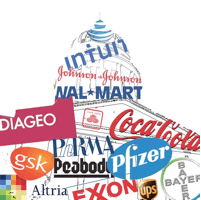
Some of the companies that support the American Legislative Exchange Council (ALEC), a legislative group that takes corporate money to write business friendly laws. credit

Some of the companies that support the American Legislative Exchange Council (ALEC), a legislative group that takes corporate money to write business friendly laws. credit

9. Threaten to take jobs out of communities that oppose their policies

When New York State considered a tax on sugary beverages, PepsiCo threatened to move out of Purchase, New York.

10. Organize Astroturf groups to oppose public health policies

A television ad paid for the American Beverage Association on behalf of New Yorkers Against Unfair Taxes


Ten Community Strategies to Combat Lethal but Legal Products


How can communities and community groups bring an end to food, alcohol, tobacco and other corporations’ harmful practices? 
Read this list of 10 possible strategies.


1. Strengthen right to know and duty to disclose rules.

full disclosure


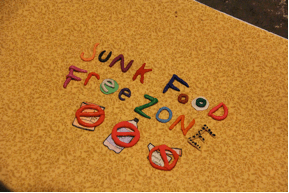
2. Create health zones free of commercial promotion of unhealthy products.

2.2


3. Use zoning laws to limit density of unhealthy outlets.

3.3


4. Encourage young people to create counter-advertising campaigns

5. Protect children from targeted marketing

5.5


6. Enforce existing laws on lethal but legal products

6.6


7. Require full disclosure of campaign contributions by donor and recipient.


8. Limit and require disclosure of all lobbying.

9. Train and support community groups and leaders

10. Reject the view that there is no alternative, insist another world is possible. 


For more, see:  Lethal but Legal: Corporations, Consumption and Protecting Public Health by Nicholas Freudenberg, Oxford University Press, 2014.

Marketing Alcohol, Tobacco and Unhealthy Food to Women: the New Affirmative Action

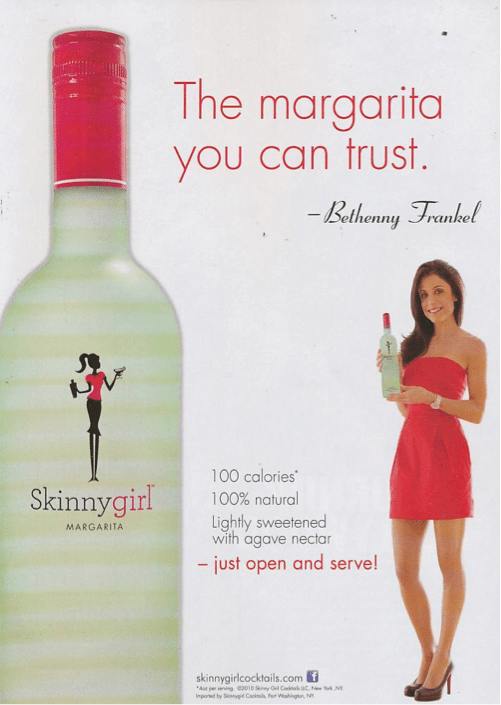
credit: Center on Alcohol Marketing to Youth

While the rest of our society still struggles to provide equal employment and educational opportunities for girls and women, the alcohol, tobacco and processed food industries have embraced affirmative action to market their lethal but legal products to women.  A few days after  International Women’s Day, it is worth asking why. 


In recent years, the longevity advantage that women have enjoyed over men has shrunk.   In 1970, women in the United States lived 7.6 years longer than men. By 2011, the advantage was less than five years, a 37 percent decline. Between 1992 and 2006, female mortality rose in more than 40 percent of U.S. counties.  One important reason for this falling gender gap in longevity has been the increased marketing of unhealthy food, tobacco and alcohol to women. 


The recent report from the US Centers for Disease Control that obesity rates for children aged 2 to 5 dropped by 43% in the last decade is welcome news for those who hope for a healthier America in fifty years.  Sadly, the more immediate story from the CDC shows flat or even increasing obesity rates for every other population group. One group that did much worse was women aged 60 and older, of whom 38 percent were obese, an increase of more than 20 percent since 2003-2004.


Since General Mills created Betty Crocker in 1921, the food industry has advertised to women. As more females moved into the workforce, new marketing opportunities arose. With fewer hours for cooking, women turned to makers of processed food and fast food outlets. To relieve the stresses of balancing family and work demands, some women turned to heavily advertised high sugar, fat and salt foods. These “fun-for-you”foods led many women to gain weight which in turn created a growing market for diet and “good for you” foods.  By marketing both products that contribute to obesity and those that claim to help dieters lose weight, companies like PepsiCo, Kellogg and Nestle have found a way to have their cake and eat it.


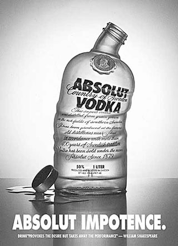
In the food, alcohol and tobacco industries, as adult male markets became saturated, better off men quit smoking or drinking or cut down on unhealthy foods, and victims of too much alcohol, tobacco and unhealthy food died, marketers of these products targeted women(and young people) to become the new source of profits.  Today, young women are prime markets for Big Alcohol.  For example, as men started to drink less hard liquor, Smirnoff began in 2000 aggressively marketing a new women and youth oriented product Smirnoff Ice, portraying it as a path to glamour and sophistication. Over the next decade, the company’s sales of all vodka products doubled, more than replacing the lost male market.  As one alcohol company executive told Advertising Age, “the beauty of this category is that it brings in new drinkers, people who really don’t like the taste of beer.”


According to CDC’s most recent Youth Risk Behavioral Survey, 34 percent of female seniors in high school reported that they binge drank at least once in the past month; up from 27 percent in 2011. Each year, 25,000 women and girls die from alcohol-related causes


Cumulatively, this targeting of women by food, alcohol and tobacco companies has had an impact on public health.   A 2013 Institute of Medicine report called U.S. Health in International Perspective: Shorter Lives, Poorer Health, found that in comparison to other developed nations, Americans have been dying at younger ages than people in almost all other high-income countries. This disadvantage has been getting worse for three decades, especially among women, which researchers attributed in part to higher U.S. consumption of alcohol, tobacco and unhealthy food.


Today, Washington’s obsessive debates about every detail of the rollout of Obamacare seem to be a distraction from the real health crisis facing this country and especially its women.  Will policy makers continue to allow corporations that value their profits over our health to be the de facto deciders on health policy in this country?   Will Big Business and its allies continue to be able to defeat any effort to restrict aggressive or deceptive marketing of their products?


In 2010, 49% of Americans reported one or more chronic diseases. These conditions account for $3 of every $4 spent on health care.  A recent World Health Organization report on chronic diseases identifies tobacco, alcohol and high fat, sugar and salt foods as leading causes of the global increase in chronic diseases.

To date, the food, alcohol and tobacco industries have warned that any effort to restrict their right to promote their profitable and legal products undermines our freedom to eat, drink or smoke what and when we choose. They further claim that main cause of the rise in chronic diseases is mysterious epidemics of increasing irresponsibility and ignorance rather than their marketing practices.These companies make the faux feminist argument that women’s right to consume sickening products with the guys is an essential part of liberation. 


For women, the women’s movement, health professionals and tax payers, accepting these arguments ensures that women’s longevity advantage will continue to shrink.  It also means that any improvements such as better access to health care and more preventive services that the Affordable Care Act may bring will be overwhelmed by the new increasingly female victims of premature deaths and preventable illnesses from tobacco, food and alcohol related chronic diseases. 


European Union Adds Teeth to Its Anti-Tobacco Legislation

A new European Union anti-tobacco directive presents some victories for health advocates but industry pressure has weakened the final text, say campaigners, reports John Maurice in the Lancet.  The numbers certainly make a strong case for a stronger directive. Every year, on average, 700 000 people in the EU die from tobacco-related causes. The main target of the new directive is young people. Among its provisions is a ban on flavoring of tobacco to give it the taste of, say, vanilla, chocolate, or menthol, and thereby to enhance its appeal to youngsters. Manufacturers must report in detail all additives they put into their tobacco products

Food Fight Starting Early Over School Lunch Rules

Keeping intact a 2010 rewrite of a law that dictates what kids eat in school — from the number of carrots to the amount of salt in their shepherd’s pie — could be a major challenge as some in Congress are already angling for a rollback, writes  Tarini Parti and Maggie Severns in Politico.  Many of the changes included in the 2010 Healthy Hunger-Free Kids Act have yet to be implemented, and reauthorization of the law is more than a year away. But the food industry and school associations are already lobbying to eliminate key provisions that have been perpetually under contention, such as sodium limits and minimum fruit requirements.

Big Soda’s Front Group Arrives Early in San Francisco

 Cross Posted from EatDrinkPolitics

STOP

Ballot measure could become first sugary drink tax in California


Earlier this month, lawmakers in San Francisco introduced a bill that would tax sugary beverages at two cents per ounce, thereby setting off the latest big fight with Big Soda. The estimated $31 million in annual revenue would go to local health programs. Voters will decide the measure’s fate in November, with a two-thirds majority being required to pass.


It didn’t take long for Big Soda to respond in the way it knows best: by setting up a front group. This one is called, “The Coalition for an Affordable City”, a not so subtle jab at some recent economic tensions in San Francisco. The industry group claims grave concern for residents: “At a time when many San Franciscans confront a growing affordability gap… the last thing we need is a tax that makes it even more expensive to live and work in San Francisco.”


Really, the last thing “we” need? “We” as in the American Beverage Association—the lobbying arm of Coke and Pepsi and friends? The bottom of the front group’s website acknowledges the relationship: “Paid for by the American Beverage Association, member of Stop Unfair Beverage Taxes – Coalition for an Affordable City.” Member in chief.


Over at Beyond Chron, Dana Woldow skillfully takes down Big Bev’s spurious arguments against the measure, exposing how “some business owners have no idea how they ended up on the Coalition for an Affordable City’s list of small businesses supposedly opposed to the tax.” Industry reps have apparently resorted to lying – claiming the measure was about insurance or health care – to convince local businesses to display a sign in their window saying: “San Franciscans shouldn’t have to pay more.”


And just this week, the San Francisco Bay Guardian conducted a sting, also catching Big Soda operatives signing up numerous unwitting local businesses to their list of supporters. In some cases, low-level employees signed on without authority, while other businesses were no longer even open. Also, canvassers presented a very biased view of the tax, not stating where the money would go, and then failing to inform owners they would be placed on an opposition list.


These are just the kind of dirty and underhanded tactics I wrote about during the two recent state-wide ballot measure fights to label GMO foods – in California in 2012 and then last year in Washington State. Guess who were among the largest contributors to the No side in both states? Coca-Cola and PepsiCo. (PepsiCo owns much more than beverages.) One way to think of the sugary drink tax fight in San Francisco is that it’s opening another front on Big Food, and the more opportunities we have to wear them down, the better.


So far, states and cities trying to pass soda taxes though the legislative process have been facing an uphill battle as they face millions of dollars in lobbying by the soft drink industry. As Judith Phillips, a research analyst for Mississippi State University, told Businessweek: “Whoever is loudest tends to control the discussion and, generally speaking, you buy your microphone with money.” That was has been a hard lesson learned in the GMO labeling fight too: campaigns need money early on, to fight the endless bank accounts of the junk food lobby.


In the 2012 election, two other California cities (Richmond and El Monte) each suffered painful defeats on soda taxes due to an onslaught of industry lobbying. But San Francisco does not shy away from controversy and has a proven track record of being a national leader on cutting edge social policies such gay marriage. A progressive, high-profile city such as San Francisco, where a victory would inspire others, just may be Big Soda’s worst nightmare. The campaign has begun gathering a strong coalition with endorsements ranging from the Hospital Council of Northern California to the San Francisco PTA.


And polling released last week by the California Endowment looks promising. Two out of three California voters support taxing sugary drinks when the revenues are tied to children’s health programs. (This confirms earlier polling showing that voters are more likely to support soda taxes tied to health services versus a general tax.)


These results rattled the American Beverage Association so much that they put out this ridiculous press release a  day prior to the poll results, proclaiming that “Public Opinion Remains Opposed To Taxing, Limiting Soft Drinks,” but without any new research. Specifically, the release claimed: “Nearly two-thirds of Americans oppose additional taxes on soft drinks … according to a number of recent independent public polls.”


Really? An astute observer on Twitter named Colin Whooten noticed the related fact-free tweet from @AmeriBev and asked for some backing, tweeting at ABA: “you release a study without citing the source? No bias there I’m sure. How about study details?” In response, ABA cheerfully replied with three links, including this 2013 Associated Press survey that concludes there is “little support” for soda taxes but no underlying data is offered, along with this poll claiming that 63 percent oppose “sin taxes.” However that poll question only asked: “Do you favor or oppose so-called ‘sin taxes’ on sodas and junk food?” – nothing about dedicating revenue to social programs most voters favor.


We can expect much more of this in the months ahead. But most San Franciscans are unlikely to fall for such BS and the city’s electorate is pretty generous when it comes to voting for tax measures to fund important programs. And city residents passed a measure in 2012 to “repeal the notion of corporate personhood” – you gotta love that.


Harold Goldstein, executive director of the California Center for Public Health Advocacy, thinks San Francisco has a real shot at winning this year. (Goldstein’s group failed to get a soda tax bill through the state legislature last year.) He told me that one important difference is how, in contrast to both Richmond and El Monte in 2012, San Francisco’s measure mandates that 100 percent of the revenues be spent on children’s health and community programs. He added:


The beverage lobby killed the tax bill in the state legislature. I expect it to be a different story in San Francisco where city leaders are putting together a highly sophisticated campaign to tell the truth about sugary drinks and the beverage industry that markets them. For perhaps the first time in the country there will be a fair fight between soda marketers and a city that cares about its children.


A truly fair fight takes money. San Francisco Supervisor Scott Wiener (one the authors of the measure) correctly predicted in the Guardian that “the beverage industry is going to flood San Francisco with enormous amounts of money spreading misinformation.” You can help level the playing field by donating to Choose Health SF here.