On Feb. 10, reports The Wall Street Journal, Valeant Pharmaceuticals International Inc. bought the rights to a pair of life-saving heart drugs. The same day, their list prices rose by 525% and 212%. Neither of the drugs, Nitropress or Isuprel, was improved as a result of costly investment in lab work and human testing, Valeant said. Nor was manufacture of the medicines shifted to an expensive new plant. The big change: the drugs’ ownership.
Underage Drinkers Most Influenced by Alcohol Marketing More Likely to Report Dangerous Drinking Behaviors

Underage youth who cite alcohol marketing and the influence of adults, movies or other media as the main reasons for choosing to consume a specific brand of alcohol are more likely to drink more and report adverse consequences from their drinking than youth who report other reasons for selecting a specific brand, new research suggests.
The findings, published earlier this month in the Journal of Adolescent Health, add to Continue reading Underage Drinkers Most Influenced by Alcohol Marketing More Likely to Report Dangerous Drinking Behaviors
“Fighting a Hurricane”: Tobacco Industry Efforts to Counter Perceived Threat of Islam
A new study in the American Journal of Public Health describes attempts by the tobacco industry to reinterpret Islamic teaching to make smoking acceptable to Muslims and to help develop markets in countries with large Muslim populations. Tobacco companies have perceived Islam as a threat to its attempts to sell more tobacco products in emerging markets in Asia.
Car-Safety Chief: Decision Near on Reopening Jeep Probe
The Wall Street Journal reports that federal regulators will decide within the next two weeks whether to reopen a probe into older Jeep models involved in fiery rear-end crashes and be “as aggressive as possible” when weighing measures to address the vehicles, the head of the National Highway Traffic Safety Administration said.
Group’s lawsuits aim to boost public health
The Center for Public Health Litigation, a new Boston group, seeks to promote public health through the courts. According to the Boston Globe, the Center is currently pursuing cases against the tobacco industry, unfair and deceptive sales practices by Big Food companies, and retailers who sell lottery tickets to children.
Australian public health advocates seek access to regional trade pact negotiations
The prime lobby group for American pharmaceutical manufacturers has been given privileged access to negotiations for a major regional trade pact that could see the cost of medicines skyrocket in Australia, reports the Sydney Morning Herald. Public health advocates and business groups are concerned that pharmaceutical giants will be able to advance their commercial interests while the details of the pact are kept secret from the Australian public.
Support New York State Mandatory Warning Label on Added Sugar in Sugary Beverages
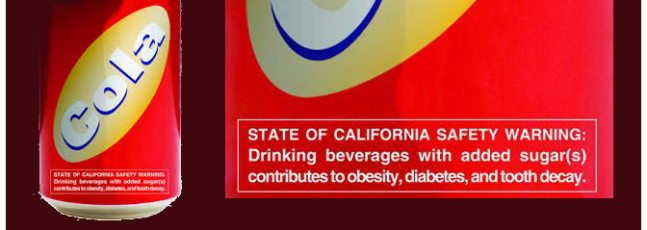
This testimony was presented to the New York State Assembly Committees on Consumer Affairs and Protection and Health on April 13, 2015:
I am here to testify in support of Bill 2320A, an act to amend the New York State agriculture and markets law, in relation to the labeling of sugar-sweetened beverages with warnings. I am a Distinguished Professor of Public Health at City University of New York School of Public Health and Hunter College and Faculty Director of the New York City Food Policy Center at Hunter College. I offer four reasons for supporting labeling of sugar-sweetened beverages with warnings on the health effects of added sugars. Continue reading Support New York State Mandatory Warning Label on Added Sugar in Sugary Beverages
How Cheap is Corporate Talk?

A new study posted on the Social Sciences Research Network by James W. Coleman at the University of Calgary in Canada compares the statements that oil companies make to regulators and to investors. The abstract is below.
When companies face adverse proposed rules, they may want to Continue reading How Cheap is Corporate Talk?
It’s true: Drug companies are bombarding your TV with more ads than ever
According to a column in the Washington Post, drug makers in 2014 spent $4.5 billion marketing prescription drugs, up from $3.5 billion in 2012. That’s also up from the $2.5 billion drug makers spent in 2000, or $3.39 billion in 2015 dollars when adjusted for inflation. The United States is just one of a few countries that allows drug companies to advertise directly to patients.
Use of Flavored Alcohol Drinks and Risky Drinking Behaviors
A new study published in the American Journal of Public Health found that exclusive consumption of alcopops, a sweetened beverage marketed to young drinkers, was associated with episodic heavy drinking and alcohol-related injuries.
 Corporations and Health Watch