The Wall Street Journal reports that Volkswagen AG Chief Executive Martin Winterkorn resigned under pressure after the company admitted it cheated on U.S. emissions tests sparked massive losses of its market value and left it facing prosecution and potentially billions in fines. Winterkorn said he accepted responsibility for the irregularities but wasn’t aware of any wrongdoing on his part.
FDA for First Time Orders Major Cigarette Brand Pulled Off the Market, Sending Strong Message to Manufacturers about Complying with 2009 Law
Statement of Matthew L. Myers, President, Campaign for Tobacco-Free Kids
WASHINGTON, DC – For the first time since being granted regulatory authority over tobacco products by a 2009 law, the U.S. Food and Drug Administration today ordered a tobacco company (R.J. Reynolds) to pull a major cigarette brand – Camel Crush Bold – off the market. The agency acted under a key provision of the law that requires prior FDA review and authorization before tobacco companies market new or changed products.
Caloric Intake from Fast Food Among US Children and Adolescents Increases
From 1994 through 2006, caloric intake from fast food increased from 10% to 13% among children aged 2–18 years, according to a new report from the US Centers for Disease Control. In 2011–2012, 34.3% of all children and adolescents aged 2–19 consumed fast food on a given day.
Johnson & Johnson: America’s Most Admired Lawbreaker
Over the course of 20 years, Johnson & Johnson created a powerful drug, promoted it illegally to children and the elderly, covered up the side effects and made billions of dollars. Read the inside story by Steven Brill at Huffington Post.
Hampton Creek targeted by USDA-controlled egg industry program
Michele Simon, Cross-posted from Eat Drink Politics
Hundreds of pages of disclosed communications from the American Egg Board reveal a coordinated two-year plan to undermine and attack Hampton Creek, the San Francisco-based food company, seen as a “threat” and “major crisis” to the egg industry.


Continue reading Hampton Creek targeted by USDA-controlled egg industry program
The Vernacular of Risk — Rethinking Direct-to-Consumer Advertising of Pharmaceuticals
Aside from New Zealand, the United States is the only country with a strong pharmaceutical regulatory infrastructure that allows direct-to-consumer advertising (DTCA) of prescription drugs. That may soon change, however, as the Food and Drug Administration (FDA) moves to enact new regulations regarding risk communication in DTCA. A commentary in the New England Journal of Medicine explores this issue.
Annual Per Capita Sales of Autos and Light Trucks Down
A new analysis by Doug Short at Advisor Perspectives shows that annual per capita rate of auto and light truck sales in the United States is down 28.1% from the high of August 1978. Does this spell long term trouble for the auto industry?
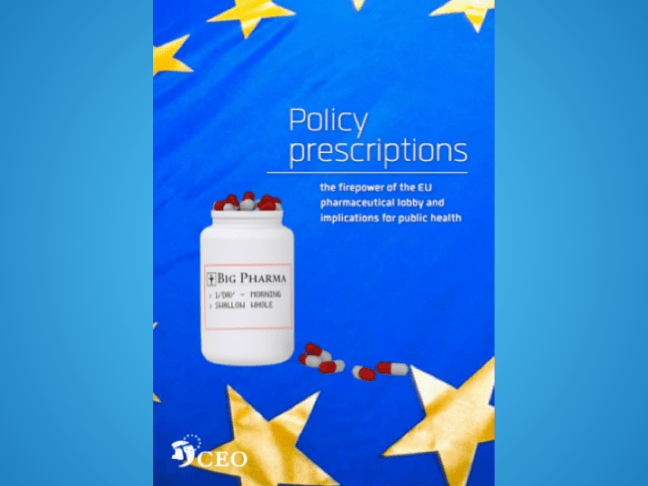
Policy prescriptions: The firepower of the EU pharmaceutical lobby and implications for public health
Corporate Europe Observatory
Executive summary
The pharmaceutical industry – including companies, associations and the top ten lobby firms they employ – have a declared lobby spend of nearly €40 million. That is around 15 times more than the lobby expenditure of civil society and consumer groups which work on public health or access to medicines. Although many pharma industry actors declare more realistic expenditure in the lobby register than three years ago, the real spending may be much more. Nonetheless, the top ten biggest spending pharmaceutical companies now declare €6 million more than in 2012, whilst the top eight European pharmaceutical industry trade associations declare seven times more. Moreover this powerful lobby has had a staggering number of meetings with European Commission departments and officials. The largest public-private partnership in the EU is with the pharmaceutical industry. Alongside its gargantuan resources and considerable access, the industry has an impressive lobbying arsenal. Its efforts are now focused on ensuring US-EU trade agreement TTIP furthers its profit-motivated agenda, including its property rights and to prevent vital data transparency for big pharma’s clinical trials.
Alcohol sales get higher after weed legalization contrary to industry fears
As an increasing number of states look to join the four states and Washington DC in legalizing recreational marijuana, many in the alcohol industry have feared that legalized weed will cut into their existing profits, reports The Guardian. But a few years into Colorado legalization, alcohol sales are up in the state, and those in the alcohol business have embraced their fellow industry.
Ten automakers are sued in U.S. over ‘deadly’ keyless ignitions
Ten of the world’s biggest automakers were sued last week by U.S. consumers who claim they concealed the risks of carbon monoxide poisoning in more than 5 million vehicles equipped with keyless ignitions, leading to 13 deaths, reports The Associated Press. According to the complaint filed in federal court in Los Angeles, carbon monoxide is emitted when drivers leave their vehicles running after taking their electronic key fobs with them, under the mistaken belief that the engines will shut off.
 Corporations and Health Watch