Our food system needs an overhaul. Let’s start now: A corporate view

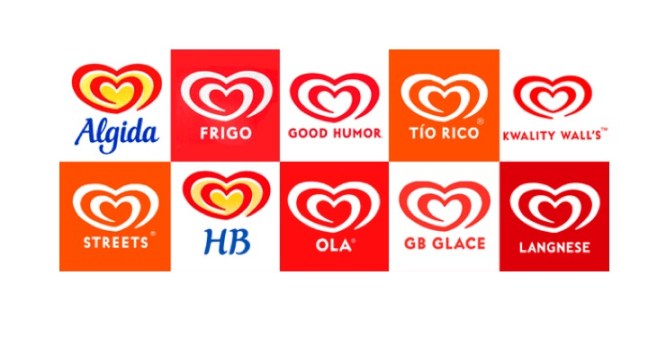
Unilever’s ice cream brands   credit

At the recent World Economic Forum in Davos, Switzerland, Amanda Sourry President, Global Foods for Unilever presented her company’s views on how food companies need to change.  Excerpts from her talk:

At Unilever, we are committed to sustainable nutrition – to food that is both made and consumed sustainably. For us this means producing safe, high-quality, nutritious food that is accessible to all, with respect for the environment and less waste, benefiting the livelihoods of food growers and helping to improve the nutrition and well being of consumers. We recognize the role we have to play as one of the largest food companies in the world to help redesign the global food system, so that it can provide a growing world population with healthy food from a healthy planet….

We must also recognize, however, that the “broken food system” has resulted in a lack of consumer trust in “big food” companies. An external environment shaped by confusing, complicated and sometimes even contradictory nutrition guidance means that consumer trust in science and in scientific experts has often been diminished. It is not enough to fix the system that provides the food we eat, we must also rebuild consumer trust in the food industry, so that we can empower consumers to make healthier and more sustainable food choices every day.

Players in the food industry need to ensure that they are putting consumer health first and foremost when considering corporate policies towards issues like food labelling and marketing to children, and ensuring their activities encourage responsible consumption, so that healthier choices become easier choices for consumers.

Additionally, recognizing the impact of global climate change on the agriculture system, we big food companies must continue to make climate-smart interventions along supply chains, and encourage consumers to transition to more plant-based nutrition…We cannot achieve such massive transformation to the global food system alone. That’s why I think that of all the Sustainable Development Goals, Number 17 – Partnerships for the Goals – is the most important. No single organization can fundamentally change our food system: collaboration, co-creation and partnerships with a variety of stakeholders are key. From the Sustainable Agriculture Initiative, to the Alliance for Good Breakfast in Kenya – a partnership between the UN World Food Programme, GAIN, the Health and Education Ministries and our fortified Blue Band spreads – we seek to collaborate with like-minded organizations to create food that tastes good, does good and doesn’t cost the earth…By mobilizing like-minded partners to view the food system holistically from production to consumption, I believe we can co-develop a new global food system that provides universal access to healthy, nutritious food, grown sustainably, while at the same time protecting the natural environment, improving livelihoods of producers and suppliers, and the health of consumers as well. I’d like to think that now is the time, in the spirit of responsive and responsible leadership, for us to come together to do just that.

For the full text, click here.
Trump tells US automakers he’ll cut taxes and regulations, says environmentalism is out of control

U.S. President Donald Trump pushed the chief executives of General Motors, Ford and Fiat Chrysler on Tuesday to increase production in the United States and boost American employment, reports Reuters. Trump opened a meeting with GM CEO Mary Barra, Ford CEO Mark Fields and Fiat Chrysler CEO Sergio Marchionne at the White House by saying he wants to see new auto plants built in the United States. The new Republican president vowed to cut regulations and taxes to make it more attractive for businesses to operate in the United States…U.S. automakers have been reluctant to open new U.S. auto plants in recent years, but they have expanded operations at existing U.S. plants…With flattening U.S. auto sales and some excess capacity, U.S. automakers may be reluctant to agree to open new plants, which likely would not come online for several years. Tuesday’s gathering was the first time the CEOs of the big three automakers have met jointly with a U.S. president since a 2011 session with Barack Obama to tout a deal to nearly double fuel efficiency standards by 2025…Automakers have urged the Trump administration to rethink those aggressive fuel efficiency mandates.

Nutrition labelling is a trade policy issue: lessons from an analysis of specific trade concerns at the World Trade Organization

Interpretive nutrition labels provide simplified nutrient-specific text and/or symbols on the front of pre-packaged foods, to encourage and enable consumers to make healthier choices. This type of labelling has been proposed as part of a comprehensive policy response to the global epidemic of non-communicable diseases. However, regulation of nutrition labelling falls under the remit of not just the health sector but also trade. Specific Trade Concerns have been raised at the World Trade Organization’s Technical Barriers to Trade Committee regarding interpretive nutrition labelling initiatives in Thailand, Chile, Indonesia, Peru and Ecuador. This paper presents an analysis of the discussions of these concerns. Although nutrition labelling was identified as a legitimate policy objective, queries were raised regarding the justification of the specific labelling This analysis indicates that while there is potential for trade sector concerns to stifle innovation in nutrition labelling policy, care in how interpretive nutrition labelling measures are crafted in light of trade commitments can minimize such a risk and help ensure that trade policy is coherent with nutrition action.

Full Citation:   Thow  AM,  Jones A,  Hawkes C, Ali I, Labonté R. Nutrition labelling is a trade policy issue: lessons from an analysis of specific trade concerns at the World Trade Organization Health Promot Int (2017) daw109.

An Economy for the 99 Percent

Credit

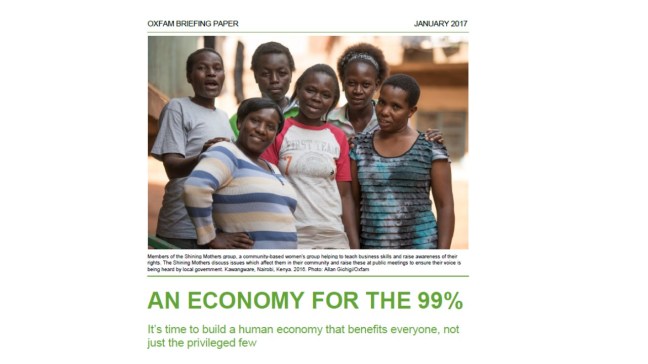
Eight men own the same wealth as the 3.6 billion people who make up the poorest half of humanity, according to a new report published by Oxfam today to mark the annual meeting of political and business leaders in Davos. Oxfam’s report, ‘An economy for the 99 percent’, shows that the gap between rich and poor is far greater than had been feared. It details how big business and the super-rich are fuelling the inequality crisis by dodging taxes, driving down wages and using their power to influence politics. It calls for a fundamental change in the way we manage our economies so that they work for all people, and not just a fortunate few.

The Regulation of Alcohol Marketing: From Research to Public Health Policy

A new special issue of the journal Addiction examines the state of knowledge on regulating alcohol marketing.  In an overview, Maristela Monteiro, Thomas Babor, David Jernigan and Chris Brookes summarize three key themes in these papers: alcohol marketing causes harm to vulnerable populations; industry self-regulation is ineffective in protecting vulnerable populations; and alternatives are available to address the problem.  They conclude that renewed action by governments to control alcohol marketing is needed.

Gun Industry Supports Suicide Prevention

Just as the sugary beverage industry supports initiatives to increase physical activity, the gun industry has found a new cause: suicide prevention. The Associated Press reports that a new initiative by the National Sports Shooting Foundation, the trade association of gun manufacturers, and the American Foundation for Suicide Prevention, seeks to use gun stores and shooting ranges to reach people at risk of suicide.  “As with most relationships, we had to get to know one another a bit. We had to see that they were serious, and I’m sure that they had to see that we were not going to be gun control activists,” said Robert Gebbia, CEO of the American Foundation for Suicide Prevention. “We’re interested in not taking guns away, but in limiting access by those who have serious mental health problems and are at risk.”  It’s all about practicing safe storage, he said.

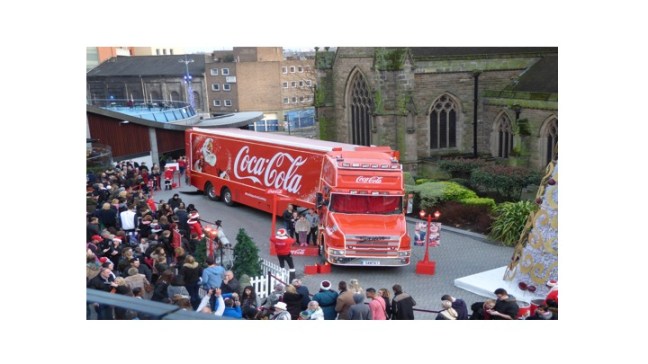
Coca-Cola, ABA Accused of Tobacco-Like Deception in Lawsuit

Credit

Coca-Cola Co. was sued by activists who compare the beverage giant’s advertising tactics to the tobacco industry’s past efforts in minimizing the health effects of its products and targeting children to replenish the ranks of its customers, reports Bloomberg. The nonprofit Praxis Project seeks to stop Coke and the Washington-based American Beverage Association from deceptive advertising of sugary drinks, particularly to children, and for the disclosure of documents related to their impact on health. Studies have linked sugary drinks to obesity, Type 2 diabetes and cardiovascular disease, the group said. A copy of the lawsuit is available here.

Working Around the World To Kick The Big Tobacco Habit

Ten years ago, writes Kelly Henning from the Bloomberg Philanthropies Public Health program in the Health Affairs blog, the world was a different place when it came to tobacco. Fewer than twenty developing countries in the world had even one strong tobacco control policy in place. The tobacco industry was beginning an aggressive ramping up of nefarious activities to grow their market share in vulnerable developing countries. And although advocates for tobacco control measures had a major public health victory in passing the Framework Convention on Tobacco Control, the world’s first public health treaty, little financial or technical help was available to support countries that wanted to put life-saving, proven tobacco control policies in place. Early in 2007, the tobacco control landscape was changed dramatically when Michael R. Bloomberg, then in his second term as mayor of the City of New York, donated $125 million through his foundation, Bloomberg Philanthropies, for a two-year commitment to reducing global tobacco use. Now ten years and a total of $600 million later, Bloomberg recently committed another $360 million over six years to this life-saving work, bringing his total financial commitment to nearly $1 billion. In that time, nearly 100 countries worldwide with a total of more than four billion people have passed at least one strong tobacco control law—and fifty-nine of these countries with nearly 3.5 billion people have received Bloomberg support.

EPA Reports 2016 Enforcement Highlights

In a landmark settlement, the U.S. Environmental Protection Agency reports, that  Volkswagen agreed to spend up to $14.7 billion to settle allegations of using “defeat devices” to cheat emissions tests and deceive customers. Volkswagen will offer consumers a buyback and lease termination for nearly 500,000 model year 2009-2015 2.0 liter diesel vehicles sold or leased in the U.S., and provide additional compensation to consumers, at a cost of up to $10 billion. In addition, Volkswagen will spend $4.7 billion to mitigate the pollution from these cars and invest in green vehicle technology. Together, these actions will restore clean air protections and make our auto industry cleaner for generations of Americans to come.

OxyContin goes global — “We’re only just getting started”

Credit

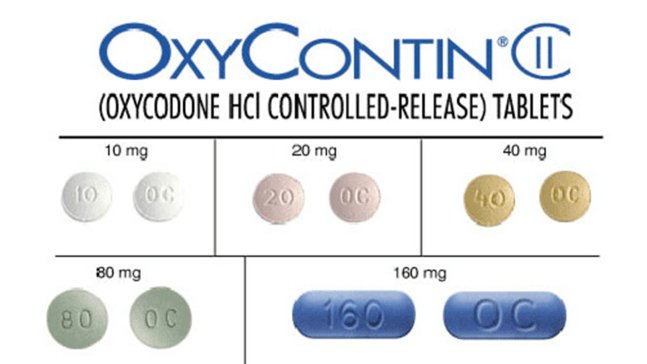
OxyContin is a dying business in America. With the nation in the grip of an opioid epidemic that has claimed more than 200,000 lives, the U.S. medical establishment is turning away from painkillers. Top health officials are discouraging primary care doctors from prescribing them for chronic pain, saying there is no proof they work long-term and substantial evidence they put patients at risk. Prescriptions for OxyContin have fallen nearly 40% since 2010, meaning billions in lost revenue for its Connecticut manufacturer, Purdue Pharma. So the company’s owners, the Sackler family, are pursuing a new strategy: Put the painkiller that set off the U .S. opioid crisis into medicine cabinets around the world. This report is the third in a three part series in which the Los Angeles Times explores the role of OxyContin in the nation’s opioid epidemic. In another post, the journalists who reported the story describe their investigatory methods.