Monitoring the impact of trade agreements on national food environments in Fiji

Trade agreements are increasingly recognized as playing an influential role in shaping national food environments and the availability and nutritional quality of the food supply. Using the INFORMAS trade monitoring protocol, investigators reviewed available food supply data to understand associations between Fiji’s commitments under WTO trade agreements and food import volume trends. The study suggests that Fiji’s WTO membership, in conjunction with associated economic and agricultural policy changes have contributed to increased availability of both healthy and less healthy imported foods. The study highlights an increase in healthy foods such as fresh fruits and vegetables and whole-grain refined cereals. The study also shows that there has been an increase in less healthy foods including fats and oils; meat; processed dairy products; energy-dense beverages; and processed and packaged foods. Monitoring the trends of imported foods at country level from the perspective of trade agreements, we enable the development of  appropriate and targeted interventions to improve diets and health and inform national health interventions to identify areas of concern.

Citation: Ravuvu A, Friel S, Thow AM, Snowdon W, Wate J. Monitoring the impact of trade agreements on national food environments: trade imports and population nutrition risks in Fiji. Global Health. 2017;13(1):33.
Big Tobacco v Global Health: Time for New Strategies

Screen Shot 2017-07-24 at 3.54.59 PMCredit

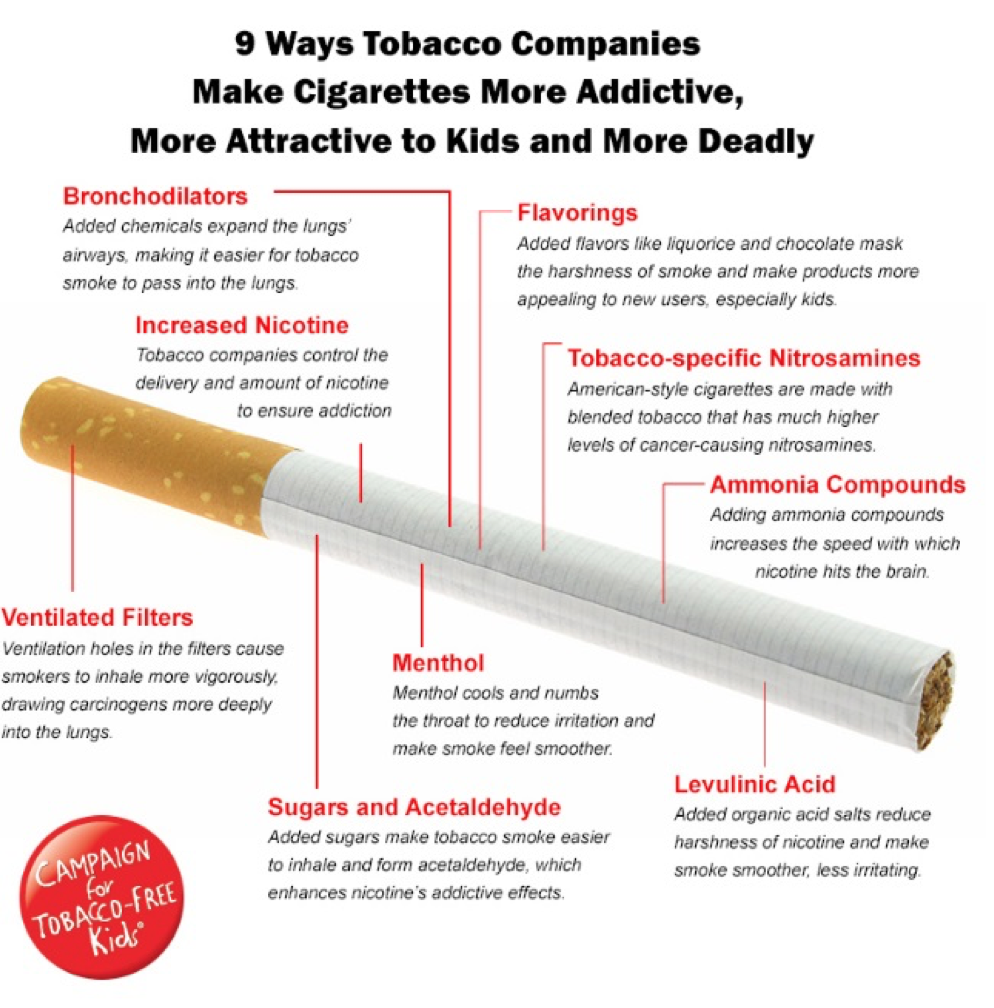
If present trends continue, experts predict, the tobacco toll in the 21st century will reach one billion premature deaths, ten times the 100 million people who died from tobacco use in the 20th century, writes Nicholas Freudenberg for Common Dreams. To avert that future will require changing the focus of current tobacco control strategies from a primary focus on changing the behavior of present and future smokers to one that seeks to change the practices of the tobacco industry itself.  Without a more direct effort to change the practices of the powerful corporations that drive the world’s leading cause of death, ending the tobacco epidemic will remain a distant goal.

Last week, two events shed light on current strategies the global tobacco industry uses to counter threats to profitability.  In London, shareholders of British American Tobacco (BAT) and in Winston-Salem, Reynolds shareholders approved a BAT buyout of Reynolds that will create the world’s largest tobacco company.  In Geneva, the World Health Organization (WHO) released its 2017 report on the global tobacco epidemic, calling on member states to counter the rising tide of tobacco corporate lobbying and litigation that undermines public health measures around the world.  Read more

German Carmakers Face Potential New Scandal Over Antitrust Issues

Germany’s high-end carmakers face a potentially destructive new scandal after European antitrust authorities said on Saturday that they were looking into allegations that Volkswagen, Daimler and BMW colluded illegally to hold down the prices of crucial technology, including emissions equipment, reports The New York Times. The emissions scandal, which came to light nearly two years ago, may now be spreading to rivals. Growing awareness of the harmful effects of diesel fumes has prompted European cities to consider bans of diesel cars and has led consumers to reject cars with diesel engines, a largely German innovation that traditionally accounted for half the market. The backlash could take on a new, far broader dimension if it turns out that the excess emissions were the result of illegal collusion by a de facto cartel. The investigation could also lead to billions of euros in fines.

Policy lessons from health taxes: a systematic review of empirical studies

Taxes on alcohol and tobacco have long been an important means of raising revenues for public spending in many countries but there is increasing interest in using taxes on these, and other unhealthy products, to achieve public health goals. This systematic review aims to generate insights into how such taxes can: (i) reduce consumption of targeted products and related harms; (ii) generate revenues for health objectives and distribute the tax burden across income groups in an efficient and equitable manner; and (iii) be made politically sustainable. Findings demonstrate that high tax rates on sugar-sweetened beverages are likely to have a positive impact on health behaviors and outcomes, and, while taxes on products reduce demand, they add to fiscal revenues. If the primary policy goal of a health tax is to reduce consumption of unhealthy products, then evidence supports the implementation of taxes that increase the price of products by 20% or more. Earmarking health taxes for health spending tends to increase public support so long as policymakers follow through on specified spending commitments. Citation: Wright A, Smith KE, Hellowell M. Policy lessons from health taxes: a systematic review of empirical studies. BMC Public Health. 2017;17(1):583.

Industry Tactics from “Coke Leaks”

Credit

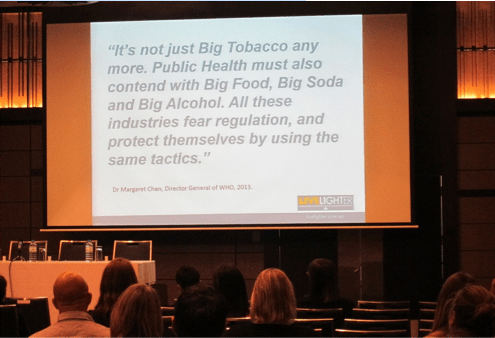
Using quotes from the leaked emails from the soda industry, this brief from Healthy Food America and Ninjas for Health illustrates the tactics the soda industry uses to achieve its business and political objectives. Internal executive emails from Coca-Cola show its coordinated global strategies to defeat sugary drink policies and influence dietary guidelines. The emails confirm what public health advocates have said for years – the beverage industry is following the tobacco industry’s playbook to fight health regulations worldwide. The emails reveal how the soda industry 1) funds studies that support its arguments, 2) pressures journalists, 3) lobbies against federal and international health policy, 4) deflects with self-regulation, 5) lies about grocery taxes, and 6) organizes fake grassroots opposition.

Healthy people and healthy profits? Elaborating a conceptual framework for governing the commercial determinants of non-communicable diseases

Non-communicable diseases (NCDs) represent a significant threat to human health. Risks for many of the major NCDs are associated with the production, marketing and consumption of commercially produced food and drink, particularly those containing sugar, salt and transfats, alcohol and tobacco. Governing determinants of risk frequently brings public health into conflict with the interests of profit-driven food, beverage, alcohol and tobacco industries. In this article, authors use a conceptual framework to review three models of governance of NCD risk: self-regulation by industry; hybrid models of public-private engagement; and public sector regulation. They analyze the challenges inherent in each model, and review what is known (or not) about their impact on NCD outcomes. They identify reforms that will be needed to the global health architecture to govern NCD risks, including to strengthen its ability to consolidate the collective power of diverse stakeholders, its authority to develop and enforce clear measures to address risks, as well as establish monitoring and rights-based accountability systems across all actors to drive measurable, equitable and sustainable progress in reducing the global burden of NCDs.

Citation: Buse K, Tanaka S, Hawkes S. Healthy people and healthy profits? Elaborating a conceptual framework for governing the commercial determinants of non-communicable diseases and identifying options for reducing risk exposure. Global Health. 2017; 13(1):34.

Massachusetts consumer and health care groups called on lawmakers to rein in skyrocketing prescription drug prices

MASSPIRG, Health Care For All, Health Law Advocates and others urged the Massachusetts Legislature’s Joint Committee on Health Care Financing to support S.652, An Act to promote transparency and prevent price gouging of pharmaceutical drug prices. The bill requires pharmaceutical manufacturers to disclose detailed information on the underlying cost components and pricing of the most expensive drugs including costs of production, R&D, marketing, rebates and discounts, and prices charged to purchasers outside of the U.S., among other information. The bill also authorizes intervention by state health care agencies and the Attorney General’s Office when pricing practices are determined to be gouging or unjustified. “Skyrocketing prescription drug prices are leading to higher health care costs for Massachusetts residents,” said Deirdre Cummings, Legislative Director at MASSPIRG. “In fact, according to an analysis of state data we submitted as testimony to the committee, rising pharmaceutical prices have a disproportionately high impact on Massachusetts health care premiums.”

America’s new tobacco crisis: The rich stopped smoking, the poor didn’t

July CHW update

Credit

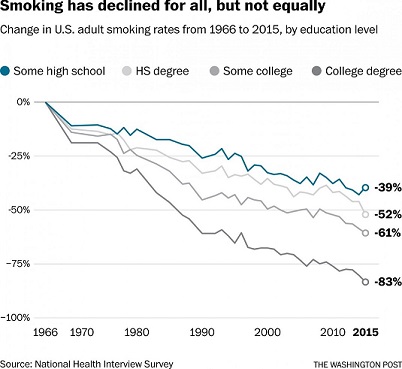
After decades of lawsuits, public campaigns and painful struggles, Americans have finally done what once seemed impossible: Most of the country has quit smoking, saving millions of lives and leading to massive reductions in cancer. Unless, reports The Washington Post, those Americans are poor, uneducated or live in a rural area. Hidden among the steady declines in recent years is the stark reality that cigarettes are becoming a habit of the poor. The national smoking rate has fallen to historic lows, with just 15 percent of adults still smoking. But the socioeconomic gap has never been bigger. Cigarette companies are focusing their marketing on lower income communities to retain their customer base, researchers say.  “Poorer people don’t smoke because anything’s different or wrong about them,” said Robin Koval, president of Truth Initiative, a leading ­tobacco-control nonprofit group. “Their communities are not protected like others are. They don’t have access to good health care and cessation programs. If you have a bull’s eye painted on your back, it’s harder to get away.”  Tobacco companies have also invested considerable resources in recent years lobbying against smoking restrictions and taxes, especially in poorer, rural and often Southern states, where smoking remains highest.

Broadening the Perspective on Gun Violence: An Examination of the Firearms Industry, 1990-2015

Firearm violence injures or kills 100,000 Americans each year. Research on firearm violence tends to focus on two elements-the host (i.e., victims of firearm violence) and the environment (i.e., gun policies)-but little attention has been paid to the agent (the gun and ammunition) or the vector (firearm manufacturers, dealers, and the industry lobby). Using Bureau of Alcohol, Tobacco, Firearms and Explosives data, trends in firearm manufacturing were investigated from 1990 to 2015. Overall domestic firearms production decreased slightly from 1996 through 2004, and then steadily increased from 1.7% in 2005 to 13.8% in 2013, when >10 million firearms were produced for the domestic market. The increase in total firearm production was driven by the increased production of pistols and rifles. Within the pistol category, increased production was attributable to an increase in higher caliber weapons. Similar trends were observed in gun purchases and recovered and traced crime guns. Trends in firearm manufacturing reveal a shift toward more-lethal weapons, and this trend is also observed in gun purchases and crime gun traces. This may reflect a societal shift in cultural practices and norms related to guns and could inform strategies to reduce firearm violence.

Citation: Smith VM, Siegel M, Xuan Z, Ross CS, Galea S, Kalesan B, Fleegler E, Goss KA. Broadening the Perspective on Gun Violence: An Examination of the Firearms Industry, 1990-2015. Am J Prev Med. 2017. pii: S0749-3797(17)30258-1.

The Company We Keep: Lobbyists in the Trump Administration

President Trump promised to “drain the swamp” when he got to Washington. Yet his appointments have included not just former lobbyists, but dozens of lobbyists whose governmental responsibilities fall into the same specific issue areas that they lobbied within the last two years — an apparent violation of Trump’s own executive order on ethics. In a new report, Public Citizen identifies 37 recent hires with lobbying conflicts stemming from activity within the last two years, only four of whom have received ethics waivers.