This week, Oxford University Press releases a new book by Corporations and Health Watch founder Nicholas Freudenberg, Distinguished Professor of Public Health at City University of New York School of Public Health and Hunter College. Here’s an excerpt from the Preface:
Never before in human history has the gap between the scientific and economic potential for better health for all and the reality of avoidable premature death been greater. In the past, babies died in infancy, women in childbirth, workers from injuries or occupational diseases, and people of all ages from epidemics of infectious disease exacerbated by inadequate nutrition, contaminated water, and poor sanitation. For the most part, the world lacked the resources and the understanding to eliminate these problems. As societies developed; as science, technology, and medicine advanced; and as people organized to improve their standards of living, more and more of the world’s population attained the living conditions that support better health and longer lives.
Today, the world still confronts the global health challenges of the last century. Epidemics of malaria, HIV infection, tuberculosis, and other communicable diseases still threaten well-being and economic development in many poor countries. More than a billion people live in urban slums where the average lifespan can be 35 years, half of that in better-off places where residents have certain access to adequate nutrition, clean water, and sanitation.
Now new threats have emerged. Deaths from chronic conditions like heart disease, cancer, diabetes, and stroke have surged, today accounting for more than 60 percent of the world’s deaths. Injuries have become the leading cause of death for young people around the world. Everywhere, from the wealthiest nations like the United States to the poorest countries in Africa, Asia, and Latin America, the proportion of deaths from these causes of death are growing. These premature deaths and preventable illnesses and injuries impose new suffering on individuals, families, and communities. They burden economies and taxpayers and jeopardize the improvements in health brought about by the public health advances of the previous two centuries.
Alarmingly, these new epidemics are not the result of the poverty and squalid living conditions that caused illness and death in the past, even though chronic disease and injuries afflict the poor much more than the rich. Nor are they the result of ignorance and inadequate science. For the most part, we understand the causes of these illnesses and injuries enough to prevent them. What we lack is the political will to implement the needed preventive measures. Even worse, in some cases the growing health burden is the result of new science and technology, which have been used to promote profit rather than prevent illness. These new epidemics of chronic diseases and injuries are instead the consequence of what most people thought were the remedies for poverty-related ill health: economic growth, better standards of living, and more comfortable lifestyles.
While many factors contributed to this global health transformation, Lethal but Legal focuses on what I consider to be most important and most easily modifiable cause: the triumph of a political and economic system that promotes consumption at the expense of human health. In this book, I describe how this system has enabled industries like alcohol, automobiles, firearms, food and beverages, pharmaceuticals, and tobacco—pillars of the global consumer economy—to develop products and practices that have become the dominant cause of premature death and preventable illness and injuries. This system was born in the United States and has now spread around the world.
In a global economy that focuses relentlessly on profit, enhancing the bottom line of a few hundred corporations and the income of their investors has become more important than realizing the potential for good health that the world’s growing wealth and the advances in science, technology, and medicine have enabled. This tension between private accumulation and public well-being is not new. But in the twenty-first century, it has come to shape our economy and politics in ways that profoundly threaten democracy, human well-being, and the environment that supports life. Paradoxically, the increasing concentration of power in the small number of the world’s multinational corporations also presents new opportunities to create another healthier and more just future.
A few nights ago I dreamt I watched a transformed Super Bowl. It wasn’t the Broncos or the Seahawks who starred in my dream but the ads. Instead of promoting soda, beer, SUVs and candy, the ads urged viewers to reject appeals to enrich big corporations by consuming products associated with premature death and preventable illnesses and injuries.
The opening ad showed two polar bears, one emaciated, one obese, wandering through a nightmare landscape where glaciers melted in the background and dark cactuses in the shape of classic Coke bottles blocked the bear’s path. “In my world,” said the scrawny bear, “we can’t find any food and we’re dying from hunger and the stress of food insecurity.” “In my world,” the plump one replied, “we’re all coming down with diabetes from drinking too much Coke. My left back paw may need to be amputated and my grandkids are so fat they can hardly move. How did we get here?”
The second ad was a TV version of a print ad run a few years ago by a group called Evangelical Environmental Network . Targeted at Christian Super Bowl viewers, the ad asked “Would Jesus drive an SUV?” The screen flashed statistics on the higher pollution levels of Ford Explorers, F-150s, Dodge Rams and other SUVs and light trucks, the rollover danger they posed to their drivers and passengers and the danger these massive vehicles posed to pedestrians, other drivers, and our carbon emissions. “Be a steward for the future. Protect your children and protect the environment. Don’t buy SUVs, “the heavenly announcer urged.
“Do you think Big Alcohol will clean up your vomit or bail you out of jail after the fourth drink?” asked the third ad, showing images of a young woman throwing up in a toilet and a guy in handcuffs with a black eye after being arrested in a drunken brawl. This ad was sponsored by Drink Truth, a new group that discourages binge drinking and promotion of alcohol to young people. Drink Truth was using the lessons from the truth campaign, designed by the Legacy Foundation with tobacco settlement dollars. Truth appealed to rebellious teens to reject the tobacco industry’s efforts to profit at the expense of their health. Scientific studies show that it contributed to more than 300,000 teens not starting to use tobacco.
This being the Super Bowl, there were another 47 minutes of ads—worth about $300 million in ad revenue to Fox — but mercifully my dream moved on to the half time show. The opener was Super Bowl favorite Beyoncé who began by apologizing to viewers and young people in general for accepting $50 million from Pepsi to promote their high sugar, salt and fat products that put her fans at risk of early death from diet-related diseases. To atone for her avarice, she pledged to contribute $5 million and kick off a new campaign, Water Me Now, that will support schools, colleges and hospitals to replace their beverage vending machines with free water fountains. Beyoncé then sang her new release Water Me Now Baby which extolled the virtues of free water for life, health and love. In the Super Bowl show, Beyoncé swam, poured and went down a water slide in a super sized version of the Water Me Now water fountain that she planned to distribute.
To reach another demographic, the next star, also a Super Bowl alumna, was Madonna. She apologized for her role in a Smirnoff ad campaign that encouraged young women to drink vodka, a campaign that public health experts believe contributed to rising rates of alcohol-related health problems among young women, a trend that threatens to bring equal opportunity for alcohol injuries and diseases to females, who had previously been at much lower risk than young men. Madonna promised to contribute her dollars and talent to Drink Truth’s ad campaign.
Third up was Justin Beiber, ready to make amends for his recent drunk driving arrest. With Beyoncé, the former Material Girl, Jay Z, LeBron James (the basketball star who has $42 million of endorsement contracts from Coca Cola, McDonald’s , Dunkin Donuts and others), Beiber announced the celebs were creating Fans United for Restoring Democracy to urge young people across the country to mobilize for the 2014 Congressional elections to elect a Congress that will overturn the Citizens United decision, support meaningful campaign finance reform, and limit special interest lobbying. “Until young people decide that politics matter,” said Beiber, “corporations are going to continue to undermine health, threaten democracy, and endanger our environment. We who have benefited so much from the young people who support us feel we need to give back to ensure that our fans and their children have a safer, healthier and more democratic future.”
I woke up Sunday morning asking, Is another world possible? Can Hollywood and Madison Avenue apply their genius to making a better, healthier world better instead of enriching those who profit from illness? By Monday morning, after watching Bob Dylan pitching polluting autos and cuddly puppies shilling Budweiser beer, I realized that as long as big corporations dominate our economy and politics, my Super Bowl dreaming is only a fantasy.
This month’s 50th anniversary of the First Surgeon General’s Report on Smoking and Health provides a bittersweet reminder of the promise and the limitations of public health activism to curb corporate promotion of behaviors and lifestyles associated with premature death and preventable illness and injury. In the half century since the report was released, the proportion of Americans who smoke has been cut in half. A new report in the Journal of the American Medical Association estimates that tobacco control efforts in the United States have prevented 8 million premature deaths and extended the average lifespan by on average almost 20 years of life for the people who did not take up smoking because of prevention campaigns, higher tobacco taxes or smoking bans. Overall, the success in reducing tobacco use has added 2.3 years to the life of the average American man and 1.6 years to the average American woman.
But this progress could have been achieved in far less time had not every preventive policy been opposed by the tobacco industry and had politicians beholden to the tobacco lobby severed these ties more quickly. These delays doomed many more to tobacco-related illnesses. And despite the progress in this country, the estimated toll from tobacco in this century is 1 billion premature deaths, more than 10 times the toll for the 20th century. The main reason so many more people will fall ill and die painful, early tobacco-related deaths is that the tobacco industry has adapted the lessons on marketing and undermining regulation that it learned in the United States to emerging markets in Asia, Africa and Latin America.
Sadly, the tobacco industry is not alone in contributing to America’s poor health standing among developed nations. In 2010, guns took the lives of 31,076 Americans in homicides, suicides and unintentional shootings, the equivalent of more than 85 deaths each day. Another 73,505 Americans were treated in hospital emergency departments for non-fatal gunshot wounds. While the scientific knowledge and technology to significantly reduce this toll are available, like the tobacco industry, the gun industry and its allies in the National Rifle Association have steadfastly blocked any progress to make guns less accessible or safer.
Similarly, the alcohol industry contributes to alcohol related injuries and illnesses by aggressive marketing, expanding the density of alcohol outlets, and designing products such as wine coolers and malt liquors to appeal to young drinkers. A recent study found that between 2001 and 2009, youth exposure to television alcohol advertising increased by 71%. Excess alcohol consumption accounts for about 4,700 annual deaths among underage drinkers. Another study estimated that the combined market value for the alcohol industry of illegal underage drinking and adult problem drinking accounted for between 37.5 and 48.8% of consumer expenditures for alcohol.
How has it come to pass that corporations now have a stronger influence on the health of Americans than public health officials, doctors or hospitals? How have corporations succeeded in convincing so many officials in the White House, Congress and the supreme court that protecting profits is a higher national priority than protecting public health?
In the last decades, a corporate consumption complex has solidified its influence on American politics and the economy. This web of consumer corporations, the bankers and hedge funds that lend them money, the trade associations that lobby for them, and the global ad agencies that market their products has been able to use its campaign contributions, lobbying and lawsuits to achieve its business goals even when the majority of Americans disagree with these. Like the military industrial complex that Dwight Eisenhower warned about before he left public office, the corporate consumption complex threatens our democracy as well as our health and environment.
Are there lessons from our partial successes in cutting tobacco use that could be applied to reducing the power of the corporate consumption complex and its brand of hyperconsumption? I suggest three.
1. Efforts to reduce tobacco use succeeded when Americans came to believe that the right to breathe clean air trumped the tobacco’s industry’s right to promote its products without public oversight. Today, we need to mobilize parents to demand our children’s right not to be shot and not to be targeted by marketing of fast food, sugary beverages and snacks that have contributed to a 176% increase in the prevalence of diabetes between 1980 and 2011.
2. Part of the success in reducing smoking came from forcing Big Tobacco to reimburse state governments for the costs of caring for people with tobacco-related illnesses. Enacting policies that would require processed food producers to reimburse taxpayers and victims of the diet-related diseases exacerbated by their promotion of high fat, sugar and salt diets and alcohol producers for those injured or killed by the binge drinking.
3. Fund independent hard-hitting prevention campaigns designed to undo the deceptive advertising Big Tobacco had sponsored. We can do the same thing by counterbalancing the media and ad campaigns today targeting young people to eat bad foods and glamorize guns.
In 1964, most observers thought it was politically impossible to defeat the tobacco industry and to bring about significant reductions in tobacco use. Today, changing the practices of the firearms, alcohol and processed food industries seems a similarly daunting task. But if we can apply the lessons from tobacco to accelerate changes in harmful business practices, perhaps we won’t need to wait another 50 years to prevent the deaths, illnesses, injuries and rising healthcare costs that today’s science could avert.
Post script: 219 Guardian readers commented on this column in the week since it was posted. A review of these comments provides a good overview of public debates about individual and corporate responsibility –as well as the occasional nuttiness of online commentary.
Senator Max Baucus and Congressman Dave Camp (Credit)
The Camp-Baucus Fast Track bill replicates the procedures included in the 2002 grant of Fast Track that expired in 2007:
The president would be empowered to unilaterally select trade negotiating partners and commence negotiations. Like the 2002 Fast Track, in the Camp-Baucus bill this authority is conditioned only on pro forma consultations and 90 calendar days’ notice being given to Congress before negotiations begin. The Camp-Baucus bill provides no mechanism for Congress to veto a president’s decision to enter into negotiations on a trade pact that would be subject to expedited floor procedures, nor any role in selecting with which countries such pacts are initiated. (Sec. 5(a))
The president would be empowered to unilaterally control the contents of an agreement. As with the 2002 Fast Track, congressional negotiating objectives in the Camp-Baucus bill are not enforceable. Whether or not U.S. negotiators obtain the listed negotiating objectives, the Camp-Baucus bill would empower the president to sign a trade pact before Congress votes on it, with a guarantee that the executive branch could write legislation to implement the pact and obtain House and Senate votes within 90 days, with all amendments forbidden and a maximum of 20 hours of debate permitted. (Sec. 3(b)(3))
Democratic and GOP presidents alike have historically ignored negotiating objectives included in Fast Track. The 1988 Fast Track used for the North American Free Trade Agreement (NAFTA) and the establishment of the World Trade Organization (WTO) included a negotiating objective on labor standards, but neither pact included such terms. The 2002 Fast Track listed as a priority the establishment of mechanisms to counter currency manipulation, but none of the pacts established under that authority included such terms.
The president would be authorized to sign and enter into an agreement subject to expedited consideration conditioned only on pro forma consultations and providing Congress 90 calendar days’ notice prior to doing so. (Sec. 6(a)(1)) The executive branch alone would determine when negotiations are “complete.” The congressional “consultation” mechanisms in the Camp-Baucus bill do not provide Congress with any authority or mechanism to formally dispute whether negotiations have indeed met Congress’ goals and thus are complete, much less any means for Congress to certify that its objectives were met before an agreement may be signed.
The president would be authorized to write expansive implementing legislation and submit it for consideration. (Sec. 6(a)(1)(C)) As with the 2002 Fast Track, such legislation would not be subject to congressional committee markup and amendment. The 2002 Fast Track states that this legislation can include any changes to U.S. law that the president deems “necessary or appropriate to implement such trade agreement or agreements.” (19 USC 3803(b)(3)(B)(ii)) Inclusion of the term “appropriate” in this section of past Fast Track authorities has been controversial, because it provides enormous discretion for the executive branch to include changes to existing U.S. law that Congress may or may not deem necessary to implement an agreement. Indeed, inclusion of the term “appropriate” has enabled Democratic and GOP administrations alike to insert extraneous changes to U.S. law into legislation that skirts committee mark up and is not subject to floor amendment. Rather than remove the term “appropriate,” the Camp-Baucus bill merely adds the superfluous modifier “strictly” in front of the same “necessary or appropriate” language found in the 2002 Fast Track. (Sec. 3(b)(3(B)ii)) As with the 2002 Fast Track, there is no point of order or other mechanism to challenge inclusion of overreaching provisions in the implementing bill.
Like the 2002 Fast Track, the Camp-Baucus bill would require the House to vote on such legislation within 60 session days, with the Senate having an additional 30 days to vote thereafter. (Sec. 3(b)(3))
Like the 2002 Fast Track, the Camp-Baucus bill would forbid all amendments and permit only 20 hours of debate on such legislation in the House and Senate. Voting, including in the Senate, would be by simple majority. (Sec. 3(b)(3))
The Camp-Baucus bill replicates the 2002 Fast Track with respect to limitations that could be placed on the application of the Fast Track process to a specific trade agreement. While the factsheet on the bill released by the Finance Committee suggests that it includes a “strong, comprehensive” disapproval process, in fact it replicates the 2002 Fast Track’s limited grounds for which a resolution to disapprove Fast Track can be offered. The Camp-Baucus bill also replicates the 2002 Fast Track’s procedures for consideration of such a resolution, which curtail the prospect that such a resolution would ever receive a vote. To obtain floor action, a resolution would have to be approved by the Ways and Means and Finance committees, and then the House and Senate would have to both pass the resolution within a 60-day period. (Sec. 6(b))
The Camp-Baucus bill includes several negotiating objectives not found in the 2002 Fast Track. However, the Fast Track process that this legislation would reestablish ensures that these objectives are entirely unenforceable:
In addition, some of the Camp-Baucus bill negotiating objectives advertised as “new” are in fact referenced in the 2002 Fast Track. For example, the 2002 Fast Track included currency measures: “seek to establish consultative mechanisms among parties to trade agreements to examine the trade consequences of significant and unanticipated currency movements and to scrutinize whether a foreign government engaged in a pattern of manipulating its currency to promote a competitive advantage in international trade.” (19 USC 3802(c)(12)) The so-called “new” text in the Camp-Baucus bill is: “The principal negotiating objective of the United States with respect to currency practices is that parties to a trade agreement with the United States avoid manipulating exchange rates in order to prevent effective balance of payments adjustment or to gain an unfair competitive advantage over other parties to the agreement, such as through cooperative mechanisms, enforceable rules, reporting, monitoring, transparency, or other means, as appropriate.” (Sec. 2(b)(11))
What is touted as “enhanced coordination with Congress” is actually the mere renaming of the Congressional Oversight Group from the 2002 Fast Track as “Congressional Advisory Groups on Negotiations,” while provisions ostensibly improving transparency merely formalize past practice:
The 2002 Fast Track established a Congressional Oversight Group (COG) comprised of members of Congress appointed by congressional leaders who were to obtain special briefings from the U.S. Trade Representative’s (USTR) office on the status of negotiations and to attend negotiations on an advisory basis. The Camp-Baucus bill renames the COG – delineating a “House Advisory Group on Negotiations” and a “Senate Advisory Group on Negotiations” and describing joint activities of the two – but includes the same appointment process and limited role for congressional trade advisory groups as found in the 2002 Fast Track. (Sec. 4(c))
The Camp-Baucus bill instructs USTR to write guidelines for its consultations with Congress, the public and private sector advisory groups. In effect, this provision merely requires USTR to put into writing how it will (or will not) relate to these interested parties. (e.g. Sec. 4(a)(3) and Sec. 4(d)(1))
The Camp-Baucus bill simply formalizes the past practices of USTR by requiring that any member of Congress be provided access to trade agreement documents. For instance, during NAFTA negotiations, members of Congress had open access to the full draft NAFTA texts with a new version placed into a secure reading room in the U.S. Capitol after each round of negotiations. In the summer of 2013, the Obama administration finally responded to growing pressure by members of Congress for access to draft TPP texts by bringing requested specific chapters to members’ offices for review when a member asked for such access. Rather than specifying that USTR must resume the practice of providing standing access for members of Congress to full draft trade agreement texts, the Camp-Baucus bill leaves to the discretion of USTR how it will provide text access to members of Congress if a member requests access. (Sec. 4(a)(1)(B))
The Camp-Baucus bill also replicates the problematic language of the 2002 Fast Track that limits access to confidential trade agreement proposals and draft texts for congressional staff with the necessary security clearances to only committee staff, excluding personal staff with clearances. (Sec. 4(a)(3)(B)(ii))
The Camp-Baucus bill faces long odds for approval in the 113th Congress:
With a large bloc of House Democrats and Republicans already having announced opposition to the old Fast Track process at the heart of Camp-Baucus bill, the prospects are limited for the Obama administration to secure passage in the first half of 2014 before lawmakers’ attention turns to midterm elections.
A letter sent to President Obama in November by 151 Democrats opposed Fast Track authority and called for the creation of a new mechanism for trade agreement negotiations and approval.
Twenty-seven Republicans have also announced their opposition to Fast Track in two letters to Obama.
Most Democratic Ways and Means Committee members joined an additional letter in November noting that the old Fast Track process enjoys little support.
Even after repeated delays in introduction, the Camp-Baucus Fast Track bill failed to gain a House Democratic cosponsor. Ways and Means Ranking Member Sandy Levin (D-Mich.) has announced that he does not support the Camp-Baucus bill. Levin’s demands for changes to the 2002 Fast Track procedure to enhance Congress’ role in determining the contents of trade pacts were rebuffed by Ways and Means Committee Chair Dave Camp (R-Mich.), Finance Committee Chair Max Baucus (D-Mont.) and Finance Committee Ranking Member Orrin Hatch (R-Utah).
The Camp-Baucus Fast Track grandfathers in the Trans-Pacific Partnership (TPP) and U.S.-EU Trans-Atlantic Free Trade Agreement (TAFTA) negotiations. (Sec. 7) Fast Track for the TPP and TAFTA is especially controversial because these pacts would include chapters on patents, copyright, financial regulation, energy policy, procurement, food safety and more, constraining the policies that Congress and state legislatures could maintain or establish on these sensitive non-trade matters. Fast Track was designed in the 1970s when trade negotiations were narrowly focused on cutting tariffs and quotas, not the sweeping range of non-trade policies implicated by today’s pacts.
Fast Track is an anomaly. It has only been in effect for five of the past 19 years:
Both Democratic and GOP presidents have struggled to convince Congress to delegate its constitutional trade authority via the Nixon-era Fast Track scheme. Fast Track has been in effect for only five years (2002-2007) of the 19 years since passage of NAFTA and the agreement that created the WTO.
A two-year effort by President Bill Clinton to obtain Fast Track trade authority during his second term in office was voted down on the House floor in 1998 when 171 Democrats were joined by 71 GOP members who bucked then-Speaker Newt Gingrich. Clinton did not have Fast Track for six of his eight years in office, but still implemented more than 130 trade agreements.
President George W. Bush spent two years and extraordinary political capital to obtain the 2002-2007 Fast Track grant, which passed a Republican-controlled House by one vote, and expired in 2007.
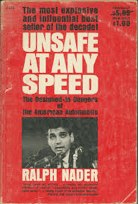
In a column in the Huffington Post, Ralph Nader, author of Unsafe at Any Speed (1965) and other corporate exposes, includes Lethal but Legal Corporations, Consumption and Protecting Public Health, a new book by published by Oxford University Press and written by CHW founder Nicholas Freudenberg, as one of 10 Books to Provoke Conversation in the New Year. He writes that “Freudenberg gives readers an absorbing aggregation of corporate crimes and abuses that destroy or damage every day the health, safety and economic well-being of the people. Then he aggregates the past civic/political victories over market fundamentalism and its corporate outlaws for framing future reform initiatives.”
The ten are:
1. Think Like a Commoner: A Short Introduction to the Life of the Commons by David Bollier (New Society Publishers)
David Bollier is a leading writer and advocate for all those real-life commons — what we own, from the public lands, public airwaves, online information and local civic assets. He calls the commons a “parallel economy and social order that…. affirms that another world is possible. And more: we can build it ourselves, now.”
2. All the President’s Bankers: The Hidden Alliances that Drive American Power by Nomi Prins (Nation Books)
All the President’s Bankers is about the hidden alliances between big bankers and the government leaders they have controlled for the past 100 years. A gripping history that reflects the words of the famed Louis B. Brandeis (later to become Supreme Court Justice Brandeis) who wrote: “We must break the Money Trust or the Money Trust will break us.” Prins was a former Goldman Sachs director. She knows this world.
3. How Can You Represent Those People? Edited by Abbe Smith and Monroe H. Freedman (Palgrave Macmillan)
How many times have criminal defense attorneys been asked this question when they represent unpopular, unsavory, or horrific accused defendants? Fifteen criminal defense lawyers write short but educational replies in both personal and professional terms. You’ll learn a lot about our legal system.
4. The Truth in Small Doses: Why We’re Losing the War on Cancer and How to Win It by Clifton Leaf (Simon & Schuster)
The Truth in Small Doses is a detailed, sober myth-busting report. Leaf concludes the “war on cancer” is a failure due to a dysfunctional “cancer culture” – “a groupthink that pushes tens of thousands of physicians and scientists toward the goal of finding the tiniest improvements in treatment rather than genuine breakthroughs; that fosters isolated and redundant problem-solving instead of cooperation; and rewards academic achievement and publication above all else.” He shows why “the public’s immense investment in research has been badly misspent.”
5. The American Way of Poverty: How the Other Half Still Lives by Sasha Abramsky (Nation Books)
The American Way of Poverty is a worthy successor to Michael Harrington’s The Other America which came out in 1962 and helped spark a war on poverty. Abramsky puts many faces of poverty into a broader context which sparks reader indignation that statistics alone can’t provoke.
6. The Firm: The Story of McKinsey and Its Influence on American Business by Duff McDonald (Simon and Shuster)
The Firm portrays a finishing school for the plutocracy both as an early recruiter of future power brokers in business and government and as a “prestigious” provider of dated business management advice often of dubious value.
7. Censored 2014: Fearless Speech in Fateful Times by Mickey Huff and Andy Lee Roth with Project Censored (Seven Stories Press)
Censored 2014 is an annual open window to censorship of the big and routine kind. It is always a must read. This volume describes the top censored stories with media analysis of 2012-2013. What a shocking commentary on the so-called free press!
8. Lethal but Legal: Corporations, Consumption and Protecting Public Health by Nicholas Freudenberg (Oxford University Press)
Aggregation is a key strategy for justice movements. Author Freudenberg gives readers an absorbing aggregation of corporate crimes and abuses that destroy or damage every day the health, safety and economic well-being of the people. Then he aggregates the past civic/political victories over market fundamentalism and its corporate outlaws for framing future reform initiatives.
9. Front Porch Politics: The Forgotten Heyday of American Activism in the 1970s and 1980s by Michael Stewart Foley (Hill and Wang)
Decades are stereotyped and often exaggerated. Foley counters the conventional take that there was a sharp and sudden letdown in civic activism after the sixties. Maybe the impression was conveyed by the media’s lessened coverage. Good antidote for those still demoralized by decennial mythologies.
10. The Capitalism Papers: Fatal Flaws of an Obsolete System by Jerry Mander (Counterpoint)
The Capitalism Papers is a fundamental critique of the intrinsic problems of the capitalist system that the author believes are inherent to its structure and unreformable. A former celebrated advertising executive, Mander goes deeper into the perverse incentives of corporate capitalism than almost anyone writing today. And man, can he write. Too bad top Wall Streeters won’t debate him.
Years ago books mattered more in provoking change. It is up to readers today not to be overwhelmed by information overload, to be selective and make books matter again.
ChinaDaily USA reports that 87 Chinese cities will begin releasing hourly updates on air quality from New Year’s Day, taking the total number doing so to 161, the Ministry of Environmental Protection announced. Data from 449 monitoring stations across the Beijing-Tianjin-Hebei area, the Yangtze River Delta and the Pearl River Delta will provide real-time updates on levels of sulfur dioxide, carbon monoxide and PM2.5 — particles smaller than 2.5 microns in diameter that can damage the lungs. The move is a response to complaints by experts and citizens about pollution, ministry spokesman Tao Detian said.
Earlier this month, two members of the European Parliament hosted a debate in the Parliament on the 514 cases that corporations have brought against governments. Some of the examples presented were the international tobacco giant Philip Morris suing the governments of Uruguay and Australia for introducing plain cigarette packaging. This debate also considered current negotiations between the EU and the US, Thailand and India, as well as the recently agreed Free Trade Agreement (FTA) with Canada. Presentations are available here.
Essential Information is a non-profit, tax-exempt organization that encourages citizens to become active and engaged in their communities. It provides provocative information to the public on important topics neglected by the mass media and policy makers. It recently released this report, the executive summary of which appears below. The full report is here.
“The problem is that you do things in the service of your country that are just not appropriate to do in the private sector.” — John Brennan, director of the Central Intelligence Agency
Executive Summary
This report is an effort to document something we know little about: corporate espionage against nonprofit organizations. The entire subject is veiled in secrecy. In recent years, there have been few serious journalistic efforts – and no serious government efforts — to come to terms with the reality of corporate spying against nonprofits.
Much of what we do know about this subject has been uncovered by accident. So the picture we have is fragmentary at best: just a few snapshots, taken mostly at random, arising from brilliant strokes of luck, giving a mere inkling of the full range of espionage activity against nonprofits.
There are, however, a few things we can say for certain.
The corporate capacity for espionage has skyrocketed in recent years. Most major companies now have a chief corporate security officer tasked with assessing and mitigating “threats” of all sorts – including from nonprofit organizations. And there is now a surfeit of private investigations firms willing and able to conduct sophisticated spying operations against nonprofits.
The use of former intelligence, military and law enforcement officers for corporate espionage appears to be commonplace. Especially prevalent is the use of former Central Intelligence Agency, National Security Agency and Secret Service agents, as well as current or former police officers, and other former military, intelligence and law enforcement officials. These current and former government employees, and current government contractors, do their spying against nonprofits with little regulation or oversight, and apparently with near impunity.
Many of the world’s largest corporations and their trade associations — including the U.S. Chamber of Commerce, Walmart, Monsanto, Bank of America, Dow Chemical, Kraft, Coca-Cola, Chevron, Burger King, McDonald’s, Shell, BP, BAE, Sasol, Brown & Williamson and E.ON — have been linked to espionage or planned espionage against nonprofit organizations, activists and whistleblowers.
Many different types of nonprofits have been targeted with espionage, including environmental, anti-war, public interest, consumer, food safety, pesticide reform, nursing home reform, gun control, social justice, animal rights and arms control groups.
Corporations have been linked to a wide variety of espionage tactics. The most prevalent tactic appears to be infiltration by posing a volunteer or journalist, to obtain information from a nonprofit. But corporations have been linked to many other human, physical and electronic espionage tactics against nonprofits. Many of these tactics are either highly unethical or illegal.
Corporations engage in espionage against nonprofits with near impunity. Typically, they suffer nothing more than minor adverse media coverage if their espionage is exposed. The lack of accountability may encourage other corporations to conduct espionage.
Corporate espionage against nonprofit organizations presents a threat to democracy and to individual privacy. Democracy cannot function without an effective civil society. But civil society and its nonprofit organizations depend crucially on their ability to keep some ideas, information, and conversations private.
Individual citizens and groups do not lose their right to privacy merely because they disagree with the activities or ideas of a corporation. The right to privacy dovetails with our First Amendment rights to speech, public debate, and full participation in the “marketplace of ideas.” It is especially unjust that corporations sabotage Americans’ fundamental rights through actions that are unethical or illegal.
Many things can be done to protect nonprofits from corporate espionage. Congress should investigate and hold hearings on corporate espionage against nonprofits. Congress and state legislatures should enact legislation to criminalize the theft of confidential, noneconomic information held by their critics. Law enforcement – especially the U.S. Department of Justice – should prioritize investigating and prosecuting corporate espionage against nonprofits.
[1] Eamon Javers, Broker, Trader, Lawyer, Spy. (New York: HarperCollins, 2010), p. xii. The quote is prior to Brennan’s appointment as director of the CIA.
Secret documents published today by WikiLeaks and analyzed by Public Citizen reveal that the Obama administration is demanding terms that would limit Internet freedom and access to lifesaving medicines throughout the Asia-Pacific region and bind Americans to the same bad rules, belying the administration’s stated commitments to reduce health care costs and advance free expression online, Public Citizen said today.
More information about the Trans-Pacific Partnership negotiations is available at www.citizen.org/tpp
On November 3, the American Public Health Association begins its an 141st Annual Meeting in Boston Massachusetts, the home of the nation’s first Tea Party– the one that challenged corporate control of trade, unlike the current Tea Party, which takes its money from the wealthiest.
credit: APHA
Several CHW contributors will be presenting their work in Boston and below are listed a selection of the more than 30 sessions or presentations that examine the role of corporations in our society and their impact on health. Forward this list of sessions to your friends and colleagues who might be interested in learning more about how corporations shape population health during their time in Boston. For more details on these sessions, click on the number or the title. The first session listed below features CHW writers, the following sessions are listed in the order of presentation.
Featured CHW Presentation
5133.0 Advocacy for Reducing the Role of the Global Alcohol, Food and Beverage, and Tobacco Industries in Health Education
11:10am Medical implications of the nuclear age Helen Caldicott, Founding president Physicians for Social Responsibility, noted author and lecturer on nuclear and environmental issues
291710 Women farmers first: Food companies, food security and the rights of women at the bottom of supply chains
279511 They’re still after our kids: Tobacco industry use of “youth smoking prevention” programs emphasizing personal responsibility to shift blame for addiction and disease to children and parents
Monday, November 4, 2013 : 2:30 PM – 2:50 PM
Lissy C. Friedman, JD , Public Health Advocacy Institute, Northeastern University School of Law, Boston, MA
Mark A. Gottlieb, JD , at Northeastern Univ. School of Law, Public Health Advocacy Institute, Boston, MA
3386.0 Corporate Malfeasance and the Public’s Health #1: Coal and Fracking Monday,
284243 Lessons from the Who’s Framework Convention on Tobacco Control: An advocacy-based approach for applying legal precedents that challenged big tobacco to challenge the food industry and reverse diet-related disease
Monday, November 4, 2013 : 5:00 PM – 5:15 PM
Sara Deon, MS , Corporate Accountability International, Boston, MA
292143 Corporate campaigning and public health: Ten tips and tricks to hold the private sector accountable
Monday, November 4, 2013 : 5:30 PM – 5:45 PM
Sarah Kalloch , Oxfam America, Boston, MA, Andy Harris, MD
Tuesday, November 5, 2013
4011.0 Community Health and Technology: Systems of Corporate Control and Implications for the People’s Health
275839 High-tech tobacco tax stamps: New technologies for fighting counterfeiting and tax evasion
Tuesday, November 5, 2013, Poster, 12:30 PM – 1:30 PM
Ryan Patrick, JD , Center for Health Policy and Legislative Analysis, The MayaTech Corporation, Silver Spring, MD ; Noah Kingery, BA , Hpla, The MayaTech Corporation, Silver Spring, MD; Carissa Holmes , CDC, Atlanta, GA ;Allison MacNeil, MPH , Office on Smoking and Health, Centers for Disease Control and Prevention, Atlanta, GA;Gabrielle R. Promoff, MA, Office on Smoking and Health, Centers for Disease Control and Prevention, Atlanta, GA
Brandon Kenemer, MPH , Office on Smoking and Health, Carter Consulting, Inc., Atlanta, GA
Kisha-Ann S. Williams, MPH, CHES , NCCDPHP, Centers for Disease Control and Prevention, Atlanta, GA
282028 Tobacco products marketing in urban Bangladesh – a rapid assessment
293114 Corporate liability, state responsibility, and labor rights intervention as a strategy to address a public health crisis: Developing a framework for protection of sugarcane workers in Nicaragua
Tuesday, November 5, 2013
1:30 PM – 1:45 PM , Y-Vonne Hutchinson, JD , La Isla Foundation, Leon, Nicaragua Purvi Patel, JD/MPH , La Isla Foundation, Leon, Nicaragua
4351.0 Corporate Malfeasance and the Public’s Health #2









 Corporations and Health Watch