Marketing Alcohol, Tobacco and Unhealthy Food to Women: the New Affirmative Action

credit: Center on Alcohol Marketing to Youth

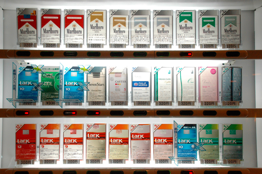
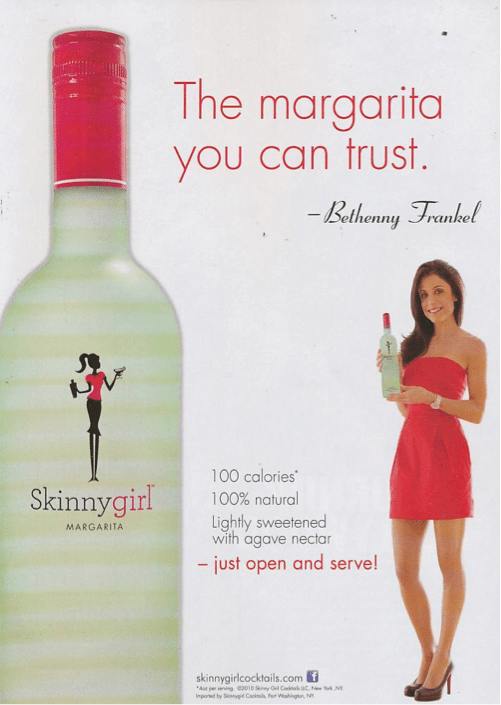
While the rest of our society still struggles to provide equal employment and educational opportunities for girls and women, the alcohol, tobacco and processed food industries have embraced affirmative action to market their lethal but legal products to women.  A few days after  International Women’s Day, it is worth asking why. 


In recent years, the longevity advantage that women have enjoyed over men has shrunk.   In 1970, women in the United States lived 7.6 years longer than men. By 2011, the advantage was less than five years, a 37 percent decline. Between 1992 and 2006, female mortality rose in more than 40 percent of U.S. counties.  One important reason for this falling gender gap in longevity has been the increased marketing of unhealthy food, tobacco and alcohol to women. 


The recent report from the US Centers for Disease Control that obesity rates for children aged 2 to 5 dropped by 43% in the last decade is welcome news for those who hope for a healthier America in fifty years.  Sadly, the more immediate story from the CDC shows flat or even increasing obesity rates for every other population group. One group that did much worse was women aged 60 and older, of whom 38 percent were obese, an increase of more than 20 percent since 2003-2004.


Since General Mills created Betty Crocker in 1921, the food industry has advertised to women. As more females moved into the workforce, new marketing opportunities arose. With fewer hours for cooking, women turned to makers of processed food and fast food outlets. To relieve the stresses of balancing family and work demands, some women turned to heavily advertised high sugar, fat and salt foods. These “fun-for-you”foods led many women to gain weight which in turn created a growing market for diet and “good for you” foods.  By marketing both products that contribute to obesity and those that claim to help dieters lose weight, companies like PepsiCo, Kellogg and Nestle have found a way to have their cake and eat it.


In the food, alcohol and tobacco industries, as adult male markets became saturated, better off men quit smoking or drinking or cut down on unhealthy foods, and victims of too much alcohol, tobacco and unhealthy food died, marketers of these products targeted women(and young people) to become the new source of profits.  Today, young women are prime markets for Big Alcohol.  For example, as men started to drink less hard liquor, Smirnoff began in 2000 aggressively marketing a new women and youth oriented product Smirnoff Ice, portraying it as a path to glamour and sophistication. Over the next decade, the company’s sales of all vodka products doubled, more than replacing the lost male market.  As one alcohol company executive told Advertising Age, “the beauty of this category is that it brings in new drinkers, people who really don’t like the taste of beer.”


According to CDC’s most recent Youth Risk Behavioral Survey, 34 percent of female seniors in high school reported that they binge drank at least once in the past month; up from 27 percent in 2011. Each year, 25,000 women and girls die from alcohol-related causes


Cumulatively, this targeting of women by food, alcohol and tobacco companies has had an impact on public health.   A 2013 Institute of Medicine report called U.S. Health in International Perspective: Shorter Lives, Poorer Health, found that in comparison to other developed nations, Americans have been dying at younger ages than people in almost all other high-income countries. This disadvantage has been getting worse for three decades, especially among women, which researchers attributed in part to higher U.S. consumption of alcohol, tobacco and unhealthy food.


Today, Washington’s obsessive debates about every detail of the rollout of Obamacare seem to be a distraction from the real health crisis facing this country and especially its women.  Will policy makers continue to allow corporations that value their profits over our health to be the de facto deciders on health policy in this country?   Will Big Business and its allies continue to be able to defeat any effort to restrict aggressive or deceptive marketing of their products?


In 2010, 49% of Americans reported one or more chronic diseases. These conditions account for $3 of every $4 spent on health care.  A recent World Health Organization report on chronic diseases identifies tobacco, alcohol and high fat, sugar and salt foods as leading causes of the global increase in chronic diseases.

To date, the food, alcohol and tobacco industries have warned that any effort to restrict their right to promote their profitable and legal products undermines our freedom to eat, drink or smoke what and when we choose. They further claim that main cause of the rise in chronic diseases is mysterious epidemics of increasing irresponsibility and ignorance rather than their marketing practices.These companies make the faux feminist argument that women’s right to consume sickening products with the guys is an essential part of liberation. 


For women, the women’s movement, health professionals and tax payers, accepting these arguments ensures that women’s longevity advantage will continue to shrink.  It also means that any improvements such as better access to health care and more preventive services that the Affordable Care Act may bring will be overwhelmed by the new increasingly female victims of premature deaths and preventable illnesses from tobacco, food and alcohol related chronic diseases. 


Food Fight Starting Early Over School Lunch Rules

Keeping intact a 2010 rewrite of a law that dictates what kids eat in school — from the number of carrots to the amount of salt in their shepherd’s pie — could be a major challenge as some in Congress are already angling for a rollback, writes  Tarini Parti and Maggie Severns in Politico.  Many of the changes included in the 2010 Healthy Hunger-Free Kids Act have yet to be implemented, and reauthorization of the law is more than a year away. But the food industry and school associations are already lobbying to eliminate key provisions that have been perpetually under contention, such as sodium limits and minimum fruit requirements.

Big Soda’s Front Group Arrives Early in San Francisco

 Cross Posted from EatDrinkPolitics

STOP

Ballot measure could become first sugary drink tax in California


Earlier this month, lawmakers in San Francisco introduced a bill that would tax sugary beverages at two cents per ounce, thereby setting off the latest big fight with Big Soda. The estimated $31 million in annual revenue would go to local health programs. Voters will decide the measure’s fate in November, with a two-thirds majority being required to pass.


It didn’t take long for Big Soda to respond in the way it knows best: by setting up a front group. This one is called, “The Coalition for an Affordable City”, a not so subtle jab at some recent economic tensions in San Francisco. The industry group claims grave concern for residents: “At a time when many San Franciscans confront a growing affordability gap… the last thing we need is a tax that makes it even more expensive to live and work in San Francisco.”


Really, the last thing “we” need? “We” as in the American Beverage Association—the lobbying arm of Coke and Pepsi and friends? The bottom of the front group’s website acknowledges the relationship: “Paid for by the American Beverage Association, member of Stop Unfair Beverage Taxes – Coalition for an Affordable City.” Member in chief.


Over at Beyond Chron, Dana Woldow skillfully takes down Big Bev’s spurious arguments against the measure, exposing how “some business owners have no idea how they ended up on the Coalition for an Affordable City’s list of small businesses supposedly opposed to the tax.” Industry reps have apparently resorted to lying – claiming the measure was about insurance or health care – to convince local businesses to display a sign in their window saying: “San Franciscans shouldn’t have to pay more.”


And just this week, the San Francisco Bay Guardian conducted a sting, also catching Big Soda operatives signing up numerous unwitting local businesses to their list of supporters. In some cases, low-level employees signed on without authority, while other businesses were no longer even open. Also, canvassers presented a very biased view of the tax, not stating where the money would go, and then failing to inform owners they would be placed on an opposition list.


These are just the kind of dirty and underhanded tactics I wrote about during the two recent state-wide ballot measure fights to label GMO foods – in California in 2012 and then last year in Washington State. Guess who were among the largest contributors to the No side in both states? Coca-Cola and PepsiCo. (PepsiCo owns much more than beverages.) One way to think of the sugary drink tax fight in San Francisco is that it’s opening another front on Big Food, and the more opportunities we have to wear them down, the better.


So far, states and cities trying to pass soda taxes though the legislative process have been facing an uphill battle as they face millions of dollars in lobbying by the soft drink industry. As Judith Phillips, a research analyst for Mississippi State University, told Businessweek: “Whoever is loudest tends to control the discussion and, generally speaking, you buy your microphone with money.” That was has been a hard lesson learned in the GMO labeling fight too: campaigns need money early on, to fight the endless bank accounts of the junk food lobby.


In the 2012 election, two other California cities (Richmond and El Monte) each suffered painful defeats on soda taxes due to an onslaught of industry lobbying. But San Francisco does not shy away from controversy and has a proven track record of being a national leader on cutting edge social policies such gay marriage. A progressive, high-profile city such as San Francisco, where a victory would inspire others, just may be Big Soda’s worst nightmare. The campaign has begun gathering a strong coalition with endorsements ranging from the Hospital Council of Northern California to the San Francisco PTA.


And polling released last week by the California Endowment looks promising. Two out of three California voters support taxing sugary drinks when the revenues are tied to children’s health programs. (This confirms earlier polling showing that voters are more likely to support soda taxes tied to health services versus a general tax.)


These results rattled the American Beverage Association so much that they put out this ridiculous press release a  day prior to the poll results, proclaiming that “Public Opinion Remains Opposed To Taxing, Limiting Soft Drinks,” but without any new research. Specifically, the release claimed: “Nearly two-thirds of Americans oppose additional taxes on soft drinks … according to a number of recent independent public polls.”


Really? An astute observer on Twitter named Colin Whooten noticed the related fact-free tweet from @AmeriBev and asked for some backing, tweeting at ABA: “you release a study without citing the source? No bias there I’m sure. How about study details?” In response, ABA cheerfully replied with three links, including this 2013 Associated Press survey that concludes there is “little support” for soda taxes but no underlying data is offered, along with this poll claiming that 63 percent oppose “sin taxes.” However that poll question only asked: “Do you favor or oppose so-called ‘sin taxes’ on sodas and junk food?” – nothing about dedicating revenue to social programs most voters favor.


We can expect much more of this in the months ahead. But most San Franciscans are unlikely to fall for such BS and the city’s electorate is pretty generous when it comes to voting for tax measures to fund important programs. And city residents passed a measure in 2012 to “repeal the notion of corporate personhood” – you gotta love that.


Harold Goldstein, executive director of the California Center for Public Health Advocacy, thinks San Francisco has a real shot at winning this year. (Goldstein’s group failed to get a soda tax bill through the state legislature last year.) He told me that one important difference is how, in contrast to both Richmond and El Monte in 2012, San Francisco’s measure mandates that 100 percent of the revenues be spent on children’s health and community programs. He added:


The beverage lobby killed the tax bill in the state legislature. I expect it to be a different story in San Francisco where city leaders are putting together a highly sophisticated campaign to tell the truth about sugary drinks and the beverage industry that markets them. For perhaps the first time in the country there will be a fair fight between soda marketers and a city that cares about its children.


A truly fair fight takes money. San Francisco Supervisor Scott Wiener (one the authors of the measure) correctly predicted in the Guardian that “the beverage industry is going to flood San Francisco with enormous amounts of money spreading misinformation.” You can help level the playing field by donating to Choose Health SF here.


How Washington Dooms Millions of Americans to Premature Death

Re-posted from The Daily Beast


credit
credit

Lost in the vitriolic debate over Obama’s health reforms is the simple fact that tobacco, alcohol, and bad food are the leading killers in America. Professor Nicholas Freudenberg on why we need to change our consumption if we’re going to get healthier.


While it’s unrealistic to expect that recent successes in enrolling more people into health insurance will diminish the health care debates in Congress any time before November’s elections, Washington’s obsession with ObamaCare has made the nation lose sight of other strategies for improving health and reducing health care costs.


Advances in public health require not only getting more people insured, but also finding ways to turn off the faucets that are sending floods of Americans with chronic diseases into our emergency rooms, hospitals—and morgues. Chronic diseases cause 7 out of every 10 deaths in the United States and 49% of Americans have one or more chronic diseases. They account for $3 of every $4 spent on healthcare—about $1.5 trillion annually.


The World Health Organization has identified three drivers of the global rise in chronic diseases—excess consumption of tobacco, alcohol and high fat, sugar, and salt foods.  According to a recent study by University of Washington researchers, tobacco, alcohol and diet cause more than 1.2 million annual premature deaths in the United States from heart disease, stroke, cancer, diabetes, and other conditions.


Corporations and their allies claim that choices around food, alcohol and tobacco are a matter of individual responsibility, not public policy.  But this argument doesn’t explain why the prevalence of diabetes has increased 176% in the last 30 years. And it is contradicted by researchers’ estimate that prevention campaigns, higher tobacco taxes and smoking bans have prevented 8 million premature deaths and extended the average lifespan for the people who did not take up smoking by on average almost 20 years. 


We need a better balance between the constitutional protection of commercial speech and a corporation’s responsibility not to misrepresent the health benefits of their products.


To bring about similar advances will require not only spending more on prevention but also creating policies that make it more difficult for tobacco, alcohol and food companies to design products and marketing campaigns that contribute to premature death and preventable illnesses. Critics rightly point out that less than a dime of every health care dollar we spend goes to prevention. 


But the bigger problem is how much our society spends on promoting disease.  Each year the tobacco, alcohol and food industries spend more than $25 billion marketing their products. That’s more than twice the annual expenditures for the entire Centers for Disease Control. As tobacco, alcohol and food companies lose white middle class customers—either to healthier choices or premature death—they ramp up their advertising to new market segments such as women, children, Blacks and Latinos. By targeting these populations, they hope to grow their bottom line and recruit new life-time customers. But what’s good for business is bad for health.  A 2013 study found that in some places in the US, women’s longevity has worsened, in part because of tobacco, food and alcohol consumption.


credit
credit

An article published in JAMA Internal Medicine last week further undermines the “people make stupid choices” argument.  Researchers found that compared to people who obtained less than 10% of their calories from added sugar, those who obtained more than 25% from this source were almost 3 times more likely to die of cardiovascular disease.  Where does that added sugar come from?  Not from the sugar we spoon on our cereal or into our coffee. The highest proportion (37.1%) comes from sugary beverages.  Customers don’t choose how much sugar to add to their soda—they pick what’s on the shelf.  And despite some feel-good commitments to health from Coca Cola and PepsiCo, it’s still sugary soda that drives these companies’ profits— and their marketing dollars.


The public health message is clear: if Americans consumed less added sugar fewer would die prematurely.  But last week PepsiCo rejected calls to sell its North American beverage business.  Rather, it decided to double down on selling sugary drinks. PepsiCo’s CEO explained to investors that “snacks and beverages purchased and consumed together” helped grow business.  In other words, if the company can persuade consumers to quench the thirst its salty FritoLays produce with Pepsi, they can increase sales.  Pepsi estimated it earned up to a billion dollars from such “synergies” which also contribute to more diabetes and salt-induced hypertension.


A vending machine in a hospital.  credit
A vending machine in a hospital.  credit

What policy approaches could make it harder for corporations to profit at the expense of public health?  Strengthening corporations’ duty to disclose what they know about the health effects of their products would help consumer make informed choices. On the legal front, we need a better balance between the constitutional protection of commercial speech and a corporation’s responsibility not to misrepresent the health benefits of their products. Misleading corporate health claims are the slow-motion equivalent of falsely shouting fire in a crowded theater. Another goal is to make it harder for corporations to pass on to tax payers and consumers the health care costs their products generate.  The success of the fast food, gun, pharmaceutical and other industries in getting Congress to limit the rights of injured consumers to file class action lawsuits are steps in the wrong direction. Finally, turning off the faucets of marketing that produce our flood of chronic disease will require a more level political playing field by limiting corporate campaign contributions, lobbying and revolving door employment.


In all likelihood, our national health discussion will continue to be dominated by debates on software for healthcare.gov or whether to delay enrollment deadlines.  But by failing to consider more upstream solutions for preventing disease and reducing health care costs, Washington is dooming millions of Americans to premature death. 


Nicholas Freudenberg, a Professor at the City University of New York School of Public Health and Hunter College is the author of Lethal But Legal: Corporations, Consumption, and Protecting Public Health

The Fallacy of Marketing ‘Healthy’ Food to Youths

Cross-posted from Al-Jazeera Opinion

 Michelle Obama at a Let’s Move event in Atlanta in 2011.  Credit
Michelle Obama at a Let’s Move event in Atlanta in 2011. Credit

Michelle Obama is probably the most popular first lady in recent memory, with approval ratings embarrassingly higher than her husband’s, at least in 2012. She is the picture of health, speaks openly about the challenges of raising two daughters and feeding them right and uses her platform to call attention to the country’s childhood obesity crisis through her Let’s Move program.


And yet, with all this going for her, even she cannot make a serious dent in the problem of how food and media corporations are targeting children with junk-food advertising. So instead, she has turned to the easier task of getting a few corporations to pledge to market so-called healthy food to children. First came the announcement with Disney in 2012 that food advertised on its radio and TV channels would have to meet Disney’s nutrition guidelines, and then last fall a deal with Sesame Workshop, the producer of the children’s television show “Sesame Street,” to license its characters to help the Produce Marketing Association promote fruits and vegetables to children. Just last month came the latest pledge, from Subway, which will offer a new kids’ menu and stress healthier eating through an expansive child- and family-focused marketing campaign.


These large-scale commitments may sound great, but here’s the rub: Public-health advocates haven’t been asking for more food marketing to children. Rather, for years — even decades — the aim has been to get the marketing to stop.


Obama is well aware that junk-food marketing to kids is at the heart of the childhood obesity problem. At the inception of the Let’s Move program in 2010, she sternly lectured the junk-food industry’s trade group, the Grocery Manufacturers Association, “not just to tweak around the edges.” In September, at a gathering at the White House, she had a surprisingly blunt message to food marketers:


You all know that our kids are like little sponges. They absorb whatever is around them. But they don’t yet have the ability to question and analyze what they’re told. Instead, they believe just about everything they see and hear, especially if it’s on TV. And when the average child is now spending nearly eight hours a day in front of some kind of screen, many of their opinions and preferences are being shaped by the marketing campaigns you all create. And that’s where the problem comes in.


She even called on the industry “to empower parents instead of undermining them as they try to make healthier choices for their families.” Well said.


Despite her best efforts, however, curbing junk-food marketing to children is not something the first lady can fix. She is simply in the wrong wing of the White House. Meanwhile, the West Wing has shown little willingness to stand up to the junk-food industry. An effort by four federal agencies to enact better nutrition standards for how food is marketed to children — which, even if passed, would have been only voluntary and therefore unenforceable — was scuttled in 2011 by corporate lobbyists. Barack Obama’s administration has been silent on the matter ever since, apparently content to let the first lady host happy press conferences with Elmo and Rosita from “Sesame Street.” 


While Let’s Move grabs headlines, the public discourse has shifted away from the much more important policy discussion at stake: the food industry’s failed attempt to self-regulate. Ignoring food advocates’ repeated calls for increased accountability, fast-food leaders, such as McDonald’s and Burger King, routinely violate pledges of responsible marketing to children, as do cereal giants, such as General Mills. Even in the school environment, where Michelle Obama’s efforts have had some positive impact (e.g., improvements to meal guidelines), junk-food marketing remains a significant problem, as recent research has shown, further demonstrating the weakness (PDF) of self-regulatory pledges from industry. It is not enough to have better nutrition guidelines on school meals when corporations are deliberately targeting schoolchildren in order to build brand loyalty for life. According to a study conducted by researchers at the University of Michigan and the University of Illinois, most students, from elementary to high schools, are “exposed to commercialism aimed at obtaining food or beverage sales or developing brand recognition and loyalty for future sales.”


Making false promises about marketing to children may even have legal implications. In most states as well as under federal law, it is illegal to engage in false or deceptive advertising, which can include when a corporation reneges on a voluntary pledge to behave responsibly.


A focus on healthy-food marketing also distracts us from facing what is fundamentally wrong about corporations targeting children for profit-making. As Susan Linn, the author of “Consumer Kids,” and I argued in June, any type of marketing to kids is inherently deceptive because children lack the cognitive capacity to understand how marketing works, making the practice potentially illegal and, at the least, unethical.


Furthering this concern, Josh Golin, associate director of the Campaign for a Commercial-Free Childhood, tells me that from a commercialization standpoint, the “Sesame Street” approach to using characters to market fresh produce is a “terrible idea.” He notes that “the produce aisle was literally the only place in a grocery store where children weren’t being targeted — and where parents could get a respite from the nagging that marketers covet in every other aisle.” He also says that Let’s Move has the wrong priorities. “If you got rid of junk-food marketing and also did vegetable marketing, you’d have a chance. But slapping Elmo on some bananas is not going to compete with sugary, salty, highly processed food with another character on a way-cooler package with a big TV campaign and an advergame to support it.” (Advergames are games on websites, such as HappyMeal.com, aimed at getting kids to play online while immersed in an advertising environment, where they are especially susceptible.)


Similarly, Let’s Move’s partnership with Subway is unlikely to prove effective and may even do more harm than good. The largest fast-food company (in terms of outlets) is already known for falsely creating a healthy halo — giving the impression of health to cover up the junk. Most of Subway’s offerings are meat-heavy and overly processed. (Its new Fritos Chicken Enchilada Melt is just one example.) A recent petition asked Subway to remove from its bread a chemical called azodicarbonamide, which is also used in plastics. The company says it will, but details are sketchy.


Since Subway wasn’t marketing to children before, few advocates in public health were complaining about it. But now, as the White House announcement notes, the three-year deal represents Subway’s “largest kid-targeted marketing effort to date,” including a promise to “deliver $41 million in media value.”


Meanwhile, food and media corporations, including McDonald’s, General Mills and Nickelodeon (the leading channel where marketers target children), are engaging in business as usual, exploiting children with harmful and deceptive messages about what they should eat. Children do not need more marketing to get them to eat well; they just need the junk-food peddlers to stop undermining parents.


No one in Washington is even talking about these companies’ tactics. Instead, Let’s Move is engaging in quasi-public-policy-making without the usual democratic checks and balances, such as getting input from multiple stakeholders — or the public, for that matter. But the blame for that lies less with the first lady and more with the president and a hopeless Congress for placing corporate interests above children’s health. Is our federal government so broken that a press conference with the Muppets is the best we can hope for? 


Michele Simon is a public health lawyer, president of Eat Drink Politics, and author of “Appetite for Profit: How the Food Industry Undermines Our Health and How to Fight Back.”


Australian Labor Party Questions Removal of Nutrition Website

Australia’s 7News reports that the opposition Labor Party has pressed Assistant Health Minister Fiona Nash on her chief-of-staff’s links to the food industry, after the controversial removal of a Health Department website last week. Senator Nash said she ordered her department to take down the website, which promoted a new star rating system for food labels. The Commonwealth,  states and territories all endorsed a new voluntary food labeling system at the end of last year. While the food and drink manufacturing body, the Food and Grocery Council, has been resisting the introduction of the system, consumer advocates have pushed for it.

Lethal but Legal: Corporations, Consumption and Protecting Public Health

This week, Oxford University Press releases a new book by Corporations and Health Watch founder Nicholas Freudenberg, Distinguished Professor of Public Health at City University of New York School of Public Health and Hunter College. Here’s an excerpt from the Preface:


bookcover

Never before in human history has the gap between the scientific and economic potential for better health for all and the reality of avoidable premature death been greater. In the past, babies died in infancy, women in childbirth, workers from injuries or occupational diseases, and people of all ages from epidemics of infectious disease exacerbated by inadequate nutrition, contaminated water, and poor sanitation. For the most part, the world lacked the resources and the understanding to eliminate these problems. As societies developed; as science, technology, and medicine advanced; and as people organized to improve their standards of living, more and more of the world’s population attained the living conditions that support better health and longer lives.


Today, the world still confronts the global health challenges of the last century. Epidemics of malaria, HIV infection, tuberculosis, and other communicable diseases still threaten well-being and economic development in many poor countries. More than a billion people live in urban slums where the average lifespan can be 35 years, half of that in better-off places where residents have certain access to adequate nutrition, clean water, and sanitation.


Now new threats have emerged. Deaths from chronic conditions like heart disease, cancer, diabetes, and stroke have surged, today accounting for more than 60 percent of the world’s deaths. Injuries have become the leading cause of death for young people around the world. Everywhere, from the wealthiest nations like the United States to the poorest countries in Africa, Asia, and Latin America, the proportion of deaths from these causes of death are growing. These premature deaths and preventable illnesses and injuries impose new suffering on individuals, families, and communities. They burden economies and taxpayers and jeopardize the improvements in health brought about by the public health advances of the previous two centuries.


Alarmingly, these new epidemics are not the result of the poverty and squalid living conditions that caused illness and death in the past, even though chronic disease and injuries afflict the poor much more than the rich. Nor are they the result of ignorance and inadequate science. For the most part, we understand the causes of these illnesses and injuries enough to prevent them. What we lack is the political will to implement the needed preventive measures. Even worse, in some cases the growing health burden is the result of new science and technology, which have been used to promote profit rather than prevent illness. These new epidemics of chronic diseases and injuries are instead the consequence of what most people thought were the remedies for poverty-related ill health: economic growth, better standards of living, and more comfortable lifestyles.


While many factors contributed to this global health transformation, Lethal but Legal focuses on what I consider to be most important and most easily modifiable cause: the triumph of a political and economic system that promotes consumption at the expense of human health. In this book, I describe how this system has enabled industries like alcohol, automobiles, firearms, food and beverages, pharmaceuticals, and tobacco—pillars of the global consumer economy—to develop products and practices that have become the dominant cause of premature death and preventable illness and injuries. This system was born in the United States and has now spread around the world.


In a global economy that focuses relentlessly on profit, enhancing the bottom line of a few hundred corporations and the income of their investors has become more important than realizing the potential for good health that the world’s growing wealth and the advances in science, technology, and medicine have enabled. This tension between private accumulation and public well-being is not new. But in the twenty-first century, it has come to shape our economy and politics in ways that profoundly threaten democracy, human well-being, and the environment that supports life. Paradoxically, the increasing concentration of power in the small number of the world’s multinational corporations also presents new opportunities to create another healthier and more just future.


Lethal but Legal is available online from: 

amazon-logoBarnes__Noble_t250logo

and bookstores everywhere.

Has Australia’s Food and Health Dialogue Improved Quality of Food?

The Medical Journal of Australia published a report assessing Australia’s Food and Health Dialogue, a public private partnership established by the Australian Government in 2009 to encourage production of healthier food.  The authors concluded that “the Dialogue has highly creditable goals but the mechanism for delivering on them has proved inadequate. Explicit processes and the outcomes to be delivered within defined timelines are required, along with a clear plan for remediation if they are not achieved.”

Super Bowl Dreaming

football
credit

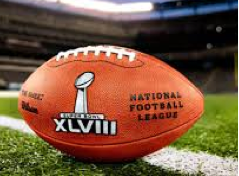
A few nights ago I dreamt I watched a transformed Super Bowl. It wasn’t the Broncos or the Seahawks who starred in my dream but the ads. Instead of promoting soda, beer, SUVs and candy, the ads urged viewers to reject appeals to enrich big corporations by consuming products associated with premature death and preventable illnesses and injuries.  


The opening ad showed two polar bears, one emaciated, one obese, wandering through a nightmare landscape where glaciers melted in the background and dark cactuses in the shape of classic Coke bottles blocked the bear’s path. “In my world,” said the scrawny bear, “we can’t find any food and we’re dying from hunger and the stress of food insecurity.”   “In my world,” the plump one replied, “we’re all coming down with diabetes from drinking too much Coke.  My left back paw may need to be amputated and my grandkids are so fat they can hardly move. How did we get here?”


The second ad was a TV version of a print ad run a few years ago by a group called Evangelical Environmental Network .   Targeted at Christian Super Bowl viewers, the ad asked “Would Jesus drive an SUV?”  The screen flashed statistics on the higher pollution levels of Ford Explorers, F-150s, Dodge Rams and other SUVs and light trucks, the rollover danger they posed to their drivers and passengers and the danger these massive vehicles posed to pedestrians, other drivers, and our carbon emissions.  “Be a steward for the future. Protect your children and protect the environment. Don’t buy SUVs, “the heavenly announcer urged.


“Do you think Big Alcohol will clean up your vomit or bail you out of jail after the fourth drink?” asked the third ad, showing images of a young woman throwing up in a toilet and a guy in handcuffs with a black eye after being arrested in a drunken brawl.  This ad was sponsored by Drink Truth, a new group that discourages binge drinking and promotion of alcohol to young people.  Drink Truth was using the lessons from the truth campaign, designed by the Legacy Foundation with tobacco settlement dollars. Truth appealed to rebellious teens to reject the tobacco industry’s efforts to profit at the expense of their health.  Scientific studies show that it contributed to more than 300,000 teens not starting to use tobacco.


This being the Super Bowl, there were another 47 minutes of ads—worth about $300 million in ad revenue to Fox — but mercifully my dream moved on to the half time show. The opener was Super Bowl favorite Beyoncé who began by apologizing to viewers and young people in general for accepting $50 million from Pepsi to promote their high sugar, salt and fat products that put her fans at risk of early death from diet-related diseases.  To atone for her avarice, she pledged to contribute $5 million and kick off a new campaign, Water Me Now, that will support schools, colleges and hospitals to replace their beverage vending machines with free water fountains.   Beyoncé then sang her new release Water Me Now Baby which extolled the virtues of free water for life, health and love.  In the Super Bowl show, Beyoncé swam, poured and went down a water slide in a super sized version of the Water Me Now water fountain that she planned to distribute.


To reach another demographic, the next star, also a Super Bowl alumna, was Madonna.  She apologized for her role in a Smirnoff ad campaign that encouraged young women to drink vodka, a campaign that public health experts believe contributed to rising rates of alcohol-related health problems among young women, a trend that threatens to bring equal opportunity for alcohol injuries and diseases to females, who had previously been at much lower risk than young men.  Madonna promised to contribute her dollars and talent to Drink Truth’s ad campaign.


Third up was Justin Beiber, ready to make amends for his recent drunk driving arrest.  With Beyoncé, the former Material Girl, Jay Z, LeBron James (the basketball star who has $42 million of endorsement contracts from Coca Cola, McDonald’s , Dunkin Donuts and others), Beiber  announced the celebs were creating Fans United for Restoring Democracy to urge young people across the country to mobilize for the 2014 Congressional elections to elect a Congress that will overturn the Citizens United decision, support meaningful campaign finance reform, and limit special interest lobbying.  “Until young people decide that politics matter,” said Beiber, “corporations are going to continue to undermine health, threaten democracy, and endanger our environment.  We who have benefited so much from the young people who support us feel we need to give back to ensure that our fans and their children have a safer, healthier and more democratic future.”


I woke up Sunday morning asking, Is another world possible? Can Hollywood and Madison Avenue apply their genius to making a better, healthier world better instead of enriching those who profit from illness?   By Monday morning, after watching Bob Dylan pitching polluting autos and cuddly puppies shilling Budweiser beer,  I realized that as long as big corporations dominate our economy and  politics, my Super Bowl dreaming is only a fantasy.  

Top Lessons from 50 Years of Fighting the Tobacco Industry

Cross-posted from The Guardian

credit
credit: Shahbaz Majeed

This month’s 50th anniversary of the First Surgeon General’s Report on Smoking and Health provides a bittersweet reminder of the promise and the limitations of public health activism to curb corporate promotion of behaviors and lifestyles associated with premature death and preventable illness and injury. In the half century since the report was released, the proportion of Americans who smoke has been cut in half. A new report in the Journal of the American Medical Association estimates that tobacco control efforts in the United States have prevented 8 million premature deaths and extended the average lifespan by on average almost 20 years of life for the people who did not take up smoking because of prevention campaigns, higher tobacco taxes or smoking bans. Overall, the success in reducing tobacco use has added 2.3 years to the life of the average American man and 1.6 years to the average American woman.


But this progress could have been achieved in far less time had not every preventive policy been opposed by the tobacco industry and had politicians beholden to the tobacco lobby severed these ties more quickly. These delays doomed many more to tobacco-related illnesses. And despite the progress in this country, the estimated toll from tobacco in this century is 1 billion premature deaths, more than 10 times the toll for the 20th century. The main reason so many more people will fall ill and die painful, early tobacco-related deaths is that the tobacco industry has adapted the lessons on marketing and undermining regulation that it learned in the United States to emerging markets in Asia, Africa and Latin America.


Sadly, the tobacco industry is not alone in contributing to America’s poor health standing among developed nations. In 2010, guns took the lives of 31,076 Americans in homicides, suicides and unintentional shootings, the equivalent of more than 85 deaths each day. Another 73,505 Americans were treated in hospital emergency departments for non-fatal gunshot wounds. While the scientific knowledge and technology to significantly reduce this toll are available, like the tobacco industry, the gun industry and its allies in the National Rifle Association have steadfastly blocked any progress to make guns less accessible or safer.


Similarly, the alcohol industry contributes to alcohol related injuries and illnesses by aggressive marketing, expanding the density of alcohol outlets, and designing products such as wine coolers and malt liquors to appeal to young drinkers. A recent study found that between 2001 and 2009, youth exposure to television alcohol advertising increased by 71%. Excess alcohol consumption accounts for about 4,700 annual deaths among underage drinkers. Another study estimated that the combined market value for the alcohol industry of illegal underage drinking and adult problem drinking accounted for between 37.5 and 48.8% of consumer expenditures for alcohol.


How has it come to pass that corporations now have a stronger influence on the health of Americans than public health officials, doctors or hospitals? How have corporations succeeded in convincing so many officials in the White House, Congress and the supreme court that protecting profits is a higher national priority than protecting public health?


In the last decades, a corporate consumption complex has solidified its influence on American politics and the economy. This web of consumer corporations, the bankers and hedge funds that lend them money, the trade associations that lobby for them, and the global ad agencies that market their products has been able to use its campaign contributions, lobbying and lawsuits to achieve its business goals even when the majority of Americans disagree with these. Like the military industrial complex that Dwight Eisenhower warned about before he left public office, the corporate consumption complex threatens our democracy as well as our health and environment.


Are there lessons from our partial successes in cutting tobacco use that could be applied to reducing the power of the corporate consumption complex and its brand of hyperconsumption? I suggest three.


1. Efforts to reduce tobacco use succeeded when Americans came to believe that the right to breathe clean air trumped the tobacco’s industry’s right to promote its products without public oversight. Today, we need to mobilize parents to demand our children’s right not to be shot and not to be targeted by marketing of fast food, sugary beverages and snacks that have contributed to a 176% increase in the prevalence of diabetes between 1980 and 2011.


2. Part of the success in reducing smoking came from forcing Big Tobacco to reimburse state governments for the costs of caring for people with tobacco-related illnesses. Enacting policies that would require processed food producers to reimburse taxpayers and victims of the diet-related diseases exacerbated by their promotion of high fat, sugar and salt diets and alcohol producers for those injured or killed by the binge drinking.


3. Fund independent hard-hitting prevention campaigns designed to undo the deceptive advertising Big Tobacco had sponsored. We can do the same thing by counterbalancing the media and ad campaigns today targeting young people to eat bad foods and glamorize guns.


In 1964, most observers thought it was politically impossible to defeat the tobacco industry and to bring about significant reductions in tobacco use. Today, changing the practices of the firearms, alcohol and processed food industries seems a similarly daunting task. But if we can apply the lessons from tobacco to accelerate changes in harmful business practices, perhaps we won’t need to wait another 50 years to prevent the deaths, illnesses, injuries and rising healthcare costs that today’s science could avert.


Post script:  219 Guardian readers commented on this column in the week since it was posted.  A review of these comments provides a good overview of public debates about individual and corporate responsibility –as well as the occasional nuttiness of online commentary.