Efforts to reduce underage exposure to alcohol advertising in Europe by implementing time restrictions have not worked, according to new research from the Center on Alcohol Marketing and Youth (CAMY) at the Johns Hopkins Bloomberg School of Public Health and the Dutch Institute for Alcohol Policy. The report, published in the Journal of Public Affairs, confirms what Dutch researchers had already learned in that country: time restrictions on alcohol advertising actually increase teen exposure, because companies move the advertising to late night.
The bribery aisle: How Wal-Mart got its way in Mexico
In its continuing investigation of the illegal practices of Wal-Mart corporation, the New York Times reports that “Wal-Mart de Mexico was not the reluctant victim of a corrupt culture that insisted on bribes as the cost of doing business. Nor did it pay bribes merely to speed up routine approvals. Rather, Wal-Mart de Mexico was an aggressive and creative corrupter, offering large payoffs to get what the law otherwise prohibited. It used bribes to subvert democratic governance — public votes, open debates, transparent procedures. It used bribes to circumvent regulatory safeguards that protect Mexican citizens from unsafe construction. It used bribes to outflank rivals.”
Beyoncé and Lebron James help Pepsi and Coke to promote obesity and diabetes
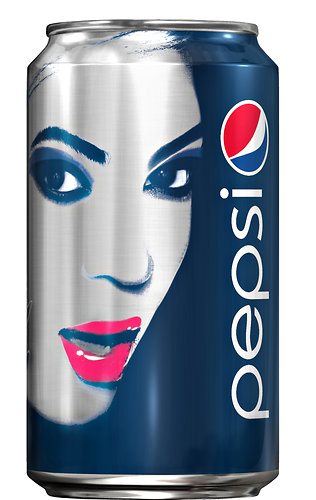
 Beyoncé, the pop star, and PepsiCo, the soda company, have signed a new deal to promote each other, reports the New York Times. The multiyear campaign, estimated to cost $50 million, will bring benefits to both parties. “Pepsi embraces creativity and understands that artists evolve,” explained Beyoncé. “As a businesswoman, this allows me to work with a lifestyle brand with no compromise and without sacrificing my creativity.”
For Pepsi, explains the Times, “the goal is to enhance its reputation with consumers by acting as something of an artistic patron instead of simply paying for celebrity endorsements.” “Consumers are seeking a much greater authenticity in marketing from the brands they love,” said Brad Jakeman, president of Pepsi’s global beverage group. “It’s caused a shift in the way we think about deals with artists, from a transactional deal to mutually beneficial collaboration.”
Unfortunately, not everyone benefits from such collaboration. While many factors have contributed to the rise in obesity and diabetes, no product has been more consistently implicated in the rise than the sugary beverages that are the lifeblood of Coke and Pepsi’s profits. In the first six months of 2012, the two companies spent $148 million to promote their products on TV, radio, print and digital ads, what’s known as measured media. They spent much more advertising in other countries around the world, nation’s whose obesity and diabetes rates are also rising.
Can public health advocates play a role in discouraging multimillionaire celebrities from sickening the fans that made them rich? (According to Celebrity Networth, Beyoncé’s 2012 net worth is $350 million.)

Abdul El-Sayed, a social epidemiologist and physician-in-training at the Columbia University School of Public Health, has an idea. In a recent post on the 2 X 2 Project, a blog of the Department of Epidemiology at Columbia University, he writes an open letter to Lebron James. James, the Miami Heat basketball star, has contracts with Coke and McDonalds. In his letter, El Sayed writes:
LeBron, your agreement to advertise Sprite for the Coca-Cola Company is worth $16 Million over six years. Let’s do a little math to estimate how much sugar you’ll sell to our kids over that period.
Assuming that Coca-Cola breaks even on the deal (which is at least what it will do), then you should make the company back at least $16 million over six years. Coca-Cola makes about 21 cents on the dollar over all the products it sells, and a 20-ounce Sprite costs $1.39 on average. If Coca-Cola makes the same profit on 20-ounce Sprites, that means that you’ll have sold at least the equivalent of 54.4 million 20-ounce Sprites over the course of your six-year contract. Now, each one of those 20-ounce Sprites has 16 spoons of sugar in it, so LeBron, you’re responsible for selling over a billion spoons of sugar. Not to mention all of the McDonald’s grease you’re selling.
Beyond the billion spoons of sugar and the millions of Big Macs you’ll sell, perhaps the worst impact of your endorsements is the confusion it creates in kids’ minds.
Children see you accomplish extraordinary athletic feats on the basketball court night in and night out. At the same time, though, they see you supporting products their parents and doctors tell them are unhealthy. As young, impressionable children, that creates confusion about what is and is not healthy for them. After all, kids must think, how can Sprite and McDonald’s be unhealthy if LeBron James, the pinnacle of sports, is telling me to buy them?
The open letter to James ends with a plea:
In the end, whether you like it or not, you are a role model in our society. Kids look up to you—many want to be just like you. While it may be unfair to expect that you weigh in on all of society’s problems, you do have particular weight when it comes to this one, which you represent—whether you like it or not—as an athlete. Don’t allow yourself to be used as a tool to confuse the messaging about what is and is not healthy for our kids.
LeBron, if you’re reading this, I know you know how to step it up and lead: I watched you do it in the finals against OKC, and I watched you do it again this summer in London. This is your opportunity to step it up in a bigger way. Be the leader we know you can be, and take a stand against endorsements for companies that are making our kids obese. Just like on the court, if you lead, others will follow.
El Sayed also asks readers to tweet the article @kingjames with #LebronForTheKids and to post it LeBron’s Facebook wall: https://www.facebook.com/LeBron
Supreme Court to consider ‘pay for delay’ deals keeping generic drugs off the market
The U.S. Supreme Court has agreed to decide whether so-called pay for delay settlements that temporarily keep generic competitors out of the market are lawful in patent litigation, reports the ABA Journal. In “pay for delay” cases, brand-name drug companies pay a would-be generic competitor to drop a challenge of the brand-name patent and to keep the generic version of the drug off the market for a specified time period. The FTC maintains that such arrangements cost consumers $3.5 billion a year.
Trans-Pacific Partnership and the slow-motion corporate coup
In Yes Magazine, Lori Wallach describes how a highly secretive trade agreement aims to penalize countries that protect workers, consumers, and the environment. However, she writes, the growing opposition goes beyond the usual trade justice suspects.
The takers: State and local governments subsidize corporations

In his campaign for President, Mitt Romney famously charged that 47% of the American population paid no federal income tax and “are dependent upon government, who believe that they are victims, who believe the government has a responsibility to care for them, who believe that they are entitled to health care, to food, to housing, to you-name-it.” A new investigation by the New York Times identifies another category of taker: the corporations who take more than $80 billion in subsidies each year from state and local governments. According to the Times, these governments award $9.1 million in corporate subsidies every hour. More than 5,000 companies have been awarded a total of more than $1 million each in local subsidies. Using the database of state and local government subsidies to corporations created by the New York Times, the table below shows 25 selected companies frequently mentioned in Corporations and Health Watch that received more than $1 million in subsidies. The largest recipient of local government subsidies was the automobile industry. The top three US car companies alone received $4.75 billion in local subsidies in the period reviewed by the New York Times. Most troubling, the Times investigation noted:
A portrait arises of mayors and governors who are desperate to create jobs, outmatched by multinational corporations and short on tools to fact-check what companies tell them. Many of the officials said they feared that companies would move jobs overseas if they did not get subsidies in the United States. Over the years, corporations have increasingly exploited that fear, creating a high-stakes bazaar where they pit local officials against one another to get the most lucrative packages. States compete with other states, cities compete with surrounding suburbs, and even small towns have entered the race with the goal of defeating their neighbors.
The Times further observed that for many communities, “the payouts add up to a substantial chunk of their overall spending… Oklahoma and West Virginia give up amounts equal to about one-third of their budgets, and Maine allocates nearly a fifth.” As national, state and local officials debate about how best to balance revenues and expenses, corporate subsidies deserve further scrutiny. CHW readers can visit the Times searchable database to examine their states’ record or the subsidies received by corporations they are tracking.
|
|
Name of Company |
Total Subsidy |
Number of Grants |
Number of States |
|
General Motors |
$1.77 billion |
208 |
16 |
|
|
Ford |
$1.58 billion |
119 |
8 |
|
|
Chrysler |
$1.4 billion |
14 |
3 |
|
|
Orca Bay Seafood |
$296 million |
4 |
1 |
|
|
Fresh Direct |
$131 million |
9 |
1 |
|
|
Archer Daniels Midland |
$110 million |
23 |
6 |
|
|
Daimler |
$101 million |
24 |
8 |
|
|
Toyota Motor Company |
$96.5 million |
16 |
5 |
|
|
Pfizer |
$92.9 million |
44 |
9 |
|
|
Walmart Stores |
$80.5 million |
176 |
23 |
|
|
Merck and Company |
$60.7 million |
18 |
5 |
|
|
Coca Cola Bottling |
$49 million |
61 |
16 |
|
|
Diageo |
$40 million |
7 |
2 |
|
|
Abbott Laboratories |
$14.7 million |
21 |
9 |
|
|
Pepsi Cola(various franchises) |
$13.3 million |
23 |
9 |
|
|
Jim Beam Brands |
$10.8 million |
7 |
1 |
|
|
Philip Morris USA |
$8.06 million |
5 |
2 |
|
|
Remington Arms Company |
$8.32 million |
13 |
3 |
|
|
Millercoors |
$7.46 |
7 |
4 |
|
|
Smith & Wesson |
$6.16 million |
9 |
1 |
|
|
Lorillard Tobacco Company |
$5.5 million |
2 |
1 |
|
|
Anheuser-Busch |
$4.62 million |
2 |
2 |
|
|
Cargill |
$4.4 million |
9 |
5 |
|
|
Reynolds Tobacco Company |
$3.09 million |
1 |
1 |
|
|
Pernod Ricard |
$1 million |
1 |
1 |
Health groups tell Nickelodeon to stop hawking junk food
A coalition of health groups is calling on Nickelodeon to stop airing commercials that promote unhealthy foods. The Hill reports that the groups urged the channel and its parent company, Viacom, to implement strong nutrition standards for the foods marketed on Nickelodeon and by its shows’ characters. SpongeBob SquarePants and Dora the Explorer should not be licensed to advertise foods like imitation fruit snacks or Popsicles, the American Academy of Pediatrics and others wrote. “Research shows that food marketing is an important factor contributing to children’s poor diets and obesity,” the letter stated. “The majority of foods marketed to children remain of poor nutritional quality. The [federal Institute of Medicine] concluded that marketing puts children’s health at risk.”
Federal judges rule that ban on off-label marketing violates freedom of speech
The New York Times reports that a federal appeals court threw out the conviction of a drug company sales representative who sold a drug for uses not approved by the Food and Drug Administration. In a case that could have broad ramifications for the pharmaceutical industry, a three-judge panel of the Court of Appeals for the Second Circuit in Manhattan ruled that the ban on so-called off-label marketing violated the representative’s freedom of speech. In recent years, drug companies have paid billions of dollars in penalties to the federal government after being accused of marketing blockbuster drugs for off-label uses.
Taxing for health

Taxing products that harm health has long been part of the public health’s armamentarium to reduce the impact of harmful corporate practices. As the global economic crisis continues and the austerity mentality feeds government hunger for new sources of support, politicians look for streams of revenue that can win public support. Recent media coverage of several political debates about taxes designed to promote health illustrate the potential and pitfalls of this strategy.
In France, the new socialist government has proposed a new tax on beer that would increase the price of a half pint of beer by six cents. According to the New York Times, the government offers a public health rationale for the beer tax. There has been an “excessive alcoholization, in particular of youth, with beer more than with wine,” said Jérôme Cahuzac, the budget minister. French beer taxes are among the lowest in the 27-state European Union, he noted, and the scheduled increase would leave them only the 10th highest, lower than in Britain, Spain and the Netherlands.
The Socialist government has also said it will increase the value-added tax, a type of consumption tax, in several sectors of the food industry, including restaurant meals, to 10 percent from 7 percent, partly reversing a reduction made by the previous center-right government. In addition, France’s social security budget, which is in the final stages of the legislative process, also includes heavier taxes on tobacco and new ones on energy drinks. Proposed new taxes total about $30 billion; the increase in the beer tax is expected to generate an additional $625 million.
Not surprisingly, bar owners oppose the new tax, fearing it will cut their business. Others complain that the tax increase is just on beer, not wine, an important sector of the national economy. One supporter of the bill, Even Gérard Bapt, a Socialist legislator, expressed the opinion that the “increase would have to be much more significant to have a real moderating effect on consumption.”
While the socialist government in France is proposing new consumption taxes, Danish lawmakers from the center-right party earlier this month have killed a controversial “fat tax” one year after its implementation, reports the Wall Street Journal. They acted after deciding its negative effect on the economy and the strain it has put on small businesses outweighed the health benefits.
The new tax led to increases of up to 9 percent on products such as butter, oil, sausage, cheese and cream. “What made consumers upset was probably that an extra tax was put on a natural ingredient,” Sinne Smed, a professor at the Institute of Food and Resource Economics in Copenhagen, told the Journal.
The fat tax brought an estimated $216 million in 2012 in new revenue. To make up for the lost revenue, Danish lawmakers will raise income taxes slightly and reduce personal tax deductions. The lawmakers also reversed an earlier decision to create a sugar tax. The fat tax was created in 2011 to address Denmark’s rising obesity rates and relatively low life expectancy. There is little evidence the tax impacted consumers financially, reports the Journal, but it did spark a shift in consumer habits. Many Danes have bought lower-cost alternatives, or in some cases hopped the border to Germany, where prices are roughly 20% lower, or to Sweden.
In a commentary in the New Scientist on the repeal of Denmark’s fat tax Marion Nestle, the New York University nutritionist, disputed the contention that Denmark’s decision was based on health:
Nobody likes taxes, and the fat tax was especially unpopular among Danish consumers, who resented having to pay more for butter, dairy products and meats – foods naturally high in fat. But the real reason for the repeal was to appease business interests. The ministry of taxation’s rationale was that the levy on fatty foods raised the costs of doing business, put Danish jobs at risk and drove customers to buy food in Sweden and Germany…. Governments must decide whether they want to bear the political consequences of putting health before business interests. The Danish government cast a clear vote for business. At some point, governments will need to find ways to make food firms responsible for the health problems their products cause. When they do, we are likely to see immediate improvements in food quality and health. Let’s hope this happens soon.

Another approach to public health taxes has been suggested by outgoing Ohio Congressman Dennis Kucinich. He has proposed a bill HR 4310 End The Childhood Obesity Subsidy Act that would prohibit any company from claiming a tax deduction for the expense of marketing that is directed at children “to promote the consumption of food at fast food restaurants or of food of poor nutritional quality.” In a November press release and video, Kucinich argues:
According to the Institute of Medicine, ‘Aggressive marketing of high-calorie foods to children and adolescents has been identified as one of the major contributors to childhood obesity.’ We can end this tax break, improve our kids’ health and reduce our nation’s debt all at the same time. It’s time to stop subsidizing the childhood obesity epidemic.
Under current law, the federal tax code allows companies to deduct “reasonable and necessary” expenses of marketing and advertising from their income taxes. Fast food marketers get the same break that other businesses do.
So what do these three recent stories from different parts of the world tell us about the use of taxation to promote health and end harmful corporate practices?
First, taxes on products that harm health will always generate intense opposition from a variety of business interests, from local retailers to the world’s largest corporations. Advocates who propose such taxes better expect such opposition and be ready to counter it.
Second, finding the balance between a level of taxation that will actually discourage use and one that is politically feasible in a particular context requires scientific analysis of the available literature and political analysis of the opportunities and constraints. A May 2012 review in the British Medical Journal concluded that
Taxes on unhealthy food and drinks would need to be at least 20% to have a significant effect on diet-related conditions such as obesity and heart disease. Ideally, this should be combined with subsidies on healthy foods such as fruit and vegetables, they add.
Advocates need to assess the potential for achieving health goals with a proposed tax and consider the pros and cons of a variety of alternative strategies before deciding to pursue the tax route.
Finally, as Kucinich’s proposal suggests, changing the tax code to promote health is not limited to taxes that lead to direct increases in consumer prices. Dozens of corporate subsidies enable low prices for unhealthy products and supporting changes in taxation that limit these subsidies may offer promoting political opportunities for discouraging harmful corporate practices. Given the key role that marketing plays in promoting unhealthy behaviors, environments and lifestyles, a closer analysis of tax subsidies for advertising that harms health seems warranted.
The alcohol industry’s plan to give America a giant drinking problem
Why has the United States, so similar to Great Britain in everything from language to pop culture trends, managed to avoid the huge spike of alcohol abuse that has gripped the UK? Tim Heffernan asks in the Washington Monthly. The reasons are many, he writes, but one stands out above all: the market in Great Britain is rigged to foster excessive alcohol consumption in ways it is not in the United States—at least not yet. By deliberately hindering economies of scale and protecting middlemen in the booze business, America’s system of regulation was designed to be willfully inefficient, thereby making the cost of producing, distributing, and retailing alcohol higher than it would otherwise be and checking the political power of the industry.
 Corporations and Health Watch