Is the New York Post now an arm of the alcohol lobby?

Cross posted from Appetite for Profit 


 Alcohol policy doesn’t get nearly as much attention as it should. Federal estimates are that excessive alcohol consumption costs us $223 billion a year, not to mention the 79,000 deaths nationally. And yet on the rare occasion a political leader tries to even talk about the need to stem the tide of alcohol-related harm, all hell can break loose. This is true especially in New York, where the governor can be found hosting summits pledging to help promote beer and wine produced in the state. No wonder that New York State, at a mere 30 cents per gallon, has one of the lowest rates of wine excise taxes in the nation and at only 14 cents a gallon, one of the lowest on beer.


So when the New York Health State Department of Health recently released its “prevention agenda” for the next five years, perhaps it should come as no surprise that politics once again trumped public health. And yet, the way it happened is still shameful and alarming.


The action plan, written by a committee of health professionals, is intended to “serve as the blueprint for state and local community action to improve the health of New Yorkers and address health disparities.” In the draft version released in November, in the section to “promote mental health and prevent substance abuse” was the following language (page 10):

Increase evidence-based environmental strategies that prevent and reduce underage drinking, such as:

  • Increase taxation on alcohol sales.
  • Decrease alcohol outlet density.
  • Increase motor vehicle sobriety checkpoints.
  • Alcohol outlet compliance checks; alcohol outlet server/seller training.

Nothing too radical here: just a few policy ideas stemming from decades of scientific research on the most effective ways to reduce alcohol harm.


Enter the New York Post. In an alarmist December 3 article, Carl Campanile wrote:

Critics are furious with the proposals, which they said are another example of health zealots run amok. “It’s one gigantic nanny state we’re dealing with here,” fumed New York Conservative Party Chairman Mike Long, a former Brooklyn liquor-store owner.


The very next day, the Post ran a celebratory article taking credit for how Governor Cuomo “shot down” the state health department’s proposals. “The governor doesn’t support raising this tax, or the other measures,” state Health Department spokesman Bill Schwarz told the Post, which also boasted:

The rejection from Cuomo’s office came hours after The Post reported the state Public Health and Health Planning Council was pushing the proposal in its five-year “Prevention Agenda” for 2013-2017. But state Health Commissioner Dr. Nirav Shah will request that the anti-booze provisions be dropped from the plan in a vote Thursday because they are “contrary” to Cuomo’s position.


Sure enough, the health commissioner played the good soldier and caved to his boss’s political will. In the final version of the document released this month is this more vague and tepid language (p. 11):

Consider evidence based strategies to reduce underage drinking such as those promulgated by the U.S. Surgeon General and the Centers for Disease Control and Prevention.


To recap: A panel of independent health professionals made scientifically-sound policy recommendations in a planning document only meant to guide local decision-making, not even close to being an actual policy agenda. A local rag got wind of it, blew it out of proportion, got the governor’s office to place a phone call to the health commissioner, who in turn, scrubbed the document.


And this isn’t the first time the Rupert Murdoch-owned Post has influenced alcohol-related public health. Last January, the same “reporter” Carl Campanile wrote this incendiary article about alcohol policy in New York City, where Mayor Bloomberg is a constant butt of jokes over his willingness to put public health over profits. Same outrage, same result. The city quickly backed off its alcohol prevention agenda.


So the question is when did the New York Post become a de facto arm of the alcohol lobby?


Nicholas Freudenberg is Distinguished Professor of Urban Public Health at Hunter College, City University of New York. He told me this episode is “an ominous reminder of how often profit trumps health.” He added:

That a Governor with political ambitions thinks it’s more important to placate the alcohol industry than take action to reduce a leading cause of premature death and preventable illness and injury is disturbing. That a health commissioner accepts this policy interference is equally disappointing.


No wonder we can’t get anywhere on alcohol policy in New York, or anywhere else for that matter.

Youth drinking cultures, social networking, and alcohol marketing: Implications for public health

In a study of how new social networking technologies influence alcohol marketing to youth published in Critical Public Health,  Tim McCreaner at the Massey University School of Public Health in Auckland New Zealand and colleagues conclude that social networking systems contribute to pro-alcohol environments and encourage drinking.

Corporations need penalties that hurt

In the Los Angeles Times, Michael Hiltzik writes, “If you’re concerned about corporate crime, 2012 looked like a pretty successful year for the good guys.” The Thousand Oaks biotech giant Amgen paid $762 million in fines and penalties and pleaded guilty to a federal charge related to illegal marketing of its anemia drug Aranesp. Britain’s GlaxoSmithKline and Illinois-based Abbott Laboratories paid $3 billion and $1.5 billion in government penalties, respectively, in connection with their off-label promotions of blockbuster drugs. Glaxo’s was the biggest drug company settlement in history.  To the companies, however, these big numbers are just chump change.

YouTube conversations on corporations and health in 2012


Corporations and Health Watch readers often ask for suggestions for new materials for teaching or speaking in public about the impact of corporations on health.  To meet this request, I suggest a few selections that have been posted in the last year. 


Dr. Marcia Angell, senior lecturer of Harvard Medical School’s Department of Social Medicine and former editor-in-chief of the New England Journal of Medicine, answers that question and more in this installment of the President’s Lecture Series at The University of Montana. This presentation, “The Truth About the Drug Companies”. 

Posted on August 17, 2012: 78 minutes


Dr. Yoni Freedhoff at the University of Ottawa was invited by the food industry to give this talk at an industry breakfast, but, he writes “3 days prior to the event they got cold feet and dis-invited me. The good news is, the internet’s a much larger audience than a room full of food industry folks who likely wouldn’t have cared much about what I had to say in the first place. So here’s my take on what the food industry can do, why they’re not going to do it, and what we can do about it.”       

Posted on December 10, 2012: 13 minutes


Dr.  David Hemenway of Harvard Public Health Institute present facts that show that MORE GUNS = MORE HOMICIDES. After MSNBC Right Wing TV Host of the Cycle read some statistics supporting more guns in America, she was silenced by some startling facts from a real study done nationwide.

Posted December 19, 2012: 4 minutes


Michael Kang , a law professor at Emory University discusses the lasting impact of Citizens United v. Federal Election Commission, the landmark United States Supreme Court case, including what was missed in the original outrage over the decision and where we might see campaign finance reform in the future.

Posted September 13, 2012: 2 minutes


Dr. David Jernigan , Director of the Center on Alcohol Marketing to Youth at Johns Hopkins University delivers a presentation on alcohol marketing as a risk factor for underage drinking during CDC’s Public Health Grand Rounds.

Posted on April 4, 2012: 9 minutes


Bill Moyers interviews Naomi Klein, author of the international bestseller The Shock Doctrine. Klein says says the tragic destruction of Hurricane Sandy can also be the catalyst for the transformation of politics and our economy. She’s been in New York visiting the devastated areas — including those where “Occupy Sandy” volunteers are unfolding new models of relief — as part of her reporting for a new book and film on climate change and the future, discuss hurricanes, climate change, and democracy. “Let’s rebuild by actually getting at the root causes. Let’s respond by aiming for an economy that responds to the crisis both [through] inequality and climate change,” Klein tells Bill. “You know, dream big.”

Posted Nov 17, 2012: 32 minutes


Michele Simon, Attorney and Author of Appetite for Profit–How the Food Industry Undermines Our Health  talks with us about the tens of billions of dollars worth of lobbying, misinformation, fraudulent press releases, misinformation, and massive advertising campaigns used to influence your food choices, as well as agricultural subsidies, the FDA, corporate deregulation, food safety issues, experimental food technologies, obesity, and children (and now that the Supreme Court has made it legal to influence elections), the government itself.

Posted March 12, 2012: 15 minutes

Energy drinks promise edge, but experts say proof Is scant

Energy drinks are the fastest-growing part of the beverage industry, reports the New York Times, with sales in the United States reaching more than $10 billion in 2012 — more than Americans spent on iced tea, or sports beverages like Gatorade. The drinks are now under scrutiny by the Food and Drug Administration after reports of deaths and serious injuries that may be linked to their high caffeine content. However that review ends, one thing is clear, interviews with researchers and a review of scientific studies show: the energy-drink industry is based on a brew of ingredients that, apart from caffeine, have little, if any benefit for consumers.

Toyota in $1.1 billion gas-pedal settlement

Toyota Motor Corporation agreed to pay about $1.1 billion to settle a class-action lawsuit stemming from complaints of unintended acceleration in its vehicles that soured its reputation for quality and undermined its sales globally, reports the Wall Street Journal.  Owners of some 16 million Toyota, Lexus and Scion vehicles would be eligible for payments and safety updates that would vary depending on their vehicle and its age.

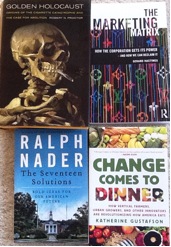
Books on Corporations and Health from 2012

Need one more late holiday gift for a fellow investigator of corporations and health? Looking for something to read yourself on those long dark January nights?  Need some sobering books to relieve too much holiday good cheer and rampant consumerism? This year brought a spate of new books examining the impact of corporations on health.  Here are ten that caught my eye over the last year. 


Paul M. Barrett. Glock: The Rise of America’s Gun.  Crown.                         

The story of the company that makes America’s gun, the favorite of cops and serial killers. 


Sharon Y. Eubanks, Stanton A. Glantz. Bad Acts: The Racketeering Case Against the Tobacco Industry.  American Public Health Association.

The inside story of the legal and political battles against tobacco corporations by Sharon Eubanks,  the lead counsel for the United States in the largest civil Racketeer Influenced and Corrupt Organizations (RICO) enforcement action ever filed, United States v. Philip Morris, et al.,  and veteran tobacco researchers Stanton Glantz. 


Jeremy A. Greene, Elizabeth Siegel Watkins. (Editors) Prescribed: Writing, Filling, Using, and Abusing the Prescription in Modern America.  Johns Hopkins University Press.  

In this edited collection, ten historians examine the role of prescription drugs in the last half of the twentieth century and analyze how drug companies, physicians and patients use and abuse prescription drugs.   


Katherine Gustafson.  Change Comes to Dinner How Vertical Farmers, Urban Growers, and Other Innovators Are Revolutionizing How America Eats.  St Martin’s Griffin.    

The author searches for alternatives to the corporate-driven food system and describes some promising local initiatives.   


Gerard Hastings.  The Marketing Matrix: How the Corporation Gets Its Power – And How We Can Reclaim It.  Routledge.                                                    

A UK marketing professor argues that we live in the simulated world created by the Marketing Matrix and suggests how we might escape its power. 


Martin Lindstrom.  Brandwashed: Tricks Companies Use to Manipulate Our Minds and Persuade Us to Buy.  Kogan Page.                                                     

A marketing insider reveals the strategies advertisers use to persuade us to buy their products.


Robert Proctor.  Golden Holocaust: Origins of the Cigarette Catastrophe and the Case for Abolition.  University of California Press.                                  

Stanford historian presents a history of the tobacco industry in the twentieth century and makes the case for a ban on the manufacture and sale of cigarettes.


Ralph Nader.  The Seventeen Solutions Bold Ideas for Our American Future.  Harper. 

The founder of the modern consumer movement describes the problems America faces and offers seventeen solutions, several focused on changing corporations. 


David Stuckler and Karen Siegel. (Editors and Authors). Sick Societies: Responding to the global challenge of chronic disease Oxford University Press.

This edited collection synthesizes the evidence on the rise of chronic diseases and assesses the role of government, business, and corporations in the etiology and prevention of chronic disease. 


Bill Vlasic. Once Upon a Car: The Fall and Resurrection of America’s Big Three Automakers–GM, Ford, and Chrysler. William Morrow.                                    

An account of the collapse and government-supported resurrection of the domestic auto industry by the Detroit bureau chief for the New York Times. 

Toyota to pay record $17.35 million fine for delaying recall

For the fourth time, Toyota has agreed to pay a fine to settle allegations by the National Highway Traffic Safety Administration that the automaker delayed a safety recall, reports The New York Times.  In a news release, the safety agency said Toyota would pay $17.35 million, the maximum allowed by law. Toyota did not admit any wrongdoing and said it was paying the fine to avoid a continued dispute with the safety agency. The automaker said the same thing when agreeing to pay the three previous fines, which totaled $48.8 million.

Gun makers, video game industry and NRA partner to promote fun and guns to children

In recent years, reports The New York Times, the firearms and video game industries have quietly forged a mutually beneficial marketing relationship. The McMillan Group, the maker of a high-powered sniper’s rifle, and Magpul, which sells high-capacity magazines and other accessories for assault-style weapons are listed as partners of the Electronic Arts, a maker of video games. Assault-style rifles made by Bushmaster Firearms have a roster of credits on various video games. Many of the same producers of firearms and related equipment are also financial backers of the N.R.A. For example, Glock, Browning and Remington are listed as corporate sponsors of the NRA.

Newtown massacre as a public health failure—and opportunity


27 Glocks and Sig Sauers

While the nation grapples with how 27 lives were lost in small-town America last Friday, the bigger question is, how are so many lives lost all year around in cities big and small? The public health profession – whose primary aim is prevention – is at least partly to blame for the nation’s failure to address gun violence.


While conventional medicine treats patients with problems such as lung cancer and gunshot wounds, public health professionals instead focus on the related behaviors, aiming to prevent people, for example, from smoking or drinking too much. Similarly, when it comes America’s gun problem, public health speaks of “violence prevention” or the even more sterile “injury control.”


However, each of these approaches fails to address the underlying factor driving the negative behaviors: massive industries that manufacture and market the products of destruction, whether it’s tobacco, alcohol, or in this case, guns.


Of course it’s not just the market for deadly product these industries create; it’s also the powerful lobbyists that hold our political system hostage to reform. The public health profession has failed miserably in the political arena due to its collective unwillingness to identify and oppose harmful corporate lobbying.


While much has been said about how the National Rifle Association intimidates politicians, this is no excuse for inaction by the public health field. (Some also argue the NRA’s political influence is exaggerated.) Now more than ever public health professionals working in violence prevention need to speak out about the role the firearms industry in destroying lives forever. They need to step out of their academic ivory towers and government offices to tell the truth about how the manufacture, sale, and marketing of guns contribute to our “culture of violence.”


Fortunately, there is no lack of effective policies available to reduce gun violence and the influence of the gun’s industries harmful practices. For example:


1. Taxes on bullets, a strategy designed to make ammunition more expensive and to bypass current interpretations of the Second Amendment;

2. Mandatory trigger locks, in which only the legal owner of the gun can fire the weapon, often using finger print technology, and other such built-in safety devices;

3. Bans on assault weapons and other military style firearms, which have proven helpful in other nations;

4. Stricter enforcement of systems for registration of those banned from owning firearms including those with felony convictions, serious mental illness, and histories of domestic violence and extension of this background check system to gun shows;

5.  Legal liability for gun companies for the consequences of unscrupulous retail distribution practices which make it easy for purchasers to bypass registration system;

6.  Rescinding recent laws that allow people to carry concealed weapons to churches, universities, national parks and other settings;

7.  Licensing systems that would require gun owners, like car owners, to obtain a license to operate a firearm and require periodic re-licensing;

8.  Stricter standards for the manufacture of firearms, now one of the least regulated products on the market;

9. Adequate funding for enforcement of the above measures at local, state and federal levels;

10. An end to the ban on federal funding for research on gun violence, which muzzles public health research, depriving society and policymakers the evidence needed to make informed policy decisions.


No one of these actions alone will end the gun carnage that makes us an outlier among developed nations. But, as we have learned with tobacco, a wide array of evidence-based public health interventions, designed to counter the power of an industry that profits from lethal but legal products can, over time, reduce premature deaths and preventable harm.


What can public health professionals do now to support and amplify public pressure for action to protect the public against the harmful practices of the fire arms industry and its supporters? First, we can educate ourselves. Just as thousands of public health researchers and professionals can now discuss the science and politics of the tobacco industry efforts to undermine health, we need a similar effort to educate the public about the gun industry. The resources below are a few places to start.


Second, we need to take on the collective gun lobby: the National Rifle Association, the National Shooting Sports Foundation, and the gun companies. Like the climate deniers, these groups seek to obfuscate the science about gun control, discredit effective public health measures and stoke fears. In a recent commentary the journalist Bill Moyers called the NRA “the enabler of death—paranoid, delusional and venomous as a scorpion.” This report, Blood Money: How the Gun Industry Bankrolls the NRA examines the close relationship between industry and the NRA. 


Third, we need to mobilize support for specific legislative proposals. It’s not enough to just have the date and educate, we also need to act. The public health profession is great at collecting data and publishing articles, but miserable at taking political action. This requires a fundamental shift in both allocation of resources and in attitude.


Of course, many other important public health measures can also help reduce gun violence such as better prevention and treatment of mental illness and efforts to reduce violent media and violence of all kinds. But what makes the United States stand out is our unwillingness to put the safety of our people ahead of the economic interests of the gun industry. Let’s make sure that the unfortunate window the Newtown massacre has opened doesn’t close before another town has to bury its children.


Books on Gun Violence

  • Barrett PM. Glock: The Rise of America’s Gun.  New York, NY: Crown; 2012.
  • Spitzer RJ. The Politics of Gun Control, 5th Edition, Paradigm, 2011
  • Hemenway D. Private Guns, Public Health.  Ann Arbor, MI: University of Michigan Press; 2004.
  • Diaz T. Making a Killing: The Business of Guns in America. New York, NY: New Press; 1999.

Organizations and Campaigns Challenging Industry Practices

Violence Policy Center
The Brady Center to Prevent Gun Violence
Coalition to Stop Gun Violence
Where Did the Gun Come From?
Harvard Injury Control Research Center
Means Matter Suicide, Guns, and Public Health
Stop Handgun Violence