Not your grandfather’s cigar

A new generation of cheap and sweet cigars threatens a new generation of kids

This is the EXECUTIVE SUMMARY of a report released by the Campaign for Tobacco Free Kids.  The full report can be accessed here.


Credit
Credit: Campaign for Tobacco Free Kids

An explosion of cheap, flavored cigars in recent years has driven a two-fold increase in annual sales of cigars in the United States – from 6 billion cigars to more than 13 billion in the last 12 years – and changed the demographics of cigar smoking. Cheap, flavored, small cigars that appeal to young people are marketed aggressively and have resulted in high school kids and young adults being twice as likely as their older counterparts to be cigar smokers. These trends come at a time when some in Congress want to prohibit the Food and Drug Administration (FDA) from regulating certain kinds of cigars rather than pushing it to do so. A 2009 federal law, the Family Smoking Prevention and Tobacco Control Act (the Tobacco Control Act), gave the FDA immediate authority to regulate cigarettes, smokeless tobacco, and roll-your-own tobacco, and authorized the agency to extend its jurisdiction to all other tobacco products, including cigars. The FDA has announced its intention to do so, but has yet to act.


In the absence of FDA regulation of cigars, cigarette manufacturers have manipulated some cigarette brands to qualify as small or even large cigars. By doing so, they have evaded a ban on flavored cigarettes and other regulations intended to prevent kids from using tobacco products and protect public health. In addition, to avoid higher federal taxes and keep their products cheap, some cigarette and small cigar manufacturers have manipulated the weight of their products to qualify for lower tax rates charged on large cigars. Both actions make these manipulated products more appealing and more affordable to our nation’s kids.  This report documents how the proliferation of new cigar products and their marketing has changed the market in ways that threaten our kids and establishes the need for common-sense regulation of cigars. It also explains how tobacco tax policy should be reformed to help prevent kids from falling prey to the lure of cheap, sweet cigars.


The Cigar Landscape


  • Cigars today are no longer the “big stogies” that our grandfathers used to smoke. Instead, the cigar category consists of products that vary widely in sizes, shapes, flavors, and price points, making them appealing to a broader audience, including kids.
  • The common terms used to describe today’s products – “premium cigars,” “cigarillos,” “blunts,” and “little” or “small cigars” – are not mutually exclusive because there is a lot of overlap in the characteristics of different products that allow some to fall in multiple, or in between, categories
  • Annual cigar sales have more than doubled in the past decade. This has been driven by a dramatic increase in the number and types of small cigar products that are flavored, packaged, placed, promoted, and priced to appeal to young people.
  • High school students are about twice as likely (13.1 percent v. 6.6 percent) as adults to report smoking a cigar in the past month, and young adults (18-24 year olds) are even more likely (15.9 percent) to do so. Every state that reports cigar use data for youth shows a higher cigar smoking rate for high school kids than for adults.
  • Each day, about 3,050 kids under age 18 try cigar smoking for the first time – compared to about 3,650 who try cigarettes. In at least six states – Florida, Georgia, Maryland, Massachusetts, Rhode Island, and Wisconsin – youth cigar smoking now equals or surpasses cigarette smoking.
  • Flavored cigars are the most popular among youth and young adults. One state survey showed that nearly three-fourths of its high school cigar smokers smoked flavored cigars.
  • Today’s cigar market is dominated not by large, traditional cigars hand-rolled in whole tobacco leaf, but by an ever-expanding variety of products of all sizes that include filters, flavors and names (e.g. “Da Bomb Blueberry,” “Pinkberry”) with obvious appeal to kids.
  • The most popular cigar brands among youth come in a dizzying array of candy and fruit flavors that underscore how different these products are from your grandfather’s cigar. Swisher Sweets flavors include peach, strawberry, chocolate, grape, and blueberry. White Owl flavors include grape, strawberry, wild apple, pineapple, peach, and watermelon.
  • A lack of regulation of cigars by the FDA enables manufacturers to modify cigarettes to evade the ban on flavored cigarettes and to aggressively market cheap, sweet cigar products that appeal to youth. In addition to being flavored and packaged attractively, they are displayed prominently and sold cheaply.
  • Between 2001 and 2008, the sale of cigars increased by 87 percent. However, that was driven almost entirely by the sale of small cigars, which increased by 158 percent, while large cigar sales increased by only 46 percent.
  • Cigar sales continued to increase between 2008 and 2011. While technically this appears to be driven by an increase in sales of cigars classified as “large,” in actuality it was because small cigar makers slightly increased the weight of their products to meet the definition of large cigars and avoid a higher federal tax on small cigars implemented in 2009 (these “large cigars” continue to be of similar size and shape as cigarettes). Other data sources show that sales of so-called premium large cigars actually declined during this time period.


Health Harms from Cigars


  • According to the National Cancer Institute and the U.S. Surgeon General, regular cigar smoking causes cancer, heart disease, and chronic obstructive pulmonary disease (COPD).
  • Cigar smoke contains the same toxins as cigarette smoke. Any difference in risks between cigars and cigarettes is likely attributable to differences in frequency of use and the fact that not all cigar smokers inhale. However, many new cigar products are more like cigarettes and therefore are more easily smoked and inhaled like cigarettes.
  • Cheap, sweet cigars can serve as an entry product for kids to a lifetime of smoking.


Manipulation to Avoid Regulation and Taxation


  • In recent years, tobacco companies have manipulated their products to avoid regulation and taxation. Federal and state laws distinguish between cigarettes and cigars based on the composition of the wrapper and the weight of the product, while the distinction between small and large cigars is determined by weight.
  • To circumvent the FDA’s ban on fruit- and candy-flavored cigarettes that appealed to kids, some cigarette makers have added tobacco to the wrapper and weight to their products so they meet the definition of small or large cigars, despite still being sold in packs of 20 like cigarettes. These products come in various flavors including wild berry, “Pinkberry,” and lemonade.
  • In addition to avoiding the ban on flavorings, these manipulated cigarettes have also escaped other FDA regulations, including a ban on deceptive terms like “light” and “low-tar” and a requirement that cigarettes be kept behind the counter and out of reach of kids.
  • Some small cigars and cigarettes have added weight to their products to meet the legal definition of large cigars. As a result, they not only avoid the flavor ban, but are taxed at a lower rate. Some of these “large cigars” are still sold with 20 in a pack and with prices as low as 88 cents per pack.


The Need for Regulation of Cigars


  • The Tobacco Control Act gave the FDA’s Center for Tobacco Products the authority to regulate all tobacco products. It gave immediate jurisdiction to the Center to regulate cigarettes, smokeless tobacco, and roll-your-own (RYO) cigarette tobacco and established specific regulations for each (e.g., bans on flavored cigarettes and deceptive terms like “light” and “low-tar”).
  • The Tobacco Control Act also gave the FDA the authority to assert its jurisdiction over all tobacco products through a rule-making process. The FDA has announced its intention to regulate all tobacco products, but has yet to take action to do so.
  • The law gives the FDA flexibility to determine what specific regulations to apply to each type of tobacco product. The FDA would not be required to impose the same regulations over cigars as cigarettes or to regulate all types of cigars in the same way. The agency would base its regulations on what is necessary to best protect the public health, taking into account the harms caused by different products, who uses the products, how the products are marketed, and other evidence-based criteria.
  • Given their success in marketing their products to kids and young adults, it is not surprising that some in the cigar industry are aggressively pressuring Congress to exempt them from any regulation by the FDA. No tobacco product should be exempt from regulation. The FDA should be able to take actions to protect children and consumers from the harms caused by every tobacco product. Consumers should be informed about the contents and health consequences of all tobacco products, and the FDA should be able to prevent practices that appeal to kids, mislead consumers, and/or increase the addictiveness or harm of tobacco use.
  • While supporters say these bills would exempt only so-called premium large cigars, their definitions could exempt some machine-made cigars from FDA oversight and would not prohibit flavored cigars from qualifying for an exemption. The bill also would create incentives for tobacco companies to further manipulate their products to escape regulation, as they have done in the past.

New Access to Nutrition Index rates food companies

The first edition of the global Access to Nutrition Index (ATNI) report and rankings was released recently, reports Triple Pundit.  The good news is that finally we have the metrics to evaluate how these companies address challenging nutritional issues, the bad news is that most of them perform quite poorly. When almost all of the top 10 pupils in your class get an F grade, it’s usually due to one of two causes – either the test you gave is not fair, or there’s something very wrong with this class. Read more to find the answer in this case.

Second chance for governments to make history and agree to an Arms Trade Treaty

Cross posted from Oxfam


3.20


“Seeing young boys carrying AK-47’s, and young girls with their babies in one arm and a gun in the other was a frightening sight.”

Djimon Hounsou

Actor and Oxfam ambassador


Governments from over 190 member states have a second chance to make history this month by agreeing the first ever Arms Trade Treaty, a coalition of NGOs and human rights groups said.


Diplomats are meeting in New York for two weeks of negotiations at the United Nations, to agree an Arms Trade Treaty, which will control the international supply of arms and ammunition.


The Control Arms coalition, supported by Academy Award nominee Djimon Hounsou, urged diplomats to use the time effectively to close the massive loopholes in the current draft text and agree a treaty that will truly save lives.


In July 2012, member states were unable to reach agreement on the ATT after a number of countries including the US and Russia requested more time in the final hours of negotiations. Since July, there have been indications that some of those major exporters are more open to agreeing a treaty this time around.


Bring the arms trade under control


“It’s ‘crunch time’ in New York this week. The negotiations must successfully deliver a strong treaty text as the world can wait no longer for a global treaty to bring the arms trade under control. Too many unscrupulous regimes, militias, arms dealers and criminals can easily get their hands on dangerous weapons. Too many innocent civilians including teachers, doctors or children die as a result of the current situation. It’s now time to put an end to this and agree on robust and clear rules that will bring the trade of M16s, AK47s, attack helicopters and countless rounds of ammunition under control,” said Anna Macdonald, Oxfam’s Head of Arms Control.


“Seeing young boys carrying AK-47’s, and young girls with their babies in one arm and a gun in the other was a frightening sight, like something out of a Hollywood movie, but for me it was a painful reminder of what I myself could’ve become,” said Djimon Hounsou, Actor and Oxfam ambassador. “But it’s apparent that the people of South Sudan long for peace with both their brothers to the north and within their own borders.”


“It doesn’t solve every problem, but a strong Arms Trade Treaty on weapons and ammunition is not something we can question. It is something we must act upon; today,” continued Hounsou.


The Control Arms coalition said that the draft text from July 2012 contains many of the basic elements needed to better regulate the global arms trade. However, the campaigners say the text also includes a number of weaknesses which threaten to fatally undermine the treaty’s overall effectiveness.


Several weaknesses and loopholes


In its current form, Control Arms believes, the treaty does little to increase responsibility and restraint in the global arms trade. One major concern is that ammunition, a deadly trade worth more than $US4 billion annually, is covered by weaker provisions than other types of weapons.


“We cannot have a treaty that regulates the trade in arms but excludes one of the main causes of death: the bullets. Some conflicts in Africa have been prolonged because of the ability of combatants to reload. We need to regulate how ammunitions are transferred from the production line, to the end destination,” said Geoffrey Duke, National Coordinator of the South Sudan Action Network on Small Arms (SSANSA).


Another clause could exempt weapons transfers from the treaty if they are labeled as being part of a “national defence cooperation agreement”. This clause, introduced by India, would mean that transfers made under existing defence contracts, between Russia and Syria for example, would be allowed to stay outside of the jurisdiction of a future treaty.


Control Arms is also worried that the criteria that set out whether or not an arms transfer is permissible are too weak and contain loopholes that could allow some irresponsible deals to continue to slip through the net.


“These ‘escape clauses’ have been pushed by a vocal minority of states. They want a Swiss cheese Treaty, full of holes to continue their deadly trade with impunity. The majority of governments who are craving for a safer world must speak out and get the most robust ATT agreed in two weeks’ time,“ said Allison Pytlak, Campaign Manager at Control Arms.


Oxfam has also recently published a report Getting it Right: The pieces that matter for the Arms Trade Treaty

Spending on drugs slows due to increased use of generics but new price increases loom

Spending on prescription drugs nationwide has been slowing for years, reports the New York Times, because of the increasingly widespread use of low-cost generics. But in 2012, something unheard-of happened: money spent on prescription drugs actually dropped. But some are warning that the ever-expanding use of generics has masked a growing problem for the government, insurers and others who pay the bill for prescription drugs: the rising cost of complex specialty medicines that treat cancer, rheumatoid arthritis and other diseases.

Access to Nutrition Index: Corporate responsibility or opening markets?

A new initiative launched today called Access to Nutrition Index – sponsored by the Global Alliance for Improved Nutrition (GAIN) (1) and the Gates Foundation has been slammed by critics as a whitewash. GAIN is a new type of public private entity which claims to work to tackle malnutrition – but Patti Rundall, Co-Chair of the International Baby Food Action Network, says its work seems to focus on opening up markets for its 600 partner companies (including Danone, the world’s second largest baby food company, Mars, Pepsi, and Coca Cola).

A vicious circle: Declining sales lead gun and sugary beverage corporations to hypermarketing and hyperlobbying

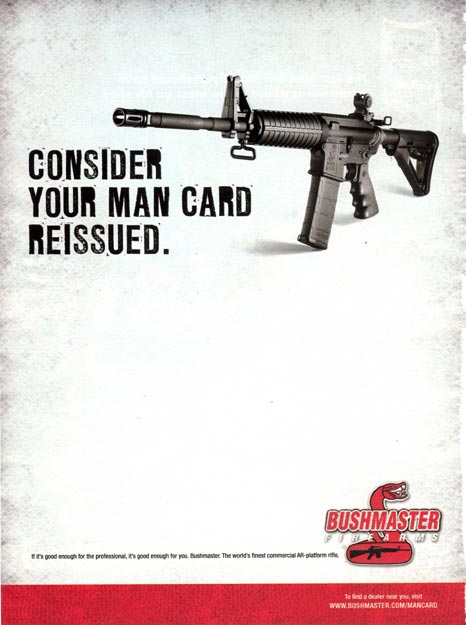
An ad for Bushmaster, Credit
An ad for Bushmaster, Credit 


A recent report in the New York Times found that the share of American households with guns has declined sharply over the last forty years. In the 1970s, an average of 50 percent of American households owned guns; by 2012 the proportion had fallen to 34 percent.


The decline in gun owner was most precipitous among younger Americans, reports the Times.  Household ownership of guns among elderly Americans remained virtually unchanged from the 1970s to this decade at about 43 percent, while ownership among Americans under the age of 30 fell to 23 percent this decade from 47 percent in the 1970s. The survey showed a similar decline for Americans ages 30 to 44.


Declining Soda Sales

Credit: New York Times

As shown in the chart to the left, consumption of carbonated soft drinks, sugary and diet beverages associated with a variety of health problems, has also declined in the United States.  It fell from a high of 2.4  eight  ounce servings per week in 1998 to a low of  just under 2 in 2011, a drop in per capita consumption of about 16 percent since the peak in 1998, according to Beverage Digest, a trade publication.


Hypermarketing and Hyperlobbying

What’s the connection between the declines in these two very different legal but lethal products?  In both cases, demographic changes in the consumer market and public health campaigns contributed to decreased sales.  In both cases, the response of the industry was to amplify its marketing and lobbying campaigns in an effort to reverse these declines.


The gun industry stokes the apprehension that each mass shooting and each proposed gun safety measure may lead to the confiscation of the more than 300 million guns American own.  The NRA has learned that generating fear helps to sell guns, further strengthening  its alliance with the gun makers who help to fund it.  For the gun industry, declines in sales have led to new efforts to advertise to men (“Consider your man cared reissued”, says Bushmaster) and women. The New York Times described an advertisement by Colt in the 1990s that showed a mother tucking a child into bed — “Self-protection is more than your right … it’s your responsibility,” the ad said.


According to the Wall Street Journal, a prolonged drop in U.S. soda revenues would represent a serious blow to the beverage industry since soda represents nearly 25% of the U.S. beverage market.  For decades, its massive scale has also guaranteed profit margins for decades.  To counter the threat, PepsiCo has invested hundreds of millions of dollars in marketing to turn around its U.S. soda business after losing market share to Coke. In January, Coke launched new television ads this week to counter consumer concerns about obesity and moves by officials to restrict soda sales.


So here’s the problem:  public health successes in reducing demand for unhealthy or dangerous products leads industries to double down on marketing the unhealthy product in an effort to overcome declining sales.  This effort can take several forms. It can lead to increased advertising to the same market or to new market segments (e.g., youth, women, Blacks and Hispanics) that are seen to present opportunities for growth.  Or it can lead industries to take their unhealthy products overseas—the soda industry is hoping to restore global profits in China, India and elsewhere.  Finally, as we have seen with the gun and soda industries, the campaign to restore sales can lead to aggressive political efforts to discredit the science and public health messages that contribute to declining sales or to remove or water down regulations or taxes that might further discourage sales.


In these cases, corporations are simply fulfilling their mandate to maximize profits. For public health, however, this hypermarketing and hyperlobbying presents a “can’t win for losing” dilemma.  If our successes accelerate the very practices we seek to end, then perhaps we need to consider broader and deeper strategies for modifying the business and political practices that harm public health.


New report on tobacco industry efforts to undermine health in Latin America

A new report, issued in Spanish under the title “Health is non-negotiable; Civil society addresses the tobacco industry’s strategies in Latin America” describes the range of strategies the global tobacco industry  deploys to circumvent the restrictions imposed on cigarette advertising. The report was prepared by the Argentine and Mexican chapters of the Inter-American Heart Foundation (Fundación Interamericana del Corazón, FIC) and Brazil’s Alliance for the Control of Tobacco Use (Aliança de Controle do Tabagismo, ACT), among other organizations.

New York Times urges Bloomberg to pursue soda tax instead of portion size limitation

In an editorial, the New York Times urged Mayor Bloomberg  not to appeal a judge’s decision to reject the city’s proposed limitation on soda portion size and instead to pursue a penny-per ounce state tax on sugary drinks.  “Just as taxes helped cut the use of cigarettes,” argued the Times, “taxes could help cut the public’s indulgence in high-calorie, giant drinks.”

Retailer just says no to exploiting children

Cross posted from Corporate Accountability International

Sign at Mom's Organic Market
Sign at Mom’s Organic Market


As the frequent bearer of bad news about the food industry, I am thrilled to share a positive story. Last month, MOM’s Organic Market, a small retail chain based in the Baltimore area, announced it would stop carrying products featuring children’s cartoon characters:


Products ranging from Dora the Explorer frozen soybeans to Elmo juice boxes will be discontinued and replaced with organic alternatives in cartoon-free packaging.


Company CEO Scott Nash blogged last August about how his young daughter begged for a cereal she never tasted because of “Clifford the Big Red Dog” on the box, putting the store’s policy into motion. The company sent me this list of discontinued items, which includes numerous Earth’s Best products, along with a few other natural food companies.


While MOM’s is a small chain targeting a specific audience, the move is still significant, especially considering the greenwashing many natural and organic companies engage in. MOM’s community outreach representative Laura Holley-Poole told me many food makers were taken by surprise:


Several producers said they thought their products would be OK because they used mostly organic ingredients, or because they choose cartoon characters who had a positive or educational message. But they may be missing how using cartoon characters to target kids doesn’t go over to well with a lot of parents who buy their products.


As an example, she pointed to this confused apology from green household products maker Seventh Generation, in the wake of customer outcry over the company’s decision to co-brand its diapers with Dr. Seuss’ “The Lorax.”


The move is very significant in the current discourse over the ongoing problem of marketing to children.


As I’ve written before, our federal government has turned its back on this issue so the only place left to demand change is with industry. But food companies are engaging in a massive public relations charade designed to make us believe they are making positive changes.


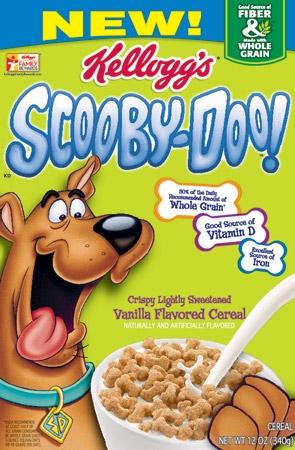
For example, Kellogg has a new product, Scooby-Doo! That’s the actual name of the cereal – Scooby Doo! – but this is less important the image on the box. Some think this product is a positive development because it contains “only” six grams of sugar per serving. But it’s very likely that Kellogg’s motivation was to be eligible for the very lucrative WIC (Women, Infants, and Children federal assistance program) market, for which six grams of sugar per serving is the maximum allowed. Kellogg says as much on this community feedback page where it also appears not everyone is so happy with the product, leading Marion Nestle to ponder if the product will last very long.


When I asked MOM’s CEO Scott Nash about marketing “healthy food” to children, he answer was simple: “The ends don’t justify the means. Marketing to children is wrong, no matter what is being marketed.” He believes marketing to children “should be illegal.” I couldn’t agree more and that’s why I support Corporate Accountability International’s ongoing campaign to stop McDonald’s from exploiting children (as opposed to just making “healthier” Happy Meals).


Supermarket News described the market’s announcement as “bold” and showing leadership but noted that “MOM’s caters to a specific demographic, so this kind of action wouldn’t float at a mainstream retailer.” Still, the article noted “taking a stand is controversial, but it’s empowering; it defines the retailer against the backdrop of everyone else.” This is exactly the point: the policy creates a new standard for other retailers to follow. Are you listening Whole Foods CEO John Mackey?


The company also hopes others, such as progressive co-ops and independent retailers follow its lead. Holley-Poole told me the largest impact would be on product manufacturers in the organic food industry. “I would not be surprised to see many of the discontinued items re-introduced with new cartoon-free packaging in a couple years,” she said. Susan Linn, director of the Campaign for a Commercial-Free Childhood praised the new policy:

Using beloved media characters to sell kids on a particular brand of food is wrong, even if it’s healthy food. Children should not be trained to pick foods based on the cartoon on the box. We congratulate MOM’s for taking this courageous stance on behalf of families and urge other companies to follow suit.


I am often asked: who in the food industry is doing it right? I am very happy to finally have an answer to that question.