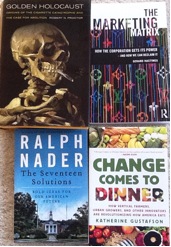
Books on Corporations and Health from 2012

Need one more late holiday gift for a fellow investigator of corporations and health? Looking for something to read yourself on those long dark January nights?  Need some sobering books to relieve too much holiday good cheer and rampant consumerism? This year brought a spate of new books examining the impact of corporations on health.  Here are ten that caught my eye over the last year. 


Paul M. Barrett. Glock: The Rise of America’s Gun.  Crown.                         

The story of the company that makes America’s gun, the favorite of cops and serial killers. 


Sharon Y. Eubanks, Stanton A. Glantz. Bad Acts: The Racketeering Case Against the Tobacco Industry.  American Public Health Association.

The inside story of the legal and political battles against tobacco corporations by Sharon Eubanks,  the lead counsel for the United States in the largest civil Racketeer Influenced and Corrupt Organizations (RICO) enforcement action ever filed, United States v. Philip Morris, et al.,  and veteran tobacco researchers Stanton Glantz. 


Jeremy A. Greene, Elizabeth Siegel Watkins. (Editors) Prescribed: Writing, Filling, Using, and Abusing the Prescription in Modern America.  Johns Hopkins University Press.  

In this edited collection, ten historians examine the role of prescription drugs in the last half of the twentieth century and analyze how drug companies, physicians and patients use and abuse prescription drugs.   


Katherine Gustafson.  Change Comes to Dinner How Vertical Farmers, Urban Growers, and Other Innovators Are Revolutionizing How America Eats.  St Martin’s Griffin.    

The author searches for alternatives to the corporate-driven food system and describes some promising local initiatives.   


Gerard Hastings.  The Marketing Matrix: How the Corporation Gets Its Power – And How We Can Reclaim It.  Routledge.                                                    

A UK marketing professor argues that we live in the simulated world created by the Marketing Matrix and suggests how we might escape its power. 


Martin Lindstrom.  Brandwashed: Tricks Companies Use to Manipulate Our Minds and Persuade Us to Buy.  Kogan Page.                                                     

A marketing insider reveals the strategies advertisers use to persuade us to buy their products.


Robert Proctor.  Golden Holocaust: Origins of the Cigarette Catastrophe and the Case for Abolition.  University of California Press.                                  

Stanford historian presents a history of the tobacco industry in the twentieth century and makes the case for a ban on the manufacture and sale of cigarettes.


Ralph Nader.  The Seventeen Solutions Bold Ideas for Our American Future.  Harper. 

The founder of the modern consumer movement describes the problems America faces and offers seventeen solutions, several focused on changing corporations. 


David Stuckler and Karen Siegel. (Editors and Authors). Sick Societies: Responding to the global challenge of chronic disease Oxford University Press.

This edited collection synthesizes the evidence on the rise of chronic diseases and assesses the role of government, business, and corporations in the etiology and prevention of chronic disease. 


Bill Vlasic. Once Upon a Car: The Fall and Resurrection of America’s Big Three Automakers–GM, Ford, and Chrysler. William Morrow.                                    

An account of the collapse and government-supported resurrection of the domestic auto industry by the Detroit bureau chief for the New York Times. 
Toyota to pay record $17.35 million fine for delaying recall

For the fourth time, Toyota has agreed to pay a fine to settle allegations by the National Highway Traffic Safety Administration that the automaker delayed a safety recall, reports The New York Times.  In a news release, the safety agency said Toyota would pay $17.35 million, the maximum allowed by law. Toyota did not admit any wrongdoing and said it was paying the fine to avoid a continued dispute with the safety agency. The automaker said the same thing when agreeing to pay the three previous fines, which totaled $48.8 million.

Gun makers, video game industry and NRA partner to promote fun and guns to children

In recent years, reports The New York Times, the firearms and video game industries have quietly forged a mutually beneficial marketing relationship. The McMillan Group, the maker of a high-powered sniper’s rifle, and Magpul, which sells high-capacity magazines and other accessories for assault-style weapons are listed as partners of the Electronic Arts, a maker of video games. Assault-style rifles made by Bushmaster Firearms have a roster of credits on various video games. Many of the same producers of firearms and related equipment are also financial backers of the N.R.A. For example, Glock, Browning and Remington are listed as corporate sponsors of the NRA.

Newtown massacre as a public health failure—and opportunity


27 Glocks and Sig Sauers

While the nation grapples with how 27 lives were lost in small-town America last Friday, the bigger question is, how are so many lives lost all year around in cities big and small? The public health profession – whose primary aim is prevention – is at least partly to blame for the nation’s failure to address gun violence.


While conventional medicine treats patients with problems such as lung cancer and gunshot wounds, public health professionals instead focus on the related behaviors, aiming to prevent people, for example, from smoking or drinking too much. Similarly, when it comes America’s gun problem, public health speaks of “violence prevention” or the even more sterile “injury control.”


However, each of these approaches fails to address the underlying factor driving the negative behaviors: massive industries that manufacture and market the products of destruction, whether it’s tobacco, alcohol, or in this case, guns.


Of course it’s not just the market for deadly product these industries create; it’s also the powerful lobbyists that hold our political system hostage to reform. The public health profession has failed miserably in the political arena due to its collective unwillingness to identify and oppose harmful corporate lobbying.


While much has been said about how the National Rifle Association intimidates politicians, this is no excuse for inaction by the public health field. (Some also argue the NRA’s political influence is exaggerated.) Now more than ever public health professionals working in violence prevention need to speak out about the role the firearms industry in destroying lives forever. They need to step out of their academic ivory towers and government offices to tell the truth about how the manufacture, sale, and marketing of guns contribute to our “culture of violence.”


Fortunately, there is no lack of effective policies available to reduce gun violence and the influence of the gun’s industries harmful practices. For example:


1. Taxes on bullets, a strategy designed to make ammunition more expensive and to bypass current interpretations of the Second Amendment;

2. Mandatory trigger locks, in which only the legal owner of the gun can fire the weapon, often using finger print technology, and other such built-in safety devices;

3. Bans on assault weapons and other military style firearms, which have proven helpful in other nations;

4. Stricter enforcement of systems for registration of those banned from owning firearms including those with felony convictions, serious mental illness, and histories of domestic violence and extension of this background check system to gun shows;

5.  Legal liability for gun companies for the consequences of unscrupulous retail distribution practices which make it easy for purchasers to bypass registration system;

6.  Rescinding recent laws that allow people to carry concealed weapons to churches, universities, national parks and other settings;

7.  Licensing systems that would require gun owners, like car owners, to obtain a license to operate a firearm and require periodic re-licensing;

8.  Stricter standards for the manufacture of firearms, now one of the least regulated products on the market;

9. Adequate funding for enforcement of the above measures at local, state and federal levels;

10. An end to the ban on federal funding for research on gun violence, which muzzles public health research, depriving society and policymakers the evidence needed to make informed policy decisions.


No one of these actions alone will end the gun carnage that makes us an outlier among developed nations. But, as we have learned with tobacco, a wide array of evidence-based public health interventions, designed to counter the power of an industry that profits from lethal but legal products can, over time, reduce premature deaths and preventable harm.


What can public health professionals do now to support and amplify public pressure for action to protect the public against the harmful practices of the fire arms industry and its supporters? First, we can educate ourselves. Just as thousands of public health researchers and professionals can now discuss the science and politics of the tobacco industry efforts to undermine health, we need a similar effort to educate the public about the gun industry. The resources below are a few places to start.


Second, we need to take on the collective gun lobby: the National Rifle Association, the National Shooting Sports Foundation, and the gun companies. Like the climate deniers, these groups seek to obfuscate the science about gun control, discredit effective public health measures and stoke fears. In a recent commentary the journalist Bill Moyers called the NRA “the enabler of death—paranoid, delusional and venomous as a scorpion.” This report, Blood Money: How the Gun Industry Bankrolls the NRA examines the close relationship between industry and the NRA. 


Third, we need to mobilize support for specific legislative proposals. It’s not enough to just have the date and educate, we also need to act. The public health profession is great at collecting data and publishing articles, but miserable at taking political action. This requires a fundamental shift in both allocation of resources and in attitude.


Of course, many other important public health measures can also help reduce gun violence such as better prevention and treatment of mental illness and efforts to reduce violent media and violence of all kinds. But what makes the United States stand out is our unwillingness to put the safety of our people ahead of the economic interests of the gun industry. Let’s make sure that the unfortunate window the Newtown massacre has opened doesn’t close before another town has to bury its children.


Books on Gun Violence

  • Barrett PM. Glock: The Rise of America’s Gun.  New York, NY: Crown; 2012.
  • Spitzer RJ. The Politics of Gun Control, 5th Edition, Paradigm, 2011
  • Hemenway D. Private Guns, Public Health.  Ann Arbor, MI: University of Michigan Press; 2004.
  • Diaz T. Making a Killing: The Business of Guns in America. New York, NY: New Press; 1999.

Organizations and Campaigns Challenging Industry Practices

Violence Policy Center
The Brady Center to Prevent Gun Violence
Coalition to Stop Gun Violence
Where Did the Gun Come From?
Harvard Injury Control Research Center
Means Matter Suicide, Guns, and Public Health
Stop Handgun Violence

Time restrictions on TV advertisements ineffective in reducing youth exposure to alcohol ads

Efforts to reduce underage exposure to alcohol advertising in Europe by implementing time restrictions have not worked, according to new research from the Center on Alcohol Marketing and Youth (CAMY) at the Johns Hopkins Bloomberg School of Public Health and the Dutch Institute for Alcohol Policy. The report, published in the Journal of Public Affairs, confirms what Dutch researchers had already learned in that country: time restrictions on alcohol advertising actually increase teen exposure, because companies move the advertising to late night.

The bribery aisle: How Wal-Mart got its way in Mexico

In its continuing investigation of the illegal practices of Wal-Mart corporation, the New York Times reports that “Wal-Mart de Mexico was not the reluctant victim of a corrupt culture that insisted on bribes as the cost of doing business. Nor did it pay bribes merely to speed up routine approvals. Rather, Wal-Mart de Mexico was an aggressive and creative corrupter, offering large payoffs to get what the law otherwise prohibited. It used bribes to subvert democratic governance — public votes, open debates, transparent procedures. It used bribes to circumvent regulatory safeguards that protect Mexican citizens from unsafe construction. It used bribes to outflank rivals.”

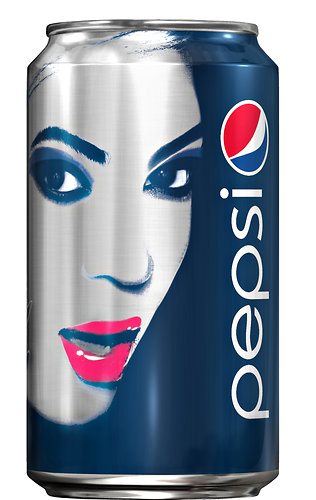
Beyoncé and Lebron James help Pepsi and Coke to promote obesity and diabetes

Beyoncé, the pop star, and PepsiCo, the soda company, have signed a new deal to promote each other, reports the New York Times.  The multiyear campaign, estimated to cost $50 million, will bring benefits to both parties. “Pepsi embraces creativity and understands that artists evolve,” explained Beyoncé. “As a businesswoman, this allows me to work with a lifestyle brand with no compromise and without sacrificing my creativity.”


For Pepsi, explains the Times, “the goal is to enhance its reputation with consumers by acting as something of an artistic patron instead of simply paying for celebrity endorsements.”  “Consumers are seeking a much greater authenticity in marketing from the brands they love,” said Brad Jakeman, president of Pepsi’s global beverage group. “It’s caused a shift in the way we think about deals with artists, from a transactional deal to mutually beneficial collaboration.”


Unfortunately, not everyone benefits from such collaboration.  While many factors have contributed to the rise in obesity and diabetes, no product has been more consistently implicated in the rise than the sugary beverages that are the lifeblood of Coke and Pepsi’s profits.  In the first six months of 2012, the two companies spent $148 million to promote their products on TV, radio, print and digital ads, what’s known as measured media.  They spent much more advertising in other countries around the world, nation’s whose obesity and diabetes rates are also rising. 


Can public health advocates play a role in discouraging multimillionaire celebrities from sickening the fans that made them rich?  (According to Celebrity Networth, Beyoncé’s 2012 net worth is  $350 million.)


Credit

Abdul El-Sayed, a social epidemiologist and physician-in-training at the Columbia University School of Public Health, has an idea.  In a recent post on the 2 X 2 Project, a blog of the Department of Epidemiology at Columbia University, he writes an open letter to Lebron James. James, the Miami Heat basketball star, has contracts with Coke and McDonalds.  In his letter, El Sayed writes:


LeBron, your agreement to advertise Sprite for the Coca-Cola Company is worth $16 Million over six years. Let’s do a little math to estimate how much sugar you’ll sell to our kids over that period.


Assuming that Coca-Cola breaks even on the deal (which is at least what it will do), then you should make the company back at least $16 million over six years. Coca-Cola makes about 21 cents on the dollar over all the products it sells, and a 20-ounce Sprite costs $1.39 on average. If Coca-Cola makes the same profit on 20-ounce Sprites, that means that you’ll have sold at least the equivalent of 54.4 million 20-ounce Sprites over the course of your six-year contract. Now, each one of those 20-ounce Sprites has 16 spoons of sugar in it, so LeBron, you’re responsible for selling over a billion spoons of sugar. Not to mention all of the McDonald’s grease you’re selling.


Beyond the billion spoons of sugar and the millions of Big Macs you’ll sell, perhaps the worst impact of your endorsements is the confusion it creates in kids’ minds.


Children see you accomplish extraordinary athletic feats on the basketball court night in and night out. At the same time, though, they see you supporting products their parents and doctors tell them are unhealthy. As young, impressionable children, that creates confusion about what is and is not healthy for them. After all, kids must think, how can Sprite and McDonald’s be unhealthy if LeBron James, the pinnacle of sports, is telling me to buy them?


The open letter to James ends with a plea:


In the end, whether you like it or not, you are a role model in our society. Kids look up to you—many want to be just like you. While it may be unfair to expect that you weigh in on all of society’s problems, you do have particular weight when it comes to this one, which you represent—whether you like it or not—as an athlete. Don’t allow yourself to be used as a tool to confuse the messaging about what is and is not healthy for our kids.


LeBron, if you’re reading this, I know you know how to step it up and lead: I watched you do it in the finals against OKC, and I watched you do it again this summer in London. This is your opportunity to step it up in a bigger way. Be the leader we know you can be, and take a stand against endorsements for companies that are making our kids obese.  Just like on the court, if you lead, others will follow.


El Sayed also asks readers to tweet the article @kingjames with #LebronForTheKids and to post it LeBron’s Facebook wall: https://www.facebook.com/LeBron


Supreme Court to consider ‘pay for delay’ deals keeping generic drugs off the market

The U.S. Supreme Court has agreed to decide whether so-called pay for delay settlements that temporarily keep generic competitors out of the market are lawful in patent litigation, reports the ABA Journal. In “pay for delay” cases, brand-name drug companies pay a would-be generic competitor to drop a challenge of the brand-name patent and to keep the generic version of the drug off the market for a specified time period. The FTC maintains that such arrangements cost consumers $3.5 billion a year.

The takers: State and local governments subsidize corporations


In his campaign for President, Mitt Romney famously charged that 47% of the American population paid no federal income tax and “are dependent upon government, who believe that they are victims, who believe the government has a responsibility to care for them, who believe that they are entitled to health care, to food, to housing, to you-name-it.”  A new investigation by the New York Times identifies another category of taker: the corporations who take more than $80 billion in subsidies each year from state and local governments. According to the Times, these governments award $9.1 million in corporate subsidies every hour. More than 5,000 companies have been awarded a total of more than $1 million each in local subsidies.   Using the database of state and local government subsidies to corporations created by the New York Times, the table below shows 25 selected companies frequently mentioned in Corporations and Health Watch that received more than $1 million in subsidies.  The largest recipient of local government subsidies was the automobile industry.  The top three US car companies alone received $4.75 billion in local subsidies in the period reviewed by the New York Times.  Most troubling, the Times investigation noted:


A portrait arises of mayors and governors who are desperate to create jobs, outmatched by multinational corporations and short on tools to fact-check what companies tell them. Many of the officials said they feared that companies would move jobs overseas if they did not get subsidies in the United States.   Over the years, corporations have increasingly exploited that fear, creating a high-stakes bazaar where they pit local officials against one another to get the most lucrative packages. States compete with other states, cities compete with surrounding suburbs, and even small towns have entered the race with the goal of defeating their neighbors.


The Times further observed that for many communities, “the payouts add up to a substantial chunk of their overall spending… Oklahoma and West Virginia give up amounts equal to about one-third of their budgets, and Maine allocates nearly a fifth.”  As national, state and local officials debate about how best to balance revenues and expenses, corporate subsidies deserve further scrutiny.  CHW readers can visit the Times searchable database to examine their states’ record or the subsidies received by corporations they are tracking. 


Name of Company

Total Subsidy

Number of Grants

Number of States


General Motors

$1.77 billion

208

16


Ford

$1.58 billion

119

8


Chrysler

$1.4 billion

14

3


Orca Bay Seafood

$296 million

4

1


Fresh Direct

$131 million

9

1


Archer Daniels Midland

$110 million

23

6


Daimler

$101 million

24

8


Toyota Motor Company

$96.5 million

16

5


Pfizer

$92.9 million

44

9


Walmart Stores

$80.5 million

176

23


Merck and Company

$60.7 million

18

5


Coca Cola Bottling

$49 million

61

16


Diageo

$40 million

7

2


Abbott Laboratories

$14.7 million

21

9


Pepsi Cola(various franchises)

$13.3 million

23

9


Jim Beam Brands

$10.8 million

7

1


Philip Morris USA

$8.06 million

5

2


Remington Arms Company

$8.32 million

13

3


Millercoors

$7.46

7

4


Smith & Wesson

$6.16 million

9

1


Lorillard Tobacco Company

$5.5 million

2

1


Anheuser-Busch

$4.62 million

2

2


Cargill

$4.4 million

9

5


Reynolds Tobacco Company

$3.09 million

1

1


Pernod Ricard

$1 million

1

1