As the United States revisits its trade policies with China, Canada, Mexico, the European Union nations, and other countries, it is easy to get lost in the complex national and global business, political and social issues at play. For public health researchers and scholars, the new debates on trade provide an opportunity to deepen public understanding of the health and social consequences of various trade regimes.
In a recent articlein Global Social Policy, Ashley Schram examines the impact of trade on non-communicable diseases:
Trade and investment policy has the capacity to support or undermine global action on rising noncommunicable disease (NCD) rates. This article will employ a political science approach to explore how ideology, institutions and interests within the trade and investment policy space may constrain policy recommendations made in the World Health Organization’s Global Action Plan (GAP) on NCDs. Specifically, it details how neoliberal ideology may constrain public health values, how the new constitutionalism may constrain public health legitimacy and how disparities in money, power and resources between elite economic actors and public policy actors may constrain the capacity of public health to influence trade and investment agreement negotiations. The implications of these constraints on the implementation of the GAP-NCDs are discussed.
The Schram article is contained in a special issueof Global Social Policyon trade and health for which some articlesare available open access.
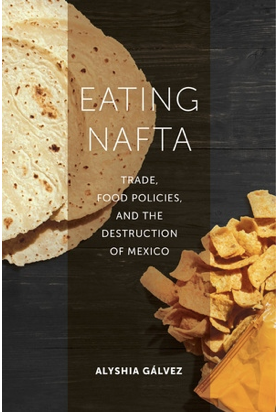
For other perspectives on trade and health, visitthe link to the Livestream and resources presented at the CUNY Urban Food Policy Institute’s recent forum on Food, Trade, & Health: What Are the Connections?The speakers are: Alyshia Galvez, Associate Professor of Latin American Studies at Lehman College and the former director of the Jaime Lucero Institute of Mexican Studies at City University of New York. She is author of the forthcoming book, Eating NAFTA: Trade and Food Policies and the Destruction of Mexico and David Sanders,founder and Emeritus Professor of the School of Public Health at the University of the Western Cape in South Africa. He is also a founder of the People’s Health Movement, a global movement that promotes health justice. For decades, he has studied the health consequences of South Africa’s changing food system.
 Corporations and Health Watch