Next week residents of Berkeley, California, will decide whether to place a penny-an-ounce tax on sugary beverages, writes Mother Jones. The beverage industry has fought off similar taxes and restrictions in every American city where they’ve been proposed, but it has never faced a more formidable challenge than it does in this overwhelmingly liberal and well-educated college town. The soda fight is, if nothing else, a case study in whether truckloads of cash can sway a politically engaged citizenry.
Guns Laws Bring Cash Into Campaigns
Money on both sides of the gun-control debate is pouring into the governor’s race in Connecticut, reports the Wall Street Journal, where the issue has taken on deep resonance since the deadly shooting at a Newtown school. Americans for Responsible Solutions, founded by former U.S. Rep. Gabrielle Giffords, has spent about $750,000 on the race. The National Shooting Sports Foundation says it will be spending “a multiple of seven figures” on races in Connecticut and Colorado, which also has recently passed gun restrictions.
World Trade Organization Rules Against Popular U.S. Country-of-Origin Meat Labels on Which Consumers Rely

Cross Posted from Public Citizen
Compliance Panel Says U.S. Policy Still Violates WTO Despite Changes Made to Comply With 2012 WTO Order; U.S. Should Not Change COOL Policy

(The recent) ruling by a World Trade Organization (WTO) compliance panel against U.S country-of-origin meat labeling (COOL) policies sets up a no-win dynamic, and the Obama administration should appeal the ruling, Public Citizen said.
If the administration were to weaken COOL, U.S. consumers would lose access to critical information about where their meat comes from at a time when consumer interest in such information is at an all-time high and opposition would only grow to the administration’s beleaguered trade agenda. If the administration again were to seek to comply with the WTO by strengthening COOL, then Mexico and Canada – the two countries that challenged the policy – likely would continue their case, even though cattle imports from Canada have increased since the 2013 strengthening of the policy.
The ruling further complicates the Obama administration’s stalled efforts to obtain Fast Track trade authority for two major agreements, the Trans-Pacific Partnership and the Trans-Atlantic Free Trade Agreement. Both of these pacts would expose the United States to more such challenges against U.S. consumer, environmental and other policies.
“Many Americans will be shocked that the WTO can order our government to deny U.S. consumers the basic information about where their food comes from and that if the information policy is not gutted, we could face millions in sanctions every year,” said Lori Wallach, director of Public Citizen’s Global Trade Watch. “Today’s ruling spotlights how these so called ‘trade’ deals are packed with non-trade provisions that threaten our most basic rights, such as even knowing the source and safety of what’s on our dinner plate.”
The WTO compliance panel decided that changes made in May 2013 to the original U.S. COOL policy in an effort to make it comply with a 2012 WTO ruling against the law are not acceptable and that the modified U.S. COOL policy still constitutes a “technical barrier to trade.” The panel decided that the strengthened COOL policy afforded less favorable treatment to cattle and hog imports from Canada and Mexico, despite a 52 percent increase in U.S. imports of cattle from Canada under the modified policy. The panel stated that the alleged difference in treatment did not “stem exclusively from legitimate regulatory distinctions.”
The United States has one chance to appeal this decision before the WTO issues a final, binding ruling. Under WTO rules, if the U.S. appeal fails, Canada and Mexico would be authorized to impose indefinite trade sanctions against the United States unless or until the U.S. government changes or eliminates the popular labeling policy.
Today’s ruling follows a string of recent WTO rulings against popular U.S. consumer and environmental policies. In May 2012, the WTO ruled against voluntary “dolphin-safe” tuna labels that, by allowing consumers to choose to buy tuna caught without dolphin-killing fishing practices, have helped to dramatically reduce dolphin deaths. In April 2012, the WTO ruled against a U.S. ban on clove-, candy- and chocolate-flavored cigarettes, enacted to curb youth smoking. In each of those cases, U.S. policy changes made to comply with the WTO’s decisions also have been challenged before WTO panels similar to the one that issued today’s ruling.
“The WTO again ruling against a popular U.S. consumer protection will just spur the growing public and congressional concerns about the big Pacific and European trade deals the administration is now pushing and the Fast Track authority to railroad through Congress more agreements that undermine basic consumer rights,” said Wallach.
Background
The COOL policy was created when Congress enacted mandatory country-of-origin labeling for meat – supported by 92 percent of the U.S. public in a recent poll – in the 2008 farm bill. This occurred after 50 years of U.S. government experimentation with voluntary labeling and efforts by U.S. consumer groups to institute a mandatory program.
In their successful challenge of COOL at the WTO, Canada and Mexico claimed that the program violated WTO limits on what sorts of product-related “technical regulations” signatory countries are permitted to enact. The initial WTO ruling was issued in November 2011. Canada and Mexico demanded that the United States drop its mandatory labels in favor of a return to a voluntary program or standards set by an international food standards body in which numerous international food companies play a central role. Neither option would offer U.S. consumers the same level of information as the current labels. The United States appealed.
The WTO Appellate Body sided with Mexico and Canada in a June 2012 ruling against COOL. The U.S. government responded to the final WTO ruling by altering the policy in a way that fixed the problems identified by the WTO tribunal. However, instead of watering down the popular program as Mexico and Canada sought, the U.S. Department of Agriculture responded with a rule change in May 2013 that strengthened the labeling regime. The new policy provided more country-of-origin information to consumers, which satisfied the issues raised in the WTO’s ruling. However, Mexico and Canada then challenged the new U.S. policy. With today’s ruling, the WTO has announced its support for the Mexican and Canadian contention that the U.S. law is still not consistent with the WTO rules.
True Cost of Diverted Tobacco Payouts Measured in Lives
Cross-posted from The Conversation

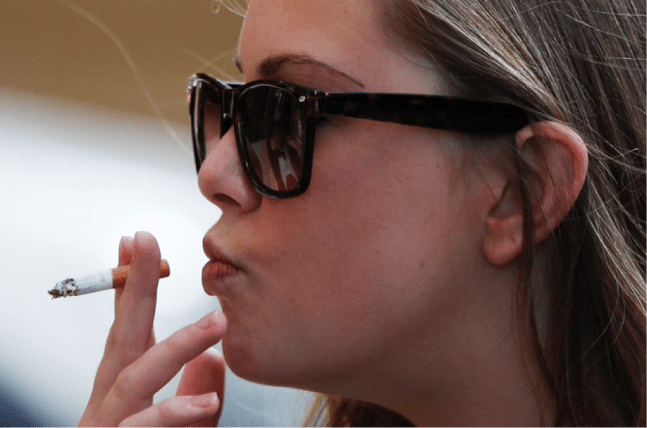
- Not enough tobacco company money is going into public health campaigns. REUTERS/Daniel Munoz

The #20 Million Memorial created earlier this month by the United States Centers for Disease Control, is an online tribute to honor the 20 million spouses, mothers, fathers, children, sisters, brothers, and friends who have died of tobacco-related diseases since 1964.
The memorial recognizes the 50th anniversary of the 1964 Surgeon General’s Report on Smoking and Health, the document that alerted Americans to the perils of tobacco.
In some ways, tobacco control demonstrates a public health triumph. Since 1965, the percentage of Americans adults who smoked has fallen from 42.4% to 18%.
Researchers estimate that since the Surgeon’s General’s first report, 8 million tobacco deaths have been averted, giving those who quit or didn’t start on average an added 20 years of life, clear evidence of the benefits of public health investment.
But the dark side of this achievement is our failure to use what we know to prevent millions of more premature deaths.
Settlement funds diverted
Last year marked another tobacco milestone – the 15th anniversary of the Master Settlement Agreement of 1998, an agreement between the Attorneys General of 46 states (four states had settled earlier) and the tobacco industry to change advertising practices and require the industry to pay more than $200 billion to fund tobacco prevention activities in perpetuity.
A recent investigation by ProPublica found that only a fraction of the money the tobacco industry is paying is actually funding tobacco control activities.
Instead, Citigroup, JPMorgan, UBS, Goldman Sachs, Morgan Stanley and now-defunct firms like Bear Stearns, Lehman Brothers and Merrill Lynch — the same financial institutions that helped trigger the 2008 global economic crisis — had convinced many state governments to divert their tobacco settlement funds into a financial instruments called capital appreciation bonds (CABS) in order to borrow money for routine expenses.
ProPublica estimates that bankers and their consultants and lawyers have pocketed more than $500 million in fees for this financial engineering.
The nine states, three territories, District of Columbia and several counties that issued $3 billion in CABS have promised a total of $64 billion to pay them off, a lucrative investment that jeopardizes public health and financial solvency.

New Jersey spends the least on smoking prevention. Its 2014 revenues from tobacco – taxes and settlement funds—were $947 million, of which none was spent on tobacco control. The story in similar in many other states. For example, in 2013 Massachusetts brought in $815 million in tobacco money of which only about $4.2 million or 0.5% was spent on smoking cessation and prevention programs.
Last year, a tobacco deal got New Jersey Governor Chris Christie $92 million to fill a gap in his budget. Earlier CABs issued by New Jersey threaten additional debt, a problem temporarily solved by signing over the anticipated tobacco money expected from 2017 to 2023 – more than $400 million — to repay the debt early and get more cash from investors in exchange.
According to the CDC, each year 11,800 people in New Jersey die from tobacco-related diseases and the cost of health care for these conditions is $4.06 billion. About 60,000 high school students in New Jersey smoke cigarettes.
Nationally, according to ProPublica’s analysis, about 44%, or nearly one in every two dollars the tobacco companies pay out each year, goes to investors rather than governments. Between 1998 and 2010, reports the CDC, revenues from state taxes and the MSA settlement almost tripled, from $8.8 billion to $24 billion.
In this same period, the percentage of tobacco revenues dedicated to tobacco control fell by 10%. This year, says the Campaign for Tobacco Free Kids, states are appropriating only 1.9% of their state tobacco revenues to tobacco control.
The true cost of diverting the money
Diverting revenues from tobacco to other purposes causes three problems. First, it costs lives. The CDC has estimated that fully implementing known tobacco control measures between 1998 and 2010 would have cost about $29 billion.
In this period,the federal and state governments spent about $8 billion on tobacco control, about 27% of the recommendation. More troubling, the proportion of the recommended funding allocated has fallen alarmingly, from 51% in 2002, the high year, to 17% in 2010, the last year for which data are available.
As a result of these decisions, millions of smokers and potential smokers who could have joined the 8 million whose lives were extended as a result of tobacco control activities ended up getting sick or dying.
In addition, failing to invest in tobacco control costs money. A 2008 study found that when California increased spending on tobacco control, smoking rates declined faster than elsewhere in the nation and health care expenditures on tobacco-related diseases fell by $84 billion in 15 years.
A second problem with diversion is its impact on taxes and public spending. In the short run, politicians justify taking out loans on tobacco revenues as a way to avoid tax increases. Usually that means leaving in place an inequitable tax structure.
In the longer run, turning over public dollars to bankers and financial institutions risks the financial stability of state governments. In an October 6 op ed in the New York Times, Jim Estes, a professor of finance at California State University, San Bernardino, warned that defaults on tobacco CABs could begin in 2026 in the nine states that have already mortgaged their future.
Already New Jersey has had its credit rating downgraded by Wall Street twice this year, an action that will require New Jersey tax payers to cover for Christie’s gamble.
Who’s protecting public health?
Most troubling, elected officials’ willingness to speculate with tobacco revenues shows how far we need to come to restore public health protection as a government priority.
If we can’t trust our public officials to take action to save lives from tobacco, the world’s best-studied toxic exposure, when they have the funds to do so, what can we expect from them when regulating legal but potentially lethal industries like alcohol, firearms, automobiles, processed foods and pharmaceuticals?
A growing body of scientific evidence shows that the products and practices of these industries are the world’s leading causes of death through chronic diseases and injuries.
Nicholas Freudenberg is author of Lethal but Legal Corporations, Consumption and Protecting Public Health.
The Conversation is a collaboration between editors and academics to provide informed news analysis and commentary that’s free to read and republish.
The Gun Lobby Lap Dogs of Congress
PR Newswire reports that the Brady Campaign to Prevent Gun Violence has launched a video, website and scorecard exposing members of Congress for the campaign dollars they have taken from the corporate gun lobby, while blocking life-saving legislation that would keep guns out of the hands of criminals. The lapdogscorecard.org website and video calls out all legislators based on two simple criteria: do they take money from the corporate gun lobby, and do they support expanding Brady background checks to online and gun show sales?
Toyota Recalls Mount as Automaker Faces Increasing Scrutiny
Automotive News reports that Toyota Motor Corp. made its fourth global recall involving more than a million vehicles this year, as the world’s largest automaker begins operating with stricter supervision over safety from U.S. regulators. The carmaker is calling back 1.75 million vehicles, including 759,000 Toyota and Lexus sedans to repair fuel pipes that could leak and raise fire risks.
Alcohol-related illness and death in Scottish neighbourhoods: is there a relationship with the number of alcohol outlets?

Researchers at the Centre for Research on Environment, Society and Health (CRESH) at the University of Edinburgh and the University of Glasgow in Scotland have released a new report on alcohol outlet density and health. Key messages are below and full report is here.
- There are large variations in numbers of alcohol outlets within neighbourhoods across Scotland.
- Across the whole of Scotland, neighbourhoods with higher numbers of alcohol outlets had significantly higher alcohol-related death rates.
- Alcohol-related death rates in neighbourhoods with the most alcohol outlets were more than double the rates in those with the fewest outlets. There were 34 alcohol-related deaths per 100,000 people in neighbourhoods with the most off-sales outlets, compared with 13 per 100,000 in neighbourhoods with the fewest.
- Across the whole of Scotland, alcohol-related hospitalisation rates were significantly higher in neighbourhoods with the most alcohol outlets.
Law Center and Americans for Responsible Solutions Release Toolkit on Guns and Domestic Violence
To recognize Domestic Violence Awareness Month this October, the Law Center to Prevent Gun Violence and Americans for Responsible Solutions has released a new report, Commonsense Solutions: State Laws to Address Gun Violence Against Women. This toolkit for legislators and advocates both documents existing laws on guns and domestic violence and offers suggestions for commonsense gun laws to better protect victims of domestic violence.
G.O.P. Error Reveals Donors and the Price of Access
Recently published documents, reports The New York Times, show that many of America’s most prominent companies, from Aetna to Walmart, have poured millions of dollars into the campaigns of Republican governors since 2008. “This is a classic example of how corporations are trying to use secret money, hidden from the American people, to buy influence, and how the governors association is selling it,” said Fred Wertheimer, the president of Democracy 21, a nonpartisan group that advocates more transparency and controls over political money.
#20 Million Memorial — Remembering Those Who Have Died Because of Smoking
Fifty years ago, the U.S. Surgeon General released the first report on smoking and health. Since then, there have been an estimated 20 million deaths due to smoking. The U.S. Centers for Disease Control and Prevention has created an online memorial that honors those #20million people – spouses, mothers, fathers, children, sisters, brothers, friends, – who we have lost. View their stories and honor your loved ones using #20million*, **.

* Legal Terms: By posting your memorial with the hashtag #20Million, your submission will become a part of CDC’s #20Million Memorial. See full legal terms and conditions.
** Disclaimer: The photos and messages on this page have been submitted as part of the #20Million Memorial Campaign. This content was submitted by groups or individuals, and feature their own interpretations, opinions and dramatizations, about tobacco use, and do not necessarily represent the views of the Centers for Disease Control and Prevention (CDC) or the Department of Health and Human Services (HHS). Including these memorials does not constitute an official endorsement on behalf of the CDC or HHS. Social media provides a dynamic environment for a variety of people to express their views. Comments posted about these memorials by partners, organizations, or individuals do not constitute an endorsement by the U.S. Government sponsors of this campaign.
 Corporations and Health Watch