Based on a review of documents detailing what Exon Mobil knew about the company’s role in climate change, Geoffrey Supran and Naomi Oreskes, writing in The New York Times, conclude that “Exxon Mobil misled the public about the state of climate science and its implications. Available documents show a systematic, quantifiable discrepancy between what Exxon Mobil’s scientists and executives discussed about climate change in private and in academic circles, and what it presented to the general public.” Their analysis is published in Environmental Research Letters. A coalition of state attorneys general and the Securities and Exchange Commission are investigating whether the company lied to the public and investors about what it knew about the dangers of climate change. Making corporations liable for misleading investors about scientific evidence may be a valuable strategy for public health advocates seeking to reduce harmful corporate practices.
Audi Engineer Implicates Superiors in Diesel Case, Lawyer Says
A cloud of suspicion hanging over Volkswagen thickened, reports The New York Times, after a lawyer for a jailed former engineer said his client implicated top managers of the German carmaker’s Audi luxury brand in a continuing diesel cheating scandal. Statements and evidence provided to German investigators by the former head of thermodynamics in Audi’s engine development department suggest that knowledge of emissions fraud reached higher in the ranks of management than Volkswagen has admitted. No members of the company’s management board have been charged, although investigations are continuing.
Increasing Prevalence of Annual Alcohol Use, High-Risk Drinking, and Alcohol Disorders in the United States, 2001-2002 to 2012-2013
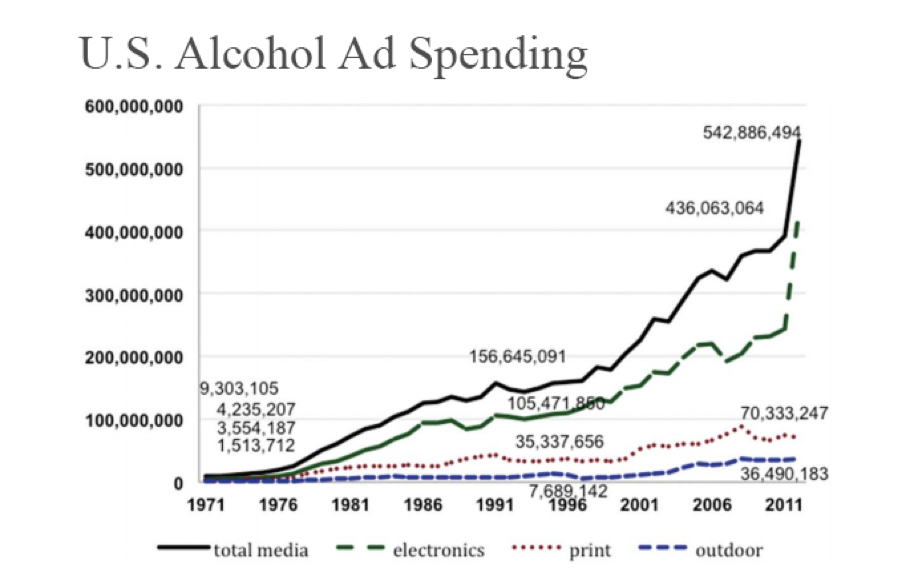
More Americans are drinking high amounts of alcohol, and the greatest increases are seen among women and older adults, according to a new study published in JAMA Psychiatry. In the new report, researchers at the National Institute on Alcohol Abuse and Alcoholism compared two large studies of people who self-reported their drinking habits. The first was a study of more than 43,000 adults from 2001-2002, and the second included more than 36,000 adults from 2012-2013. A previous study had shown that between 1971 and 2011, alcohol advertising in the U.S. increased more than 400 percent. The author of the earlier study concluded that since overall per capita consumption of alcohol had not increased in that time, advertising did not affect drinking rates. The new study raises the question as to whether increased advertising has a distinct influence on populations at risk of heavy drinking.
F.D.A. Urges Court to Block New York City’s Calorie Count Law
The Food and Drug Administration has filed court papers in support of an effort to overturn a New York City law requiring calorie counts to be posted by certain establishments, reports The New York Times, at least the second time the Trump administration has inserted itself into a local case. The plaintiffs have asked a judge to grant an injunction to keep the city from enforcing the law, which it plans to start doing on August 21. In response, New York City Health Commissioner Mary Bassett observed, “The F.D.A. has taken the position that chains can stop providing customers with critical nutrition information. Poor nutrition is fueling an epidemic of chronic diseases, and this basic information should be accessible and transparent to all.”
Deregulatory Disasters: People Harmed by Deregulation Speak Out Against the Regulatory Accountability Act
People who have been harmed by inadequate regulatory protections shared their tragic stories at a press conference at the Economic Policy Institute last week. The event was sponsored by the Coalition for Sensible Safeguards, an alliance of more than 150 organizations. The coalition and speakers called on Congress to reject the Regulatory Accountability Act (S. 951), which would shut down our system of public protections. From dangerous cars to unsafe food to harmful consumer products, these heartbreaking and emotional stories illustrate the far-reaching impact of the corporate-backed deregulatory agenda pushed by Congress and the White House by showing how it affects the lives of workers, consumers and families. Watch the event here.
Diesel emissions kill. What is the car industry going to do about it?

The European Environment Agency estimates that 75,000 Europeans died prematurely as a result of nitrogen oxide poisoning in 2012 – among them 22,000 in Italy, 14,000 in Great Britain and 10,000 in Germany. In an attempt to protect the health of EU citizens, nitrogen oxide emissions limits have been established across Europe. Since 2010, that limit has been set at an annual maximum of 40 micrograms of NOx per cubic meter. Beyond that, all automobiles produced after January 2000 have been required to meet NOx emission reduction standards. Yet automakers have shamelessly flouted such emissions and health protection standards, reports Gears of Biz, a technology newsletter. Automobiles were equipped with software designed to trick laboratory ratings tests, and in normal driving conditions emissions far exceeded legal limits. A 1,500-euro ($1,750) fix could save thousands of lives – but carmakers are unwilling to pay.
Take the Generic Drug, Patients Are Told — Unless Insurers Say No
Faced with competition, some pharmaceutical companies are cutting deals with insurance companies to favor their brand-name products over cheaper generics, reports Pro Publica and The New York Times. Insurers pay less, but sometimes consumers pay more. Out of public view, corporations are cutting deals that give consumers little choice but to buy brand-name drugs — and sometimes pay more at the pharmacy counter than they would for generics. The practice is not easy to track, and has been going on sporadically for years. But several clues suggest it is becoming more common.
Media Coverage of Alcohol Issues: A Critical Political Economy Framework-A Case Study from Ireland
Growing literature documents news media representation of alcohol-related issues. However, current scholarship has neglected critical political economic frameworks to interpret media coverage of alcohol. The case of Ireland from 2012 to 2017 illustrates the authors’ proposed framework empirically. Four main newspapers’ coverage of the Public Health (Alcohol) Bill and related policies are examined. The authors conclude that the media reflect the views of the political and economic establishment on public health measures: there is some support from the medical professions and progressive politicians, but overall, there is a clear reluctance to support strong public health strategies.
Citation: Mercille J. Media Coverage of Alcohol Issues: A Critical Political Economy Framework-A Case Study from Ireland. Int J Environ Res Public Health. 2017;14(6).
Global developments in alcohol policies since 2010
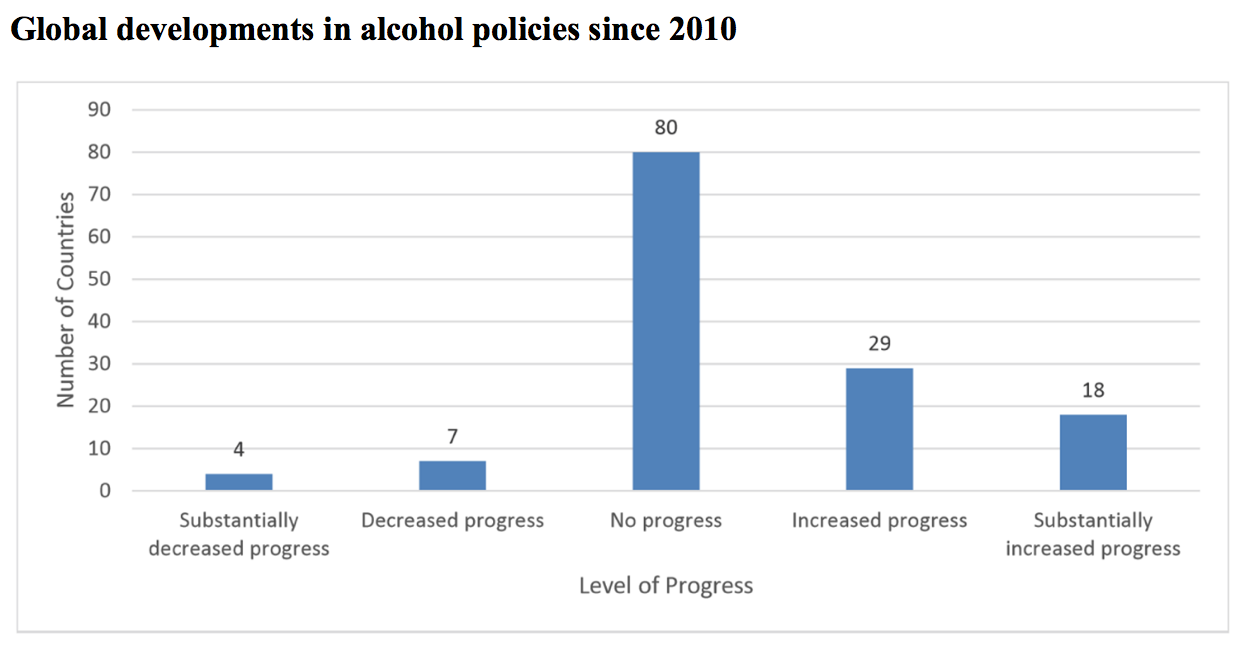
Trends in statutory regulation of alcohol marketing since 2010 by number of countries. Credit
A report on progress in implementation of the WHO global strategy to reduce the harmful use of alcohol since 2010 concludes that while the scope and intensity of national efforts to address alcohol-related harm have increased, resources have not, particularly in low- and middle-income countries where alcohol consumption and related harm are likely to be rising most rapidly. The report was prepared by David Jernigan as background for the WHO Forum on Alcohol, Drugs and Addictive Behaviours. Not a single low-income country reported increases in resources devoted to alcohol policy implementation since 2010. The available evidence shows that progress has been skewed towards wealthier countries, with low- and middle-income countries experiencing increased challenges with alcohol consumption and alcohol control. The “slow-moving disaster” of harmful use of alcohol will not abate without significant further global and national commitment, investment, and coordinated action to increase regulatory and enforcement capacity
100,000 Pages of Chemical Industry Secrets Gathered Dust in an Oregon Barn for Decades — Until Now
For decades, some of the dirtiest, darkest secrets of the chemical industry have been kept in Carol Van Strum’s barn writes Sharon Lerner in The Intercept. The 80-year-old structure in rural Oregon housed more than 100,000 pages of documents obtained through legal discovery in lawsuits against Dow, Monsanto, the Environmental Protection Agency, the U.S. Forest Service, the Air Force, and pulp and paper companies, among others. As of today, those documents and others that have been collected by environmental activists will be publicly available through a project called the Poison Papers.
 Corporations and Health Watch