True Cost of Diverted Tobacco Payouts Measured in Lives

Cross-posted from The Conversation

smoking
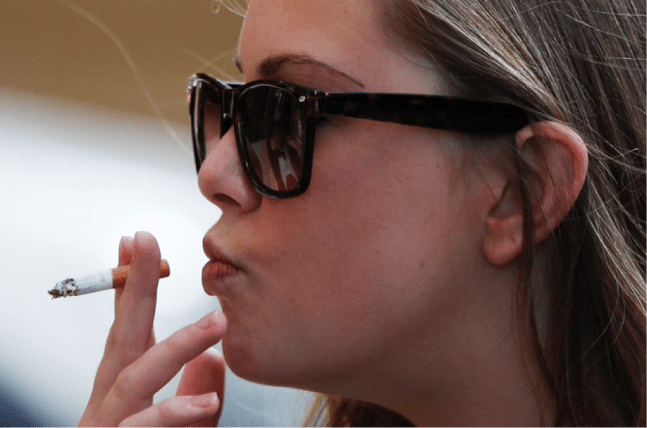
Not enough tobacco company money is going into public health campaigns. REUTERS/Daniel Munoz

The #20 Million Memorial created earlier this month by the United States Centers for Disease Control, is an online tribute to honor the 20 million spouses, mothers, fathers, children, sisters, brothers, and friends who have died of tobacco-related diseases since 1964.


The memorial recognizes the 50th anniversary of the 1964 Surgeon General’s Report on Smoking and Health, the document that alerted Americans to the perils of tobacco.


In some ways, tobacco control demonstrates a public health triumph. Since 1965, the percentage of Americans adults who smoked has fallen from 42.4% to 18%.


Researchers estimate that since the Surgeon’s General’s first report, 8 million tobacco deaths have been averted, giving those who quit or didn’t start on average an added 20 years of life, clear evidence of the benefits of public health investment.


But the dark side of this achievement is our failure to use what we know to prevent millions of more premature deaths.


Settlement funds diverted


Last year marked another tobacco milestone – the 15th anniversary of the Master Settlement Agreement of 1998, an agreement between the Attorneys General of 46 states (four states had settled earlier) and the tobacco industry to change advertising practices and require the industry to pay more than $200 billion to fund tobacco prevention activities in perpetuity.


A recent investigation by ProPublica found that only a fraction of the money the tobacco industry is paying is actually funding tobacco control activities.


Instead, Citigroup, JPMorgan, UBS, Goldman Sachs, Morgan Stanley and now-defunct firms like Bear Stearns, Lehman Brothers and Merrill Lynch — the same financial institutions that helped trigger the 2008 global economic crisis — had convinced many state governments to divert their tobacco settlement funds into a financial instruments called capital appreciation bonds (CABS) in order to borrow money for routine expenses.


ProPublica estimates that bankers and their consultants and lawyers have pocketed more than $500 million in fees for this financial engineering.


The nine states, three territories, District of Columbia and several counties that issued $3 billion in CABS have promised a total of $64 billion to pay them off, a lucrative investment that jeopardizes public health and financial solvency.


20mil
CDC, CC BY-SA


New Jersey spends the least on smoking prevention. Its 2014 revenues from tobacco – taxes and settlement funds—were $947 million, of which none was spent on tobacco control. The story in similar in many other states. For example, in 2013 Massachusetts brought in $815 million in tobacco money of which only about $4.2 million or 0.5% was spent on smoking cessation and prevention programs.


Last year, a tobacco deal got New Jersey Governor Chris Christie $92 million to fill a gap in his budget. Earlier CABs issued by New Jersey threaten additional debt, a problem temporarily solved by signing over the anticipated tobacco money expected from 2017 to 2023 – more than $400 million — to repay the debt early and get more cash from investors in exchange.


According to the CDC, each year 11,800 people in New Jersey die from tobacco-related diseases and the cost of health care for these conditions is $4.06 billion. About 60,000 high school students in New Jersey smoke cigarettes.


Nationally, according to ProPublica’s analysis, about 44%, or nearly one in every two dollars the tobacco companies pay out each year, goes to investors rather than governments. Between 1998 and 2010, reports the CDC, revenues from state taxes and the MSA settlement almost tripled, from $8.8 billion to $24 billion.


In this same period, the percentage of tobacco revenues dedicated to tobacco control fell by 10%. This year, says the Campaign for Tobacco Free Kids, states are appropriating only 1.9% of their state tobacco revenues to tobacco control.


The true cost of diverting the money


Diverting revenues from tobacco to other purposes causes three problems. First, it costs lives. The CDC has estimated that fully implementing known tobacco control measures between 1998 and 2010 would have cost about $29 billion.


In this period,the federal and state governments spent about $8 billion on tobacco control, about 27% of the recommendation. More troubling, the proportion of the recommended funding allocated has fallen alarmingly, from 51% in 2002, the high year, to 17% in 2010, the last year for which data are available.


As a result of these decisions, millions of smokers and potential smokers who could have joined the 8 million whose lives were extended as a result of tobacco control activities ended up getting sick or dying.


In addition, failing to invest in tobacco control costs money. A 2008 study found that when California increased spending on tobacco control, smoking rates declined faster than elsewhere in the nation and health care expenditures on tobacco-related diseases fell by $84 billion in 15 years.


A second problem with diversion is its impact on taxes and public spending. In the short run, politicians justify taking out loans on tobacco revenues as a way to avoid tax increases. Usually that means leaving in place an inequitable tax structure.


In the longer run, turning over public dollars to bankers and financial institutions risks the financial stability of state governments. In an October 6 op ed in the New York Times, Jim Estes, a professor of finance at California State University, San Bernardino, warned that defaults on tobacco CABs could begin in 2026 in the nine states that have already mortgaged their future.


Already New Jersey has had its credit rating downgraded by Wall Street twice this year, an action that will require New Jersey tax payers to cover for Christie’s gamble.


Who’s protecting public health?


Most troubling, elected officials’ willingness to speculate with tobacco revenues shows how far we need to come to restore public health protection as a government priority.


If we can’t trust our public officials to take action to save lives from tobacco, the world’s best-studied toxic exposure, when they have the funds to do so, what can we expect from them when regulating legal but potentially lethal industries like alcohol, firearms, automobiles, processed foods and pharmaceuticals?


A growing body of scientific evidence shows that the products and practices of these industries are the world’s leading causes of death through chronic diseases and injuries.


Nicholas Freudenberg is author of Lethal but Legal Corporations, Consumption and Protecting Public Health.


The Conversation is a collaboration between editors and academics to provide informed news analysis and commentary that’s free to read and republish.


#20 Million Memorial — Remembering Those Who Have Died Because of Smoking

Fifty years ago, the U.S. Surgeon General released the first report on smoking and health. Since then, there have been an estimated 20 million deaths due to smoking. The U.S. Centers for Disease Control and Prevention has created an online memorial that honors those #20million people – spouses, mothers, fathers, children, sisters, brothers, friends, – who we have lost. View their stories and honor your loved ones using #20million*, **.

20million

** Disclaimer: The photos and messages on this page have been submitted as part of the #20Million Memorial Campaign. This content was submitted by groups or individuals, and feature their own interpretations, opinions and dramatizations, about tobacco use, and do not necessarily represent the views of the Centers for Disease Control and Prevention (CDC) or the Department of Health and Human Services (HHS). Including these memorials does not constitute an official endorsement on behalf of the CDC or HHS. Social media provides a dynamic environment for a variety of people to express their views. Comments posted about these memorials by partners, organizations, or individuals do not constitute an endorsement by the U.S. Government sponsors of this campaign.

Public Policies and the Risk Factors for NCDs in Brazil

Todosjuntos


At the Todo Juntos Contra O Cancer (Together Against Cancer) conference in Sao Paulo, Brazil last week, several presenters explored the role of the food, alcohol and tobacco industries in non-communicable diseases in Brazil and elsewhere. The moderator of the panel was Claudia Collucci, a reporter for Folha de Sao Paulo, a major Brazilian newspaper. The panel at this session included:


Professor Carlos A. Monteiro, Department of Nutrition, School of Public Health, University of Sao Paulo, who spoke on Ultra-processed foods and health, exploring the need for public policies to reduce the proportion of calories derived from ultra-processed foods;


Dr. Maristela Monteiro, Senior Advisor for Alcohol and Substance Abuse at the Pan American Health Organization, who spoke on Alcohol as a risk factor for public health in the Americas , an overview of the burden of disease imposed by alcohol and the policies used to reduce this burden.


Paula Johns, Executive Director, ACT – Alliance for the Control of Tobacco Use, Brazil, who spoke on Success and challenges in tobacco control, a look at the challenges faced and strategies employed to curb smoking prevalence in Brazil.


Nicholas Freudenberg, Distinguished Professor of Public Health at City University of New York, who spoke on Changing the Practices of the Tobacco, Alcohol, Automotive, and Food Industries to Prevent Noncommunicable Diseases, an examination of the role of corporate business and political practices on NCDs.

Climate Change, Food and Health: Taking Action to Address Root Causes

ClimateTree

The “good” news is that three of the world’s most serious threats —human-induced climate change, accelerating epidemics of chronic diseases, and growing food insecurity — have common causes and therefore potentially common solutions. The 2014 Climate Summit at the United Nations later this month provides an opportunity for scientists, government leaders, activists and concerned citizens from around the world to examine these common causes and identify the actions we can take to modify the underlying causes of these intersecting crises.


What are these common roots?   Our economy’s continued dependence on fossil fuels ensures that carbon continues to accumulate, accelerating rising global temperatures and their impact on weather, climate and human well-being. The global energy industry from Exxon to BP to Gazprom uses its economic and political power to thwart widespread implementation of alternatives. Evidence shows that coal plays an especially important role in climate change yet countries like China, the United States and others continue to support coal production. According to Greenpeace, the fossil fuel industry is planning 14 massive coal, oil and gas projects that would produce as much new carbon dioxide emissions in 2020 as the entire US, and delay action on climate change for more than a decade.


Hyperconsumption describes lifestyles and health behaviors that put people at risk of premature death and preventable chronic illnesses. Each year the tobacco, alcohol and processed food industries spend billions of dollars aggressively promoting their products around the world, despite the World Health Organization’s finding that increased consumption of tobacco, alcohol and unhealthy food are primary drivers of growing rates of chronic diseases, today’s leading global killers. The production and distribution practices of the food, alcohol and tobacco industries contribute to global warming and also magnify global health inequalities.


Autocentrism is the irrational promotion of automobiles as the main mode of human transportation. Despite growing evidence that active transportation like walking and bicycling and mass transitcontribute to more physical activity, better health, fewer emissions of carbon and other pollutants, and people-friendlier cities and towns, the automobile industry and the governments that support it resist pursuing alternatives at a scale that can achieve their benefits.


Industrial agriculture describes the transformation of food production from small and medium size farmers and manufacturers to a system where giant multinational corporations like Monsanto, Cargill, Coca Cola, McDonald’s, Nestle and Walmart control every stage of our food system from patented seeds, monoculture farming, and integrated distribution to global marketing and retail outlets. Industrial agriculture insists that the bottom line is their profit, not human need. Its practices on fertilizers, transportation, meat production and global trade contribute to carbon emissions, diet-related diseases and food insecurity.


One reason that climate change, chronic disease and food insecurity have worsened in recent decades is that the industries involved and business and international trade associations they have created have coordinated a massive effort to roll back regulations that protect public health and the environment and discredit the science that documents the dangers the world faces.


Underlying these trends has been the growing concentration of wealth and power in the hands of corporations and the moneyed interests that own and control them. The synergistic impact of these developments has been a rise in inequality and declines in democracy, developments that make it harder to propose and mobilize public support for alternative policies.


Some who agree on the magnitude of the threats and the evidence on common causes of climate change, premature deaths from chronic diseases and growing food insecurity are reluctant to act because they believe the problems are too big and complex and the perpetrators too powerful to make change possible. But the acceleration of each of these problems results from human decisions made over the course of the last few decades. And what people decide in one time, they can change in another.


To the chorus of the powerful that there is no alternative to the status quo the response of the majority must be that another world is possible. By encouraging public discussion of the common roots of climate change, chronic diseases and food insecurity, we can begin to shine a light on the actions that will lead us to that other world.


Every generation is judged by the world we leave our children and grandchildren. The decisions we make in the years to come will determine whether our legacy is shortened lifespans, growing hunger, and further deterioration of the environment that supports life. Or we can decide that our gift will be better health, food security and a more sustainable planet. The choice is ours.


Another World is Possible

ClimateTreeHealthy


For more information, read the recent Lancet summary on climate change and health and Chapter 7 on food security and Chapter 11 on Human Health from the Intergovernmental Panel on Climate Change, 2014.


Philip Morris International Fined in Brazil for Targeting Youth with its “Be Marlboro” Ads

Philip Morris International’s “Be Marlboro” campaign is coming under fire again for targeting youth, writes the Campaign for Tobacco Free Kids. This time, the consumer protection agency from the Brazilian state of São Paulo has fined Philip Morris over $480,000. The agency acted after a formal complaint was filed against Philip Morris by tobacco control activists who documented how its marketing tactics were aimed at youth.

Good Time to Buy Stock in Philp Morris International?

Sure there are problems, writes the Wall Street Journal’s Market Watch, like the widening global ban on smoking in public, most recently in Russia, and the growing popularity of e-vapor cigarettes. Global cigarette sales, by volume, continue to decline because of these trends. But here’s the key: Philip Morris has been warning about these trends all year, and by now they seem priced in. “Our key takeaway is that the absence of any new issues results in less risk,” says Morgan Stanley’s David Adelman, who has a “buy” rating on the stock.

How Wall Street Tobacco Deals Left States with Billions in Toxic Debt

In November 1998, attorneys general from across the country sealed a historic deal with the tobacco industry to pay for the health care costs of smoking. Then, Wall Street came knocking with an offer many state and local politicians found irresistible: Cash upfront for those governments willing to trade investors the right to some or all of their tobacco payments. Things haven’t exactly worked out as planned, finds Pro Publica in an analysis of more than 100 of these deals.

Back to School Books on Corporations and Health

For those who make a living teaching about health, August means getting ready for returning to the classroom and introducing new students to what we think is important. A basic premise of Corporations and Health Watch is that every health professional should understand something about the ways corporations influence health and what can be done to prevent or modify corporate practices that harm health.


To help CHW readers contribute to that goal, I suggest five books to add to public health, medical, nursing, social work or related course readings and discussions.  These books have been published or updated in the last year or so, are available for less than $30, and can be used in a variety of courses including introductory public health, health policy, social and behavioral health, epidemiology or social epidemiology and more specialized courses.


I suggest books –in addition to the texts and journal articles we usually assign—because they give students an opportunity to read in more depth on a single topic, evaluate the range of evidence that authors present, and react to the opinions the authors draw from this evidence. The brief descriptions of each book are those provided by the publisher.


corpsnotpeople

Corporations Are Not People: Reclaiming Democracy from Big Money and Global Corporations

By Jeff Clements, Updated Edition, 2014, Berrett and Kohler


Describes the new fabrication of rights and power for corporations and money, at the expense of the rights of human beings and of democracy itself.  A resource for everyone who want to join the historic work to overcome partisan divides and re-engage in self-government by all Americans — community by community, state by state, and, ultimately, in Washington itself. This 2014 edition is updated throughout with surprising information and analysis about the impacts of unlimited money in federal, state, and even local elections; the spreading “corporate capture of the courts” resulting from the dangerous fabrication of “corporate rights” in the Constitution; and the growing, historic response from people of all political viewpoints to defend democracy and rebuild government of the people. A completely new chapter—“Do Something”- shows how thousands of so-called ordinary people are working to build the “most dynamic, grass-roots movement in the United States,” and offers “portals” for people to connect and act.


gundebate

The Gun Debate What Everyone Needs to Know
Philip J. Cook and Kristin A. Goss, Oxford University Press, 2014


No topic is more polarizing than guns and gun control. From a gun culture that took root early in American history to the mass shootings that repeatedly bring the public discussion of gun control to a fever pitch, the topic has preoccupied citizens, public officials, and special interest groups for decades. The Gun Debate: What Everyone Needs to Know® delves into the issues that Americans debate when they talk about guns. With a balanced and broad-ranging approach, noted economist Philip J. Cook and political scientist Kristin A. Goss thoroughly cover the latest research, data, and developments on gun ownership, gun violence, the firearms industry, and the regulation of firearms. The authors also tackle sensitive issues such as the effectiveness of gun control, the connection between mental illness and violent crime, the question of whether more guns make us safer, and ways that video games and the media might contribute to gun violence. No discussion of guns in the U.S. would be complete without consideration of the history, culture, and politics that drive the passion behind the debate. Cook and Goss deftly explore the origins of the American gun culture and the makeup of both the gun rights and gun control movements.


bookcover

Lethal But Legal Corporations, Consumption, and Protecting Public Health
Nicholas Freudenberg, Oxford University Press, 2014


Decisions made by the food, tobacco, alcohol, pharmaceutical, gun, and automobile industries have a greater impact on today’s health than the decisions of scientists and policymakers. As the collective influence of corporations has grown, governments around the world have stepped back from their responsibility to protect public health by privatizing key services, weakening regulations, and cutting funding for consumer and environmental protection. Today’s corporations are increasingly free to make decisions that benefit their bottom line at the expense of public health. Lethal but Legal examines how corporations have influenced — and plagued — public health over the last century, first in industrialized countries and now in developing regions. It is both a current history of corporations’ antagonism towards health and an analysis of the emerging movements that are challenging these industries’ dangerous practices. The reforms outlined here aim to strike a healthier balance between large companies’ right to make a profit and governments’ responsibility to protect their populations. While other books have addressed parts of this story, Lethal but Legal is the first to connect the dots between unhealthy products, business-dominated politics, and the growing burdens of disease and health care costs. By identifying the common causes of all these problems, then situating them in the context of other health challenges that societies have overcome in the past, this book provides readers with the insights they need to take practical and effective action to restore consumers’ right to health.


badpharmaBad Pharma: How Drug Companies Mislead Doctors and Harm Patients
by Ben Goldacre (New paperback edition, 2014) Macmillan Publishers.


We like to imagine that medicine is based on evidence and the results of fair testing and clinical trials. In reality, those tests and trials are often profoundly flawed. We like to imagine that doctors who write prescriptions for everything from antidepressants to cancer drugs to heart medication are familiar with the research literature about these drugs, when in reality much of the research is hidden from them by drug companies. We like to imagine that doctors are impartially educated, when in reality much of their education is funded by the pharmaceutical industry. We like to imagine that regulators have some code of ethics and let only effective drugs onto the market, when in reality they approve useless drugs, with data on side effects casually withheld from doctors and patients. All these problems have been shielded from public scrutiny because they are too complex to capture in a sound bite. Ben Goldacre shows that the true scale of this murderous disaster fully reveals itself only when the details are untangled. He believes we should all be able to understand precisely how data manipulation works and how research misconduct in the medical industry affects us on a global scale. With Goldacre’s characteristic flair and a forensic attention to detail, Bad Pharma reveals a shockingly broken system in need of regulation. This is the pharmaceutical industry as it has never been seen before.


foodpolitics

Food Politics: How the Food Industry Influences Nutrition and Health by Marion Nestle, University of California Press, Revised and Updated Paperback, 2013


We all witness, in advertising and on supermarket shelves, the fierce competition for our food dollars. In this engrossing exposé, Marion Nestle goes behind the scenes to reveal how the competition really works and how it affects our health. The abundance of food in the United States—enough calories to meet the needs of every man, woman, and child twice over—has a downside. Our overefficient food industry must do everything possible to persuade people to eat more—more food, more often, and in larger portions—no matter what it does to waistlines or well-being. Like manufacturing cigarettes or building weapons, making food is very big business. Food companies in 2000 generated nearly $900 billion in sales. They have stakeholders to please, shareholders to satisfy, and government regulations to deal with. It is nevertheless shocking to learn precisely how food companies lobby officials, co-opt experts, and expand sales by marketing to children, members of minority groups, and people in developing countries. We learn that the food industry plays politics as well as or better than other industries, not least because so much of its activity takes place outside the public view.


For previous Corporations and Health Watch Back to School posts see:
Corporations and Health Watch Goes Back to School: 10 Recent Articles for Fall 2013 Courses
Bringing Corporations and Health into the Public Health Curriculum
Corporations and Health Watch Goes Back to School: 10 Ways to Bring the Health Impact of Business Practices into the Classroom

Uruguay’s New Law Leads to Full Compliance With WHO Tobacco Control Guidance

Uruguay has introduced stringent new bans on all forms of tobacco advertising, promotion and sponsorship (TAPS), including cigarette displays at point of sale, reports the International Union against Tuberculosis and Lung Disease. When this legislative upgrade comes into force in August, Uruguay will be fully implementing the World Health Organization’s MPOWER guidelines – which assist countries to build and manage tobacco control.

R.J. Reynolds Loses $23.6 Billion Verdict

A $23.6 billion jury verdict on Friday against R.J. Reynolds Tobacco Co. represents the latest in a string of blows against the tobacco industry in Florida, the last major hub of tobacco litigation in the U.S., reports the Wall Street Journal. The award is almost certain to be cut down significantly either by the judge in the case or on appeal, legal experts said. Still, the verdict sends a message to the industry that the public continues to find it responsible for smoking-related illnesses and deaths.