The takers: State and local governments subsidize corporations


In his campaign for President, Mitt Romney famously charged that 47% of the American population paid no federal income tax and “are dependent upon government, who believe that they are victims, who believe the government has a responsibility to care for them, who believe that they are entitled to health care, to food, to housing, to you-name-it.”  A new investigation by the New York Times identifies another category of taker: the corporations who take more than $80 billion in subsidies each year from state and local governments. According to the Times, these governments award $9.1 million in corporate subsidies every hour. More than 5,000 companies have been awarded a total of more than $1 million each in local subsidies.   Using the database of state and local government subsidies to corporations created by the New York Times, the table below shows 25 selected companies frequently mentioned in Corporations and Health Watch that received more than $1 million in subsidies.  The largest recipient of local government subsidies was the automobile industry.  The top three US car companies alone received $4.75 billion in local subsidies in the period reviewed by the New York Times.  Most troubling, the Times investigation noted:


A portrait arises of mayors and governors who are desperate to create jobs, outmatched by multinational corporations and short on tools to fact-check what companies tell them. Many of the officials said they feared that companies would move jobs overseas if they did not get subsidies in the United States.   Over the years, corporations have increasingly exploited that fear, creating a high-stakes bazaar where they pit local officials against one another to get the most lucrative packages. States compete with other states, cities compete with surrounding suburbs, and even small towns have entered the race with the goal of defeating their neighbors.


The Times further observed that for many communities, “the payouts add up to a substantial chunk of their overall spending… Oklahoma and West Virginia give up amounts equal to about one-third of their budgets, and Maine allocates nearly a fifth.”  As national, state and local officials debate about how best to balance revenues and expenses, corporate subsidies deserve further scrutiny.  CHW readers can visit the Times searchable database to examine their states’ record or the subsidies received by corporations they are tracking. 


Name of Company

Total Subsidy

Number of Grants

Number of States


General Motors

$1.77 billion

208

16


Ford

$1.58 billion

119

8


Chrysler

$1.4 billion

14

3


Orca Bay Seafood

$296 million

4

1


Fresh Direct

$131 million

9

1


Archer Daniels Midland

$110 million

23

6


Daimler

$101 million

24

8


Toyota Motor Company

$96.5 million

16

5


Pfizer

$92.9 million

44

9


Walmart Stores

$80.5 million

176

23


Merck and Company

$60.7 million

18

5


Coca Cola Bottling

$49 million

61

16


Diageo

$40 million

7

2


Abbott Laboratories

$14.7 million

21

9


Pepsi Cola(various franchises)

$13.3 million

23

9


Jim Beam Brands

$10.8 million

7

1


Philip Morris USA

$8.06 million

5

2


Remington Arms Company

$8.32 million

13

3


Millercoors

$7.46

7

4


Smith & Wesson

$6.16 million

9

1


Lorillard Tobacco Company

$5.5 million

2

1


Anheuser-Busch

$4.62 million

2

2


Cargill

$4.4 million

9

5


Reynolds Tobacco Company

$3.09 million

1

1


Pernod Ricard

$1 million

1

1

Judge orders tobacco companies to say they lied

A federal judge on Tuesday ordered tobacco companies to publish corrective statements that say they lied about the dangers of smoking and that disclose smoking’s health effects, including the death on average of 1,200 people a day. Business Week reports that Judge Gladys Kessler ordered tobacco companies to publish corrective ads stating that a federal court has concluded that the defendant tobacco companies “deliberately deceived the American public about the health effects of smoking” and “that smoking kills more people than murder, AIDS, suicide, drugs, car crashes and alcohol combined, and that “secondhand smoke kills over 3,000 Americans a year.”

New report on tobacco industry in China

According to a new report from The Brookings Institution, The Political Mapping of China’s Tobacco Industry and Anti-Smoking Campaign, the high prevalence of tobacco use in China is not only the country’s single most serious public health problem, but also constitutes the ultimate test case for the global tobacco control campaign. While China’s remarkable economic growth over the past three decades has been one of the most amazing miracles of our time, the country has also gained a reputation as “the smoking dragon” due to its rapidly growing tobacco industry and ongoing smoking-related health crisis. The anti-smoking campaign in China, despite daunting challenges and deep-rooted institutional barriers, has the potential—and the unprecedented opportunity—to change the course of the tobacco epidemic within China and in the world. The drafting of a political map of China’s tobacco industry and its main stakeholders is essential for the next phase of the campaign.

To achieve NCD Targets, WHO should monitor tobacco, alcohol and food industry practices

This week the member states of the World Health Organization are meeting in Geneva to agree on a Global Monitoring Framework  for noncommunicable diseases (NCDs).   Meeting participants discussed indicators and targets that could be used to assess progress towards achieving the goal of reducing preventable deaths from NCDs by 25 percent by 2025.  Also participating in the meeting was the NCD Alliance, a network of more than 2,000 civil society organizations from more than 170 countries.  The Global Action Plan and the Global Monitoring Framework on NCDs are a result of the United Nations High-Level Meeting of the General Assembly on NCDs held in New York City in September 2011. 


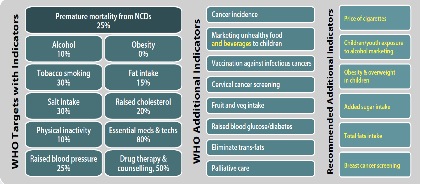
The discussions at the meeting in Geneva focused on what to measure.  As shown below, WHO has set 2025 targets as shown in the column on the left and then proposed additional indicators as shown in the middle column.  The NCD Alliance has recommended some additional indicators, shown in the column on the right.


These targets and indicators mark an important step forward in controlling NCDs. As Cary Adams, the Chair of the NCD Alliance noted in Geneva , the “commitment to measuring our progress and setting realistic and achievable goals, supported by the investment required, will…make a real difference to those of us who have or will develop NCDs in our lifetime. “


But monitoring changes in health status and health behavior related to NCDs and government NCD prevention policies may not be enough to achieve the stated goals.  As several experts have acknowledged, the business and political practices of the alcohol, tobacco and food industries play a critical role in the development of NCDs.[i][ii][iii] Without changes in these practices, it will be difficult to reduce premature deaths.  To encourage the discussion of indicators and targets for such monitoring, I suggest some provocative goals for the monitoring of corporate practices.


  1. Reduce expenditures on marketing alcohol, tobacco and unhealthy foods by the top 10(or 20 or 50) global producers of each of these products by a fixed percentage each year. The alcohol, tobacco and food industries are heavily concentrated with the top firms controlling a significant portion of market share.[iv][v][vi]  Since research evidence shows that more marketing leads to more consumption of these products associated with NCDs,[vii] less marketing could reduce exposure to this negative influence.
  2. Reduce corporate expenditures on lobbying and campaigns contributions for the top 10(or 20 or 50) global producers of alcohol, tobacco and unhealthy food by a fixed percentage each year. Tobacco, alcohol and food corporations have used their political and economic clout to undermine public health protections and to create an environment that allows them to promote behaviors and lifestyles associated with NCDs. [viii][ix][x] Restricting their ability to externalize the costs of the NCDs associated with their products and to thwart the democratic principles of one person one vote could help to prevent premature deaths, reduce government expenditures on health care and restore more democratic processes.
  3. Require tobacco, alcohol and food companies to commission an independent health impact assessment of any new product or practice and to make the assessment publicly available.


Each year, these companies introduce thousands of new products and practices. Often, however,  the adverse health impact is not recognized for years.  Requiring companies to hire independent researchers to complete health impact assessments according to uniform standards prior to exposing the population to such practices or products and to make such reports public could discourage companies from releasing into the market inadequately tested products. 


How could such targets be monitored?  The World Health Organization and other global bodies, the NCD Alliance and its network of NGO partners, national governments and other bodies could each play a role in setting targets and monitoring this indicator.  Global organizations could limit participation in international forums to those organizations who achieved targets.  Institutional investors could invest in companies that met targets and disinvest from those that did not.   National governments could favor companies meeting targets for procurement contracts and penalize those that failed to meet the targets.  They could also offer subsidies or tax breaks to companies that achieved targets. Some nations may choose to make these guidelines mandatory, especially for practices implicitly or explicitly designed to increase consumption of unhealthy products by children and young people.  


In the current political climate, these proposals will of course elicit intense opposition from corporations and their allies.  But 50 years ago the current measures in place to control tobacco use would have been unthinkable.  Effective public health officials need to compromise but before they compromise, they have to be able to articulate public health goals that are based on the evidence and have the potential to fulfill the mandate to protect population health.    Unless public health professionals,  researchers and advocates begin discussing now how to take action to end the corporate practices that contribute to the preventable illnesses and premature mortality  that  NCDs impose, 50 years from now we’ll still be lamenting the steady increase in the health burden and economic costs imposed by NCDs. 


[i] Beaglehole R, Bonita R, Horton R, et al., and the NCD Alliance. Priority actions for the non-communicable disease crisis. Lancet. 2011;377(9775):1438-47.

[ii] Magnusson RS. Rethinking global health challenges: towards a ‘global compact’ for reducing the burden of chronic disease. Public Health. 2009;123(3):265-74.

[iii] Lien G, DeLand K. Translating the WHO Framework Convention on Tobacco Control (FCTC): can we use tobacco control as a model for other non-communicable disease control? Public Health;125(12):847-53.

[iv] Jernigan DH. The global alcohol industry: an overview. Addiction. 2009 Feb;104 Suppl 1:6-12.

[v]    Eriksen M, Mackay J, Ross H.  Chapter 18 Tobacco Companies in The Tobacco Atlas 4th Edition  pp. 56-57

[vi] Stuckler D, Nestle M. Big food, food systems, and global health. PLoS Med.2012;9(6):e1001242.

[vii] Stuckler D, McKee M, Ebrahim S, Basu S (2012) Manufacturing Epidemics: The Role of Global Producers in Increased Consumption of Unhealthy Commodities Including Processed Foods, Alcohol, and Tobacco. PLoS Med 9(6):e1001235.

[viii] Brownell KD (2012) Thinking Forward: The Quicksand of Appeasing the Food Industry. PLoS Med 9(7):e1001254.

[ix] Freudenberg N. The manufacture of lifestyle: the role of corporations in unhealthy living. J Public Health Policy. 2012 May;33(2):244-56.

[x] Gilmore AB, Savell E, Collin J. Public health, corporations and the new responsibility deal: promoting partnerships with vectors of disease? J PublicHealth (Oxf). 2011;33(1):2-4.

EU urged to press ahead with tobacco crackdown amid lobbying scandal

Leading doctors are calling on the government to lean on the European commission to press ahead with the promised tough new tobacco products directive, in spite of the resignation of the EU health commissioner and a growing scandal in Brussels around alleged tobacco industry influence, reports the Guardian.  The commissioner John Dalli has revealed that he was forced to resign by the European commission president, José Manuel Barroso, following an investigation by the EU anti-fraud office into a complaint by a Swedish tobacco company.  The company, Match, which makes the EU-banned smokeless tobacco product “snus,” alleged that a compatriot of Dalli’s had offered to arrange meetings with the commissioner for money. Dalli denied meeting any lobbyist.

Protecting Public Health from Risky Corporate Practices

Photo Credit: British American Tobacco

Two current news stories illustrate the challenges the US government faces in protecting the public from corporations that manufacture dangerous products.  A  Huffington Post report posted on October 9th describes how in 1993, Bain and Co., the Boston consulting company where Mitt Romney was CEO, received a $3.9 million contract from the US government to help the Russian government privatize its economy.  At the same time, Bain also had a contract with British American Tobacco (BAT), a conglomerate that produced Kool, Lucky Strike and Pall Mall cigarettes.   In 1992, the Russian government’s monopoly on tobacco production ended.  Bain used its government contract to develop a privatization strategy for Russia, then helped BAT executives to maximize the company’s growth opportunities in this new environment.    


Bain also worked for Philip Morris, another Big Tobacco company that was expanding its business in Russia.  In an earlier investigation, the Center for Public Integrity has shown how the marketing and pricing strategies of multinational tobacco companies – and their sweetheart deals with Russian officials – helped increase the rate of smoking among Russian women from 7 % in 1992 to 22% by 2009.  Russian men continue to have among the highest smoking rates in the world.   In Bain’s US work with Philip Morris, reports the Huffington Post, the

consulting company helped Philip Morris  to develop a “coordinated long term approach to legal/regulatory/public

opinion opportunities and challenges to maximize shareholder wealth.” 


In another story, The New York Times reports that 11 people have died and 119 have become sick in a national meningitis outbreak linked to injections of a contaminated drug .  All of them had been injected with a pain drug shipped around the country by a compounding pharmacy in Massachusetts. Compounding pharmacies are small to midsize businesses that have emerged to exploit gaps in the regulations of the pharmaceutical industry. 


Photo Credit: US Food and Drug Administration

“This incident raises serious concerns about the scope of the practice of pharmacy compounding in the US and the current patchwork of federal and state laws,” said a statement by Representative Henry A. Waxman, Democrat of California, and two other Democrats on the House Energy and Commerce Committee, Diana DeGette of Colorado and Frank Pallone Jr. of New Jersey. The committee has jurisdiction over the Food and Drug Administration.


Gary Dykstra, a professor at the University of Georgia College of Pharmacy who was the F.D.A.’s deputy associate commissioner for regulatory affairs in the 1990s and retired in 2007, told the Times that Federal drug regulators have tried to crack down on the larger compounding pharmacies with limited success. “They were pushing the limits of pharmacy practice. We were seeing some very clever entrepreneurs that were trying to get a foothold in what they saw as a need but taking it to extremes.” However, inspection proved difficult. They were politically adept, he said, using lobbyists. “They were making a lot of money so they fought us pretty hard,” Mr. Dykstra

said.  “They argued this was a doctor-patient relationship and the F.D.A. couldn’t interfere…We would put a lot of

work into an investigation but our recommendations would find little support.”  The F.D.A. has said it knows of 200

“adverse events,” involving 71 compounded products since 1990.

Norway rules in favor of tobacco display ban

Reuters reports that a Norwegian court has upheld a ban on displaying tobacco products in stores, in a closely-watched ruling as governments across the world look to crack down on smoking to improve public health and cut medical costs. The court on Friday rejected a complaint by Philip Morris, maker of Marlboro cigarettes, which argued the ban violates a free trade agreement linking non-EU member Norway to the European Union’s market rules.

Good News: Tobacco Consumption Drops in Wake of Federal Tax Hike

More than three years after President Obama signed legislation increasing the federal cigarette tax from 39 cents a pack to $1.01 a pack, rates of smoking have dropped.

According to an analysis by USA Today, the decrease in smoking can be seen especially among teens, poor people and those dependent on government insurance. The dip in smokers came after the president signed the tax hike — which was intended to finance expanded healthcare for children — in early 2009 and it went into effect on April 1, 2009.

Bringing Corporations and Health into the Public Health Curriculum

As public health students and faculty head back to school this week, Corporations and Health Watch continues its tradition of starting the academic year with a commentary on teaching about corporations and health. Our argument for including teaching about the impact of corporations on health in public health and related academic programs is based on the following premises:


  • Corporations are the dominant economic and political institution of the 21st century and thus have a profound influence on global well-being.
  • The business and political practices of corporations are a modifiable social determinant of health and thus a promising target for public health interventions.
  • To achieve local, national and global public health goals of reducing premature mortality, shrinking inequalities in health,  and controlling non-communicable diseases and injuries  will require making changing corporate behavior as important a public health priority as changing individual behavior.
  • Few public health academic programs adequately prepare their students to investigate, analyze or contribute to modifying the corporate policies and practices that harm health.


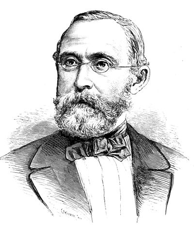
Professor Rudolph Virchow
Photo credit

To be effective in fulfilling their responsibility to prevent illness, promote health and reduce health inequalities, public health professionals should be able to demonstrate the following competencies:


  1. Identify corporate business and political practices that affect health.
  2. Develop public health strategies to encourage health-promoting corporate practices and discourage or end health-damaging ones.
  3. Analyze the public health advantages and disadvantages of various government/market relationships
  4. Create alliances with consumer, environmental, labor  and health organizations and movements that seek to  change harmful corporate practices and policies
  5. Describe the roles of public health professionals and researchers in modifying harmful corporate practices or policies.


These competencies can be developed in several ways.  Core public health courses can includes sessions on these topics as they relate to, for example, epidemiology, health policy, environmental health, or health education.  Some programs have developed specialized courses on the topic, allowing interested students to pursue this interest.  (To see a  syllabus for a doctoral course Interdisciplinary Perspectives on Corporations and Health 1900-2012 at City University of New York  click here to request a copy.)  Or a student-faculty interest group can bring together those who want to pursue research, advocacy or practice on the corporate impact on public health. 


Front entrance to the Bloomberg School of Public Health
Photo credit


For the time being, you’re more likely to find a corporate name on the front of a school of public health than to have corporate practices discussed in the classroom.  Fortunately, however, a growing number of resources are available to faculty who want to teach about this topic and students who want to learn more or write papers on corporations and health.  I offer here a short list of such sources.


10 Sources on Corporations and Health for Use in Basic Public Health Classes

(with suggestions for use in Epidemiology (EPI), Health Policy & Management (HPM), Social and Behavioral Health (SBH), or Environmental & Occupational Health (EOH) Core Courses)


Biglan A. Corporate Externalities: A Challenge to the Further Success of Prevention Science.  Prev Sci. 2011; 12(1): 1–11. (HPM, SBH)

Brandt AM.  Inventing conflicts of interest: a history of tobacco industry tactics. Am J Public Health. 2012;102(1):63-71.(EPI, SBH, HPM)

Freudenberg N, Galea S. The impact of corporate practices on health: implications for health policy. J Public Health Policy. 2008;29(1):86-104 (SBH,HPM)

Hastings G. Why corporate power is a public health priority. BMJ. 2012;345:e5124.(EPI, HPM, SBH)

Huff, J. 2007. Industry influence on occupational and environmental public health. International Journal of Occupational and Environmental Health 13.1: 107–117. (EPI, EOH)

Labonté R, Mohindra KS, Lencucha R.  Framing international trade and chronic disease.  Global Health. 2011 Jul 4;7(1):21.(EPI, SBH,HPM)

Ludwig DS, Nestle M. Can the food industry play a constructive role in the obesity epidemic? JAMA. 2008 Oct 15;300(15):1808-11.(SBH,HPM)

Stuckler D, McKee M, Ebrahim S, Basu S Manufacturing Epidemics: The Role of Global Producers in Increased Consumption of Unhealthy Commodities Including Processed Foods, Alcohol, and Tobacco. PLoS Med 2012;  9(6): e1001235. (EPI, SBH, HPM)

Wiist, W.H. (Ed). Bottom Line or Public Health. Tactics Corporations Use to Influence Health and Health Policy, and What We Can Do to Counter Them. NY: Oxford University Press, 2010. (relevant chapters for all 4 courses)

Woodcock J, Aldred R. Cars, Corporations, and Commodities: Consequences for the Social Determinants of Health. Emerging Themes in Epidemiology. 2008 Feb 21;5:4.  (EPI, EOH, SBH)


In addition to these selected resources, a bibliographic essay on Business and Corporate Practices can be found in the Public Health section of Oxford Online Bibliographies.


Finally, several Corporations and Health Watch contributing writers have websites or blogs that include additional timely material.  Check out these sites:  David Jernigan, Michele Simon, Bill Wiist.


Previous CHW Posts on Teaching about Corporations and Health


10 Ways to Bring the Health Impact of Business Practices into the Classroom  September 2011

Teaching about Corporations and Health  June 2010

Teaching about Corporations and Health: Bringing Corporate Practices into Public Health Classrooms  December 2007