The Oglala Sioux Tribe in South Dakota, whose federal lawsuit against four Nebraska beer sellers and some of the nation’s biggest breweries was dismissed this week, may refile the lawsuit in state court, the tribe’s attorney told the Associated Press. Tom White, an Omaha-based attorney for the tribe, said he’ll urge the Pine Ridge Indian Reservation’s council to continue with its lawsuit against the alcohol manufacturers and distributors, and four retailers in Whiteclay, Neb. The town of about a dozen residents on the dry reservation’s border sold the equivalent of 4.3 million 12-ounce cans of beer last year.
McDonald’s “educating” nutrition professionals

Cross-posted from Corporate Accountability International
 In the report I recently released, (covered by the New York Times) “And Now a Word from Our Sponsors,” I described the various ways the food industry influences the largest trade group of nutrition professionals – the Academy of Nutrition and Dietetics – through corporate sponsorship. While other corporations such as Coca-Cola play a more prominent role by being an “Academy Partner,” McDonald’s engaged in its trademark health-washing at the Academy’s annual meeting last fall.
To visit McDonald’s booth at the event’s expo hall, you would never know that it was the nation’s leading fast-food corporation. While several other companies (such as Kellogg) tried to get registered dietitians (RDs) to come to their booths for a free breakfast, McDonald’s was the most successful with this strategy. But they weren’t serving up the corporation’s common breakfast items like the Egg McMuffin or Sausage Biscuit. Rather, to visit the McDonald’s booth, you’d think the fast-food giant only sold oatmeal and smoothies. As I approached, a McDonald’s rep offered me some oatmeal, insisting that I just try it. (I declined, explaining that I make my own at home; I later learned that default version of McDonald’s oatmeal contains a whopping 32 grams of sugar.)
I asked a few RDs why they were there and they just said they were hungry. Fair enough, but it was clear that McDonald’s had succeeded in positioning itself as a purveyor of healthy food while feeding RDs breakfast. In addition, most of the banners at the McDonald’s booth showed images of healthy foods like smoothies, never mind the McRib or Big Macs. (See photos.)
McDonald’s also was spinning tall tales at an education session called “Making a Difference: Improving Nutrition at QSRs.” (QSR stands for quick service restaurant, industry’s euphemism for fast food.) While numerous other sessions were listed in the program as officially sponsored, this one was not. Moderating the panel was Ilene Smith, an RD with Porter Novelli, a public relations firm with a long list of Big Food clients, including McDonald’s.
The first panelist was a consultant to numerous fast-food chains who goes by “Dr Jo®” – yes, she actually trademarked her name. The other was Cindy Goody, director of nutrition for McDonald’s. Goody introduced the “McDonald’s nutrition team” (most were wearing red jackets, like a sports team), including several RDs and chefs.
This session was a 90-minute infomercial for the fast-food giant. In fact, when I turned to an RD sitting next to me afterward, that’s exactly what she called it. She told me she was disappointed because she came to the panel expecting substantive information about what chain restaurants were doing about nutrition. Instead, we saw slide after slide about how wonderful McDonald’s is for posting calories on its menus (never mind how the company lobbied for decades against menu labeling) and for adding apple slices to Happy Meals. Goody touted McDonald’s “commitment to children’s well-being… Now parents feel better feeding their kids Happy Meals.” But not a word about how the Happy Meals still contain hamburgers or fried chicken, and are marketed to young children. (Goody’s slides from that presentation are available online.)
When it came time for questions and answers, I was the only one willing to challenge what we just heard. I asked Goody why McDonald’s continued to market to children as young as age two, despite calls from public health professionals and others to stop exploiting kids. She simply repeated the same PR line about alleged nutrition improvements, without addressing the ongoing problem of marketing to kids. I was cut off when I tried to ask a follow-up.
Later I had a troubling conversation with an RD friend about this session. As I began to tell her about it, she countered that McDonald’s did not “have a session” at the event. I had to insist that I had witnessed it myself to convince her. This exchange demonstrated the problem with how the sessions are listed in the program. Because this particular panel did not say “Sponsored by McDonald’s,” this RD had no idea it was in fact a McDonald’s-run session.
Which made me wonder, how did McDonald’s get on the program in the first place, if it weren’t an official sponsor like the other food companies? Did Cindy Goody (or someone else at McDonald’s) actually submit an abstract to the Academy of Nutrition and Dietetics and apply to be a speaker? According to the Academy submission guidelines, proposals are “reviewed based on their individual merit and their application to the Academy’s strategic mission, vision and goals.” But how could McDonald’s PR spin possibly apply to the Academy’s stated vision of “optimizing the nation’s health through food and nutrition”?
I would expect McDonald’s to push its public relations agenda at a nutrition conference, but shame on the Academy of Nutrition and Dietetics for so readily offering up the forum in which to do so. You can read my full report (or the executive summary) on corporate sponsorship of the Academy, see photos of the expo and read what former members are saying about why they left.
Maker hid data about design flaw in hip implant, records show
Executives at Johnson & Johnson, the American multinational medical devices and pharmaceutical corporation, knew years before they recalled [the] troubled artificial hip in 2010 that it had a critical design flaw, The New York Times writes, but the company concealed that information from physicians and patients, according to internal documents disclosed on Friday during a trial related to the device’s failure.
Center for Science in the Public Interest translates Coca Cola ad into English
When Coca-Cola released “Coming Together,” a 2 minute ad addressing obesity, it was met with jeers and howls of laughter. Now that the laughter has died down, CSPI thought it would attempt to translate the ad’s Cokespeak into plain English. See the video.
Are America’s Nutrition Professionals in the Pocket of Big Food?
Cross posted from Appetite for Profit
Are America’s nutrition professionals in the pocket of Big Food? While the Academy of Nutrition and Dietetics’ 74,000-member trade group partners with the likes of Coke and Hershey’s, the nation’s health continues to suffer from poor diet. That’s the question Michele Simon asks in her new report, Are America’s Nutrition Professionals in the Pocket of Big Food? Here’s the Executive Summary.
By any measure, the nation is currently suffering from an epidemic of diet-related health problems. According to the U.S. Centers for Disease Control and Prevention,1 chronic diseases – such as heart disease, stroke, cancer, and diabetes – “are among the most common, costly, and preventable of all health problems.”
Against this backdrop, we must ask: what is the role of the Academy of Nutrition and Dietetics (AND)—the nation’s largest association of nutrition professionals—in preventing or at least stemming the tide of diet-related health problems? What responsibility does this influential group of registered dietitians bear to be a leading advocate for policy changes to make eating healthfully more accessible? Does forming partnerships with the food industry compromise such a group’s credibility? And what does the food industry gain from such partnerships?
Why does it matter? As this report will show, the food industry’s deep infiltration of the nation’s top nutrition organization raises serious questions not only about that profession’s credibility, but also about its policy positions. The nation is currently embroiled in a series of policy debates about how to fix our broken food system. A 74,000-member health organization has great potential to shape that national discourse – for better and for worse.
Findings:
- Beginning in 2001, AND listed 10 food industry sponsors; the 2011 annual report lists 38, a more than three-fold increase.
- The most loyal AND sponsor is the National Cattleman’s Beef Association, for 12 years running (2001-2012).
- Processed food giants ConAgra and General Mills have been AND sponsors for 10 of the last 12 years.
- Kellogg and the National Dairy Council have been AND sponsors for 9 of the last 12 years.
- Companies on AND’s list of approved continuing education providers include Coca-Cola, Kraft Foods, Nestlé, and PepsiCo.
- Among the messages taught in Coca-Cola-sponsored continuing education courses are: sugar is not harmful to children; aspartame is completely safe, including for children over one year; and the Institute of Medicine is too restrictive in its school nutrition standards.
- At AND’s 2012 annual meeting, 18 organizations – less than five percent of all exhibitors – captured 25 percent of the total exhibitor space. Only two out of the 18 represented whole, non-processed foods.
- Based on square footage, only about 12 percent of the expo floor was taken up by fruit and vegetable vendors, using AND’s own generous classification.
- The AND Foundation sells “nutrition symposia” sponsorships for $50,000 at the annual meeting. In 2012, Nestlé presented a session on “Optimal Hydration.” • The Corn Refiners Association (lobbyists for high fructose corn syrup) sponsored three “expo impact” sessions at the AND 2012 annual meeting.
- Roughly 23 percent of annual meeting speakers had industry ties, although most of these conflicts were not disclosed in the program session description.
- In an independent survey, 80 percent of registered dietitians said sponsorship implies Academy endorsement of that company and its products.
- Almost all RDs surveyed (97 percent) thought the Academy should verify that a sponsor’s corporate mission is consistent with that of the Academy prior to accepting them.
- A majority of RDs surveyed found three current AND sponsors “unacceptable.” (Coca-Cola, Mars, and PepsiCo.)
- The AND lobbying agenda reveals mostly safe issues benefiting registered dietitians. To date, AND has not supported controversial nutrition policies that might upset corporate sponsors, such as limits on soft drink sizes, soda taxes, or GMO labels.
- AND’s sponsors and their activities appear to violate AND’s own sponsorship guidelines.
- In 2011, AND generated $1.85 million in sponsorship revenue, which represents about 5% the total revenue. This is down from 9% in both 2010 and 2009.
- For the AND Foundation, corporate contributions were the single largest source of revenue in 2011: $1.3 million out of a total of $3.4 million or 38 percent.
- In 2011, the AND Foundation reported more than $17 million in net assets, more than six times its expenses for that year.
Recommendations
1) Greater Transparency: AND should make more details available to the public (or at least to members) regarding corporate sponsorship—far beyond what it currently provides in its annual reports.
2) Request Input from Membership: Trade group policies should reflect the desires of its members. Many RDs object to corporate sponsorship but don’t know how to make their voices heard.
3) Meaningful Sponsorship Guidelines: AND should implement much stronger and more meaningful sponsorship guidelines, possibly looking to the Hunger and Environmental Nutrition Dietetic Practice Group’s stricter guidelines as a model.
4) Reject Corporate-Sponsored Education: AND should reject outright corporate-sponsored continuing education, as well as corporate-sponsored education sessions at its annual meeting. AND should also consider placing more distance between its credentialing arm and the main organization.
5) Increased Leadership on Nutrition Policy: In recent years, AND’s leadership has taken important steps to improve its policy agenda and create a positive presence in Washington. However, while the staff in the D.C. office is lobbying on behalf of AND’s membership, “education sessions” are being taught to RDs by Coke and Hershey’s. This disconnect will continue to undermine AND’s credibility on critical policy issues until the conflicts are resolved.
The full report is available here.
India hears appeal of compulsory license for cancer drug Sorafenib
India’s Intellectual Property Appellate Board is hearing Bayer’s appeal to the government’s compulsory license for patents on the drug Sorafenib (sold under the brand name Nexavar by Bayer). Used to treat kidney and liver cancer, the drug costs 2,800,000 rupees (USD 5,214) per patient per month and the generic costs 8,880 rupees (USD 165) per patient per month. The compulsory license was issued under Section 84 of the Patents Act, on the grounds that the invention was “not available to the public at a reasonably affordable price,” and therefore not reasonably worked in India. Read more
Price cap regulation of tobacco in United Kingdom could yield financial and public health benefits
A new study posted online in Tobacco Control explores the feasibility of applying a system of price-cap regulation in the United Kingdom to address the market failure inherent to the tobacco industry. The authors conclude that applying a system in the UK would raise around £500 million per annum (US$750 million) and that the significant financial and public health benefits the system would generate suggest this is a policy that should be given serious consideration.
Gun violence debates open doors for public discussion on role of gun industry
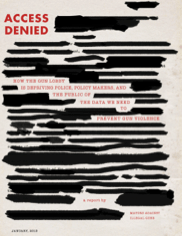

As President Obama lays out plans for executive and legislative action to reduce injuries and deaths from firearms and New York State approves a sweeping package of gun control measures, health advocates have new opportunities to inform the public debate. A few recent reports will assist in this task.
Mayors Against Illegal Guns released a new report Access Denied How the Gun Lobby is Depriving Police, Policy makers and the Public of the Data We Need to Prevent Gun Violence. The report asserts that:
Information is central to the American idea. It fuels our economy, keeps our elected officials accountable, and guides our public policy choices. But not always. Since the 1990s, the Washington gun lobby has led an aggressive effort to limit what we know about firearms. And it has largely succeeded.
The report describes how the gun industry and the National Rifle Association have advocated policies that restrict scientists, law enforcement officials, the military and doctors from gathering the evidence that could inform more effective policies. The Mayors’ group makes these recommendations to end the evidence blackout:
For nearly two decades, the U.S. has failed to make progress in reducing gun violence and gun crime because it has refused to look at them, to research them, and to talk about them. To make progress in the future, the federal government must revive research on firearms and remove restrictions on the use of information that can reduce crime and save lives.
Elected officials should take the following steps:
- Remove “policy riders” on federal appropriations bills that limit firearms research at the CDC and NIH and provide appropriate funding to study the role of firearms on public health.
- Fully fund the National Violent Death Reporting System and expand it to all 50 states to improve our understanding of the role firearms play in fatalities.
- Reconstitute the research program on gun trafficking at the National Institute of Justice to update and expand our understanding of the market for illegal guns.
- Resume the publication of Justice Department reports on illegal gun markets and trafficking patterns.
- Rescind the Tiahrt Amendments.
- Expand the bulk sale reporting program for assault weapons to include all 50 states.
An investigation by George Zornick, “How Walmart Helped Make the Newtown Shooter’s AR-15 the Most Popular Assault Weapon in America”, published in the Nation magazine examines how Walmart became the largest gun and ammunition retailer in the country. The Bushmaster AR-15 used by Lanza in the Newtown massacre is familiar to many Walmart shoppers. It’s on sale at about 1,700 Walmart stores nationwide, though the retail chain pulled the weapon from its website three days after the attack. Zornick reports that in 2006:
The chain announced that it was rolling back gun sales, citing declining profit margins on the relatively expensive weapons, which even at Walmart can retail for hundreds of dollars. But in 2011, company executives were looking at eight straight quarters of declining sales at stores open for a year or more—the worst slump in Walmart’s history.
This report shows that the ready access to guns that contributes to the nation’s high gun death rates is not mainly the result of a few shady gun dealers but of business deals between America‘s largest corporations that are looking to maximize profits by any means necessary.
Finally, Johns Hopkins University this week convened more than 20 global experts for a summit on gun policy and violence to summarize relevant research and its implications for policymakers and concerned citizens. “The(se) research-informed measures address not only mass shootings but also the less publicized U.S. gun violence that takes an average of 30 lives every day,” said Summit organizer Jon Vernick, JD, MPH, co-director of the Center for Gun Policy and Research at the Johns Hopkins Bloomberg School of Public Health. “We can reduce this number through implementation of such measures as expanding conditions which would prohibit high-risk individuals from possessing guns, strengthening the background check system by covering all firearm sales, and ensuring that necessary records for prohibited individuals are available.”
Drug companies find willing research partners on campus
In their quest for the next big drug discovery, reports the Springfield, Missouri News-Leader , pharmaceutical companies are increasingly teaming up with some of the nation’s top universities, recruiting campus scientists as partners and offering schools multimillion-dollar deals to work on experimental drugs in development. Dr. Marcia Angell, former editor-in-chief of the New England Journal of Medicine criticized the pharmaceutical industry’s new coziness with major campuses. “What it does,” she said, “is to blur the boundaries between academic medical centers and investor-owned companies”.
Coca Cola launches new obesity ads
The New York Times reports that the Coca-Cola Company has launched a new television ad campaign aimed at getting on the healthy side of the national debate over obesity — a novel step for a company built on sugary soft drinks. Critics charged the company’s goal was to confuse, not educate the public.
 Corporations and Health Watch