Top 10 Lies Told by McDonald’s CEO at Annual Shareholders’ Meeting

Cross-posted from Corporate Accountability International

Image from Brendan McDermid/Reuters

Last week at McDonald’s annual shareholder’s meeting, CEO Don Thompson got caught off-guard when a team of 15 advocates, led by Corporate Accountability International, descended upon corporate headquarters to question the fast food leader’s relentless exploitation of children and communities of color.


Leading the way was Tanya Fields, executive director of the BLK ProjeK and mother of four. In her dramatic statement, Fields described her neighborhood in the Bronx as a “food swamp filled with corner stores and fast food,” noting that with three outlets within walking distance of her home, “McDonald’s happens to be the biggest alligator in that swamp.” She concluded: “Sorry, but four apple slices in plastic packaging won’t cut it.”


McDonald’s CEO Don Thompson’s response was to ignore Fields altogether and instead give the usual cheerleading speech about all the great things his company was doing. Then he took questions, and the fun really began.


Here are the top 10 lies told by Don Thompson during the Q&A session.


In response to 9-year-old Hannah Robertson (read her statement):


1) “First off, we don’t sell junk food, Hannah.”


Where to even begin? A quick look at the menu belies that statement, while this “big breakfast” item packs more than 1,000 calories: half a day’s worth.


Thompson tried this spin more than once:


2) “We sell lots of fruits and veggies at McDonald’s and we sell side salads for a dollar on the dollar menu.”


In 2011, McDonald’s made a big deal about how it would automatically include apple slices in Happy Meals. Considering that McDonald’s is now the single largest purchaser of apples in the nation, that may qualify as “lots of fruit.” Then again, the company is also the single largest purchaser of both beef (a billion pounds a year) and potatoes. I suppose Thompson would count fries as a vegetable?


While it’s true McDonald’s sells a side salad on its dollar menu (one of 13 items), if you only have a one dollar to spend, what’s the likelihood you would choose a small salad over the 310-calorie “grilled onion cheddar burger”?


3) Claiming “chicken nugget Happy Meals and fat-free milk” are healthy.


According to the McDonald’s website, Chicken McNuggets contain roughly 30 ingredients, including: sodium phosphates, sodium acid pyrophosphate, sodium aluminum phosphate, monocalcium phosphate and calcium lactate.


The “fat-free milk” Thompson touted numerous times is actually chocolate milk, containing 10 grams of added sugar, which as registered dietitian Andy Bellatti told me, is more than 75 percent of a day’s worth for children ages 4-8 (per the American Heart Association’s guidelines). He added: “As it is, American children are consuming an exorbitant amount of sugar; no one should be encouraging sugary beverages simply because they contain calcium and vitamin D.”


Next, in response to a question from Corporate Accountability International about how McDonald’s is getting kicked out of hospitals over obvious concerns about the conflicting messages, Thompson claimed:


4) “Many hospitals have asked us to come back in or to never leave.”


Thompson must be forgetting about how the CEO of Truman Medical Center in Kansas City kicked McDonald’s out just last year, citing an “inconsistent message.” Perhaps Thompson was also unaware of at least three other hospitals that had ended their contracts with McDonald’s prior to Truman: Lurie Children’s Hospital (formerly Chicago Memorial Hospital), Children’s Hospital of Philadelphia, Vanderbilt Medical Center and Parkland Health & Hospital System.


Also, Thompson must have missed this memo: more than 3,000 health professionals and institutions from around the world have signed a letter urging McDonald’s to stop marketing junk food to children.


Continuing the healthcare theme was a powerful statement by pediatric endocrinologist Dr. Andrew Bremer, who called out the CEO for the company’s marketing to children: “Last year you said, and I quote: ‘Do me the honor… of not associating us with doing something that is damaging to children.’ Well with all due respect, Mr. Thompson, your corporation is doing just that.”


In his response, Thompson seemed to be getting a little desperate, sidestepping the issue of marketing to children altogether, claiming:


5) “We provide high-quality food, we always have. It’s real beef, it’s real chicken, it’s real tomatoes, real lettuce, real fruit, real smoothies, real dairy, real eggs.”


Really? The “real eggs” in an Egg McMuffin are “prepared with” the following:


Liquid Margarine: Liquid Soybean Oil and Hydrogenated Cottonseed and Soybean Oils, Water, Partially Hydrogenated Soybean Oil, Salt, Soy Lecithin, Mono and Diglycerides, Sodium Benzoate and Potassium Sorbate (Preservatives), Artificial Flavor, Citric Acid, Vitamin A Palmitate, Beta Carotene (Color).


Even the “real smoothies” contain unpronounceable additives. See for example, the “fruit base” of the McCafe Mango Pineapple Smoothie, which consists of:


Water, Clarified Demineralized Pineapple Juice Concentrate, Mango Puree Concentrate, Pineapple Juice Concentrate, Orange Juice Concentrate, Pineapple Puree, Passion Fruit Juice, Apple Juice Concentrate, Natural (Botanical Source) and Artificial Flavors, Contains less than 1% of the following: Peach Puree, Cellulose Powder, Pear Juice Concentrate, Xanthan Gum, Peach Juice Concentrate, Pectin, Citric Acid, Colored with Fruit and Vegetable Juice and Turmeric Extract, Ascorbic Acid (Preservative).


But wait, there’s more. The Mango Pineapple Smoothie also contains “low fat smoothie yogurt,” consisting of: “Cultured Grade A Reduced Fat Milk, Sugar, Whey Protein Concentrate, Fructose, Corn Starch, Modified Food Starch, Gelatin, Active Yogurt Cultures.” And did I mention the 47 grams of sugar? But I am sure it’s “real sugar,” right Mr. Thompson?


Next, continuing to pound Thompson on marketing to kids was Kia Robertson (parent of Hannah; see Kia’s statement here). Then the CEO trotted out the tired industry defense on exploiting children:


6) Globally, we follow guidelines on responsible marketing to children.


Parents in Brazil would beg to differ. Just last month, McDonald’s was fined $1.6 million by the consumer protection agency in Sao Paolo for violating local laws on targeting children.


Here in the U.S., McDonald’s is far from responsible. A report from Yale University found that McDonald’s targets children as young as age 2 at Ronald.com. (This site now redirects to HappyMeal.com, where children are forewarned at the top of the page: “Hey kids, this is advertising!”)


The Yale report also found: “Although McDonald’s pledged to improve food marketing to children, they increased their volume of TV advertising from 2007 to 2009.” Preschoolers saw 21 percent more McDonald’s ads and older children viewed 26 percent more ads in 2009 compared to 2007. So much for guidelines.


Then Thompson actually said these words:


7) “And we are not marketing food to kids.”


Two words: Happy Meals.


8) To further this point, he claimed “We are not marketing in schools.”


Since a picture is worth a thousand words, see here, here, and here for Ronald McDonald visits to schools. Corporate Accountability International’s report contains more examples of school sightings of McDonald’s clown ambassador.  The company likes to claim, as CEO Thompson did, that Ronald is “just a clown” and that he doesn’t actually hawk food per se, never mind the branding.


McDonald’s also promotes “McTeacher’s Nights” in which, as the company describes it: “Educators, students, parents, and friends are invited to their local McDonald’s to ‘work’ and raise money for a designated school related cause.” Free labor plus free PR for McDonald’s, how brilliant is that?


In more defensiveness, (you almost had to feel sorry for him) CEO Thompson next tried this line:


9) We are not the cause of obesity.


Did he not see Supersize Me?


OK, McDonald’s is obviously not the only cause of our nation’s health woes, but research has shown a connection between the location of fast-food outlets and adverse health outcomes in communities.


For example, one study found that nearly one-third of U.S. children ages 4 to 19 eat fast food, which increases the risk of obesity due to an increase in daily calories. Another study showed that students with fast-food outlets near their schools were more likely to be overweight, and to consume more soda and fewer fruits and vegetables. And this connection was stronger for African-American children, while a third study found a similar pattern among low-income African-American adults. Speaking of which…


In response to Michelle Dyer (see her statement here), who challenged Thompson on McDonald’s marketing to communities of color, the African-American CEO began by joking, “this hits kind of close to home, wonder why that is?” Then he got very defensive, claiming:


10)  “We do not, have not, will not, try to target people of color… I’ve been here 23 years. I know we don’t do that and we wouldn’t do that. We don’t do that under my leadership.”


These three McDonald’s websites speak for themselves:


According to this Bloomberg article, in 2011 McDonald’s CEO’s salary topped $8.75 million. For that kind of money, Don Thompson should have far better talking points at the ready. Let’s see what happens next year.


Meanwhile, you can take Corporate Accountability International’s action to tell CEO Don Thompson to stop marketing to children here.

Gun Makers Saw No Role in Curbing Improper Sales

In a review of court documents from earlier lawsuits against the gun industry, The New York Times found that the industry’s leaders argued, often with detachment and defiance, that their companies bear little responsibility, beyond what the law requires, for monitoring the distributors and dealers who sell their guns to the public.  The executives claimed not to know if their guns had ever been used in a crime. They eschewed voluntary measures to lessen the risk of them falling into the wrong hands. And they denied that common danger signs — like a single person buying many guns at once or numerous “crime guns” that are traced to the same dealer — necessarily meant anything at all.

WHO Calls for Total Ban on Tobacco Advertising

As May 31 World No Tobacco Day approaches,  the World Health Organization (WHO) has called for a comprehensive ban on all tobacco advertising, promotion and sponsorship, saying that the tobacco companies’ ” aggressive marketing” has led to addiction killing at least 6 million people worldwide each year, reports the  Xinhua News Agency. In a statement issued Thursday, WHO Regional Director for the Western Pacific Dr. Shin Young-soo cited the WHO Framework Convention on Tobacco Control as saying governments around the world “must comprehensively ban tobacco advertising, promotion and sponsorship.”

U.S. Firearms Trafficking to Guatemala and Mexico

A new report from the Woodrow Wilson International Center for Scholars examines the role that the trafficking of US weapons into Guatemala may play a role in the continuing violence and criminality in that Central American nation.  The report  reviews an analysis that the US Bureau of Alcohol, Tobacco, Firearms and Explosives (ATF) conducted of weapons from two Guatemalan military bunkers in 2009. One bunker contained firearms and the other explosives and military ordnance.

Court Rules Against Industry Efforts to Hide Health Effects of Styrene

Earth Justice, an environmental group, reports that the D.C. District Court dismissed the styrene industry’s challenge to the identification of styrene as “reasonably anticipated to be a human carcinogen,” ensuring that government can alert the American public to the potential dangers of styrene, a chemical used extensively in the manufacture of plastics, as well as boats, cars, bathtubs, and products made with rubber, such as tires and conveyer belts.

Best Public Relations Money Can Buy

 Cross-posted from Center for Food Safety


5.15


What are front groups?


In response to heightened criticism over the past few years, the food industry has stepped  up its public relations efforts to reassure the media, the public, and policymakers that our food system is healthy and safe. One increasingly common way industry attempts to shape the public discourse is by forming a group that appears to benefit the public. Often these groups claim to represent farmers or consumers or some other sympathetic constituency when in fact they are funded by powerful industry players. Some long-standing front groups have a broad agenda, such as pushing industry-friendly science. Others form just to lobby or conduct public relations on a specific policy for a limited time and then disappear. It is critical to understand who these groups are and how they operate. Their tactics are designed to hide their true agenda and funders. For example, representatives of front groups often write op-eds or appear as experts without disclosing the conflict of interest.


What is the difference between trade groups and front groups?


Food companies hire lobbyists to push for legislation in their favor and oppose laws that hurt their interests. Trade groups are formal lobbying organizations through which food companies pool their resources to be more powerful. An example of a food industry trade group is the National Cattleman’s Beef Association, which represents the beef industry. Each major animal product (pork, chicken, eggs, dairy) is represented by its own trade group. Likewise, the soft drink industry is represented by the American Beverage Association, while the Grocery Manufacturers Association represents both food and beverage makers such as General Mills, Coca-Cola, and Kraft Foods.


While trade groups are generally up front about who they represent, front groups are not. Front groups often have deceptive-sounding names and attempt to create a positive public impression that hides their funders’ economic motives. Also, most front groups engage mainly in public relations campaigns as opposed to lobbying.


Why does industry form front groups?


Several motivators explain the rise of front groups in recent years. Most branded food companies (such as McDonald’s or Coca-Cola) have millions of dollars invested in their public image and so would rather not engage in the under-handed and mean-spirited tactics that some front groups utilize. It’s much safer to give money to front groups to let them do the dirty work while the corporate brand image remains clean. Also, the largest players in the food industry know that “Big Ag” and “Big Food” have become synonymous with bad, so they are no longer credible messengers. It’s better to create a front group that claims to represent farmers or consumers, two groups that are more sympathetic to the public. Similarly, industry knows that it has little credibility when it comes to complicated matters such as science. Years ago, the Tobacco Institute became notorious as the public relations arm of the tobacco industry— its aim to distort the science around smoking and health. This tactic effectively delayed public policy on tobacco for decades. The food industry’s current effort to distort science is similar, but somewhat more subtle, operating through less obvious front groups.


What are common front group tactics?


The main goal of any front group is to control the public discourse. Front groups are created in direct response to criticism being leveled at a sector of the food industry. Instead of fixing the myriad problems they’ve created, the food industry’s response is to change the way these problems are talked about, to downplay them, to discredit critics, and otherwise make the problems disappear from the public’s eye.


How do front groups accomplish this goal? The most valuable currency for any front group is propaganda and disinformation. Specific tactics include:


ASTROTURFING (FAKE GRASSROOTS): pretending your group represents the little guy, usually farmers, small business owners, or consumers. The idea is to make the public feel like the group is on their side and their interests are under attack by government and the elite.


SHOOTING THE MESSENGER: discrediting critics often by mocking them, calling them names like “food police” and “extremists” and otherwise marginalizing them.


BUYING SCIENCE: paying for research, hiring scientific experts as spokespeople, placing science stories in media, all without disclosing the conflict of interest.


SCAREMONGERING: Praying on people’s fears, especially related to the economy; for example, saying a policy will result in higher food prices or job losses.


Another common tactic employed by front groups is to “debunk” common “myths” about agricultural practices or nutrition advice. Front groups will portray advocacy groups, experts, and government officials as fearmongers who don’t understand science or know the “facts.” The idea is to make the front group position appear sane and reasoned, while making opponents sound irrational and even conspiratorial.


A similar theme in front group discourse is to portray opponents as antidemocratic and anti-consumer. Often front groups will use hyperbolic language to describe policy ideas as threats to core American rights such as freedom. Such tactics exploit many American consumers’ fears and detract from the actual issue under discussion. Each of these tactics is then deployed in a massive media campaign, through paid advertisements, media coverage, published research, op-ed articles, TV appearances, social media, etc. The idea is to distract attention from the substance of the issue (because industry often has no defense) and focus instead on anything else.


Read the full report.

How to Stop Deceptive Food Marketers? Take Them to Court

Cross-posted from Eatdrink Politics


chw 5.8

Last week, Monster Beverage filed an unusual lawsuit against the San Francisco City Attorney’s office to stop an attempt to place restrictions on the company’s highly caffeinated and potentially harmful products aimed at youth. This aggressive move is a form of backlash against using the legal system to hold the food and beverage industry’s accountable for deceptive marketing practices.


With the federal government all but ignoring the numerous ways food companies deceive shoppers with dubious health claims, the courts are becoming a more popular alternative for action.


As you may recall from civics class, we have three branches of government, and when two of them – the executive and the legislative – have essentially checked out, that leaves only one place to turn for a legal remedy: the judiciary. Despite years of brainwashing by the right wing about the evils of trial lawyers, litigation is a critical and yet underutilized tool for obtaining justice under a broken and compromised political system.


Under both federal and state law, it’s illegal to engage in deceptive marketing. This is a broad concept that applies to any entity that advertises. The idea is that consumers should not be swindled into buying a product; they deserve the straight facts to make informed purchasing decisions. And while such laws do help deter shady activities, deceptive marketing statutes get violated all the time, mostly due to lack of enforcement.


It may be unsettling to realize that on grocery store shelves right now are likely hundreds of food products that contain illegal deceptive claims. While the federal government does have specific definitions for some phrases such as “low fat” or “low salt,” otherwise almost anything goes on the front of a food package because the feds have turned a blind eye. Without proper government oversight, the only recourse is for private law firms to set these companies straight.


Here are some examples of deceptive food marketing cases currently gaining traction. (Full disclosure, I am a consultant for Reese Richman, one of the law firms bringing such cases.)


Natural Claims

The Food and Drug Administration is unwilling to provide useful guidance on the definition of “natural,” resulting in ubiquitous use of the word by marketers, no matter how nutritionally deficient the product. Factor in the growing interest in organic along with consumer confusion over that label’s meaning and you have a marketing bonanza in “natural” food.


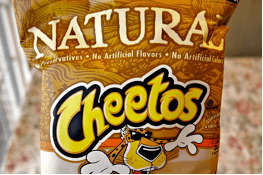
Some lawsuits are being filed over products sporting the natural label that contain genetically-engineered ingredients. Two such examples are ConAgra’s line of Wesson cooking oils and Frito-Lay’s snack products. To back up their claims, lawyers are even relying on Monsanto’s own definition of genetically-modified organisms: “Plants or animals that have had their genetic makeup altered to exhibit traits that are not naturally theirs.”


In a positive development in the ConAgra case last November, the judge found that that the plaintiffs adequately described “why genetically-modified products cannot be considered natural” and “they understood that the phrase ‘100% Natural’ meant that Wesson Oil was not made from genetically modified organisms, and that they purchased the product based on this false understanding.” This is a huge step forward for these types of cases.


In a similar action against Frito-Lay, the court recently made a preliminary ruling in favor of the plaintiff allowing the case to move forward. In its defense, Frito-Lay argued that no reasonable consumer would expect the phrase “all natural” to actually refer to all of the ingredients in the product. The court disagreed, since a reasonable consumer could interpret “all natural” to mean, um, all natural.


Such cases have tremendous potential to rock the processed food world, given how many products containing GMO ingredients are currently touting the meaningless natural label. Moreover, with increasing calls for mandatory GMO labeling at both the federal and state levels, along with voluntary retailer actions from the likes of Whole Foods, this issue is not going away anytime soon.


Other cases challenging the natural label are over products containing ingredients that are obviously not natural. One such lawsuit is against the Kellogg-owned Kashi GoLean brand of products. From the complaint:

For example, Kashi’s ‘All Natural’ GoLean Shakes are composed almost entirely of synthetic and unnaturally processed ingredients, including sodium molybdate, phytonadione, sodium selenite, magnesium phosphate, niacinamide, calcium carbonate, calcium phosphate, calcium pantothenate, pyridoxine hydrochloride, thiamin hydrochloride, potassium iodide, and other substances that have been declared to be synthetic substances by federal regulations.


Not sounding very natural. The judge has allowed this case to move forward.


Products Aimed at Children

Marketing to children qualifies as illegal deception because a child cannot understand how marketing works. What could be more deceptive than taking advantage of a child’s emotional vulnerability? Unfortunately, we have zero enforcement of this obvious legal violation due to weak-kneed government officials, once again leaving it up to the court system.


To date only one lawsuit has been filed directly challenging marketing to children— against McDonald’s over Happy Meals—an obvious target. The case was brought by the Center for Science in the Public Interest, the only nutrition advocacy group with a litigation department. (This helps explain why this tool is so underutilized.) Unfortunately, the judge dismissed the case last year. While suing over marketing to children does face certain procedural challenges, with the right venue and strategy, I am hopeful we can gain traction in time.


In lieu of directly challenging food makers for targeting children, another strategy emerging is suing over child-oriented products that make deceptive health claims. One such example is the General Mills’ product, Fruit Roll-Ups.


Also filed by Center for Science in the Public Interest, this case took the company to task for its claims their products were “fruit flavored,” “naturally flavored,” a “good source of vitamin C,” and low in calories, fat, and gluten. (Seriously, low in gluten?) In December, this case was settled when General Mills agreed to stop using the most egregious practices; for example, no longer putting images of strawberries on a product that contained none. Duh.


Chutzpah Claims

Taking the prize in the chutzpah line of cases is Coca-Cola’s vitaminwater brand. This lawsuit alleges deceptive marketing for positioning the product as a health tonic, when some varieties contain a whopping 33 grams of sugar (in 20 ounces), among other unhealthful ingredients such as dyes. That case has also been allowed to move forward, despite Coca-Cola’s desperate argument that “no consumer could reasonably be misled into thinking vitaminwater was a healthy beverage,’ a claim that was skillfully ripped apart by John Robbins and as well as hilariously pilloried by Stephen Colbert.


Another product deserving a chutzpah award is Chobani yogurt, a brand that has taken on near-iconic status in the most health-washed category of all. Chobani is being sued over its “all-natural” claim (among other statutory violations) because the label lists “evaporated cane juice,” which is just a fancy way of saying sugar. This, despite the FDA’s explicit warning to food makers not to use the phrase because the accurate description of the ingredient is actually “dried cane syrup.” But juice sounds so much more “natural” than syrup.


In a recent Twitter exchange, I had some fun with the poor social media person at Chobani. Despite the lawsuit, the company continues to use the phrase “evaporate cane juice.” When I asked why not just call it sugar, the reply was: “It’s specifically the form we use. Not all sugars are created equal.” But I got no response when I next tried to ask exactly how their sweetener was any different from sugar. (Maybe the lawyers got hold of the Twitter account.)


Rounding out the chutzpah category is Nutella, which got in legal trouble for advertising its dessert-like product as healthy breakfast. Although the case was settled for $3 million, it was also the subject of some ridicule by those who thought it was obvious that Nutella is a treat. But that critique misses the point: Under the law, companies are not allowed to market its junk food products as healthful. In a seminal case against Gerber for deceptively marketing children’s “fruit snacks,” the company tried to use the Nutrition Facts label as a defense, since the ingredients and amount of sugar are clearly listed there. But the judge explained that information being available elsewhere (like on the back of the package) does not make it OK for a company to deceive consumers in other ways, such as on the front of the package or in ads.


Litigation Challenges

While litigation represents an important tool for holding food companies responsible, there are also numerous challenges. For example, the strategy requires targeting one product or line of products at a time, which is not the most efficient approach for sweeping change. However, strategic selection of the worst (and largest) offenders can send a strong message to an entire industry.


Another limitation is how long the court process can take: often several years just to get through the preliminary phase. And, corporate defense lawyers are skillful at dragging out the process in hopes the plaintiffs will give up. Finally, the results are sometimes less than ideal. Most cases end in settlement because they are too costly to bring to trial, and negotiation necessitates compromise.


But given the widespread health-washing by a desperate food industry at a time when the American public is starting to realize that actual fruit may be a healthier option than Fruit Loops, litigation is a critical, if imperfect, tool.


Why Get Involved in Litigation?

Advocacy groups engaged in the good food movement should take notice. While major foundations may be too skittish to fund litigation, organizations can still team up with private lawyers to bring more of these sorts of cases. Nonprofits can play different roles such as: 1) offering specific expertise as consultants; 2) asking their members to serve as plaintiffs; 3) being a named plaintiff themselves in certain types of actions; or 4) serving as co-counsel.


Perhaps the best motivator for a nonprofit group to get involved in litigation is the potential for being awarded part of a “cy pres” fund: money set aside in a settlement for nonprofits doing good work that is sufficiently related to the case. Several good projects got their start with cy pres money, including a California-based group called CANFIT, which works with adolescents around health and nutrition. That settlement fund was from a deceptive marketing case against Kraft Foods, and some 20 years later the group is still going strong.


We have our work cut out for us with so much deception in the marketplace, but with better coordination and teamwork, we can make real progress through the legal system. It’s a shame that we have to turn to the courts at all, but that’s the political reality right now. Someone has to hold the food industry accountable.