The Independent reports that the European Union has agreed to ban menthol cigarettes and radically alter the packaging of so-called “slim” cigarettes as part of an overhaul of its tobacco rules. Currently slim cigarettes are sold in packaging that may attract young people, particularly girls. Under the new rules, slims will have to be sold in traditional cigarette boxes. Read More.
Big Reality Check on Big Food’s Claims on Reducing Calories
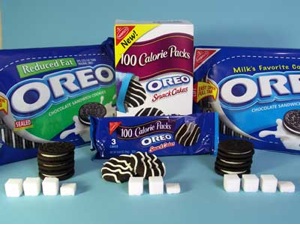

In what is becoming an all too familiar sight, the major food corporations recently teamed up with the First Lady’s Partnership for a Healthier America to announce their latest PR attempt to look like they are helping Americans eat healthier. A group calling itself the Healthy Weight Commitment Foundation, led by the CEO of PepsiCo–the nation’s largest junk food and sugary beverage pusher–claims to have delivered on its promise made in 2010 (a commitment, get it?) to reduce calories “in the marketplace” by 1.5 trillion. They further claim to have exceeded this goal, and all this a full three years ahead of schedule. The quotes by all involved were practically giddy.
The funny thing is, the official evaluation, funded by the Robert Wood Johnson Foundation, is not actually out yet, and won’t be until sometime this fall. Instead of waiting for what could be a negative, and certainly more scientific take, industry instead jumped the gun. The alleged data to back up its claims is contained in a vague document, posted here under the heading of “Preliminary Report,” even though industry is not even conducting the actual analysis. Instead, that effort is being done independently by Barry Popkin, a researcher at University of North Carolina at Chapel Hill, who confirmed with me that his results won’t be available until the fall.
Meantime, what to make of this industry spin? I asked Bruce Bradley, a former food industry executive turned blogger and author. He was skeptical, to put it mildly. Here are his thoughts about industry’s claims of calorie reduction:
First off, measuring something like this at such a high level is recipe for bias. There are just so many ways to manipulate the data to say what you want. Then when you consider who is issuing the report (HWCF) and their self-interest in appearing as responsible, I am very suspicious.
One big question I have about the data is the economic times we live in. Pre-recession habits are reflected by 2007 data. Certainly lots of families have had to cut back their food expenditures with the harder times of 2012. Again, this is certainly convenient for the sake of HCWF’s calculation. One big caveat to this is that while harder times may have required people to cut down their grocery expenditures, it also required them to cut down their “eating out” spending and make more meals at home. I don’t know restaurant trend data as well as grocery data, but I’m guessing that given how this recession has hit lower/middle income households harder than upper middle/upper income households, the impact of restaurant/foodservice consumption trends is somewhat muted, especially since this data is for 2007 and 2012.
Another big question is how Walmart was accounted for in the data. Since about 2001 Walmart refused to release any sales data. They changed that policy in 2012 and again started to share their sales information going back three years (to 2008) [Source: MediaPost Publications Nielsen Adds Walmart Data To Sales Product 03/15/2012]. Since this report goes back to 2007 what I’m imagining HWCF had to do to equalize this number was to remove Walmart from the calculation since no data was available for Walmart from that period. This would be a very convenient “have-to” for HWCF since sales volume continues to shift from more traditional grocery formats to Walmart.
Another trend that could distort this data is the increased consumption of private label foods. Since the economic downturn, private label has grown significantly. Although private label has made inroads into healthier categories, it still packs a bigger punch in traditional, high fat/salt/sugar categories. I’m guessing growth in private label is yet another way that disproportionately took high calorie volume away, hence making the HWCF’s number look better.
Finally, the beverage category is for sure one that is “helping” HWCF’s numbers. Lower/no calorie drinks is a huge trend, but it’s a crime that low/no calorie beverages are considered “healthy.”
Let’s see if the analysis due out this fall paints a more accurate picture.
Pharmaceutical Industry’s Principles for Ethical Direct-to-Consumer Advertising as a Deceptive Strategy
A new study in Journal of Health, Politics, Policy and Law shows how five leading drug companies violated industry-developed standards for ethical advertising in the United States. The authors demonstrate a consistent failure by companies that market erectile dysfunction drugs to comply with the industry’s guiding principles for ethical DTCA despite pledges of compliance by company leaders. They recommend policy responses to prevent deceptive practices, protect children from adult content, and promote genuine health care education.
Alcohol Concern Calls for Major Shakeup of Alcohol Advertising
In a new report called Stick to the Facts, Alcohol Concern, a United Kingdom charity working on alcohol issues, calls for a ban on alcohol advertising at music and sporting events in an effort to protect young people from such promotional messages. The report concludes that “advertising self-regulation is insufficient. Regulation needs to be independent of interested industries and given real teeth” in order to offer a “ framework of effective regulatory controls that balances commercial with public interest.”
Institute of Medicine Calls for Research on Gun Violence


Last week, the Institute of Medicine (IOM) released Priorities for Research to Reduce the Threat of Firearm-Related Violence, a report intended to inform scientific research that can guide policies to reduce gun violence. The report was in part a response President Barack Obama’s directive to the Centers for Disease Control and other federal agencies after the Newton Connecticut shootings to resume scientific research on gun violence. In 1996, at the behest of the gun industry and its supporters, Congress had ended most federal funding for research on gun violence.
In 2010, firearms injured or killed more than 105,000 Americans, with twice as many nonfatal firearm-related injuries (73,505) as deaths. “The complexity and frequency of gun-related violence combined with its impact on the health and safety of the nation’s residents make it a topic of considerable public health importance,” said Alan Leshner, chairman of the IOM study committee and chief executive of the American Association for the Advancement of Science. The IOM works outside of government to provide unbiased and authoritative advice to decision makers and the public.
The report calls for additional research on several topics including:
- The characteristics of firearm violence,
- Risk and protective factors,
- Interventions and strategies to reduce gun violence ,
- Gun safety technology, and
- The influence of video games and other media.
It proposes a research agenda that will produce results in three to five years. The report makes the case that “the evidence generated by implementing a public health research agenda can enable the development of sound policies that support both the rights and the responsibilities central to gun ownership in the United States. In the absence of this research, policy makers will be left to debate controversial policies without scientifically sound evidence about their potential effects.”
To illustrate the dangers of ideology rather than evidence-based policy, the report notes that while “firearm safety education programs are widespread in public schools… they are inadequately studied and the few evaluations that have been conducted provide little evidence of effectiveness.” This directly contradicts the NRA’s assertion that these programs have been shown to reduce gun injuries and deaths and should be the foundation of public policy.
The report is an important step forward in defining a research agenda on gun violence and provides scientific credibility for several important lines of research. But the IOM report is as important for what it does not say as for its recommendations. The term “gun industry” or “firearm industry” does not appear in the report. The words “National Rifle Association”, the organization that is the main obstacle to sensible gun policy, do not appear, except in the Appendix as identifications for two witnesses to the panel. The word “political” appears once and “campaign contributions” and “lobbying” not at all. These omissions are not surprising because in mainstream scientific discourse describing the political or corporate influences on research is as impolite and inappropriate as farting in public.
Some readers may argue that such criticism of a worthwhile report is unfair —this was after all a scientific report not a political analysis. But corporate practices have become an increasingly important influence on health and health policy. As the firearms, pharmaceutical, automobile, alcohol and food and beverage industries—among others—use their political and financial clout to influence health policy, failing to address these political dimensions makes it less likely that effective policies will emerge. Ignoring their role and failing to support research that documents industry influence on policy leaves advocates of healthier policies unequipped to succeed in the political arena where policies are shaped. It’s bad science and bad policy analysis.
As long as the behavior of corporations is off the polite scientific agenda, it will be difficult to design research studies or develop public health policies and programs that can address the most important causes of premature mortality and preventable illness and injury in the world today. In failing to discuss the need for research on the role of the gun industry and its supporters in gun violence, the IOM panel missed an important opportunity to educate the public, policy makers and scientists.
Altria Enters Nicotine Delivery Market
The Daily News reports that, Altria Group, the nation’s No. 1 tobacco company and owner of Marlboro maker Philip Morris USA, on Tuesday became the latest major player to enter the fledgling but potentially lucrative electronic cigarette business. The Richmond, Va.-base company unveiled its new MarkTen e-cigarette brand at its annual investors day conference in New York City. Altria said it will begin distributing MarkTen in August through its Nu Mark subsidiary, which also sells Verve chewable nicotine discs.
WHO Director Condemns Business Influences on Health Promotion
In a speech last week at the 8th Global Conference on Health Promotion, held in Helsinki, Finland, WHO Director Margaret Chan observed that “efforts to prevent non-communicable diseases go against the business interests of powerful economic operators…It is not just Big Tobacco anymore. Public health must also contend with Big Food, Big Soda, and Big Alcohol. All of these industries fear regulation, and protect themselves by using the same tactics.”
Investigative Reporting as a Public Health Research Method

Last week, the Center for Public Integrity, the nonprofit investigative news organization, reported that in 2012 the tobacco company Reynolds American Inc. helped fund several of the nation’s most politically active — and secretive — nonprofit organizations. Based on its review of company documents, Center for Public Integrity reported that Reynolds American’s contributions include $175,000 to Americans for Tax Reform, a nonprofit led by anti-tax activist Grover Norquist, and $50,000 to Americans for Prosperity, a free-market advocacy outfit heavily backed by billionaire brothers Charles and David Koch. The story provided a rare insight into how some of the most powerful politically active 501(c)(4) “social welfare” nonprofits are bankrolled.
This and similar stories by a handful of other investigative journalism outfits provide hope that despite the gloomy state of the mainstream media, dozens of reporters around the country continue to investigate corporate wrong doing . For public health researchers and activists, investigative journalists can help to fill in the gaps about our understanding of how corporations’ business and political practices can undermine health, the environment and democracy. For that reason, these investigative media outlets have become as important a source of information on corporations and health as the scientific journals that publish reports on the impact of a specific practice or exposure on a specific health outcome. This post provides an overview of several investigative journalism sites and lists some links to add to your Bookmarks.
The Center for Public Integrity proclaims that is mission is “to enhance democracy by revealing abuses of power, corruption and betrayal of trust by powerful public and private institutions, using the tools of investigative journalism.” As one of the country’s oldest and largest nonpartisan, nonprofit investigative news organizations, the Washington-based Center has produced series on the global tobacco industry, the high costs of corporate dentistry, toxic chemical pollution, and the occupational health of agricultural workers . Unlike daily mainstream media, CPI often sticks with a story for months or years. In partnership with the International Consortium of Investigative Journalists, for example, the Center produced a multi-year investigation of the tobacco industry, in which country-based reporters worked with an international team of editors to uncover how companies like Philip Morris International and British American Tobacco distorted science and subverted democratic processes in Russia, Mexico, Indonesia and Uruguay.

ProPublica is another independent, non-profit newsroom. Based in New York City, its mission is to shine “a light on exploitation of the weak by the strong and on the failures of those with power to vindicate the trust placed in them”. In the last few years, it has run investigations on guns, gun policy and the gun industry and on pharmaceutical company payments to doctors who prescribe their products. Like the Center for Public Integrity, ProPublica often partners with other media including Frontline, the New York Times and National Public Radio to produce reports that run simultaneously in several media. ProPublica’s MuckReads provides readers with ongoing updates on investigative stories in other media, offering an efficient way to scan the investigative landscape.
The Center for Media and Democracy, another non-profit investigative reporting group, published news stories and analysis that exposes corporate spin and government propaganda. The Center publishes PRWatch, SourceWatch, FoodRightsNetwork and BanksterUSA. PR Watch “exposes the hidden activities of secretive, little-known mega-firms such as Hill & Knowlton, Burson-Marsteller and Ketchum PR — the ‘invisible men’ who control our political debates and public opinion, twisting reality and protecting the powerful from scrutiny.”
Investigative Journalism and Public Health
For public health faculty, students and researchers, investigative journalism provides another window on the world. Its practitioners use a variety of methods— analyzing public data obtained through the Freedom of Information Act; “crowd-sourcing” to enlist a broad section of people who have experienced a problem to help understand its causes and consequences; and old-fashioned shoe-leather reporting. For public health students, these methods could significantly expand their research repertoires. New partnerships between schools of public health and schools of journalism could help to produce a new generation of public health journalists, investigators who can combine methods from both disciplines to expose wrong doing that harms the well-being of populations.
By teaching these research approaches, assigning public health students to read investigative journalistic accounts of public health problems, and asking them to compare the frames and methods used in, for example, an epidemiological, sociologic and investigative journalistic account of the same public health issue, faculty can help students understand the value and limits of each approach.
More resources describing investigative journalism and its methods can be found here.
Food Industry Creates New Group to “Balance” Public Debate
More than 50 food and biotechnology trade groups including Monsanto have a new coalition called Alliance to Feed the Future. Coordinated by the International Food Information Council, the alliance was created to “balance the public dialogue” on modern agriculture and large-scale food production and technology. According to the group’s website, “there is insufficient focus in today’s public discussion regarding the benefits that our modern, efficient food system provides to consumers and society. This unbalanced public debate is negatively influencing public policy and consumers’ choices.”
Nutrition Labels on Alcohol? It’s the Company’s Choice
Alcohol beverages soon could have nutritional labels like those on food packaging, but only if the producers want to put them there. The Associated Press reports that the Treasury Department, which regulates alcohol, said last week that beer, wine and spirits companies can use labels that include serving size, servings per container, calories, carbohydrates, protein and fat per serving. Such package labels have never before been approved. The labels are voluntary, so it will be up to beverage companies to decide whether to use them on their products. The decision is a temporary, first step while the Alcohol and Tobacco Trade and Tax Bureau continues to consider final rules on alcohol labels. Rules proposed in 2007 would have made labels mandatory, but the agency never made the rules final.
 Corporations and Health Watch