Public Health and Corporate Avoidance of U.S. Federal Income Tax

065A5C2A-0945-43EA-9425-A2F1FDA4ED7C

Credit

The amount of U.S. federal revenue affects the government’s ability to provide public health services, programs, infrastructure, and research to adequately protect the public’s health. Public health funding shortages are chronic. Corporate income tax avoidance is one source of unrealized federal tax revenue that, if collected and allocated to public health, could help offset those shortages. Major corporate methods of tax avoidance, their effect on federal revenue, and recommended policy changes are described. Corporate tax avoidance and government revenue shortages are framed as social determinants of health, and research questions and data sources for public health researchers for examining the issue are suggested. Although there is no guarantee that any additional corporateincome tax revenue would be directed to public health, the subject warrants the attention of public health researchers and policy advocates. The United States serves as a case study for public professionals in other countries to conduct similar analyses.

Citation:  Wiist, WH. Public Health and Corporate Avoidance of U.S. Federal Income Tax . World Medical & Health Policy. First published: 20 August 2018. https://doi.org/10.1002/wmh3.274

Grading PespiCo’s Retiring CEO Indra Nooyi on Public Health

C30CEFA9-AB05-443D-A4B0-850440987023


Credit

When PepsiCo. Inc.’s longtime chief executive, Indra Nooyi, announced that she was stepping down, reports The Wall Street Journal, Ivanka Trump was one of many people to voice her admiration for the departing CEO. “Indra, you are a mentor + inspiration to so many, myself included,” Ms. Trump wrote on Twitter.

Ms. Nooyi is finishing her tenure with a sterling reputation as a manager. She is credited with piloting PepsiCo through a rough period for the industry, as consumer tastes moved away from sugary drinks. She successfully fought off an activist investor’s attempt to break up the company and diversified into healthier snack and drink options before many competitors did. PepsiCo’s annual revenue increased 81% during her tenure to $63.5 billion last year.

Still, from a market perspective, her tenure wasn’t a complete success. PepsiCo’s total shareholder return during her time as CEO trailed both the S&P 500 index and rival Coca-Cola Co. PepsiCo’s market capitalization was $165 billion based on last Friday’s closing price, compared with $200 billion for Coca-Cola. When Ms. Nooyi took over, PepsiCo’s market cap of $106 billion was slightly larger than Coca-Cola’s, at $104 billion.

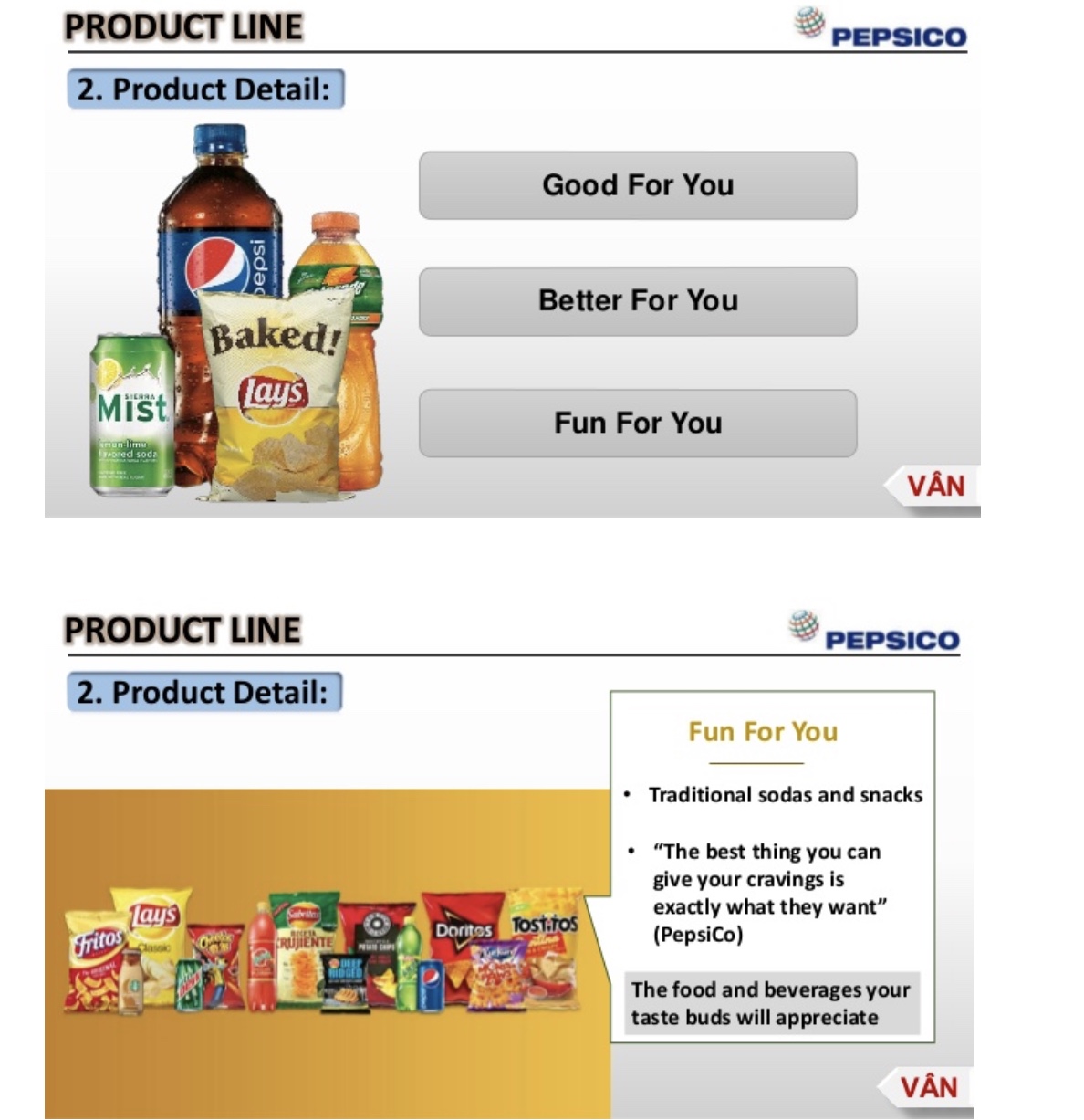
If Wall Street gives Nooyi, mixed grades, what about public health?  Nooyi is known for her desire to expand PepsiCo’sinvolvement in “good-for-you” foods.  What were the results?

2006

2017

Percent increase

Total PepsiCo revenues

$35 billion

$63.5 billion

81%

Revenues from “healthier” foods

$13.3 billion

$31.8 billion

139%

Revenues from “less healthy” foods

$21.7 billion

$31.7 billion

46%

The table above shows that while the proportion of revenues from “healthier” product increased more than for less healthy products like soda and high salt, high fat snacks, the total annual sales of less healthy products (dubbed by Nooyi as the “fun for you” foods) increased by $10 billion — 46% during  her tenure.  

In other words, the total revenues from PepsiCo  products most associated with diet-related chronic diseases increased significantly  under Nooyi’s leadership. This suggests that PepsiCo’s contribution to the burden of premature deaths and preventable illnesses associated with these products also increased.  This illustrates a classic dilemma for public health.  Even if public health advocates succeed in persuading corporations to alter the mix of products they produce, if the company expands at the same time, its overall health damaging impact may increase even as it produces some healthier products.  Moreover, the products PepsiCo and Nooyi label as “good for you” or healthy are often still high in unhealthy ingredients, even if they are fortified with vitamins or other nutrients.  
E-cigarette maker Juul targeted teens with false claims of safety, lawsuit says

Screen Shot 2018-08-02 at 10.28.34 PM

A Juul in the hand…(credit)

When a San Diego-based mother posted an emergency alert on Nextdoor, a community discussion app, she hoped a Good Samaritan could help, according to court filings, reports The Washington Post.  Her son was hysterical after losing a flash drive with his homework near the local McDonald’s, she wrote, uploading a photo along with the message. A neighbor quickly replied, explaining that the chewing-gum-sized object in the picture was not a flash drive: It was a Juul vaping device. “That’s just an indication of how quickly Juuls became prevalent,” recounted Esfand Nafisi, a lawyer who is handling two of three lawsuits initiated against Juul Labs last month. “You blinked your eye, and suddenly they were all over the place.”

“I think Juul has been insincere from the very beginning in saying it’s only for adult smokers,” said Robert Jackler, principal investigator at a Stanford University School of Medicine program that studies the impact of tobacco advertising. He noted that Juul Labs executives have boasted that they run “the most educated company, the most diligent, the most well-researched.”

Two recent court cases challenge Juul’s practices.

Read the complaintfiled against Juul in United States District Court Southern District of New York in June 2018.

Read the complaintfiled in United States District Court District of Northern California in April 2018.